
- Detailed description of the variety
- Description of the plant
- Description of vegetables
- Productivity
- Disease resistance
- Advantages and disadvantages of the variety
- Rules for growing tomatoes
- When to plant seedlings
- Selection, preparation and sowing of seeds
- Growing seedlings
- Transplanting to beds
- Caring for tomatoes
- Watering and fertilizing
- Bush formation
- Pest and disease control
- Harvesting and storage
- Feedback from our readers
Not all heat-loving vegetables thrive and produce fruit in temperate climates, where summers don't always offer warmth and sunshine. Russian breeders are striving to develop tomatoes that can be grown not only in the south but also in cooler climates, and the Sto Pudov tomato demonstrates their success. This variety produces a rewarding harvest in a greenhouse, and the large tomatoes ripen in the open garden. They are very popular among gardeners, although they don't weigh 16 kg.
Detailed description of the variety
Tomatoes, which grow in virtually all regions where agriculture is possible, reward with a good harvest when properly cared for and trained.
Description of the plant
Vigorous indeterminate tomato plants require support, as they grow over 2 meters tall and have unlimited growth, requiring pinching off the tops. The leaves are regular in shape, dark green, and do not overly thicken the bushes.
One bunch produces about 7 fruits, which ripen and become sweet even at home if picked unripe.
Description of vegetables
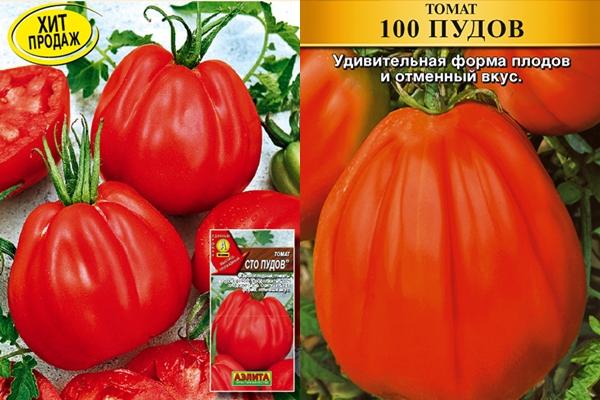
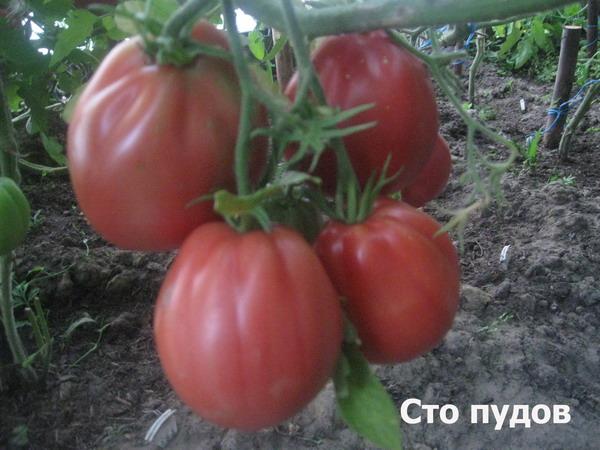
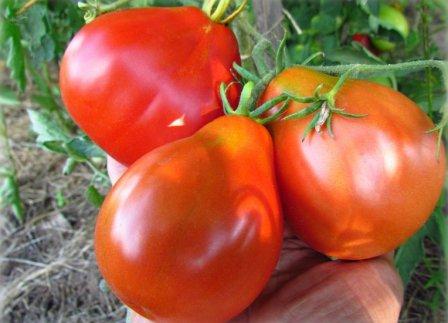
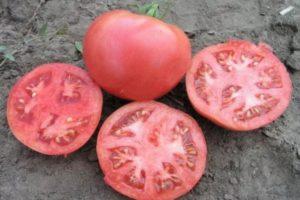
Sto Pudov tomatoes are a decent size, weighing between 200 and 350 grams. The fruits that form on the upper branches weigh less than 150 grams; these specimens are canned whole. This variety is remarkable not for the vibrant color of its skin and flesh, but for its unique shape. The tomatoes resemble a pear, with ribs extending directly from the stem. Gardeners love this tomato:
- for rich taste;
- pleasant aroma;
- presence of sourness.
The thin but dense skin prevents the tomatoes from cracking or being damaged during transportation. The fleshy pulp, rich in lycopene, sugars, and carotene, contains almost no seeds.
Productivity
Tomatoes ripen in mid-season, harvesting 110–115 days after sprouting. In the southern regions, Sto Pudov tomato seeds are sown directly into the garden bed; in central regions, seedlings are grown first. A single plant can yield up to a bucket of fruit.

Disease resistance
With proper agricultural practices, tomatoes are rarely affected by bacterial infections, as they are immune to harmful microorganisms. However, this doesn't mean preventative measures are unnecessary. Before planting, the soil should be treated with potassium permanganate, and then be sure to:
- Loosen the soil.
- Pull out weeds.
- Hilling up the bushes.
- Remove excess leaves.
If tomatoes are grown in a greenhouse, regular ventilation and good airflow are essential. Spraying the plants with Bordeaux mixture or potassium permanganate solution reduces the risk of fungal infection.
Advantages and disadvantages of the variety
Tall tomato shoots need to be tied up and properly trained, which takes time for gardeners, but tomatoes deliver a rewarding harvest even in challenging climates. The variety's advantages include:
- rapid ripening;
- excellent taste of fruits;
- original appearance.
Tomatoes are excellent for making juice and garnishing salads. The bushes are rarely affected by disease, which is another reason they are popular with gardeners and homesteaders.
Rules for growing tomatoes
Sto Pudov is not a hybrid; the collected seeds produce sprouts. The tomato is undemanding of soil type and produces well both in a greenhouse and in a garden bed.
When to plant seedlings
Tomatoes are transplanted to their permanent location when a sudden cold snap is no longer expected. Tomato seeds are sown no later than two months, but no earlier than 45 days, before planting in a greenhouse or garden bed. Calculating the optimal time is easy for a gardener or vegetable grower.
Selection, preparation and sowing of seeds
Fully ripened tomatoes are cut and placed in a jar of water. After two days in a warm place, they begin to ferment; a whitish film forms on the surface of the container, making the small seeds easier to extract. The seeds are washed, dried, and placed in a paper bag.
Before planting, seed material:
- Heat at 45–60 °C.
- Soak in salted water.
- The floating grains are removed, the rest are disinfected in potassium permanganate.
To improve germination, growth stimulants are used. Seeds are soaked in the solution for at least 12 hours.
Growing seedlings
Fill the box with a loose substrate consisting of turf, sand, peat, or humus. The seeds are spaced 20 mm apart, covered with soil, watered well, and a greenhouse effect is created using plastic film.
Once the seedlings emerge, provide them with additional light and maintain a temperature no higher than 23°C. When the seedlings have four leaves, they are transplanted into individual pots.
Transplanting to beds
Tomatoes that will be grown outdoors are hardened off in the fresh air at 40–45 days old. Two weeks later, holes are dug in a plot fertilized in the fall with humus and ash.
Tomatoes are planted in a checkerboard pattern, with 3 bushes per square meter of land, leaving 0.7 m between rows.
Caring for tomatoes
The Sto Pudov variety requires care, given that the tomato is indeterminate and requires growth regulation.
Watering and fertilizing
Moisten the soil under tomatoes planted in a greenhouse or garden bed once a week, when the top layer dries out. Allow the water to settle and, if possible, warm it in the sun. Fertilize tomatoes:
- 2 weeks after planting;
- during the appearance of flowers,
- during the period of ovary formation;
- before the fruits ripen.
Chicken manure, mullein, or mineral components such as superphosphate and magnesium sulfate are used as fertilizer. Fertilizing is combined with watering, loosening the soil, and hilling the plant.
Bush formation
When buds appear on the tomatoes, the top flowers are plucked, leaving up to four, which helps produce larger fruits. Lateral shoots up to 5 cm long are removed as soon as the tomato plants have established roots after transplanting. The lower leaves on the bushes are plucked and formed into two stems.
The plant's shoots are secured to the frame. Supports are placed under the clusters where the tomatoes have formed.
Pest and disease control
Although the Sto Pudov variety is immune to infection and is resistant to mosaic and cladosporiosis, it does attract various insects. To prevent disease and pest infestation, avoid planting tomatoes after eggplants and potatoes and spray with Fitosporin, Bordeaux mixture, or a potassium permanganate solution.
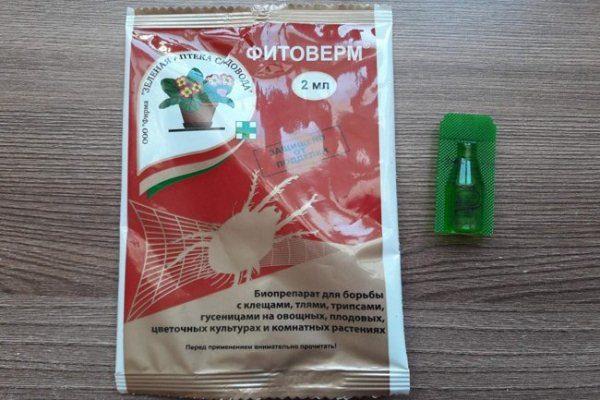
When growing tomatoes in a greenhouse, the top layer is replaced with fresh soil each season. If pests do appear, the bushes are treated with ash, celandine infusions, and onion peels. Insecticides such as Fitoverm and Akarin are used well before the fruit ripens.
Harvesting and storage
A single Sto Pudov variety plant can yield up to a bucket of tomatoes. The first tomatoes, picked in early August, are used in salads and eaten fresh. Unripe fruits are ripened at home and then used for juice extraction, pickling, and canning. In a cool place, tomatoes will keep for a month or two.
Feedback from our readers
Although less than 10 years have passed since the variety was created, some gardeners have been growing the tomato for several seasons and say they are satisfied with both the taste and the yield.
Svetlana Arkadyevna, 48, Kazan: "My neighbor, whose dacha is nearby, treated me to unusually shaped tomatoes. In the spring, I decided to plant the so-called 100 Poods variety in the greenhouse. The bushes grew over two meters tall, and I had to tie them up and remove the side shoots. The tomatoes grew so large they didn't fit in the jar, but they produced thick, flavorful juice."
Evgeniya Stepanovna, 39, Kostroma: "Last season's discovery for me was the Sto Pudov tomatoes. A neighbor who grows seedlings gave me two plants to try. I planted these tomatoes in the greenhouse. I tied up not only the stems but also the trusses with the fruit hanging down. The first tomatoes ripened on August 9th, with several weighing almost 500 grams. The tomatoes are very beautiful; their shape is hard to describe. The flavor is excellent, and the tomatoes keep well."
Related posts:
 Description of the best varieties of black tomatoes for open ground and greenhouses
 16 Best Quick Pickled Tomato Recipes for the Winter
 TOP 17 recipes for pickled sweet tomatoes for the winter
 The 14 Best Tomato and Aspirin Recipes for a 3-liter Jar for the Winter
 15 simple recipes for pickling tomatoes in jars for the winter
 How to make marinated tomatoes in jars for the winter using a Bulgarian recipe
 Recipes for amazing tomatoes in jelly for the winter, with and without sterilization, you'll lick your fingers
 Description of the best tomato varieties for open ground in the central zone