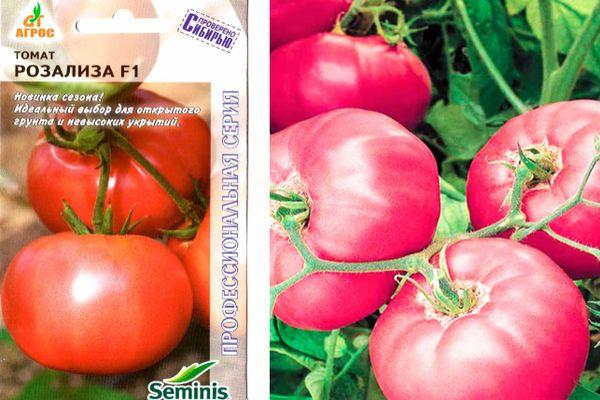
The Rosalisa f1 tomato belongs to the group of hybrid varieties. This plant was developed by Dutch breeders from the company Seminis. This tomato variety is included in the State Register of Russian Tomatoes. This hybrid is recommended for open-field cultivation by homesteaders. This variety is of particular interest to farmers due to its compact bush. Tomatoes of this type can be stored for a long time in a cold room and are suitable for medium-distance transportation.
Technical data of the plant and its fruits
The characteristics and description of this tomato are as follows:
- This variety produces a harvest in the middle of the growing season. From planting the seed bank to harvesting the first fruits, it takes 112 to 115 days.
- The plant grows to a height of 0.65–0.75 m. The stems bear numerous leaves, all light green in color. They have a rounded shape, slightly different from the standard tomato leaf proportions.
- The hybrid is resistant to diseases such as fusarium wilt, verticillium wilt, and viral leaf curl. The plant also exhibits resistance to nematodes, a garden pest.
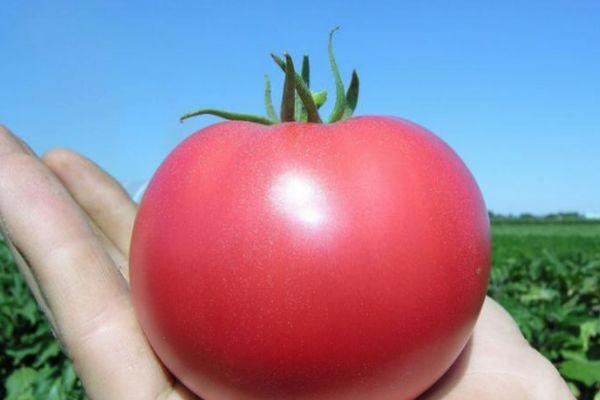
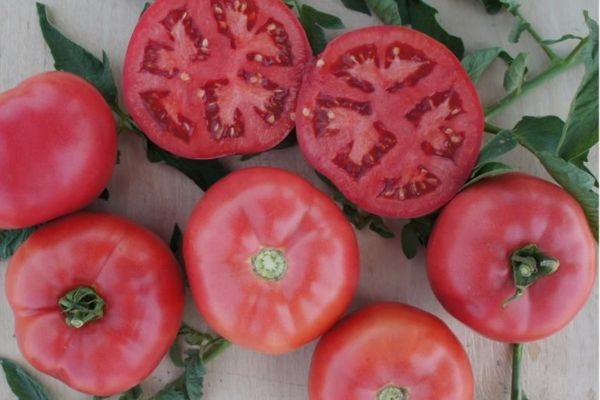
- Tomato fruits are shaped like a spheroid, flattened at the top and bottom, with visible ribs.
- The fruits weigh between 0.18 and 0.22 kg. They are colored in vibrant shades of pink. The flavor is delicate and pleasant. Inside the fruit are 3-4 seed chambers. The skin is medium-thick.
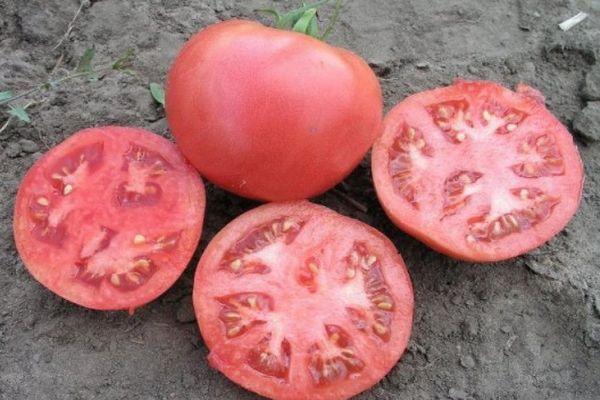
Farmer reviews indicate that the yield of this tomato variety can range from 15 to 18 kg per square meter. The fruits do not crack during long-term storage or transportation. They are typically used in salads or eaten fresh.
In Russian conditions, it is recommended to grow the hybrid in open ground or unheated greenhouses in the southern regions and the central part of the country. In Siberia and the Far North, the hybrid is grown in well-heated greenhouse blocks.

How to grow a hybrid in your garden
This variety is grown from seeds, which are purchased from specialty stores. To boost plant immunity and prevent fungal diseases, all tomato seeds are treated with potassium permanganate. The seeds are planted for seedlings 55-65 days before the planned planting of seedlings in the beds.
The soil is prepared in the fall. Dry lupine stems and branches are added. If this is not available, compost can be used. The hybrid should be planted in the same soil where carrots, eggplants, or dill were grown. The seeds are watered with room-temperature water after planting.
When the sprouts develop 1-2 leaves, they should be pricked out. After this, the bushes are fed with mineral fertilizer (superphosphate). Then, the sprouts are hardened off and ventilated to increase the hybrid's resistance to external conditions.
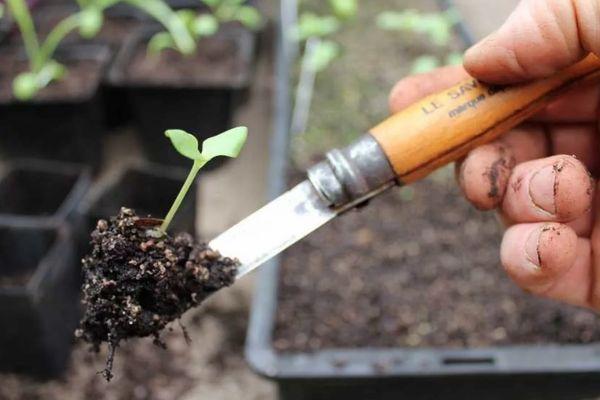
After transplanting the seedlings to their permanent soil, they are again fed with complex fertilizers. Four to six bushes can be planted per 1 m² of garden bed area. Fertilizers should be applied twice throughout the entire plant growth period, including the formation of ovaries and fruit.
Water the bushes with warm water. It's best to do this after sunset or early in the morning, before the sun has risen. Pour the water under the plant's roots, but avoid eroding the hole or getting moisture on the hybrid's leaves. Hilling should be done regularly, weeds removed, and side shoots removed.
If garden pests such as various caterpillars, aphids, and Colorado potato beetles appear, it is recommended to use chemical pesticides to kill them and their larvae. If a disease develops to which the hybrid is not resistant, it is recommended to spray the hybrid's leaves with specialized medicinal products.
Related posts:
 Description and characteristics of the 30 best hazelnut varieties, cultivation
 Description of the best tomato varieties for greenhouses in the Kirov region
 Description of the best Dutch tomato varieties for greenhouses and open ground
 Description and characteristics of the best varieties of sweet corn, cultivation technology
 TOP 30 best varieties of cold-resistant cucumbers with descriptions and characteristics
 What varieties of tomatoes are best to plant in a polycarbonate greenhouse?
 TOP 40 best late-season cucumber varieties for open ground with descriptions
 Description and pruning group of clematis Ernest Markham, planting and care of the hybrid