
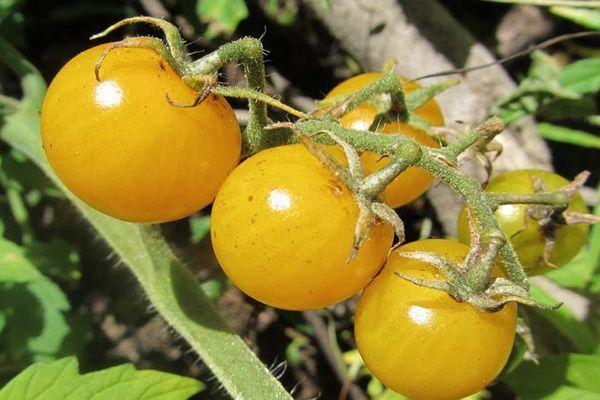
The Yellow Cherry tomato was developed by Russian breeders in the first decade of the 21st century. They were designed for open-air cultivation, but can also be successfully grown in greenhouses and hotbeds. The berries of this variety do not withstand long-term storage. They are consumed fresh or preserved whole.
Some technical data of the culture
A full description and characteristics of the variety can be obtained from specialized agricultural reference books.
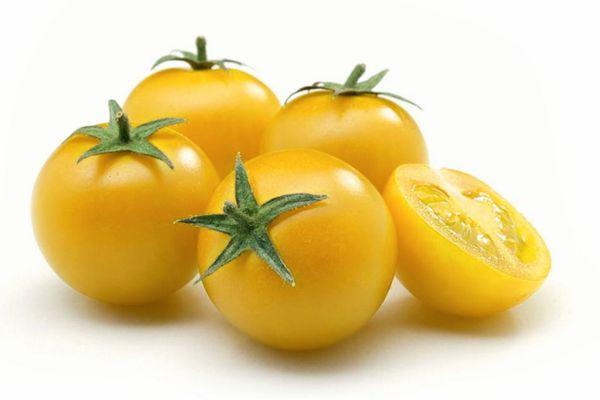
The parameters of the hybrid are as follows:
- Cherry tomatoes yield a harvest 90-95 days after sowing the seeds.
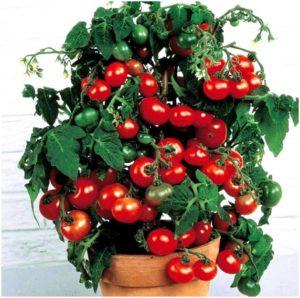
- Varieties of this cultivar have bushes ranging in height from 140 to 180 cm. The stems bear a medium number of leaves.
- Cherry tomatoes are not a hybrid. Their bushes produce loose inflorescences of an intermediate type. The first inflorescence appears above the 8th leaf, and subsequent inflorescences form every 3 leaves.
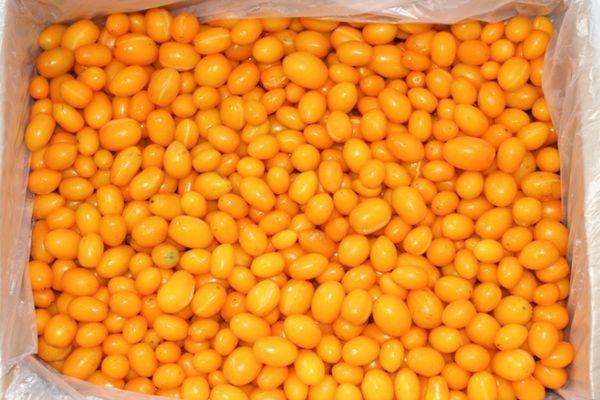
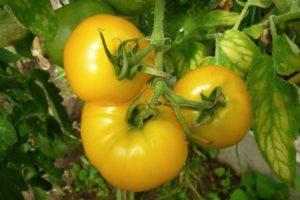
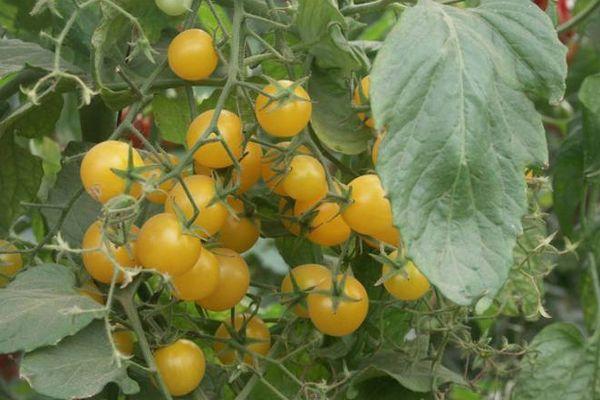
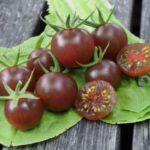
- The fruits are plum-shaped. Varietal differences in tomatoes are expressed only in the color of the berries. Most varieties have yellow fruits, while some plants have reddish berries with large yellow spots.
- The fruit weighs between 15-20 g. The skin is smooth, and the pulp contains 2-3 seed chambers. Cherry tomatoes produce 50 to 60 berries per cluster.
Reviews from gardeners growing this variety indicate that the plant yields 1.0-1.5 kg per bush. When grown in a greenhouse, this figure increases to 2.5-3 kg of berries per bush.
A disadvantage of this variety is its susceptibility to various diseases typical of nightshade crops. Cherry tomatoes are susceptible to tobacco mosaic virus, fusarium wilt, and cladosporiosis.
Tomatoes are grown throughout Russia. The southern regions are suitable for open-air cultivation. In the rest of Russia, cherry tomatoes are grown in greenhouses and hotbeds.
Growing seedlings and caring for bushes yourself
It is recommended to treat the seeds with any disinfectant (potassium permanganate, hydrogen peroxide, aloe juice, honey solutions). Then, select containers and fill them with homemade or store-bought soil. The seeds are planted 15 mm deep, watered with warm water, and covered with glass. After sprouts appear, feed them with mineral fertilizer, watering them once every 4-5 days. After 1-2 leaves develop on the stems, the plants should be pricked out. Young plants are transplanted into open ground when they reach 70-80 days of age.
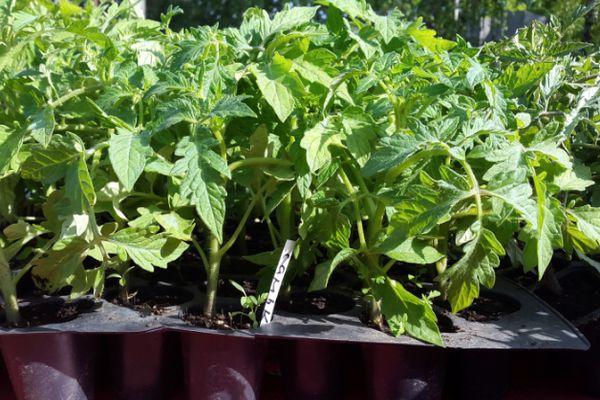
The seedlings are planted in well-drained beds. The planting pattern is 0.4 x 0.6 m. Before planting, the soil is loosened and fertilizer (peat or manure) is added. Fertilize the tomatoes three times per season. Fertilize first during flowering, then feed them with organic potassium and nitrogen mixtures after the ovaries have finished developing.
The third time, the bushes are fed with phosphorus and potassium fertilizers when the first fruits appear on them.
Water the tomato plant 2-3 times a week. Choose early morning or late evening for this process. Only the main stem and one side shoot should be trained. All other side branches should be removed. The plant should be tied to sturdy stakes or a trellis. To prevent the bush from growing too large, it is recommended to pinch the tomato plant above the third or fourth cluster.
It's recommended to loosen the soil twice a week to aerate the root system. Weeding once every 1.5 to 2 weeks helps reduce the risk of fungal and bacterial infections. This procedure also eliminates some garden pests that feed on weeds and then damage crops.
Pest and disease control
When growing cherry tomatoes in greenhouses, the plant often becomes infected with Cladosporiosis. To combat this disease, maintain indoor humidity at 60% and a temperature of 25 to 30°C. Infected leaves die under these conditions, while healthy leaves develop a certain immunity to the disease. Dead leaves are carefully removed and collected in a plastic bag to prevent the fungal spores from spreading to healthy plants.
If tomato plants are infected with fusarium wilt, to eliminate the threat to healthy plants, the diseased plants are dug up by the roots, removed from the plot, and then burned. To reduce the risk of disease spread, seedlings should be sown in well-warmed soil, which is then disinfected with a solution of potassium permanganate.
To combat tobacco mosaic virus, it is recommended to spray tomato leaves and stems with a 5% potassium permanganate solution. For disease prevention, three treatments with Fitosporin are recommended.
When various types of garden pests appear on the site, they must be destroyed with special chemical solutions.
Related posts:
 Growing cherry tomatoes in a greenhouse and open ground, when to plant seedlings
 Description of the best, sweetest, and most productive varieties of cherry tomatoes
 8 recipes for quick-pickled cherry tomatoes with garlic and hot pepper, and storage instructions
 How to plant and grow cherry tomatoes from seeds on a windowsill at home in a pot
 Delicious recipes for pickled cherry tomatoes for the winter, finger-licking good, with and without sterilization
 How to cook sun-dried sweet cherry tomatoes in the oven, microwave, and slow cooker
 Description of the exotic Black Cherry tomato variety and cultivation techniques
 How to prepare cherry tomatoes in their own juice for the winter using finger-licking recipes