
- Do cucumbers need to be pollinated?
- Which cucumber varieties require pollination?
- The main differences between male and female flowering types
- Locations
- Appearance
- Optimal conditions for fruitful pollination
- What is artificial pollination of cucumbers?
- Manual Pollination Technology for Cucumbers
- Pollination by a flower
- Tassel pollination
- How to pollinate cucumbers in a greenhouse without bees?
- Conclusion
Cucumbers are a vegetable crop grown by many gardeners. Some plant them in a polycarbonate greenhouse to protect them from frost and temperature fluctuations. Before growing cucumbers in a greenhouse, you need to understand how to pollinate cucumbers at home.
Do cucumbers need to be pollinated?
Many vegetable growers who have never grown cucumbers in a greenhouse before are interested in whether they need to pollinate them.
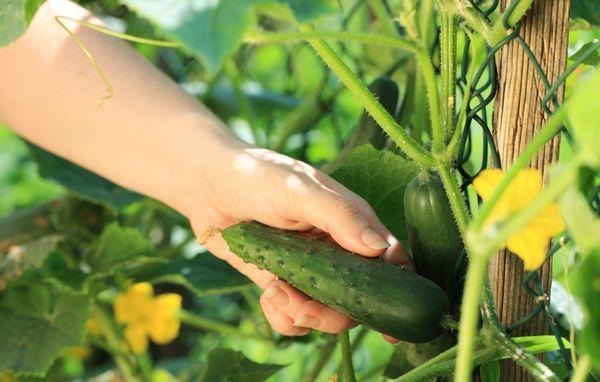
The answer to this question depends on the characteristics of the variety being grown. Hybrid cucumbers that don't require pollination are called parthenocarpic. The advantage of such plants is that they form and ripen cucumber fruits without pollination. Therefore, when planting such self-pollinating hybrids, gardeners won't have to waste time on artificial fertilization.
However, most often, people plant bee-pollinated vegetable varieties, which don't bear fruit without pollination. Experienced gardeners recommend planting them outdoors so bees can pollinate the flowers. If such cucumbers were planted in a greenhouse, you will have to transfer the pollen yourself.
Which cucumber varieties require pollination?
There are several common cucumber varieties that require pollination:
- Lastochka. An early-ripening, bee-pollinated cucumber, suitable for greenhouse planting. The harvest of Lastochka ripens 40-50 days after the young shoots emerge. Mature cucumbers are compact and suitable for pickling.
- Azbuka. A high-yielding plant resistant to many diseases and pests. Azbuka's main advantage is the taste of its harvest, which has no bitter aftertaste.
- Lord. A mid-season hybrid vegetable that can be grown in both indoor and outdoor beds. Lord has a strong immune system, protecting seedlings from fungal infections and sudden temperature fluctuations. The fruits reach 15 centimeters in length and weigh 200-250 grams.
- Teremok. A productive vegetable whose bushes are dominated by female flowers. Ripe cucumbers are medium in size, growing up to ten centimeters. Teremok fruits weigh no more than 180 grams.
- Acorn. A bee-pollinated hybrid with low bushes and low yields. Acorn's fruits weigh 120-130 grams and are 7-8 centimeters long.
The main differences between male and female flowering types
Before artificially pollinating vegetables, it is necessary to understand the main differences between female and male flowers.
Locations
You can distinguish male and female flowers by their location. Male flowers are most often found at the bottom of the bush.
Appearance
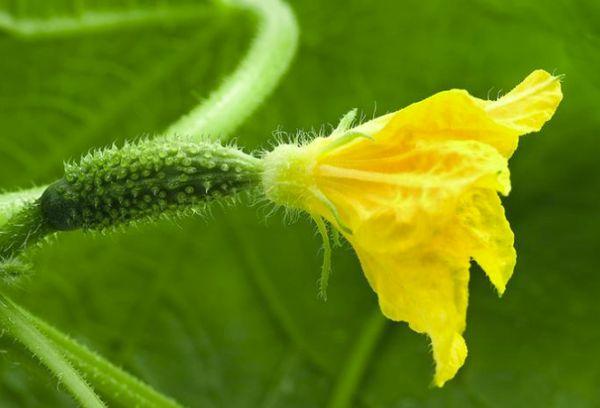
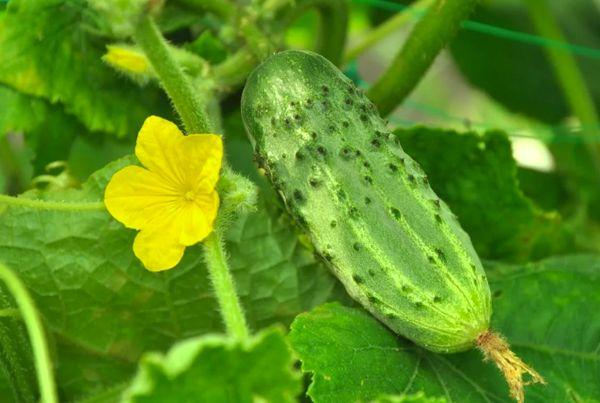
Experienced gardeners recommend paying attention to the appearance of the flowers to distinguish between different types. Female flowers have small stamens located on one of the lateral shoots. They resemble a small lump, reminiscent of a ripe cucumber.
Instead of pistils, male flowers contain a pollinator, which is needed for pollination. If you gently shake the plant, a small pollen cloud will form around the male flower.
Optimal conditions for fruitful pollination
Pollination should be carried out under optimal conditions:
- Humidity level. The success of the procedure depends on the air humidity. Vegetable growers recommend pollinating cucumbers when the humidity level does not exceed 70-75%. At high humidity, pollen quickly clumps together, while at low humidity, it dries out.
- Temperature. Temperature is also crucial. Pollen activity begins to decline when temperatures reach 30 degrees Celsius. Pollination should not be attempted if the temperature in the greenhouse or outside drops below 10 degrees Celsius. Optimal temperatures are considered to be between 15 and 25 degrees Celsius.
- Time: Gardeners recommend pollinating seedlings in the morning, before 11-12 noon.
- Pest protection. All pollinated flowers must be covered with small pieces of fabric. This is done to protect them from pests.
- Lighting. Some believe that light levels have no effect on pollination, but this is not true. It is important to ensure the plant is well-lit. If grown in a greenhouse, LED lights can be used as supplemental lighting.
What is artificial pollination of cucumbers?
Before you start pollinating cucumbers yourself, you need to become more familiar with this process.
Artificial pollination is the transfer of pollen from one flower to another. If the plant is grown outdoors, this process occurs naturally using water, insects, or wind. When growing plants indoors on a balcony or in a greenhouse, pollination must be done manually.
This is a labor-intensive process that requires careful preparation. It's essential to determine the timing of the procedure in advance and understand how to do it correctly.
Manual Pollination Technology for Cucumbers
There are two main technologies used to pollinate cucumbers. It's recommended to familiarize yourself with their key features in advance to understand how to use them in practice.
Pollination by a flower
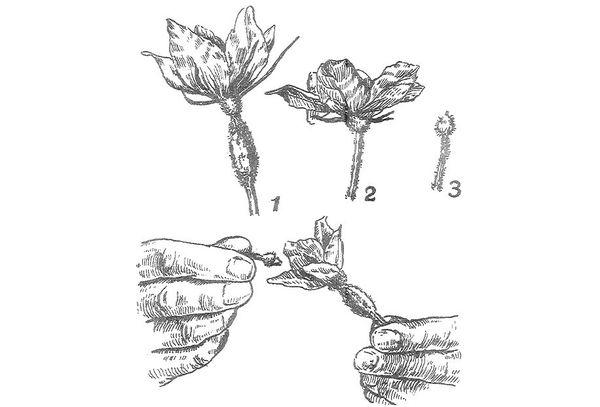
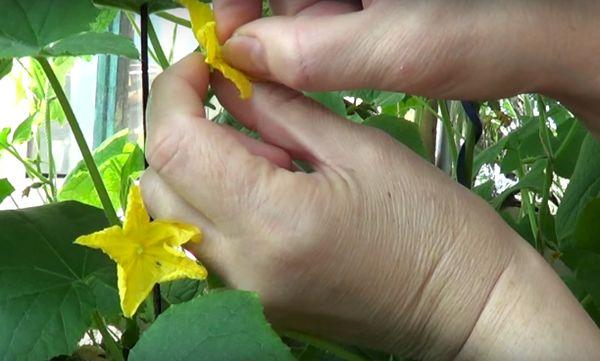
Gardeners who decide to pollinate their cucumbers themselves use a male flower. First, carefully pluck it from the bush, then remove all its petals. Then, gently touch the stamens with your palm to ensure pollen remains on their surface. Then, touch the pistils with your palm.
To ensure pollination, shake a plucked male flower near a female flower. Mark all pollinated flowers with a marker.
Tassel pollination
The most common method for transferring pollen from flowers that have just begun to bloom. It is recommended to use brushes with natural, soft bristles that will not damage the flowers.
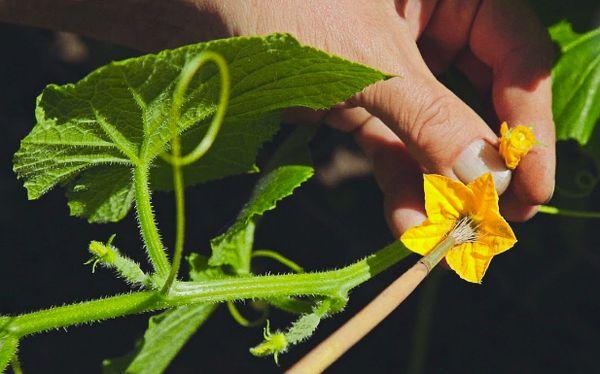
During this procedure, pollen is carefully collected from the flower, ensuring that it settles on the bristles of the brush. The collected pollen is then carefully transferred to the female pistil.
How to pollinate cucumbers in a greenhouse without bees?
Some greenhouses are inaccessible to bees, forcing cucumbers to be pollinated by hand.
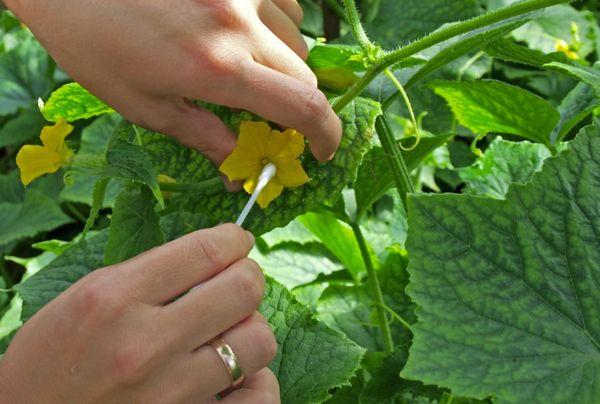
There are several recommendations that you should read before you start transferring pollen:
- Experts recommend performing the procedure early in the morning, before the sun begins to dry the air. If the weather is cloudy, you can do it later.
- It is recommended to pollinate when the air humidity level does not exceed 70% to prevent pollen from sticking together and forming large clumps.
- Pollination of cucumbers grown on a windowsill or in a greenhouse begins two days after the flowers bloom. Results will be noticeable within 3-4 days. The size of the ovary in fertilized plants will begin to increase rapidly.
- All fertilized cucumber plants must be marked. This is done to avoid re-fertilizing already pollinated cucumber seedlings. You can mark the plants with a marker, gouache, or watercolor paint.
- After pollination, all plants are carefully inspected. If their ovaries have not begun to enlarge, then pollination will need to be repeated.
Conclusion
Vegetable growers who plant cucumbers indoors or in greenhouses must transfer pollen themselves to fertilize female flowers. This is not easy, so it's best to familiarize yourself with the basic pollination procedures for cucumbers grown indoors.
Related posts:
 33 of the best recipes for delicious cucumbers for the winter
 TOP 14 recipes for pickling cucumbers so they're crispy
 Description of the best, most productive and new varieties of cucumbers for 2025
 TOP 10 recipes for quickly preparing lightly salted crispy cucumbers using cold and hot methods in a saucepan
 How to properly plant cucumber seedlings at home and what to feed them with
 Why cucumbers don't grow well in greenhouses and open ground, and what to do about it
 How to make crispy lightly salted cucumbers quickly in a bag, step-by-step recipes
 TOP 6 recipes for making pickled cucumbers for the winter, just like grandma made them