
- Reasons for seedling elongation
- How to help weakened plants?
- How to transplant elongated cucumber seedlings?
- How to properly grow cucumber seedlings so that they don’t stretch out?
- Lighting adjustments
- Watering mode
- Temperature conditions
- Cramped conditions
- Increasing the amount of soil and fertilizing with potassium
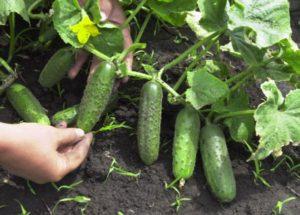
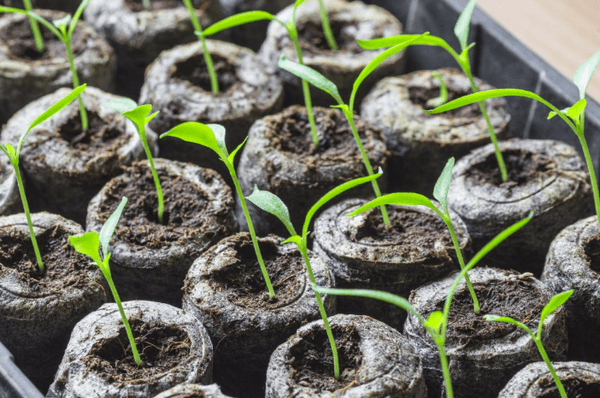
In the south, even tomato seeds are often planted directly in open ground, but in temperate climates, the fruits may not ripen. Both tomatoes and cucumbers in temperate climates are first grown in peat pots, cups, or boxes. Various factors influence the development of seedlings, and if something isn't right, the stems of young plants become weak and spindly. It's difficult for inexperienced gardeners to figure out what to do when cucumber seedlings become leggy. Experienced gardeners rarely encounter such problems.
Reasons for seedling elongation
Before making any decisions, it's important to determine what the seedlings are lacking. Seeds are usually placed in containers with a special substrate in early April. If cucumber seedlings are stretched, it's worth checking if they're getting enough light. In a dark room, the leaves will turn pale, and the plant will develop a long, thin stem.
Negatively affects seedlings:
- high temperature;
- irrigation violation;
- deficiency or excess of microelements.
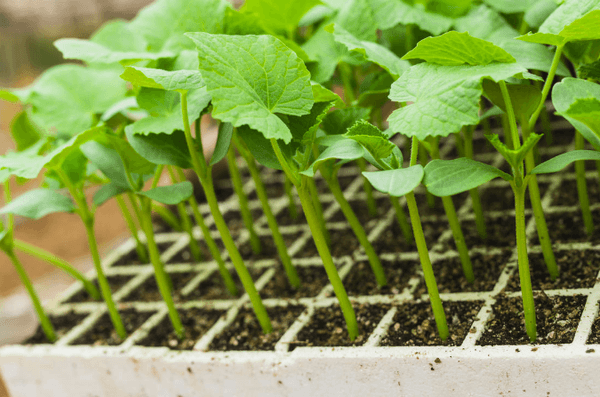
Seedlings stretch out simultaneously in low light and in hot weather. Cucumbers weaken when planted too close together. Plants in cramped containers don't thrive because the roots grow outward rather than inward, quickly becoming overcrowded in a narrow, small container.
The seedlings suffer from excess soil moisture, do not tolerate acidic soil very well, and stretch out when large amounts of fertilizers containing nitrogen are applied.
How to help weakened plants?
When the seedlings weaken and stretch upward, add dry, warm soil to the container to cover the stems. Warm soil prevents moisture stagnation and prevents root rot. But if cucumber seedlings have stretched out, novice gardeners, of course, don't know whether they can always be planted deeper. First, you need to figure out why the seedlings are weakening before attempting to bury the stems. Young bushes are unlikely to thrive if you add acidic soil to acidic soil.
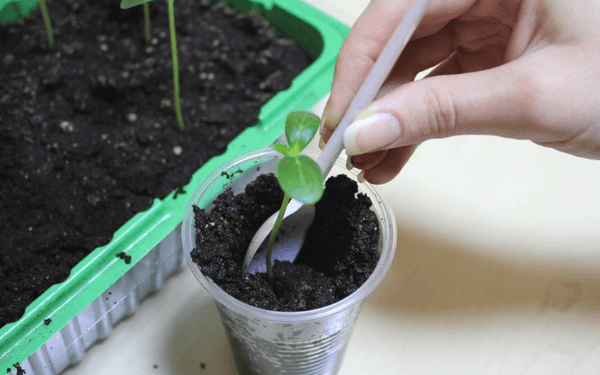
Sometimes, after sowing seeds, the seedlings emerge too densely, requiring thinning. To do this, carefully dig up the plants and place them in individual pots.
To help bushes that have stretched out in a dark and hot room recover, place them near a window, install a fluorescent lamp or a mirror, and lower the temperature to 18°C.
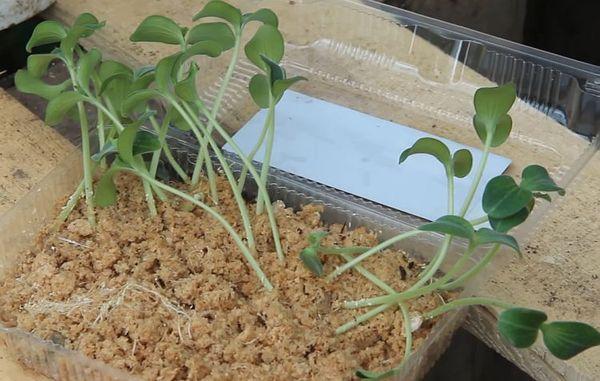 Pinching the bud located above the second leaf helps slow down growth and prevent seedlings from stretching.
Strengthen weakened bushes by watering them with ash, which contains potassium, mixing a spoonful of the substance with a glass of water.
How to transplant elongated cucumber seedlings?
Even if seedlings have thin stems, they thrive when moved to a hotbed or greenhouse. However, initially, young bushes are kept outdoors for up to four hours a day, shaded from the hot sun, which helps the elongated seedlings adapt to the new conditions.
When the temperature in the greenhouse warms up to 20 °C:
- Dig holes at intervals of about 50 cm, leaving a distance of 0.6 m between rows.
- Superphosphate is poured into the bottom of the holes.
- Water with a weak solution of potassium permanganate.
- The bushes are removed from the cup along with the soil.
- The long, thin stem is twisted slightly, and the root of the plant is planted in the hole up to the cotyledon leaves.
Once the work is completed, the soil is compacted, and the cucumbers are initially shaded from the sun by covering them with plastic. Flower buds are always removed, otherwise the seedlings won't have enough strength to take root. These bushes set fruit later, and the fruits take longer to ripen, but they will still delight you with their greenery.
Often gardeners, without knowing, How to plant elongated cucumber seedlingsThey wait until the stems straighten out and the seedlings have time to outgrow. If the bushes have already bloomed, the buds must be removed, otherwise they will not be able to take root. Such plants take a long time to set fruit, and the number of fruits significantly decreases.
Avoid replanting seedlings with flowers, as the ovaries often fall off, significantly reducing the yield. Young plants are watered with yeast dissolved in water and, after a week, fertilized with urea or ash, which contain nitrogen. A second application is made with fertilizer containing phosphorus.
If you plant leggy cucumbers correctly and care for them carefully, you can correct the mistake made when growing seedlings. The plants will quickly establish themselves and, within two months, will yield an excellent harvest.
How to properly grow cucumber seedlings so that they don’t stretch out?
To ensure successful germination and rapid seedling development, it's necessary to create optimal conditions, properly prepare the soil using humus, peat, sand, garden soil, or purchase a nutrient-rich substrate. For planting cucumbers, you need to purchase high-quality seed.
Seeds after disinfection in potassium permanganate:
- sprout by placing in a wet cloth;
- planted in cups to a depth of 20 mm;
- watered with slightly warmed water;
- cover with film and leave in a room at 25 °C.
Lighting adjustments
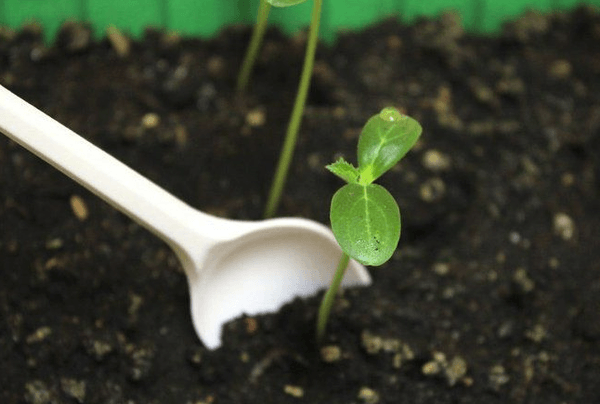
Before sprouting, seedlings need moisture and warmth most. Once sprouts emerge, they are moved to a windowsill. In cloudy weather, a grow light is added to the side of the seedlings. To prevent the stems from becoming too leggy, the plants require good lighting.
Watering mode
Water cucumber seedlings twice a week with warm water. More frequently on sunny days, but care must be taken to prevent stagnant moisture, which can cause root rot. Even strong young plants don't tolerate dry air well; in hot weather, humidification is necessary.
Temperature conditions
A few days after planting the seeds, move the container to a cool place. To ensure rapid seedling growth, daytime temperatures should be no higher than 22°C, and nighttime temperatures should not drop below 15°C. The seedlings are moved to open ground or a greenhouse after a month; it's best not to allow them to overgrow.
Cramped conditions
The seedlings' roots develop quickly, and they begin to run out of space in the container. Many gardeners avoid transplanting cucumbers, believing that transplanting stresses the plants, so they place the seeds directly into peat pots or plastic cups.
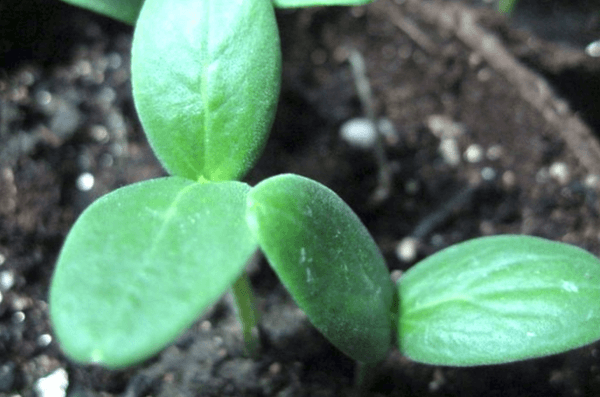
If the seedlings become crowded and stretch out, instead of shaking the soil off the tender roots, shorten them by a third and move them to another container filled with fresh soil. If the planting becomes too dense and there's insufficient light, deepen the long stems into the substrate without cutting them, which encourages new roots to form. To speed up the ripening of cucumbers, Oktyabrina Ganichkina recommends planting the plants in the garden bed at 20 days old and treating the seedlings with growth stimulants.
Take a look Also
Increasing the amount of soil and fertilizing with potassium
To prevent the seedlings from stretching, add dry, warm soil. This helps the cucumbers root faster, and the stems become thicker and stronger. When the seedlings develop two leaves, they are fed with potassium-containing fertilizers. A deficiency of this micronutrient causes plants to turn pale, develop poorly, and become susceptible to disease.
When planting cucumbers in a garden bed or greenhouse, avoid planting them too close together. Over time, they will begin to shade each other, causing the shoots to stretch.
Related posts:
 Description of unusual methods for planting and growing cucumbers
 Why cucumber leaves are drying out and what to do, how to treat them in a greenhouse and in the ground
 Description of the best varieties of Chinese cucumbers, planting, growing and care
 How to care for cucumbers in open ground from planting to harvesting
 Why do cucumber leaves curl inward and what to do about it?
 How to properly plant cucumber seedlings in a greenhouse and care instructions
 How to properly plant cucumbers in open ground with seeds, and at what depth
 How to make a cucumber trellis with your own hands from scrap materials