
- General information about the plant
- The best varieties
- Altaic
- Tangut
- Ordinary
- Wittrock
- Palmate
- Drug
- Noble
- When to plant and growing methods
- The intricacies of growing rhubarb
- Preparing seeds for sowing
- Sowing for seedlings
- Sowing in open ground
- Specifics of crop care
- Loosening and weeding
- Watering rules
- How to apply fertilizers
- How to trim correctly
- Wintering
- Pest and disease control
- Rhubarb diseases
- Ramulariasis
- Powdery mildew
- Rust
- Ascochytosis
- Rhubarb pests
- Owl eggs
- Rhubarb weevil
- Onion nematodes
- Reproduction methods
- Seeds
- By dividing the bush
- Compatibility with other plants in the garden
- Features of rhubarb transplantation depending on the season
- Harvesting
- Storage rules
Many gardeners actively plant rhubarb in their gardens. To ensure large, flavorful petioles, a comprehensive approach to growing and caring for rhubarb is required.
General information about the plant
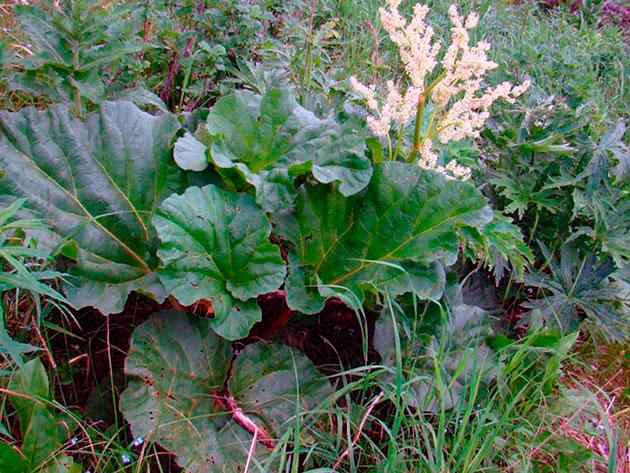
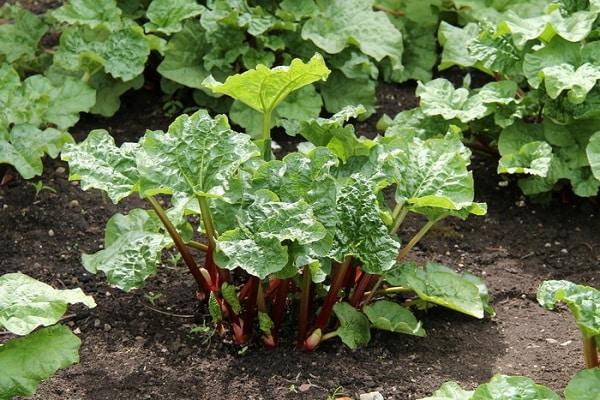
Rhubarb is a perennial herbaceous plant with developed roots and large, fleshy leaves that grow on strong petioles. By choosing the right variety and following proper cultivation practices, you can grow rhubarb with petioles weighing up to 1 kg.
If the crop is grown from seed, the first harvest ripens after a year. Early varieties begin to bear petioles after 2 years, and late varieties after 3-4 years.The exact ripening time depends on the varietal characteristics and environmental conditions.
The best varieties
When choosing a variety to grow, it's recommended to review the rankings of the best varieties. Common varieties produce large petioles with an exquisite flavor.
Altaic
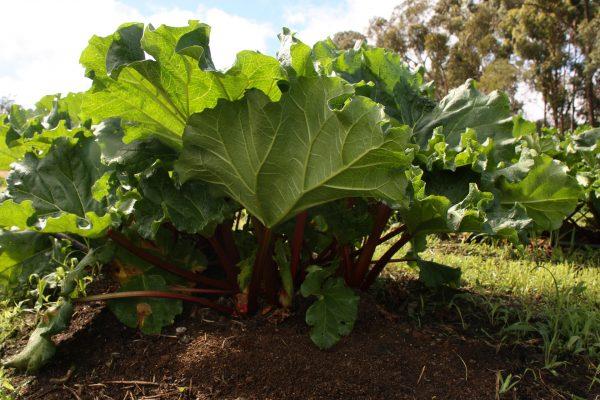
In the wild, Altai rhubarb grows on cliffs and rocky slopes. Plants reach 1.5-2 meters in height. The leaves are large, rounded, with fleshy, succulent petioles. After 2-3 years of growth, spike-shaped or paniculate inflorescences form.
Tangut
Rhubarb (Rheum tangutica) is a large plant from the Buckwheat family that produces powerful roots. During the first year of life, a spindle-shaped root grows, and with further development, a broad rhizome with several fleshy rootlets forms.
Ordinary
This variety grows up to 2 m tall, has a reddish hue, and ribbed petioles. The leaves form a rosette at the base of the stem. The heart-shaped leaves reach 80 cm in diameter.
Wittrock
Unlike other species, Wittrock rhubarb forms small bushes. The leaves are ovoid-triangular, no more than 0.5 m long and 0.4 m wide. The surface of the short petioles is pubescent. The inflorescences are paniculate and consist of several pinkish or white flowers.
Palmate
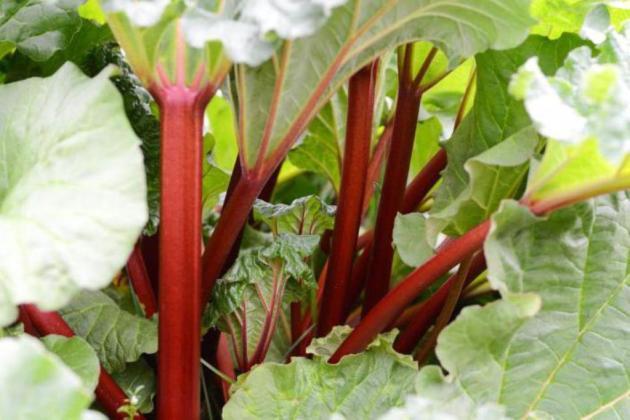
This palmate variety is characterized by large roots and a ribbed stem with a distinct red color. With proper care, plants can reach 2 meters in height. The basal rosette consists of 5-7 large, heart-shaped leaves.
Drug
This medicinal variety originated in Tibet. Plants grow to a height of approximately 2.5 meters and produce large, bright green leaves. Petioles reach 1 meter in length. A panicle of compact flowers forms on the peduncle.
Noble
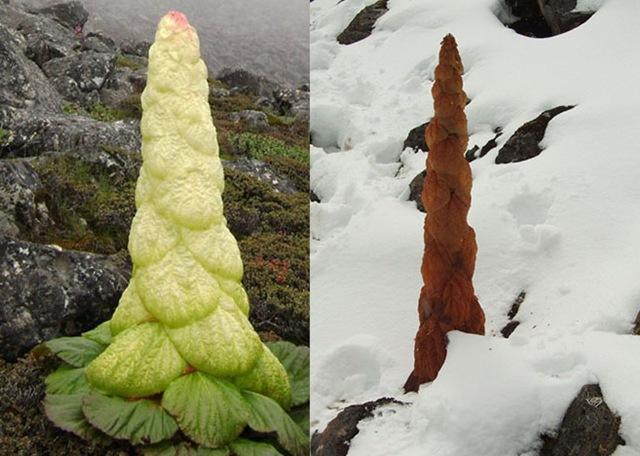
In the wild, noble rhubarb grows in the mountains. Plants reach a height of about 2 meters. Rosettes consist of bare, ovoid leaves. Paniculate inflorescences are yellow-green and form on a flat rosette of leaves.
Take a look Also
When to plant and growing methods
Rhubarb can be planted using seedlings or seeds, sowing directly into the ground. In the first case, seeds are placed in seedling containers in early April. When planting in the ground, seeds can be sown in late February or early March, thanks to the plant's frost resistance.
The intricacies of growing rhubarb
To ensure a good harvest and avoid common problems, follow basic agricultural practices. Regularly inspect your plants to spot pests or signs of crop damage.

Preparing seeds for sowing
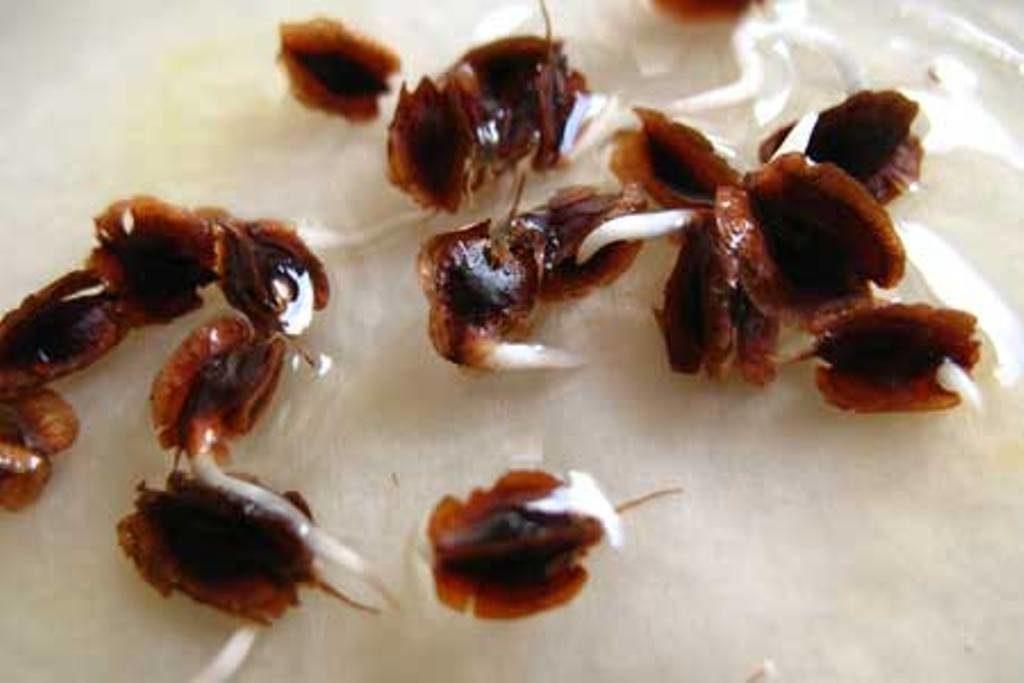
Preparation of the planting material begins 4-5 days before sowing. The seeds are placed in a separate container, covered with warm water, and left for 10 days to swell. After this time, the seeds are soaked in a potassium permanganate solution for an hour to disinfect them. Then, the planting material is laid out on a damp cloth and left until the seeds begin to sprout.
Sowing for seedlings
To grow using seedlings, prepare a small container and fill it with a mixture of regular soil, superphosphate, and potassium fertilizer. The mixture of soil and fertilizer promotes accelerated seed development. To plant the seeds, make furrows 35-40 cm deep. Then, sow the seedlings and cover them with a thin layer of soil. Compact the top layer of soil and water.
Sowing in open ground
Thanks to its frost resistance, rhubarb can be planted directly in open ground. It prefers moist soil with a high humus content and a pH of 4.5. The plant thrives in both full sun and shade. The bed should be dug over and humus added a few months before planting.
Specifics of crop care
Careful rhubarb maintenance is key to proper development and a good harvest. This care is necessary from sowing until harvesting the stalks.
Compliance with agricultural technology is required regardless of the method chosen for growing rhubarb.

Loosening and weeding
During the growing season, the soil between the rows is loosened 2-3 times. As the crop develops, the frequency of loosening can be reduced to 1-2 times per season. Weeding is recommended periodically, as weeds grow.
Watering rules
Rhubarb is watered four times during the growing season. The water requirement per square meter of soil is 25-35 liters. Adequate soil moisture promotes the formation of long, fleshy petioles.
How to apply fertilizers
Fertilizing rhubarb twice per season is sufficient. For the first application, use 15-20 g of ammonium nitrate and 20-25 g of superphosphate. For the second application, use superphosphate and potassium salt. Plants can also be fed with a solution of mullein or chicken manure.
How to trim correctly
To achieve high yields, it's important to promptly prune the plant's mother stems, which can slow its development. Flower stalks are pruned immediately after flowering.
Wintering
During the summer, the plants are rejuvenated by removing leaves and petioles, leaving a few leaves to nourish the rhubarb. By early autumn, the bushes have acquired foliage, two-thirds of which are left in preparation for winter. Ahead of the first frosts, the bushes are covered with fallen leaves or sprinkled with dry soil. These conditions provide additional protection from frost. With the onset of autumn, the covering is removed to allow the plants to continue developing freely.
Pest and disease control
Pest attacks or diseases can cause rhubarb to grow poorly and wilt. To protect against these negative external influences, plants must be treated with special preparations.
Rhubarb diseases
Despite the plants' resistance to diseases, failure to follow proper care can trigger the development of infection. Also, unfavorable climate is often the cause of diseases.
Ramulariasis
Ramularia is a common disease. Characteristic signs of ramularia include:
- the appearance of brownish spots on the leaves;
- cracking of leaf blades;
- formation of plaque on the green part of the plant.
The disease progresses in densely populated areas. To prevent the disease, clear the area of plant debris and treat it with Bordeaux mixture.
Powdery mildew
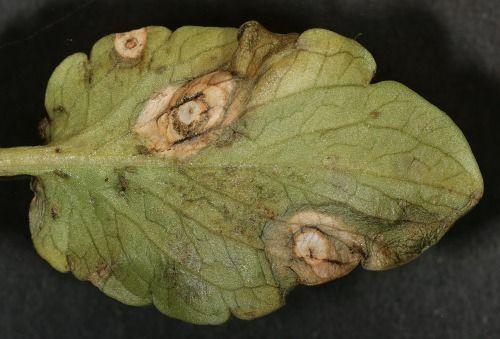
Powdery mildew can be detected by a white coating on the leaves, which darkens over time. The disease actively develops with the onset of warmer weather. Affected plant parts stop growing and, without protective treatment, die. Biofungicides such as Gamair, Planriz, and their analogues are used to combat powdery mildew.
Rust
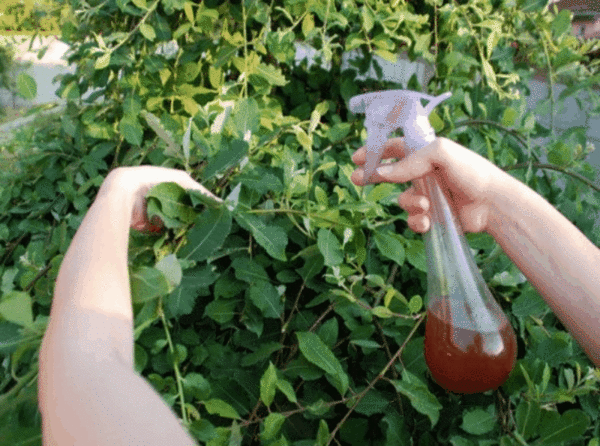
Rhubarb rust is a fungal infection. Affected plants experience stunted growth and impaired nutrient flow. Leaves affected by rusty growths should be cut off, and the plants should be sprayed with a fungicide.
Ascochytosis
Ascochyta blight causes dark, elongated spots to form on leaf blades. The tissues around the spots crack and dry out. Treatment with a 1% Bordeaux mixture solution helps combat ascochyta blight.
Rhubarb pests
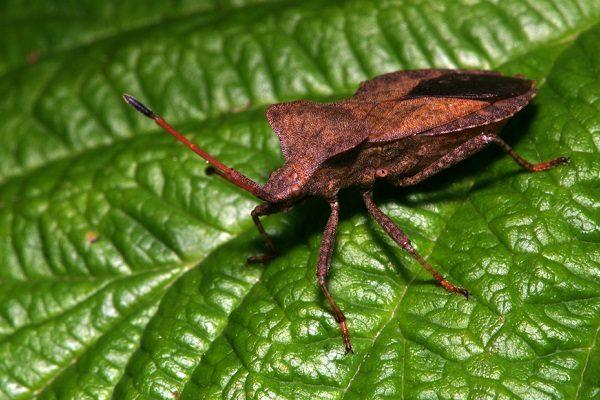
Pests can gnaw at plants and leave larvae behind. Insecticide treatments are used to eliminate the insects.
Owl eggs
Cutworm eggs overwinter near plants, and with the arrival of spring, caterpillars hatch from them and feed on the petioles. Without control, a significant portion of the crop is lost.
Rhubarb weevil
Weevils feed on rhubarb leaves and lay eggs in the petioles. Treating them with a solution of potassium permanganate helps repel them.
Onion nematodes
Nematodes are small worms that live inside stems, on leaves, and on petioles. These parasites damage plant tissue, causing it to wilt. Affected plants should be dug up and destroyed.
Reproduction methods
Rhubarb can be propagated by seed or division. Each method has its own nuances.
Seeds
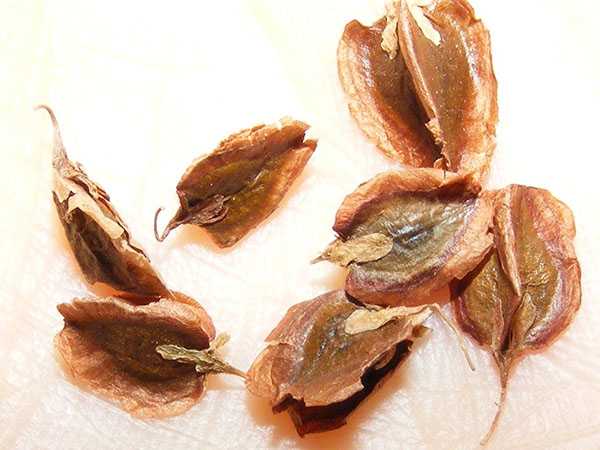
To obtain seeds from cultivated plants, the most vigorous flower stalks of three-year-old specimens must be allowed to develop. When the inflorescences become dark, the seeds are collected and dried.
By dividing the bush
Dividing bushes is done during the spring or early fall, before the first cold weather sets in. The bush is dug out of the ground and divided into several equal parts. A strong root with a pair of large buds is suitable for planting. When planting, the buds are buried 1.5 cm into the soil.
Take a look Also
Compatibility with other plants in the garden
It's recommended to grow onions, peas, horseradish, cabbage, celery, spinach, and beans near this herbaceous perennial in your garden. When choosing neighboring plants, consider the final size of the rhubarb, as it grows significantly over the course of several years and takes up a lot of space. For this reason, it's not recommended to plant plants that are difficult to transplant near rhubarb.
Features of rhubarb transplantation depending on the season
The best time to transplant rhubarb is mid-April. In spring, the underground buds swell and the leaves have not yet unfurled, reducing the risk of the rhizome drying out. Replanting in the summer is also possible.
If July temperatures are cool, you can repot without delay. If it's hot, it's best to wait until late August or repot in the fall.
Following these recommendations will allow you to grow healthy plants that will actively develop and produce a harvest.
Harvesting
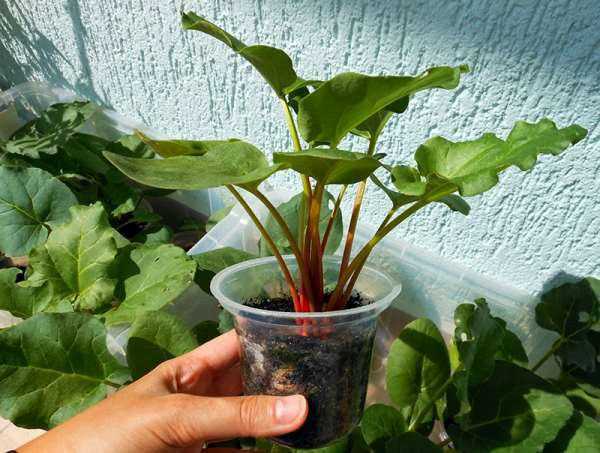
When harvesting rhubarb stalks, several rules must be followed. In particular:
- The petioles should be young and soft to the touch. Before cutting, inspect and feel the petiole. Otherwise, you could be harmed by eating it.
- Don't tear off the petioles. They are carefully grabbed at the base and slowly pulled upward. If difficulty arises, they are cut off.
- It's important to prevent the crop from flowering. When the flowering stalk forms, rhubarb accumulates substances that impair its flavor.
Storage rules
After harvesting, rhubarb begins to wilt quickly and can be stored at room temperature for no more than a day. Refrigerating the stalks will extend the shelf life by 3-4 days. Freezing is recommended for maximum storage.
Before freezing rhubarb, remove all leaves, trim off the roots, and rinse under water. The stalks can be frozen with or without the skin. If you plan to preserve the rhubarb for compote, it's best to leave the skin on. Peeled rhubarb is used in soups and as a pie filling. A simple knife is easy to remove the skin.
Related posts:
 20 Best Rhubarb Recipes for Winter
 Simple recipes for making rhubarb compote with and without sterilization for the winter
 Causes and symptoms of rhubarb insect pests and control measures
 The beneficial properties and contraindications of the rhubarb plant and its use in the treatment of diseases
 A step-by-step recipe for making rhubarb and banana jam for the winter
 Is it possible to freeze rhubarb at home for the winter and how to prepare and store it?
 11 Best Rhubarb and Orange Jam Recipes for the Winter
 Pests and diseases of gooseberries and their control using chemical and folk remedies