- Benefits of storing for future use
- What you will need
- Selecting and preparing vegetables
- How to sterilize jars
- Methods for preparing peppers for stuffing
- Freezing peppers for stuffing for the winter
- Conservation
- Peppers for stuffing for the winter in tomato juice
- The aspirin method
- Recipe without sterilization
- Bell peppers for stuffing without vinegar
- Storage rules and duration
Peppers with spices for stuffing are prepared for the winter in the summer and fall. Whole, preserved peppers can be stuffed at any time. This dish is perfect as an appetizer for any holiday table. Before preparing, it's important to familiarize yourself with the specifics of the process: choosing vegetables, containers, and sterilizing containers and lids.
Benefits of storing for future use
The advantages of this type of preservation include:
- Possibility to extend the shelf life of vegetables.
- The ability to preserve the flavor characteristics of foods, as well as their beneficial vitamin content.
- The ability to always have delicious canned dishes on hand that can decorate any holiday table.
Homemade preserves, when stored under the right conditions, can be stored for up to 2-3 years, which is a definite plus.
What you will need
To prepare and preserve dishes for the winter, it is necessary to prepare vegetables and storage containers in advance.
Selecting and preparing vegetables
Before cooking, carefully select your ingredients, as this will determine the taste of your future preparations. The rules for selection are simple:
- Avoid using overripe peppers as they may fall apart during the cooking process, causing all the filling to spill out.
- It is best to choose vegetables without visible damage or scratches.
- When purchasing peppers, be sure to check their smell. Fresh peppers emit a pleasant, subtle aroma. A strong odor, or no odor at all, may indicate improper growing and storage conditions.
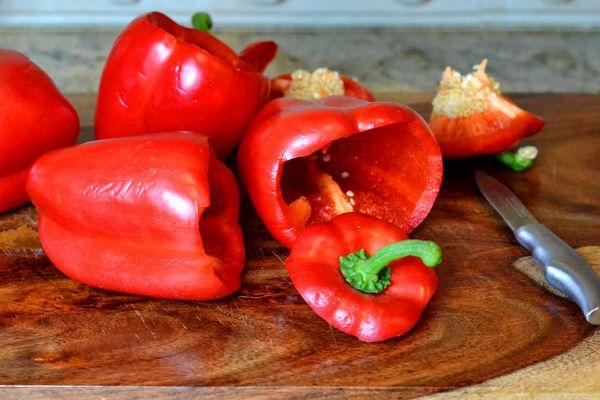
Important! Peppers must be washed and seeded before canning.
How to sterilize jars
To prevent canned goods from exploding during storage and to preserve their beneficial properties longer, it is recommended to sterilize the jars beforehand. The following methods are recommended for this:
- Boiling over steam from hot water.
- Processing vessels using grates in the oven.
- Sterilization in a multicooker using hot water.
Don't forget to clean the lids; they also need to be boiled thoroughly.
Methods for preparing peppers for stuffing
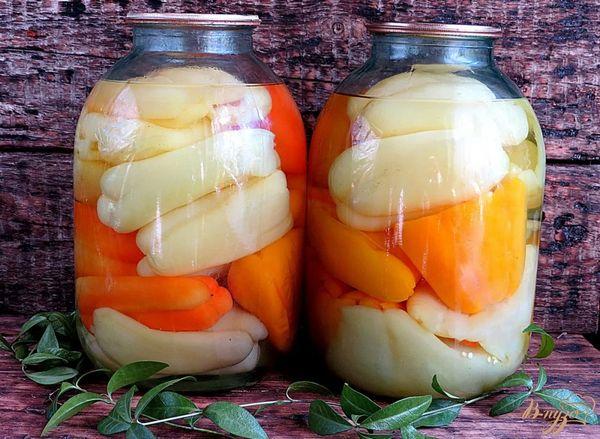
There are many ways to preserve peppers for the winter: canning, freezing, adding vinegar or tomato juice. Below are the best recipes, tried and tested by many chefs.
Freezing peppers for stuffing for the winter
To prepare you will need:
- Wash 2 kg of bell peppers, remove stems and seeds.
- Place a saucepan of water on low heat, add a little salt, and wait until it boils.
- Place prepared vegetables in water for 30 seconds.
- Dry the fruits and pack them into sealed bags.
- Send them to the freezer.
Steam treatment is necessary to preserve the rich vitamin content.
Conservation
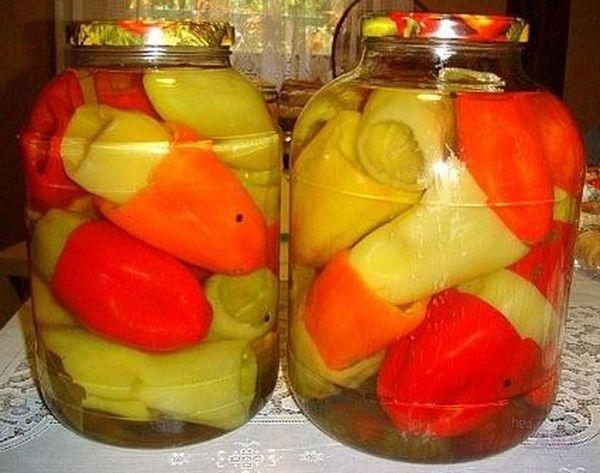
Canned peppers for the winter are prepared according to a simple recipe:
- Wash 2 kg of vegetables and remove the insides.
- Wash jars with lids and steam them.
- Press the pepper into the containers and pour boiling water over it for 20 minutes.
- Drain the water, add 5 tablespoons of vinegar, sugar and salt to the jar.
- Roll up the jars with lids.
Important! To distribute the marinade evenly, shake the container. Now you can move it to a cool, dark place.
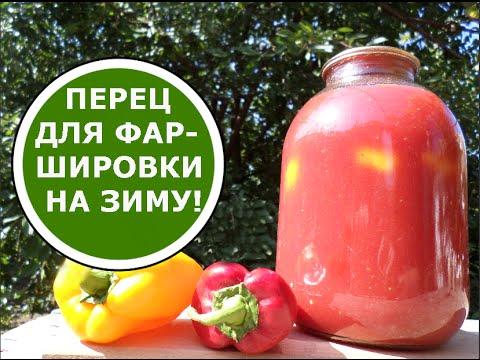
Peppers for stuffing for the winter in tomato juice
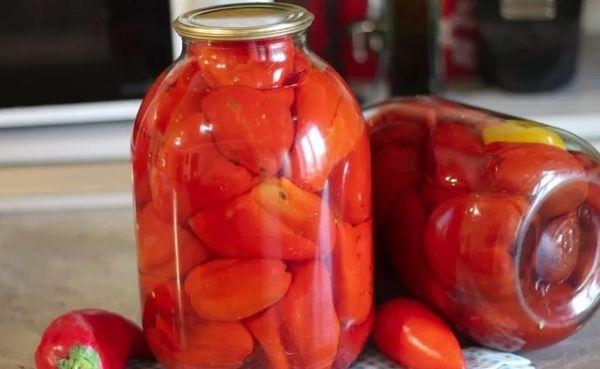
You can prepare vegetables using a simple recipe:
- Finely dice 1 kg of tomatoes, place in a saucepan, and simmer for 15 minutes over low heat. Add a little vinegar, oil, and spices.
- Wash 1 kg of pepper, remove seeds, place it in hot water and boil for 5 minutes.
- Prepare and steam the jars.
- Place vegetables tightly next to each other in a container, pour tomato paste over them, and roll up the lids.
It is recommended to store the resulting product in a basement at a temperature no higher than 9 degrees Celsius.
The aspirin method
To prepare you will need:
- Wash 2 kg of vegetables and remove the insides.
- Bring a deep saucepan of water to a boil and simmer the fruit for a few minutes. If the fruit becomes soft before it's cooked, reduce the simmering time to 1 minute.
- Pack the vegetables into clean jars so that they are not crushed or damaged.
- Place 3 aspirin tablets in each jar and pour boiling water over the mixture.
Wait a bit before sealing the jars with lids. Turn the jars upside down and, once cooled, transfer them to the cellar.
Recipe without sterilization
Peppers for winter filling are prepared according to a simple recipe:
- Wash the fruits under running water, cut off the stems, and remove the seeds.
- Place them in boiling water for 1 minute, or for 30 seconds if the peppers are ripe.
- Place the vegetables in jars, pour in a little vinegar, add salt and spices to your taste.
- Cover the blanks with lids.
The twists can be immediately transferred to the basement.
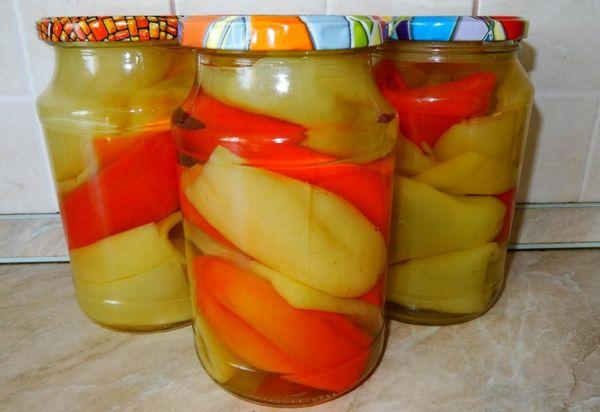
Bell peppers for stuffing without vinegar
To prepare you will need:
- Wash 1 kg of vegetables in cool water and remove the insides.
- Place the peppers in clean jars tightly next to each other.
- In a saucepan, mix water, salt and a little citric acid, bring the mixture to a boil.
- Pour the resulting marinade into jars, leave for 20 minutes, then roll up the jars with clean lids.
While the jars are cooling, turn them upside down and cover them with a towel. Once cool, transfer them to the cellar.
Storage rules and duration
Canned food is recommended to be stored for 1-1.5 years. The following guidelines should be followed:
- The optimal temperature for storage is 5-10 degrees Celsius.
- The humidity in the room should be kept at an average level.
- Avoid storing preserves near strong-smelling foods, such as onions, garlic, and various spices.
Refrigerated storage reduces the shelf life to 2-4 months. It's recommended to periodically check the vegetables for damage and mold. If the vegetables begin to smell unpleasant or change color, it's best not to use them for further stuffing.
To avoid spoilage of vegetables, it is imperative to carry out the sterilization procedure before cooking.
Related posts:
 TOP 40 New Year's 2020 Meat Recipes Using Pork, Beef, Chicken, and Lamb
 TOP 40 Hot Dish Recipes for New Year 2020: What to Cook
 The best recipes for freezing vegetables at home for the winter
 TOP 20 delicious recipes for preparing bell peppers for the winter
 Top 15 Recipes for Pickled Hot Peppers at Home
 Description of the best varieties of ornamental peppers, growing and caring for them at home
 How to quickly prepare pickled eggplant in jars for the winter, the most delicious recipes and storage conditions for the preparations
 20 recipes for canned hot peppers for the winter