
- Peculiarities of preparing spinach for the winter
- Beneficial properties
- How to choose and prepare the main ingredient correctly
- Methods for harvesting spinach at home
- Drying
- Freezing
- Harvesting with whole leaves
- Ice cubes with a surprise
- Delicate green puree
- Pickling
- Canning
- Blanched spinach
- Spinach with onions and parsley
- A recipe for preserving spinach for winter sauces
- Further storage
Fresh spinach keeps in the refrigerator for up to a week. In winter, the vegetable is less readily available due to its price, and greenhouse-grown spinach can be contaminated with nitrates and pesticides. Preserving summer spinach for the winter is a tasty and healthy addition to any home-cooked meal. Recipes for preserving the greens don't require much time or effort.
Peculiarities of preparing spinach for the winter
Preserving spinach differs from other vegetables in that it requires minimal heat treatment, can be preserved without salt, and doesn't require vinegar. Preserved spinach should be stored at low temperatures, in the refrigerator or freezer, with the exception of dried leaves.
Beneficial properties
The vegetable is 90% water, with about 3% protein and 2% carbohydrates. The calorie content of 100 grams is 22 kilocalories. The most valuable components of the green crop are vitamins B9, C, A, K, E, and PP, as well as micro- and macroelements such as potassium, calcium, magnesium, phosphorus, and iron.
Thanks to its neutral flavor and vibrant color, this vegetable is widely used in cooking. It serves as an addition to salads, soups, and sauces. Young rosettes are used fresh.
Mature leaves are suitable for harvesting and heat treatment.
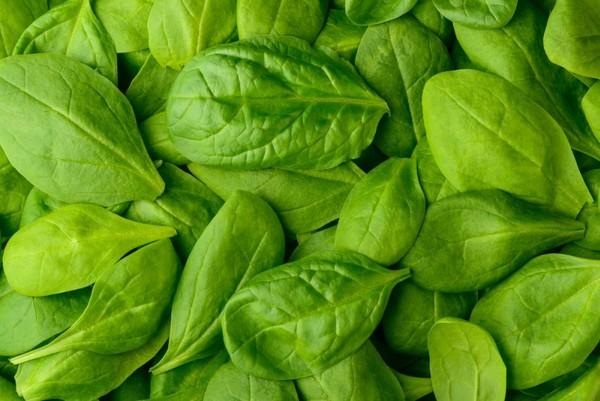
Eating spinach is beneficial for vitamin deficiency, iodine deficiency, osteoporosis, increased bleeding, and hyperglycemia.
Oxalic acid, found in green beans, forms oxalates—insoluble chemical compounds—at high temperatures. In cases of kidney failure, oxalates are not excreted from the body, forming kidney stones.
You should limit your consumption of this vegetable if you have problems with salt deposits in your joints, increased blood clotting, or stomach acidity.
How to choose and prepare the main ingredient correctly
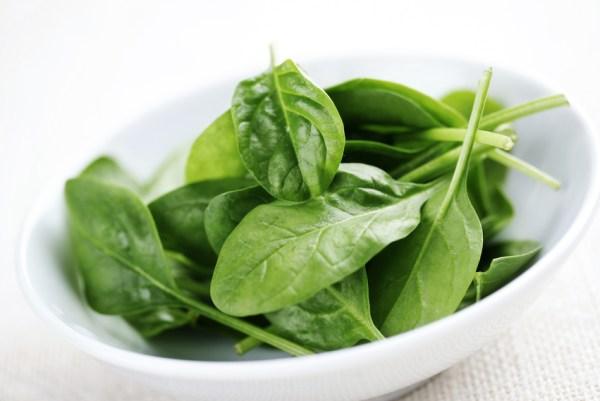
Young leaves are eaten fresh. Their plant fibers are fragile to heat and cold, quickly breaking down and turning the spinach into mush. For winter storage, use dark green, firm leaves. The freshness of the greens is tested by gently twisting the leaf: freshly picked, it produces a slight crunch.
The leaves should be free of spots or specks. They require thorough washing in a large container, not under running water. All recipes require drying the leaves and removing the stems.
Methods for harvesting spinach at home
Vegetables are preserved for the winter using traditional methods:
- dry;
- freeze;
- prepare canned food.
The recipes are simple and not labor-intensive. Parsley, arugula, butter, or vegetable oil can be used as additional ingredients.
Drying
Drying is the gentlest method of preserving green leaves for the winter. The absence of heat treatment does not destroy the vitamins.
Take a look Also
Herbs should be dried in a ventilated, shaded area. The leaves are washed thoroughly and laid out on paper towels. The air temperature should be at least 30-35 degrees Celsius on the first day to ensure active evaporation of moisture from the leaves. Once the leaves are dried, they are dried at a lower temperature to preserve their color and flavor.
The finished product should be brittle but not dusty. Place the dried leaves in a glass container, cover with lids, and store in a dry, dark place. Avoid sealing the jars too tightly, as this will impart a musty odor. A paper filter is the best way to preserve the quality of dried herbs.
The paper is breathable, allowing the dried leaf to retain its original quality. At the same time, dust and foreign odors are prevented from entering the container.
Freezing
Frozen greens allow you to preserve their nutritional value for a long time. The main rule when freezing greens is to not refreeze them after defrosting them. They lose their nutritional value.
You can freeze whole leaves, chopped, with water, oil, or in combination with other greens.
Using oil when freezing greens has advantages over the traditional method:
- the oil shell protects the delicate substance from the effects of low temperatures;
- aroma and taste are better preserved;
- the aromatization of the refrigerator compartment is blocked;
- ease of use.
You can use vegetable oil or butter. Spinach for freezing should be stemless. Fill the molds no more than 2/3 full with the prepared ingredients. The ratio of oil to greens is 1:2. Freezer temperature should be between 15-18 degrees Celsius for long-term storage of frozen greens.
Harvesting with whole leaves
There are two ways to freeze vegetables:
- To freeze greens, remove the stems, wash, and dry. Place 3-5 leaves together and roll them into a tube. Wrap each tube in plastic wrap, leaving no gaps, and place in the freezer.
- Place the leaves on a baking sheet in the freezer. Place the frozen greens in a plastic container and store in the freezer.
As needed, use part of the frozen product, package the rest and return it to the cold.
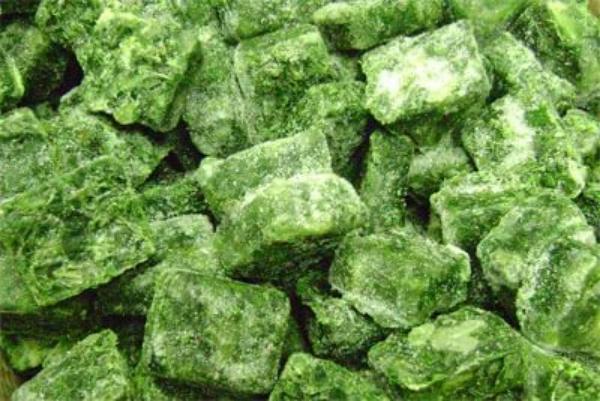
Ice cubes with a surprise
The washed and dried leaves are stripped of their stalks and cut into pieces. The chopped greens are tightly packed into prepared freezing molds and covered with cooled boiled or filtered water. The molds are then placed in the freezer.
The ice cubes are placed in a metal or plastic container and stored in the freezer until needed.
Delicate green puree
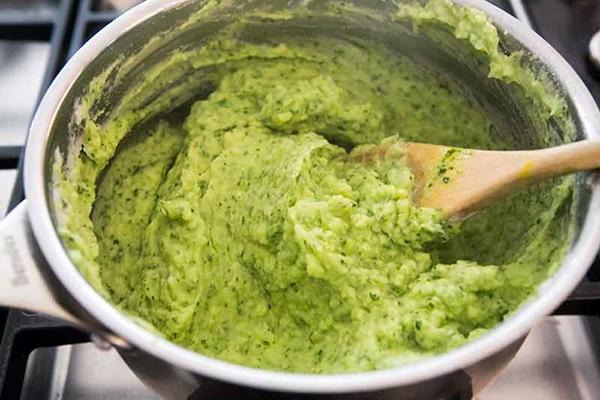
The puree is made from boiled leaves. Add water to an enamel bowl, bring to a boil, add salt to taste, and add herbs. To preserve the vibrant color, you can add a pinch of baking soda. After 5 minutes, drain the liquid. Let the leaves cool, then strain them through a sieve or blend them. The finished product is placed in sterile jars and placed in the freezer.
Another option is a spinach and arugula puree. Arugula is a salad plant with succulent leaves. It has a spicy aroma and a bitter nutty flavor. The combination with spinach adds a touch of zest to the puree. The ratio of ingredients depends on your taste preferences: for those who prefer a spicier puree, arugula should be at least half the puree, while for others, up to a quarter.
To prepare, the leaves are washed, cleaned, dried, and cut into small pieces. Blend until smooth. The resulting puree has a liquid consistency, so it is boiled down to a thicker consistency. Pack hot into preheated jars. Cool as usual. Store in the refrigerator.
Pickling
For pickling, you'll need iodized salt. Preparing the leaves involves washing, drying, and removing the stems. 500-milliliter jars should be preheated in the oven or sterilized with steam.
The leaves are placed one-third of the way down the bottom of the jar and completely covered with salt. A weight is placed on top for 10 minutes or gently pressed down with a handy tool (such as a spoon). This process is repeated over and over until the jar is full. Under the influence of the salt and the tight packing, the spinach should release juice, which will then be salted and stored throughout the winter.
The prepared container is sealed. Store in a cool, dry place. The salt to spinach ratio is 1:10. Using a scale is recommended.
Canning
Spinach is canned with sorrel: 2 parts sorrel to 1 part spinach. Oxalic acid, found in both greens, acts as a preservative and imparts a distinctive flavor to the preserves. Wash the spinach and sorrel, remove the stems, and place them in an enamel or stainless steel container with enough water to cover the leaves.
Place over medium heat. Once boiling, reduce heat and simmer for 2-3 minutes. Ladle into sterilized half-liter jars and cover with the water the greens were cooked in. Seal with lids. Refrigerate.
If there's not enough space in the refrigerator, canned herbs are prepared with salt to keep them cool. Add 20 grams of salt per liter of water. Add the salt at the same time as the herbs to ensure they have time to dissolve completely.
Blanched spinach
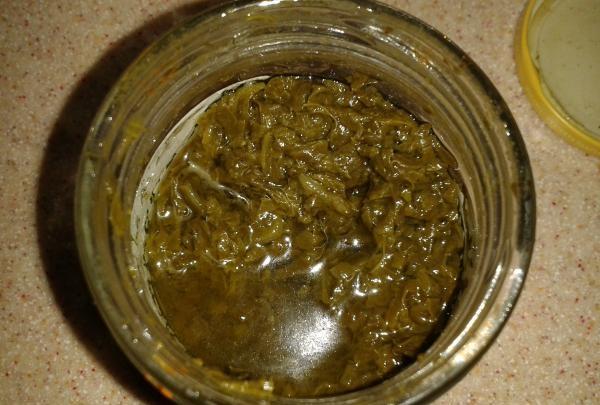
Before blanching, prepare glass jars (400-500 milliliters) and a salt solution. The ratio of water to salt per kilogram of greens is 1 liter and 50 grams of salt. Bring the water to a boil, dissolve the salt, and let it simmer for 2-3 minutes.
The spinach should be washed and stemmed. Blanch it in water at 90 degrees Celsius (194 degrees Fahrenheit), but not boiling, for 3 minutes. Place the hot leaves in preheated jars, pour boiling brine over them, and sterilize.
Take a look Also
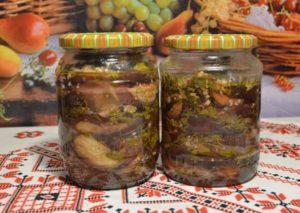
The water temperature in the sterilization container should be between 60-70 degrees Celsius. The jars of spinach should be covered with water up to the shoulders. Sterilization is best achieved with a lid on the container.
Bring the water to a boil over medium heat, then reduce the heat to low. From this point on, the sterilization process begins: 5-7 minutes. Then seal the jars tightly and turn them upside down. Store the finished preserves in a cool, dry place.
Spinach with onions and parsley
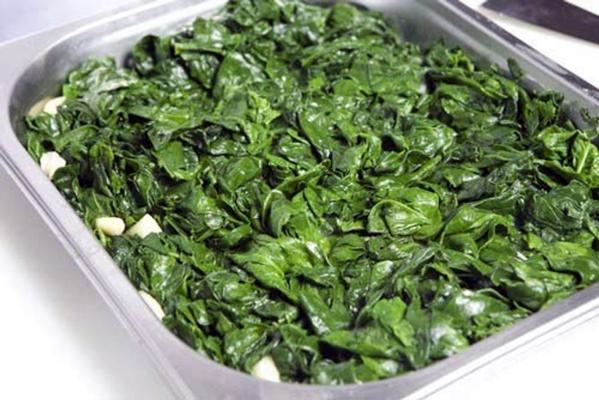
Spinach with green onions and parsley is a vitamin-rich and flavorful dressing that's perfect for soups and broths during the cold season. The recommended proportions are 5 parts spinach, 2 parts green onions, and 1 part parsley. The ratio of water to salt to greens is 4 parts water and 0.1 parts salt.
For example:
- 1000 grams of spinach;
- 200 grams of green onions;
- 100 grams of parsley;
- 400 milliliters of water;
- 10 grams of salt.
Wash the greens, and remove the stems from the spinach and parsley. Leave the green stems on the onion. Finely chop the parsley and onion. Form the spinach into noodles. Bring water with salt to a boil, then add the greens. Once boiling, simmer for 5 minutes. Pack into hot jars and seal with lids.
A recipe for preserving spinach for winter sauces
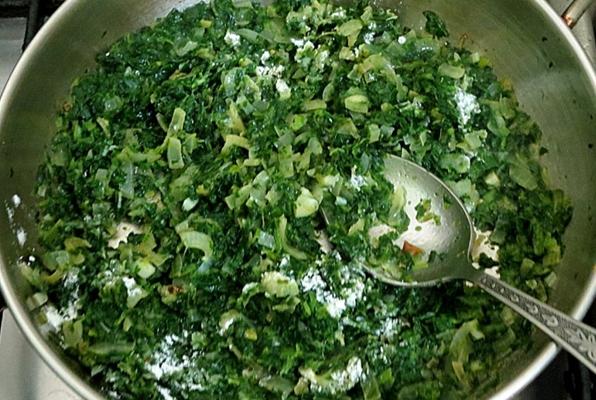
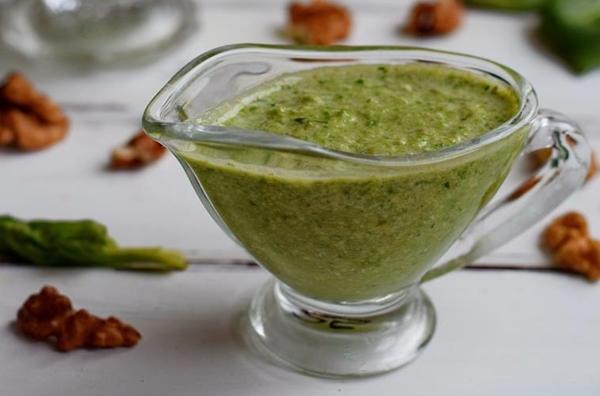
Remove the spinach stems and cut into pieces. Blend until smooth. Soften the butter at room temperature or in the microwave. Add the butter to the puree and mix thoroughly.
The finished mixture is divided into freezer-safe molds and placed in the freezer. Once frozen, the molds are transferred to a plastic or metal container. The sauce ingredients are stored in the freezer.
Further storage
It's best to store this delicate product in the refrigerator. Some preserves can be stored in the freezer. At temperatures close to 0°C, pathogenic microorganisms either die or stop reproducing. Dried leaves will spoil if the room temperature is high in humidity or low in temperature.
The shelf life of all types of preparations is no more than 8-10 months.
After this period, dried, frozen, and canned leaves lose their beneficial properties.
Related posts:
 How to properly freeze spinach leaves at home for the winter, recipes for preparations
 Causes and treatment of eggplant pests and diseases, how to combat them at home
 The best eggplant varieties for growing in a polycarbonate greenhouse: planting and care
 The best recipes for freezing vegetables at home for the winter
 Top 40 DIY New Year's Baking Recipes for 2020
 Methods for planting and propagating cherries at home
 Simple recipes for pickling milk mushrooms at home using cold and hot methods for the winter, and storage rules
 Step-by-step recipes for preparing grape leaves for dolma for the winter, and how to preserve them properly
I have a small business growing herbs. It's very helpful. BioGrow – a plant growth bioactivator. It promotes faster green growth, is completely harmless, and is incredibly easy to use.