
Edible mushrooms are rich in protein and micronutrients. They are dried, salted, pickled, boiled, and fried. Among the many species, the most common mushroom grows at forest edges, clearings, and in mossy areas. Their red, blue, and green caps are a delight when no other mushrooms are nearby. Recipes for salted russula are no different from those for saffron milk caps, milk mushrooms, butter mushrooms, and porcini mushrooms. Properly prepared, they are as tasty as any other mushroom.
What types of russula are suitable for pickling?
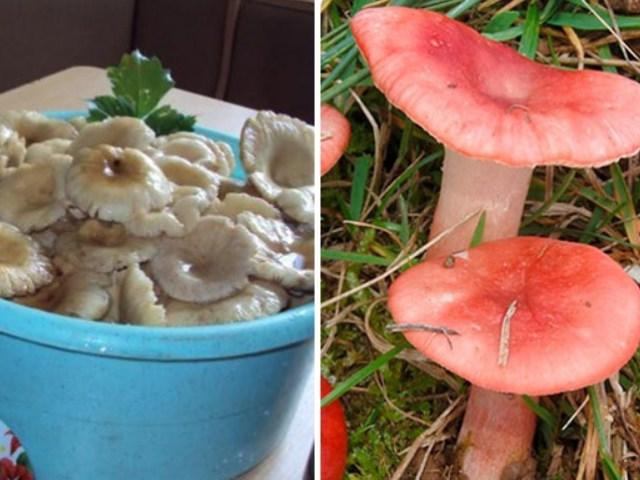
Russula mushrooms are a type of lamellar mushroom: the underside of the cap has visible gills that radiate outward. The skin easily peels off two-thirds of the cap, from the edges to the center.
The following russula are edible:
- Green. The cap is uniformly colored. The stem is cylindrical. Boiling is necessary to remove the bitter taste of the flesh.
- Yellow. After boiling, the flesh changes color from white to gray. Suitable for boiling and pickling.
- Blue-yellow. Not bitter. One of the most delicious types of russula: can be boiled, salted, or pickled.
- Light yellow. Due to their pungency, they are considered conditionally edible. They must be boiled before salting.
- Marsh mushrooms. The caps are pink or white and emit a fruity scent. The stems are widened at the base and thick.
- Maiden. The cap color is gray, with a brown or yellow tint. The stem is wide, half-hollow.
- Turkish. Black or orange shiny cap. Fruity aroma.
- Edible. They have dense white stems and caps with uneven coloring, with red, pink, and brown predominating. Suitable for any type of long-term preservation: drying, pickling, and salting.
- Greenish. The thick stems have scales at the base. The caps are fleshy and white inside. They have a sharp flavor without any trace of bitterness. They retain their shape when dried and have excellent taste when pickled and salted.
- Brown. The caps are wide and brown. The stems of young mushrooms are white or reddish, turning brown with age. They have a characteristic shrimp or herring smell that requires boiling to remove.
The common name for edible russula is "sinyavki." Red, bilious russula are considered inedible due to their pungent flavor. Young, firm-fleshed russula are used for pickling.
Preparing mushrooms for pickling
The fruiting bodies should be fresh, worm-free, whole, and firm. Russula mushrooms are sorted by species and size, and the lower 1/3 of the stem is cut off. For larger mushrooms, the cap is separated from the stem. To remove needles and leaves, the mushrooms are placed in a container of cold water for 5 minutes. A longer soak is not necessary, as the caps quickly absorb moisture.
Removing the skin from the cap is a matter of taste. Mushroom lovers avoid this procedure to avoid increasing waste: russula mushrooms have a structure that easily breaks if handled carelessly.
For recipes that do not require boiling, select the appropriate types: greenish, blue-green, food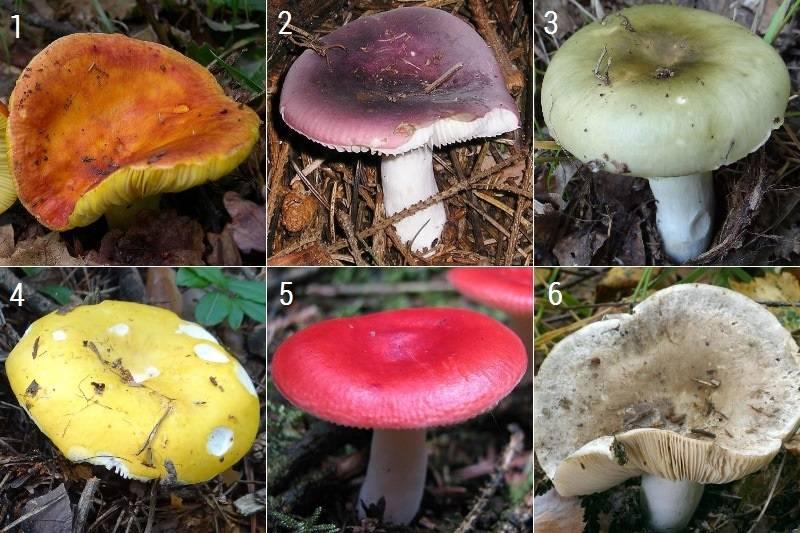
Others are boiled to remove bitterness and thicken the pulp.
- When hot pickling, the fruiting bodies are cleaned after boiling to prevent them from deteriorating. The boiled mushrooms are placed in cold water and carefully inspected. Sand and soil from the gills will remain in the broth.
- When salting without boiling, the russula mushrooms are placed in a colander and dipped into a container of water several times at short intervals. Finally, they are rinsed under running water.
How to salt mushrooms at home
Any type of russula can be pickled. Non-bitter varieties are dipped in boiling water and left for a few minutes to make them more pliable. Others, to achieve firmness, need to be boiled until the mushrooms sink to the bottom. Boiling will cause foam to form, which must be skimmed off.
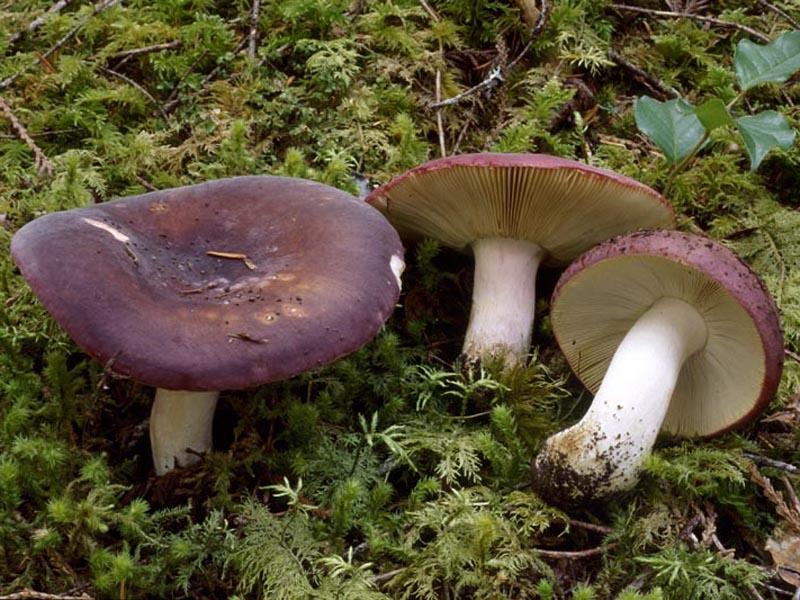
Do not consume the decoction after eating bitter and unpeeled russula.
- Fruiting bodies with bitterness are soaked to remove it. The most bitter varieties (light yellow, green, and brown) are soaked for 24 hours, changing the water every 4-6 hours. Fruiting bodies with a slight bitterness are soaked for 6 hours, changing the water every 3 hours.
- Glass, enameled, and wooden containers of various capacities are used for preparation.
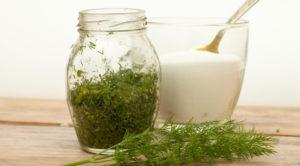
- Traditional ingredients, besides salt, include garlic and dill sprigs. They impart flavor and spiciness to the mushrooms. Allspice, hot pepper, ginger, and cumin can also be added.
The name "russula" refers to the fact that these mushrooms are eaten in a shorter period of time than other mushrooms. Their delicate flesh allows them to be salted more quickly and become edible. Recipes for preparing russula mushrooms for the winter set.
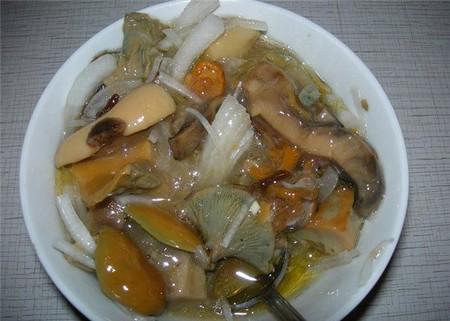
Each region where they grow has its own approach to this mushroom, employing different methods of preparation. The common points across all recipes include the ratio of salt to fruiting bodies, skimming off foam during cooking, determining the degree of cooking, and stacking whole mushrooms in layers, cap side down.
Hot method
The hot method means boiling the mushrooms. Before doing this, cut off a third of the stem. The remaining cleaning will take place after boiling. Pour water into an enamel or stainless steel container, filling it twice as much as the weight of the mushrooms. Heat over high heat until boiling, and then add the mushrooms. Salt is optional during boiling.
You can skip the salt to avoid oversalting them. If you're cooking with salt, add a tablespoon per liter of water. Cook the mushrooms over low heat, skimming off any foam. The end of cooking is indicated by the mushrooms sinking to the bottom of the pan. Transfer the cooked russula to a pan or bucket of cold water and inspect them carefully.
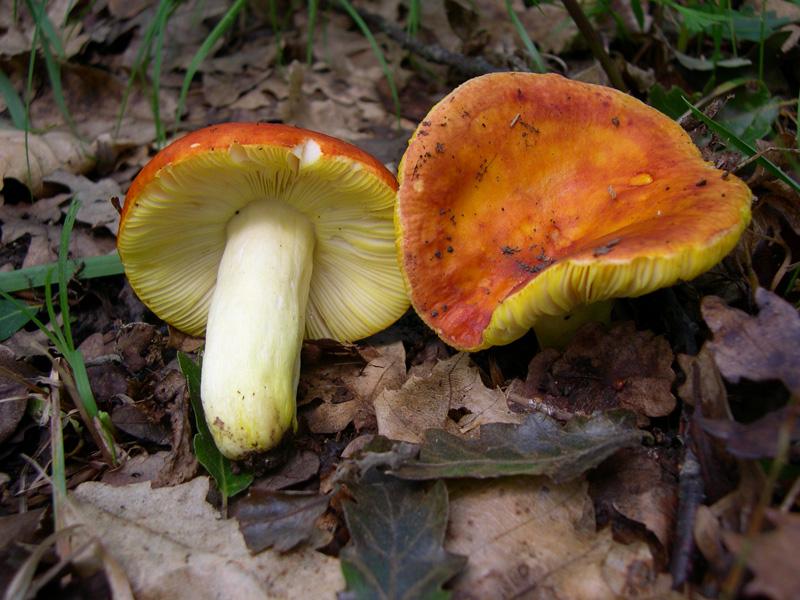
The skin on the caps prevents the flesh from becoming overcooked and loses its color during boiling. The fruiting bodies are washed and placed in a container for pickling. Place a currant leaf and lay out the first layer. Before doing this, the mushrooms must be weighed to measure out the required amount of salt.
- For mushrooms cooked without salt, use 50 grams per kilogram; with salt, use 10 grams less. The calculated volume is distributed evenly between the mushroom layers. The layer thickness is 6 centimeters.
- Along with the salt, add chopped garlic, dill umbrellas or clean seeds.
- The amount of spices is to taste. The final layer of mushrooms is sprinkled with salt, dill, and garlic, and covered with cheesecloth. A wooden or metal sheet, appropriate for the size of the container, is placed on top, and a light weight is applied. The first few days of pickling take place in a warm room.
- If the container isn't filled to the top, you can add more boiled mushrooms, seasoning them with salt and adding garlic and dill. The mushrooms will release their juices under the salt and won't be ready until at least 20 days after the last addition. They should be completely covered with brine. If there's not enough liquid, top it up with salted boiling water: 20 grams per liter.
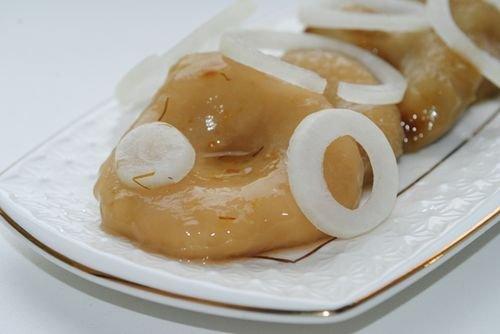
Cold method
Greenish, edible, and blue-green currants are cold-salted, without boiling or soaking. Washed and peeled, they are placed cap-side down on the bottom of a barrel, bucket, or plastic food container, on top of prepared currant leaves and a layer of salt. The amount of salt is 60 grams per kilogram of currant leaves. The layer thickness is 6 centimeters. Garlic and dill are added to taste. The final layer is covered with a clean piece of cloth, a circle, and a light weight.
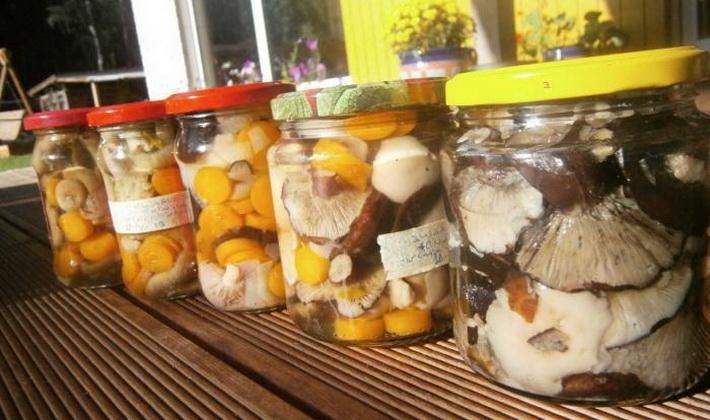
After 48-72 hours, the mushrooms will firm up and release juice. Fresh mushrooms can be added or refilled from another container. The stacking and salting instructions must be followed. After the mushrooms have finished shrinking, the barrel, enamel, or glass container should be moved to a cool place. The curing period is 45 days.
Classic recipe
The traditional method involves soaking the mushrooms, regardless of type, in cold salted water for 5-6 hours. First, the mushrooms are washed, the skin is peeled off two-thirds of the cap, and the stem is trimmed by a third. For larger specimens, the cap is separated from the stem.
For pickling, you'll need a wide-mouthed container (a wooden barrel, enamel pot, or bucket). Line the bottom with horseradish and currant leaves and sprinkle with salt. Arrange the mushrooms in rows and sprinkle with salt, garlic, and dill in the following ratio per kilogram: 60-70 grams, 4 chopped cloves, and 1 parasol.
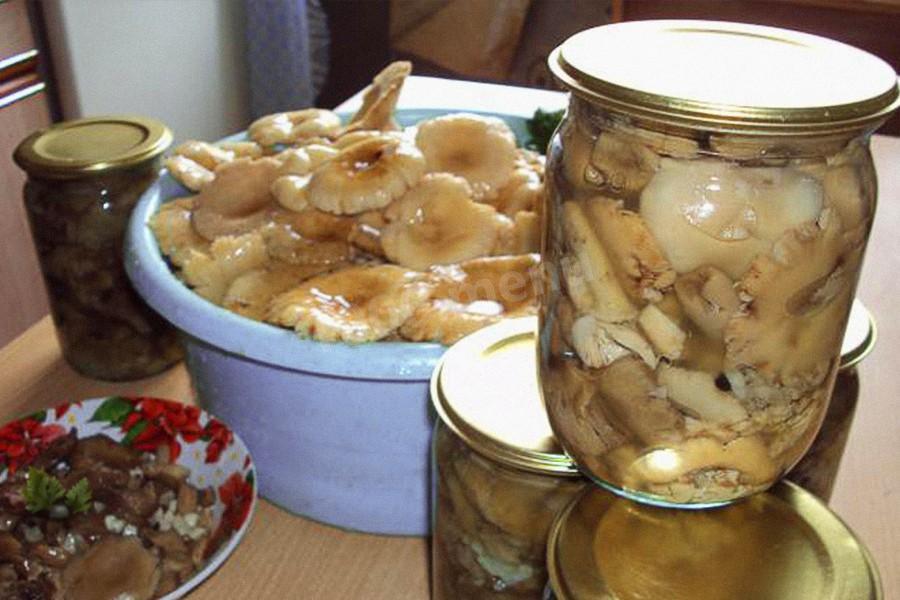
The finished container is filled with water and placed under pressure. The container is kept indoors for the first four days to allow fermentation to begin, then moved to a cool place. The pickle's readiness is checked after 40 days.
Quick pickling method
To achieve a pickled mushroom in a few days, a cold method with a higher salt content is used. Russula mushrooms are sorted by type, cleaned, and washed. They are soaked depending on the degree of bitterness in the flesh. Currant leaves and salt are placed in a prepared container. Then the mushrooms are layered, adding salt, garlic, and dill. The salt-to-mushroom ratio is doubled: 100 grams per kilogram. A weight is applied. Readiness is checked after 24 hours. The salted mushrooms are ready to eat.
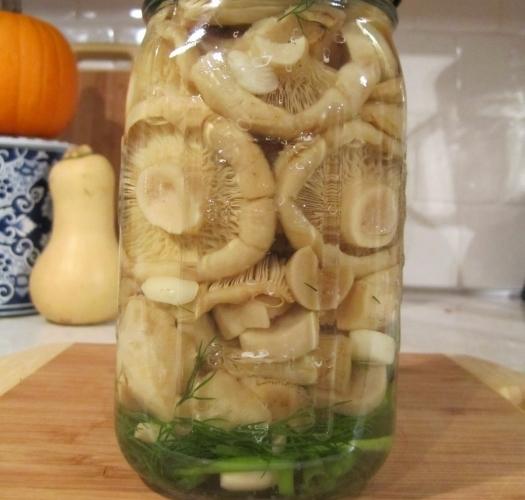
This method isn't suitable for long-term storage of russula mushrooms: after two weeks, they will become oversalted. Quick salting is used to ensure that salted russula mushrooms are consumed immediately after harvesting.
Dry salting
Dry salting uses the most delicious varieties of blue mushrooms: edible, blue-green, greenish, and pink. Instead of soaking, the mushrooms are wiped with a clean cloth, removing needles and leaves. The caps are peeled, and the stems are trimmed.
The bottom of the container is sprinkled with salt, and the russula mushrooms are layered, adding salt as needed. The salt to raw material ratio is 6:100. The mushrooms are pressed for 40 days. The mushrooms are salted in their own juice without the addition of flavorings.
Russula for the winter in jars with cilantro
Prepared raw materials are placed into clean jars in the following ratio:
- 1 kilogram of the main component;
- 6 sprigs of cilantro;
- 2 garlic cloves;
- 1 dill stalk with umbrella;
- salt – 50 grams.
Slice the mushrooms, finely chop the herbs, and divide the garlic into cloves. Sprinkle the bottom with herbs and salt. Layer the russula mushrooms in 1-2 cm layers, adding the remaining ingredients. Finally, press them lightly and pour hot water over them. Seal with nylon lids and refrigerate for 14 days.
With bird cherry
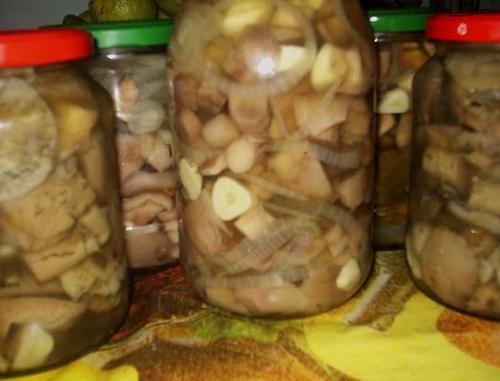
A few fresh bird cherry berries in a traditionally sealed jar will impart a tart flavor and aroma to the preserves. The addition of juniper berries will impart a resinous aftertaste. The prepared russula mushrooms are placed in a glass container according to the standard recipe. Between the layers, along with salt and spices, 2-3 bird cherry berries and 1 juniper berry are placed.
Compact the jars, pour boiling water over them, and seal with nylon lids. After cooling, store in the refrigerator.
With caraway seeds
The combination of caraway and oak leaves imparts a tart, spicy aroma to the mushrooms. The oak leaves should be green and freshly picked. To pickle, line the bottom of a liter jar with 5-6 oak leaves. Sprinkle with salt. Place the soaked russula mushrooms cap-side up, sprinkling them with salt and caraway seeds (2 tablespoons and 1/2 teaspoon) up to the shoulders. Pour boiling water over the mushrooms, completely covering the contents of the jar. The shelf life is 7 days.
In oil
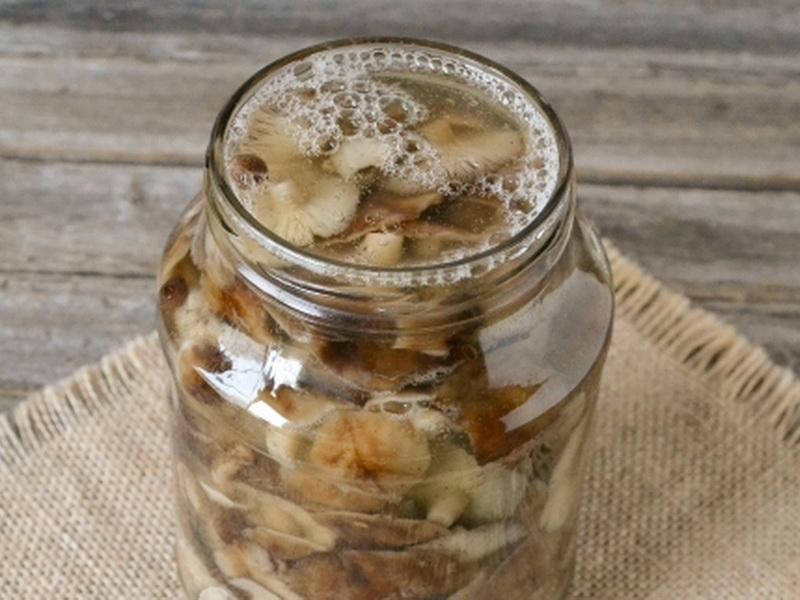
For easy storage, the mushrooms, salted in a large container, after they have completely settled, are transferred to glass jars. They are then arranged in the correct order. The brine they were in is poured in so that it completely covers the mushrooms. If there is insufficient liquid, add a cooled 2% solution. Top with 2 tablespoons of refined oil. Heat the oil in a hot frying pan, being careful not to let it boil, and then let it cool.
With ginger
Ginger will add a pungent flavor to the pickle. You'll need 20 grams of dried ginger per kilogram of raw material.
Other ingredients:
- salt – 1.5 tablespoons;
- sugar – 1 teaspoon;
- garlic – 2 cloves;
- bay leaf – 4 pieces.
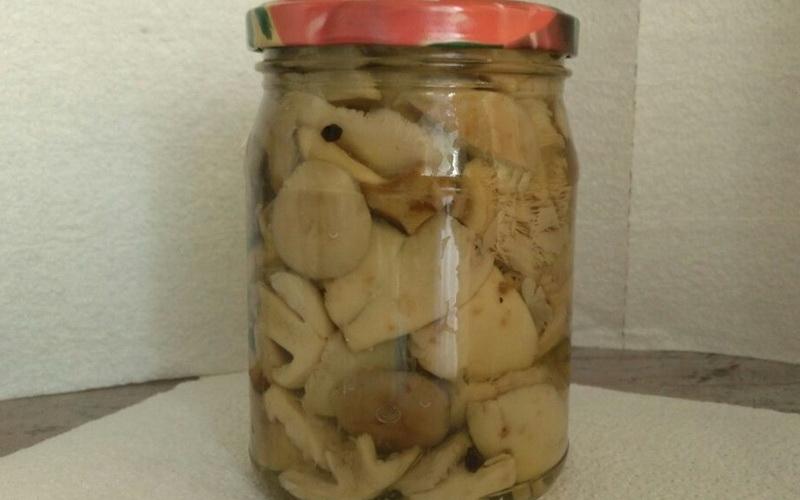
The prepared ingredients are placed in a container and covered with boiling water. The pickling is ready in 14 days.
How to store properly
For storing mushrooms, prepared in any way, the temperature regime is within the range of 1 to 6 degrees Celsius.Storage location: a cool, dry, ventilated basement or the top shelf of the refrigerator. Ensure the brine completely covers the mushrooms. Mold will form on stems and caps exposed to air. In such cases, discard damaged russula, wipe the rims of the container dry with a clean cloth, and rinse the mushroom ring and weight with boiling water.
At temperatures above normal, to extend shelf life, salted mushrooms Sterilize and package into glass jars of up to 1 liter. Remove the russula from the brine, rinse, and place in clean jars. Peppercorns and bay leaves can be added for flavor. Pour 1 tablespoon of 9% vinegar into a 500-milliliter jar. Add 2 tablespoons to a 1-liter jar.
The brine is filtered, boiled, and poured into jars, completely covering the mushrooms to a depth of 2 centimeters. Sterilization: 500 milliliters – 40 minutes, 1000 milliliters – 50 minutes. Initial temperature: 40 degrees Celsius, at a gentle simmer.
In this case, tight sealing is permitted. Sterilized mushrooms should be stored for two months due to the risk of poisoning. Mushrooms are contaminated with soil, which may harbor botulism spores. These microorganisms die at temperatures above 124 degrees Celsius, which is impossible to achieve at home. At above-zero temperatures, without access to oxygen, they begin to grow rapidly. Properly salted russula can be stored under nylon lids in the refrigerator or under pressure in a cool basement throughout the winter.
Related posts:
 How to pickle russula mushrooms for the winter in jars: the best recipes and storage conditions
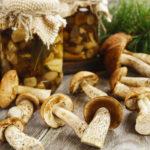 Simple step-by-step recipes for making pickled porcini mushrooms for the winter at home
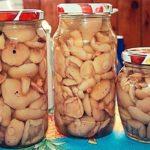 25 simple recipes for pickled mushrooms for the winter
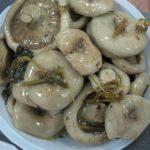 Simple recipes for pickling mushrooms hot and cold at home for the winter
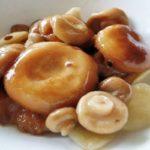 Simple recipes for pickling milk mushrooms at home using cold and hot methods for the winter, and storage rules
 How to properly marinate milk mushrooms in jars, recipes for winter preparation
 TOP 40 Hot Dish Recipes for New Year 2020: What to Cook
 Delicious recipes for pickling milk mushrooms at home using both cold and hot methods.