
- The nuances of growing tomatoes in the Moscow region
- The best tomato varieties for the Moscow region
- Which tomatoes are suitable for open ground?
- Angelica
- Peterhof
- Otradny
- Upstart
- Marusya
- Okay
- Lollipop
- Rajah
- Greenhouse varieties
- De barao
- Blagovest
- Nevsky
- Bull's heart
- Pink honey
- The most productive cherry varieties
- Marishka F1
- Greenfinch F1
- Golden Bead F1
- Early varieties
- Hurricane
- Cio-chio-san
- Kostroma F1
- The best new products
- The Pink King
- Samurai
- Pavlovskaya rose
- Bersola F1
- Kronos F1
- Matias F1
- Jaguar F1
- Which tomatoes are best to plant?
- Growing and caring for tomatoes
- Reviews from summer residents and gardeners
Considering the growing conditions and cultivation method, it's important to choose the best tomato varieties. For the Moscow region, it's best to choose varieties that will produce the desired yield with minimal labor and time. When choosing tomatoes, pay close attention to the growing method, bush formation rules, and the necessary fertilizers.
The nuances of growing tomatoes in the Moscow region
When purchasing seedlings or growing them yourself, it is important to consider several requirements to obtain the desired harvest:
- Determine which varieties grow in open ground or exclusively in greenhouse conditions.
- Choose zoned varieties, taking into account the climatic conditions for your region.
The best tomato varieties for the Moscow region
Plants must be adapted to growing in places with cool and short summers, adapted to both indoor and outdoor conditions.
The rating of varieties for different types of cultivation is presented below.
Which tomatoes are suitable for open ground?
Growing in open ground requires compliance with a number of conditions, one of which is the selection of varieties that can ripen during the short, cool summer.
Angelica
It's best grown from seedlings. The tomato grows up to 0.7 m tall. Ripening time is up to 95 days, with a fruiting branch producing up to 10 fruits. The fruits are round, firm, and red.
They have a long shelf life.
Peterhof
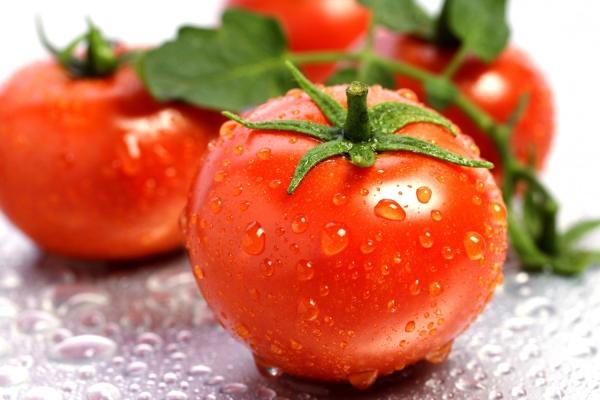
This determinate variety grows up to 0.4 m tall and is semi-spreading. It is considered an early variety, harvesting within 90 days of planting. It does not require a large area. It has an average yield of about 2 kg per bush. It is cold-hardy and disease-resistant. It has a long shelf life.
Otradny
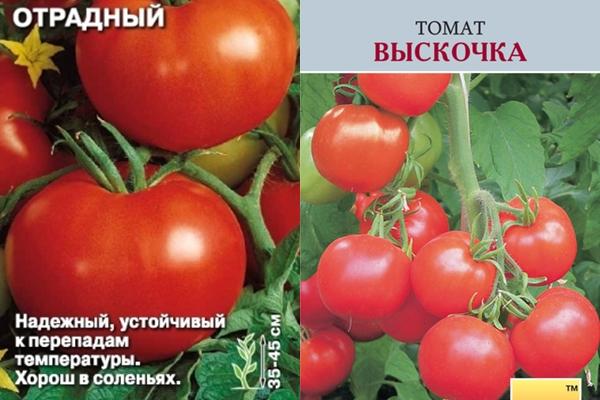
This variety is classified as a determinate variety. The bushes are narrow and not very tall. The average height is about 0.45 m, so it doesn't require staking or pinching. It has good immunity and requires little care. Due to its early maturity, it is resistant to late blight. Tomatoes are harvested in 95 days, making it considered an ultra-early variety.
Upstart
This tomato is self-explanatory. It's a rather unremarkable variety, but it's sure to please. The tomatoes are ready to harvest in 100-112 days. It can be grown without seedlings, but this is only possible in greenhouse conditions. The tomatoes are round, scarlet, and ideal for canning. They are small in size. The bush is compact, reaching up to 70 cm in height.
Advantages: no need for shaping or securing, quick ripening, excellent flavor. Disadvantages: susceptible to disease, not suitable for juice, requires warm watering.
Marusya
This is a mid-early, determinate variety. It can be grown both indoors and outdoors. Harvest time is 115 days. The bush grows up to 0.8 m tall. The bush is formed only up to the first flower stem. The fruits are ovoid and ideal for pickling.
Okay
This mid-early variety ripens in about 100 days and reaches a height of up to a meter. It grows in open beds. The fruits are tart, round, and red.
Lollipop
Depending on the growing environment (garden or greenhouse), tomatoes grow to a height of 0.4 to 1.1 m. The branches are multi-fruited, producing oval-shaped, red fruits weighing up to 50 g each, ideal for pickling. The harvest is fully harvested by August.
Rajah
An extremely early-ripening tomato. This variety produces large, oval fruits resembling red plums. They are sweet and virtually seedless. They grow in large clusters, with up to seven on a branch. They require adequate watering, but ripen on their own when picked green.
Greenhouse varieties
Among greenhouse tomatoes, there are varieties that can be grown in open beds, but they feel more comfortable in a greenhouse environment.
De barao
A long-popular variety: productive, hardy, and robust. Bushes reach 2 meters in height. Tomatoes weigh approximately 100 grams and have a pink tint. Suitable for both greenhouse and open-air cultivation.
Advantages: high-yielding, resistant to diseases, drought, temperature drops, bears fruit until frost, stores well, ripens on its own, suitable for canning.
Disadvantages: requires physical effort to tie up.
Blagovest
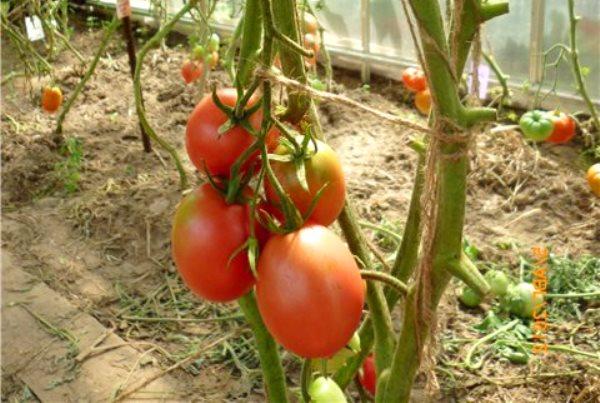
Recognized as the best early-ripening hybrid for greenhouses, this variety produces up to 8 tomatoes weighing 0.1 to 0.2 kg per branch. They have a rounded appearance and are bright red. A single bush yields up to 5 kg of tomatoes. It grows to a height of about 1.6 m and requires staking.
Nevsky
This is an early-ripening, determinate variety. Harvest time is 100 days. Because the bush is short, it can even be grown on a balcony. The fruits are round, red with a pink tint. The average weight is approximately 60 g. One bush produces approximately 1.5 kg of tomatoes. It does not require staking. It is resistant to fungal diseases.
Bull's heart
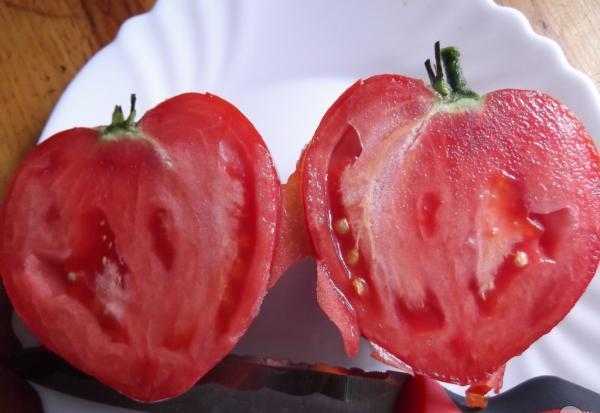
Recognized as the highest-yielding mid-season variety, with fruits weighing approximately 500 g. It grows well in both open beds and protected ground. It reaches a height of almost 1.5 m. Suitable for salads. Varieties with fruits in shades of scarlet, pinkish, yellow, and black exist.
Pink honey
This variety produces a good harvest. The fruits are juicy and pink. The plant is determinate, reaching up to 0.8 m in height, but can reach up to 1.5 m. The fruit can reach a weight of approximately 1 kg. It has a medium harvest time and can be grown outdoors.
Advantages: Hardy, juicy fruit, high yield. Disadvantages: requires staking.
The most productive cherry varieties
Delicious and sweet cherry tomatoes have long been popular. They are perfect for salads, garnishes, and pickling.
Marishka F1
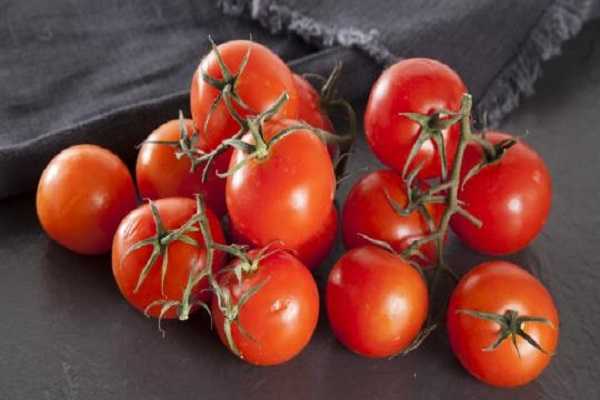
This is a tall, early-ripening hybrid tomato. The fruits are raspberry-red in color, round in shape, and weigh approximately 30 g. They are fairly disease-resistant.
Greenfinch F1
Recognized as a popular early-ripening determinate variety, it produces small, amber-green fruits, up to 17 g.
Golden Bead F1
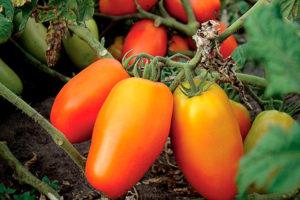
Developed by domestic selection. The fruit is orange-yellow in color, with sweet, relatively firm flesh.

Early varieties
Ultra-early tomatoes ripen in the sun during the favorable summer period. They are sweeter than late-ripening tomatoes and are suitable for juice, but are not used for canning.
Hurricane
Classified as an early-ripening hybrid, recommended for greenhouses. From 1 m2 The plant yields up to 9 kg of tomatoes. The tomatoes are firm, do not crack, flattened, and scarlet in color. Each branch bears 6-8 fruits. They grow up to 1.5 m in height.
Cio-chio-san
One of the most delicious, resilient, early-ripening indeterminate tomatoes. It bears fruit throughout the growing season. The tomatoes weigh approximately 50 g and have a pinkish hue. A single bush yields up to 6 kg.
Kostroma F1
A semi-determinate variety for greenhouse cultivation. Flat-round, red tomatoes. Yields up to 5 kg when trained into a single trunk. Resistant to fungal diseases.
The best new products
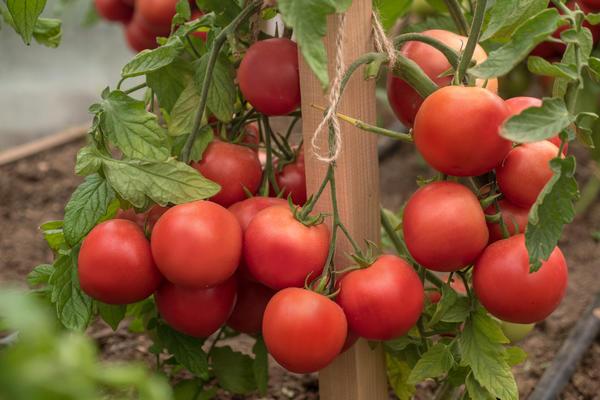
New varieties are popular among gardeners. They offer disease resistance, increased yields, and excellent flavor. These thin-skinned tomatoes with tasty flesh are perfect for salads and canning.
The Pink King
Considered a versatile pink tomato, it's perfect for salads, preserves, and juice. It's a mid-season variety, harvested after 110 days. The fruits are a delicate pink. Each tomato can weigh up to 0.3 kg. The flesh is firm and juicy, and the skin is smooth.
Samurai
It's an indeterminate variety. When grown in a greenhouse, it reaches a height of over 1.5 m. In open ground, it reaches 100–120 cm. It's a mid-early variety. The time from germination to harvest is approximately 100 days. One bush produces approximately 4 kg of tomatoes.
Pavlovskaya rose
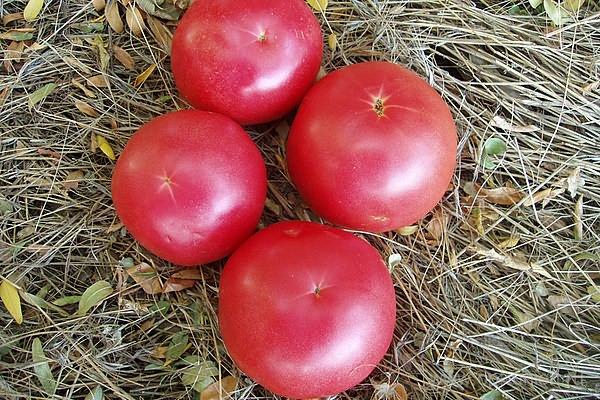
Tomatoes are grown in open beds or greenhouses. They tolerate drought and some temperature fluctuations well. They are productive: a single bush yields up to 5 kg of large tomatoes weighing up to 350 g each. Ripening time from sowing is 120 days. They grow tall and require pinching.
Bersola F1
An early, highly productive hybrid tomato. Suitable for growing indoors. The bush is vigorous, reaching up to 2 m in height, and is resistant to temperature fluctuations. Tomatoes weigh approximately 160-180 g and are firm. They are resistant to most diseases.
Kronos F1
An indeterminate hybrid for indoor cultivation, this high-yielding variety produces tomatoes weighing up to 160 g, flat-rounded, with firm flesh. They ripen quickly, are easy to transport, and retain their marketable appearance for a month.
Matias F1
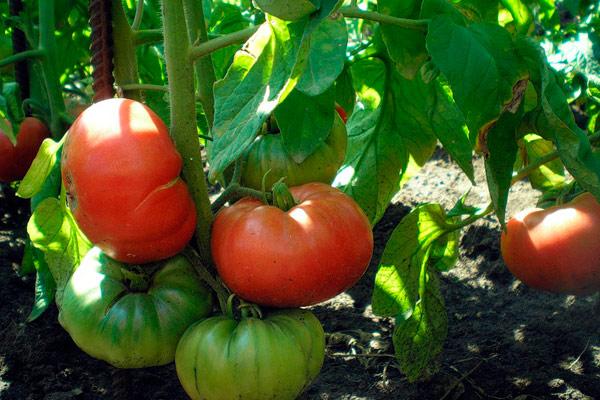
Characterized by an early ripening period, the tomatoes are round, red, and weigh up to 300 g. They form 7 to 10 fruit-bearing branches. Suitable for both open beds and indoor cultivation.
Jaguar F1
An early-ripening, outdoor-cultivated indeterminate hybrid. A vigorous, productive plant. The tomatoes are round, slightly flattened, and medium-sized. Suitable for long-term storage.
Which tomatoes are best to plant?
Before choosing the best variety, it is necessary to decide how cultivation will take place (open or closed ground), what the fruits will be used for.
Important! You must purchase zoned seeds.

Low-growing, early-ripening hybrid varieties are suitable for open beds and portable greenhouses. They will have time to ripen before they are affected by late blight.
When grown in permanent greenhouses, maturity time is not important. Plant height and fruit flavor are key. Indeterminate varieties are suitable for this type of cultivation, allowing for a large harvest in minimal space. When selecting varieties, it's important to follow proper cultivation practices. It's recommended to grow varieties resistant to late blight and other fungal diseases.
Growing and caring for tomatoes
Seeds must be treated to speed up germination, reduce disease incidence, and increase yield.
Growing tomatoes in a greenhouse:
- Prepare the beds 10-14 days before planting. Mix the soil with humus.
- The width of the bed is about 0.6 m, to create a comfortable space between rows.
- The distance between the holes is about 0.5 m, which will ensure adequate nutrition.
- The depth of the hole is 20-25 cm; in unheated greenhouses, the soil at greater depths is not warmed up enough.
- Before planting seedlings, add potassium, nitrogen and phosphorus fertilizers to the hole.
- During the growth process, carry out hilling, loosening the soil, complex fertilizing, proper watering, weeding and disease prevention measures.
In open ground:
- Dig the beds to the depth of a bayonet spade. Add organic fertilizer.
- The best predecessors of tomatoes are carrots, cabbage, and cucumbers.
- Plant seedlings after the soil warms up to 15 OC, it's somewhere around mid-May.
- Planting is carried out on a cloudy day, the distance between rows is 0.5-0.6 m.
- The distance between holes is 0.3 m for low-growing tomatoes, 0.5 m for medium-growing tomatoes.
- The hole should be about 12 cm deep. It should be dug down to the cotyledon leaves.
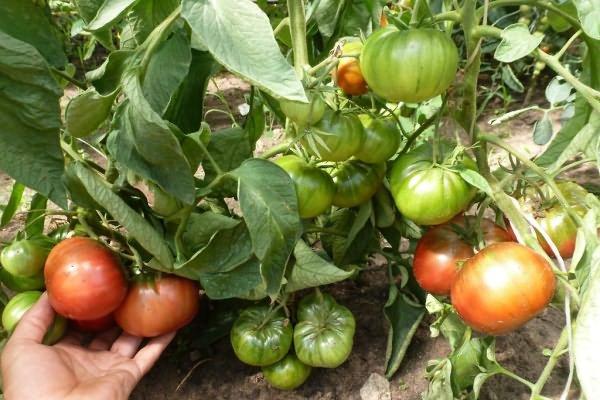
Reviews from summer residents and gardeners
Experts recommend choosing several varieties for cultivation, and experienced gardeners also confirm this.
Elena, Orekhovo-Zuyevo: "I like 'Bull's Heart.' I've been growing it in a greenhouse for many years. One tomato plant, up to 1.6 meters tall, can yield about 9 kg. The fruits are quite tasty, suitable for salads, as their size makes them unsuitable for canning. For preserves, I've chosen 'Ledenets,' 'Marusya,' and 'De Barao.' I've really fallen in love with cherry tomatoes."
Nikita, Moscow Region: "I grow several varieties of De Barao in a greenhouse on my plot. I prefer the pink and yellow ones for flavor. They look especially beautiful in salads and preserves. What I really like is that they keep for a long time and ripen on their own."
Valentina, Moscow Region: "I grew Pink Honey. I'm pleased with the size of the fruit and the yield. The taste is slightly tart, so it's an acquired taste."
Related posts:
 What varieties of tomatoes are best to plant in a polycarbonate greenhouse?
 Description of the best varieties of black tomatoes for open ground and greenhouses
 Description and characteristics of the best indeterminate tomato varieties for greenhouses
 Description of the best tomato varieties for open ground and greenhouses in the Krasnodar region
 Description of the best tomato varieties for open ground in the central zone
 Which tomato varieties are best for open ground?
 The best and most productive tomato varieties for greenhouse cultivation in the Urals, with descriptions
 Description of the best tomato varieties and ratings for greenhouses in 2025