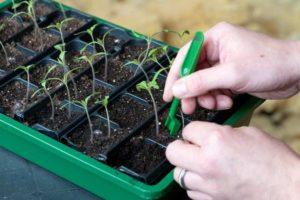
Gardeners often wonder why tomatoes turn black. A good harvest is every gardener's dream, but sometimes plants are exposed to various negative factors. This phenomenon is quite common in tomatoes. It manifests itself in various ways: both the leaves and the fruits can turn black. Tomatoes typically turn black in early August, when they are still green and in the ripening stage. Those who are experiencing this for the first time are interested in its causes and what to do to prevent tomatoes from turning black.
Late blight as a cause of tomato blackening
Let's figure out why tomatoes turn black. There are several possible causes of tomato blackening. Most often, it's caused by late blight. This disease first attacks the stems and leaves. The leaves become covered in a gray coating on the inside, and their outer surfaces become brown and spotted.
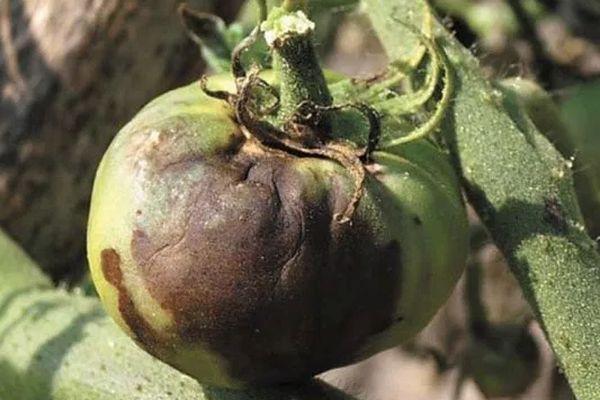
At first glance, the fruits appear unaffected by the disease, but this is not the case. Later, as they ripen, they will become covered with blackened spots, and the flesh inside will begin to rot. Fruits that have turned black should be discarded, as they are not suitable for consumption.
Late blight loves high humidity, so it spreads especially quickly during rainy periods, damaging fruits at any stage of ripening.
Naturally, gardeners are interested in what to do to prevent this disease from affecting their plants. First, it is recommended to water tomatoes at the roots in July and August, avoiding moisture getting on the foliage and fruit. If late blight has already affected the bushes, the infected parts of the plant should be removed as soon as possible. Thinning the bushes will create additional ventilation, which helps combat late blight.
For preventative purposes, it is recommended to treat tomato bushes with slightly salted water.
If symptoms of infection have already appeared on the fruit or leaves, you can spray the tomatoes with a 1% Bordeaux mixture (a mixture of lime milk and copper sulfate solution). However, this remedy is only effective in the early stages of infection.
![Description of rare collectible tomato varieties from Valentina Redko, new [year]](https://harvesthub.decorexpro.com/wp-content/uploads/2019/01/post_5bc9a12034505-700x329-300x141.jpg)
To prevent tomato diseases, it's recommended not to plant tomatoes in the same beds, and if you do, do so at least four years apart. Another tip: avoid planting tomatoes in the same beds where potatoes or peppers were grown.
Since late blight does not tolerate intense sunlight, well-lit and ventilated areas are best for growing tomatoes. It's advisable to maintain a distance of 30 cm or more between the soil and foliage to ensure good air circulation.
If you grow early tomato varieties, you can harvest the bulk of the crop before late blight begins to actively develop.
Other reasons for tomatoes turning brown
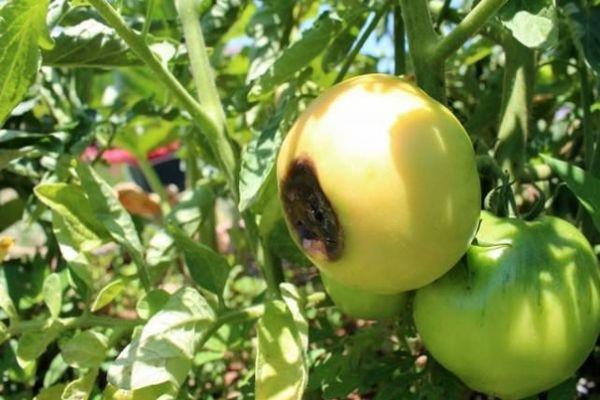
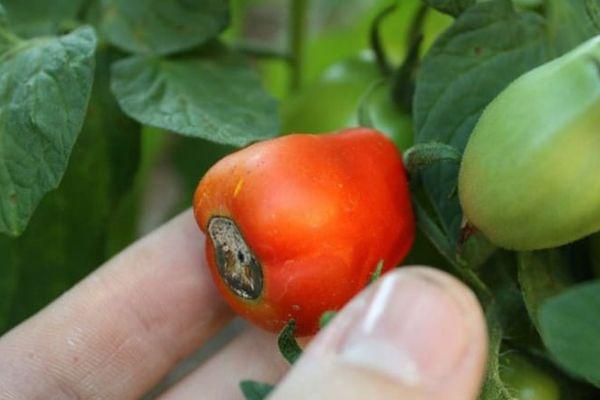
Another disease that affects tomatoes and causes fruit to turn black is blossom-end rot, or gray rot. The trigger for this disease is a mineral deficiency, most commonly calcium. Other causes include high temperatures and low humidity.
The disease affects fruits while they're still green. Initially, a grayish spot appears, which darkens over time and becomes easily separated from the healthy flesh. The rot spreads quickly, attracting numerous bacteria and fungi, accelerating the fruit's decay.
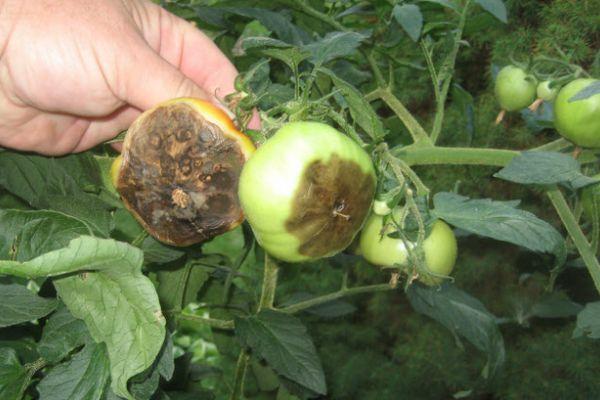
Let's figure out why tomatoes turn black in a greenhouse. Due to excessively dry air, they are susceptible to the same gray mold. To prevent this, greenhouse tomatoes should be watered at least once every two days during the initial ripening stage, and daily in hot weather. It's recommended to keep the soil moist when fertilizing to avoid burning the plant's roots.
The appearance of blossom-end rot can also be caused by excessive use of nitrogen fertilizers.
Tomatoes also turn black due to increased soil acidity, so it is better to add lime, wood ash or crushed chalk to the soil before planting.
To prevent crop loss, it's important to pay close attention to your plants and take immediate action at the first sign of disease. Blackened fruit is beyond repair—they must be promptly removed, along with any diseased leaves.
Related posts:
 Description of the best varieties of black tomatoes for open ground and greenhouses
 TOP 17 recipes for pickled sweet tomatoes for the winter
 Recipes for amazing tomatoes in jelly for the winter, with and without sterilization, you'll lick your fingers
 Delicious recipes for canned tomatoes with honey for the winter, preparation steps
 Step-by-step technology for growing tomatoes on the balcony, the best varieties with descriptions
 The 14 Best Tomato and Aspirin Recipes for a 3-liter Jar for the Winter
 Recipes for pickled tomatoes in apple juice for the winter – finger-licking good
 What varieties of tomatoes are best to plant in a polycarbonate greenhouse?