
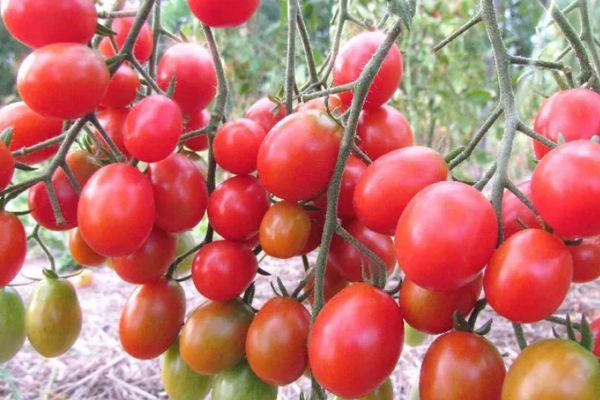
The Russian tomato Caramel (red F1 and yellow F1 varieties) is distinguished by its exceptional ornamental qualities: small fruits are gathered in large clusters, reminiscent of bunches of grapes. The vibrant color of ripe tomatoes is not the most important quality for which gardeners value this hybrid. The berries have excellent flavor and are versatile.
Plant characteristics
Both varieties belong to the same type of cherry tomato and are indistinguishable except for their color. These are hybrid varieties, so gardeners won't be able to plant their favorite tomatoes for seed. Planting material will have to be purchased from the store each year.
The bushes are indeterminate and tall. In greenhouse conditions, the plant can reach a height of over 2 meters. Tomatoes can also be grown outdoors throughout central Russia and in the southern regions. In the Moscow region, the southern Urals, and Siberia, it is recommended to pinch the bushes around mid-August to allow the ovaries on the upper cluster to develop before cold nights or early frosts.
The Caramel tomato variety (both yellow and red varieties) is resistant to temperature changes and tolerates cold weather and prolonged rains well.
The characteristics and descriptions of this variety, as provided by Russian vegetable growers, note that the berry yield does not decrease even in unfavorable years. However, those who have been growing this variety for several years recommend choosing a sunny, well-heated site. The small-fruited Red and Yellow Caramel varieties will be as sweet as candy only in such conditions.

The Caramel tomato is an early-ripening variety. It takes about 120 days from sowing the seeds to harvesting the first ripe tomatoes. Over the course of a season, the plant produces 4-5 clusters with numerous fruits. The average weight of a single berry does not exceed 30 g, but a cluster can produce up to 50 identical ovaries, which grow and ripen simultaneously.

The average yield per bush is 4-4.5 kg of marketable produce per season. To increase yield, it's common to grow 2-3 stems per bush. Tall tomatoes require staking and pruning throughout the season.
Characteristics of the Caramel hybrid fruits
Based on their fruit type, Karamelka tomatoes are classified as cherry tomatoes. The berry shape is round, slightly elongated. Ripe fruits can be red or yellow, depending on the variety. Gardeners note that the Yellow Karamel F1 tomato has a sweeter taste, even under unfavorable growing conditions or when the berries are artificially ripened.
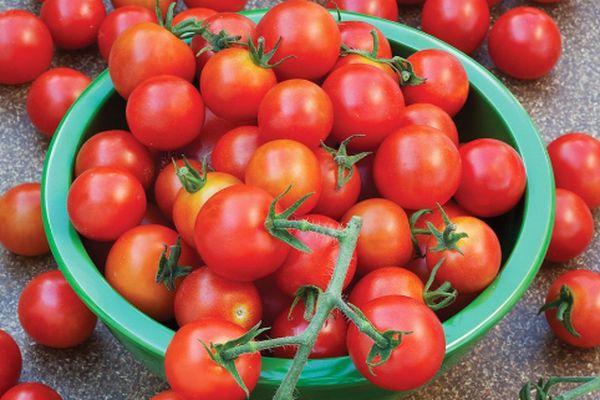
The skin is thick and durable. Mini tomatoes don't crack when ripe and withstand heat treatment during canning well. They are easy to transport without damaging even the ripest tomatoes, and ripe tomato caramels can be stored in the refrigerator for a long time (up to 2 weeks).
The fruit's flesh is firm and slightly crunchy when unripe, and slightly softer when ripe. Inside the tomato are two seed chambers, sometimes completely empty of seeds. Vegetable growers rate the taste as excellent on a five-point scale.
The fruits are high in dry matter and sugar. They have a sweet, tart flavor that changes little during colder seasons. They have a characteristic tomato aroma, pronounced in the red variety and more subtle in yellow cherry tomatoes. They are rich in lycopene, beta-carotene, and other vitamins and proteins, and are virtually acid-free, making them suitable for baby food and dietary use.
The Caramel variety is considered versatile in terms of consumption. These beautiful, multicolored tomatoes are perfect for appetizers, garnishing alcoholic cocktails, canapés, and sandwiches. Mini tomatoes are included in salads and served with sliced vegetables. They can be added to hot dishes and sauces, or grilled whole.
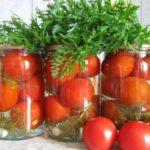
Winter preserves will become more vibrant and impressive if you include colorful cherry tomatoes in your platters and appetizers. These miniature berries are easy to preserve in their own juice, pickle, and marinate at any stage of ripeness. Blanched and creamy tomatoes make incredibly beautiful exotic jams. Small-fruited varieties are easy to dry and freeze whole.
Juicing requires a lot of small tomatoes, but if you have an excess, this method of preserving them for the winter is also possible. The juice or sauce will have a rich flavor, reminiscent of high-quality Italian tomato paste. Tomato products are used in lecho and other dips, ketchups, and borscht dressings.
How to grow caramel in your garden?
You can sow seeds for seedlings in the second half of March, so the bushes don't have time to stretch too much before transplanting into the ground. For sowing, use a substrate made of equal parts fertile soil, sand, and humus. The soil mixture should be soaked in a hot solution of potassium permanganate to kill pathogenic fungi and microorganisms.
Scatter the seeds over the surface of moist soil, covering them with a thin layer of dry sand (0.5 cm). Cover the containers with plastic wrap and place them in a warm place (+25°C) to germinate. Once the plants emerge and develop 2-3 true leaves, transplant them into individual containers 7-10 cm in diameter.
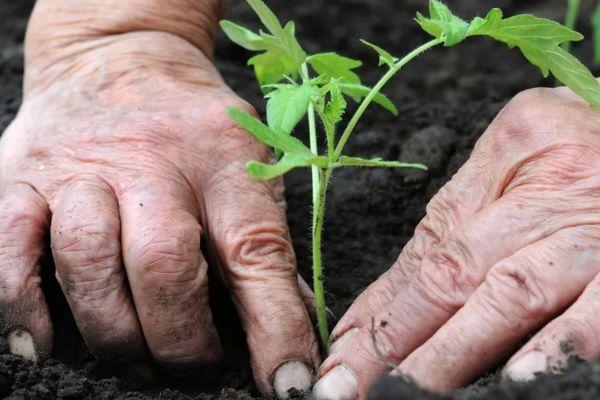
Humus (1 bucket per 1 m²), complex mineral fertilizers with a high content of phosphorus and potassium (potassium nitrate and superphosphate or mixtures like Signor Tomato) and 1-1.5 kg/m² of chalk or dolomite flour are added to the soil on the site.
Only 3 tomato plants can be planted per square meter, otherwise the tomato yield may decrease. If the seedlings have become elongated, plant them in 20 cm deep furrows. Leave 2-3 pairs of leaves above the surface.
The bush begins to be trained as soon as it begins to form shoots. All side shoots are removed from the stem before the flower cluster opens. One side shoot is left above the flower cluster, and the remaining shoots are further removed. If a third stem is desired, the side shoot is left above the second flower cluster. Further care consists of removing the side shoots and tying the growing trunks to a support.
When growing tomatoes in a greenhouse, it's important to maintain a proper watering schedule. The Caramel variety tolerates both slight drying and overheating well, but to ensure a good harvest, monitor soil moisture levels and water the plants when the top 2-3 cm of soil has dried out. In open ground, watering should be done at the same level during dry periods.
Related posts:
 Description of the best varieties of black tomatoes for open ground and greenhouses
 What varieties of tomatoes are best to plant in a polycarbonate greenhouse?
 16 Best Quick Pickled Tomato Recipes for the Winter
 Growing and caring for tomatoes in a greenhouse from planting to harvest
 The best and most productive tomato varieties for greenhouse cultivation in the Urals, with descriptions
 The best tomato varieties for growing in the Leningrad region for greenhouses and open ground
 Description of the best tomato varieties for open ground in the central zone
 15 simple recipes for pickling tomatoes in jars for the winter