
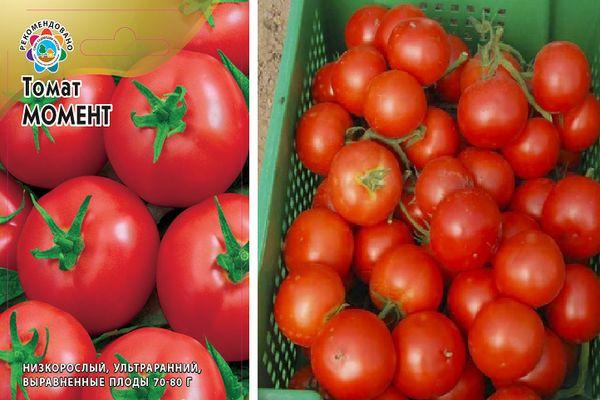
The Moment tomato belongs to a group of early-ripening tomatoes. Because the skin of this variety is resistant to mechanical damage, the fruits can be transported over long distances. Retailers readily purchase Moment tomatoes from farmers, as they can be stored in a cold room for 45 to 60 days. The fruits are used in salads, eaten fresh, pickled whole, preserved for the winter in any form, and used to make sauces, pastes, and juices.
Characteristics and description of the variety
The characteristics and description of the variety are as follows:
- The vegetation period of the plant from the first shoots to harvest is 88-96 days.
- The height of the Moment bush ranges from 0.25 to 0.4 m.
- Inflorescence is of simple type.
- Average number of standard green leaves on the stem.
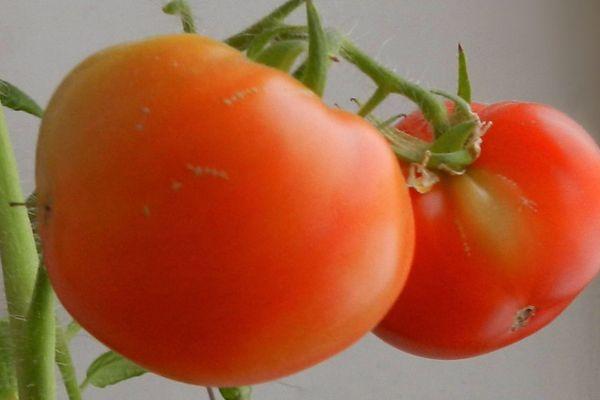
- The fruits are spherical, flattened at the top and bottom. They weigh between 60 and 80 g and are red in color.
- The pulp is pleasant to the taste. The fruits have a medium-dense consistency.
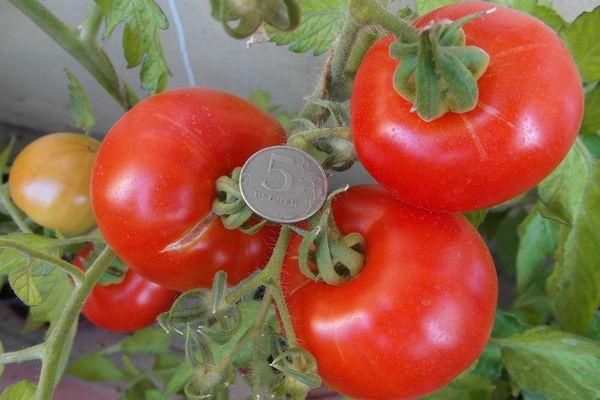
Feedback from gardeners who have planted Moment tomatoes in their plots indicates that to achieve a good harvest, it's essential to follow all expert recommendations. When grown outdoors, this variety yields up to 1.0 kg per plant. When grown in greenhouses, the yield increases to 1.2-1.4 kg per plant.
Those farmers who planted tomatoes for sale indicate that they were able to harvest from 4,500 to 4,700 g from each 1 m² of garden bed.
Gardeners highlight the following advantages of the variety: a stable harvest, undemandingness to weather conditions and quality of care, the ability to avoid bush shaping, and practically uniform fruit sizes.
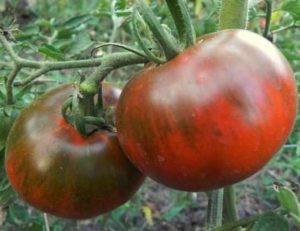
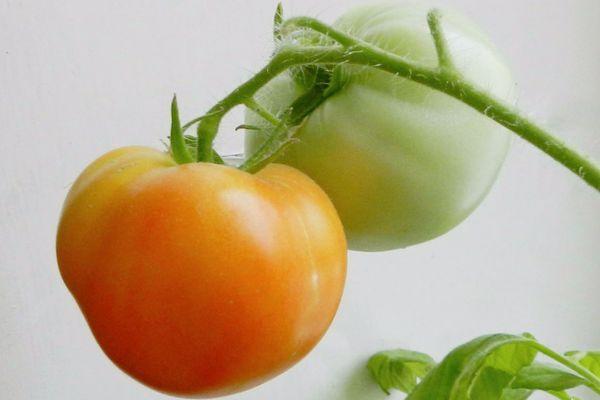
Moment's disadvantages include a small yield per plant and susceptibility to various nightshade diseases. The only tomato that is not susceptible to late blight is its ability to produce a harvest before the disease season begins.
Moment tomatoes are grown in open fields in southern Russia. In the central regions, they are grown in plastic greenhouses and hotbeds. In the northern regions, Moment tomatoes are grown in well-heated greenhouse complexes.
How to grow seedlings yourself
After purchasing the seeds, treat them with a solution of potassium permanganate or aloe vera juice. This will increase the germination rate of the seeds and strengthen the immunity of future plants. Sow the seeds in boxes with soil mixed with peat and sand. Plant the seeds 20 mm deep.
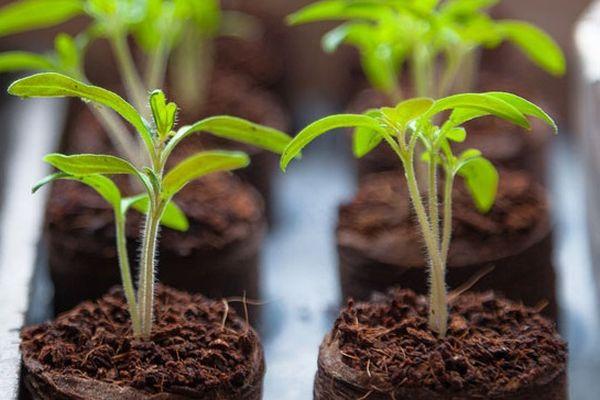
The first shoots will appear in a week. They should be watered with warm water and fed with organic (manure) or mineral (nitrogen) fertilizer. Once the seedlings have developed one or two leaves, they are pricked out. The seedlings should be 50-60 days old before being transplanted to their permanent location. About a week before transferring the bushes to a greenhouse or open ground, harden them off.
If you decide to plant tomatoes outdoors, do so after the threat of sudden frost has passed. The exact date for planting seedlings depends on the region's climate, so gardeners should determine the right time based on their personal experience.
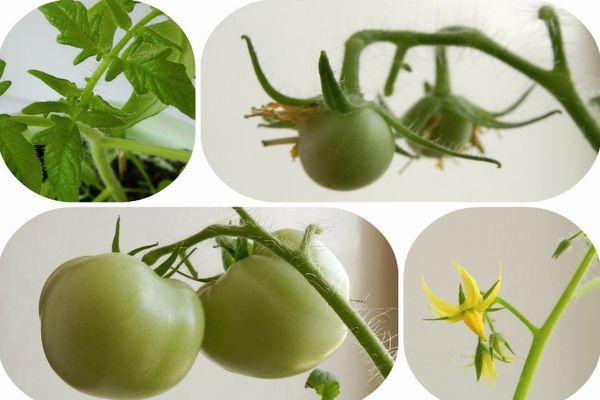
Due to the plants' small stature, they don't require side shoot removal. Experienced vegetable growers recommend planting 5 to 7 seedlings per 1 m² bed.
Caring for tomato bushes
To ensure a healthy harvest, weeding the beds 1-2 times a week is recommended. This will help prevent fungal and bacterial infections.
Hilling up the soil helps eliminate the risk of damage to the tomato plant's root system from parasitic garden insects and their larvae. Along with hilling, it's recommended to apply ground ash to the roots of the plants. It kills parasites and repels slugs.
Water twice a week with warm, sun-settled water. In hot weather, increase the frequency as needed.
Fertilize the tomato plants 3-4 times per season. Initially, nitrogen fertilizers and organic mixtures (humus or manure) are added to the soil. This promotes rapid plant growth. After flowering begins, feed the tomato plants with nitrogen and potassium mixtures. When fruit begins to appear, phosphorus and potassium mixtures are added to the soil in the beds.
 To eliminate the risk of disease, treat the plant leaves with medicinal chemicals that will destroy fungi and microorganisms that are dangerous to tomato bushes.
If various garden pests appear, such as Colorado potato beetles, aphids, and insect caterpillars, it is recommended to use toxic chemicals to protect plants, which can be purchased in specialized stores.
Related posts:
 The best grape varieties for growing in the Urals, planting and care rules in summer
 80 Best Eggplant Varieties for Different Regions with Descriptions and Characteristics
 What varieties of tomatoes are best to plant in a polycarbonate greenhouse?
 Descriptions of the 20 best cherry varieties for the Moscow region, their planting and care
 Description of the 30 best plum varieties for the Moscow region, planting and care
 Description and characteristics of the 45 best pear varieties, how to choose
 The best eggplant varieties for growing in a polycarbonate greenhouse: planting and care
 Description of the 23 best pear varieties for the middle zone, planting and care rules