
Lovers of unusual tomato varieties should definitely check out the Sinyaya Bunch f1 tomato. This is a unique hybrid created through extensive crossbreeding of various varieties. As a result, breeders achieved excellent results, producing tomatoes that grow in clusters. This is the main unique feature of these tomatoes. What attracts gardeners to them is their color. When ripe, the fruits are dark blue, comparable to very large grapes.
This variety has many other advantages, such as excellent taste and a rich supply of nutrients. Blue Cluster tomatoes are suitable for fresh consumption, as well as for winter salads and sauces. Their flavor is so rich that they're even suitable for making jam. Another advantage is that this tomato is highly resistant to mechanical damage. Therefore, the fruits easily withstand even long transportation periods.

Description of the variety
This variety is a hybrid. Its excellent characteristics were achieved by crossing domestic and wild tomatoes. The latter imparted the Blue Cluster's interesting hue.
Experts believe this variety is truly unique. It has virtually no flaws. Numerous reviews from gardeners indicate that growing tomatoes is straightforward, as they are easy to maintain, yet produce excellent yields.
Tomatoes have excellent taste, are easy to transport, and have increased resistance to diseases and pests.
Gardeners have only one concern: preparing high-quality seedlings. It's recommended to grow them in a greenhouse to increase the likelihood of a good harvest.

Blue Bunch tomatoes are tall, vigorous bushes with thick stems. Branches emerge from the base, producing clusters of fruit. These tomatoes bloom with regular flowers, and their leaves are simple and glabrous.
The characteristics and description of this variety indicate that fruits like this are unique—they have a unique dark blue hue, reminiscent of grapes. The fruits are quite unusual, which is why this hybrid has recently become very popular, and the seeds are sold in almost any specialty store. Interestingly, ripe tomatoes are dark blue, while unripe tomatoes are blue, not green.

Blue Cluster tomatoes have a sweet taste. Their fleshy flesh and thick skin make them suitable for a variety of uses. Blue Cluster tomatoes contain a very high amount of vitamins and nutrients, so they are best eaten raw. However, this variety is also very popular for winter preserves, as it would be so unusual to open a jar of pickled blue tomatoes for the New Year's table.

Care instructions
Numerous reviews from experienced gardeners indicate that this hybrid is unpretentious, although basic rules for growing it should still be followed:
- In the garden, Blue Cluster takes root best in the form of seedlings.
- They should have a fairly strong stem with leaves.
- Seeds can be planted for seedlings as early as March.
It's important to remember that this variety produces not only tall but also dense bushes. Therefore, the tomato plant needs to be trimmed of any excess material to ensure all its strength goes into the fruit.
In general, the care instructions for Blue Cluster tomatoes are standard. Before planting, the seeds should be soaked in a weak solution of potassium permanganate. Fertilize two weeks after the first leaf appears. Blue Cluster tomatoes are considered disease and pest resistant, but that doesn't mean they can't be affected.

To prevent tomato diseases, periodically spray the bushes with special solutions, which are available at specialty stores. Don't forget to weed, as weeds significantly impact the Blue Cluster's yield.
This hybrid grows to a large size. Some gardeners have Blue Cluster bushes over 2 meters tall. These tomatoes require staking. Furthermore, avoid planting the plants too close together, as this will result in insufficient light and a low fruit yield.
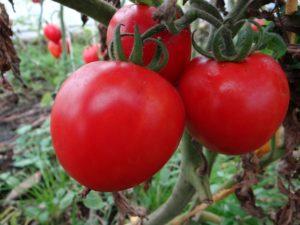
If a gardener follows these simple rules, he will get an excellent harvest of delicious blue tomatoes.
Related posts:
 Description of the Sweet Bunch tomato, reviews, and yield of the variety
 Description of the hybrid tomato Chudo-Grozd F1, cultivation of the variety
 Description and characteristics of the Red Bunch tomato variety, its yield
 Description of the hybrid tomato Black Bunch and recommendations for growing in open ground
 Description of 30 varieties and types of Muscat grapes, planting, cultivation and care
 Description of the best tomato varieties and ratings for greenhouses in 2025
 Description of the best varieties of black tomatoes for open ground and greenhouses
 Description of the Honey Bunch tomato, its advantages, and cultivation techniques