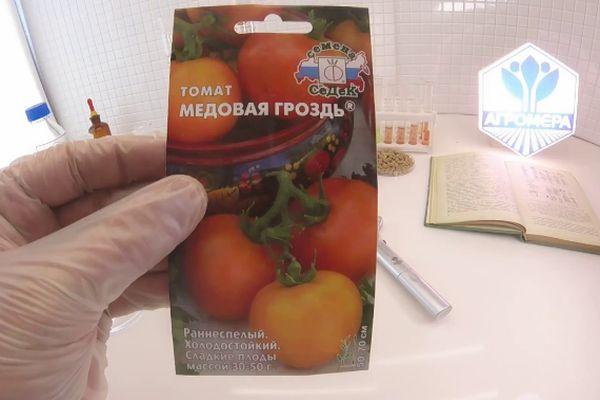
The Honey Bunch tomato attracts the attention of vegetable growers thanks to a number of advantages. This variety is distinguished by its early fruiting, high yield, and excellent taste.
Advantages of the variety
The early, cold-hardy tomato "Honey Bunch" is designed for amateur cultivation in open ground and under plastic shelters. Fruiting begins 90-105 days after germination.
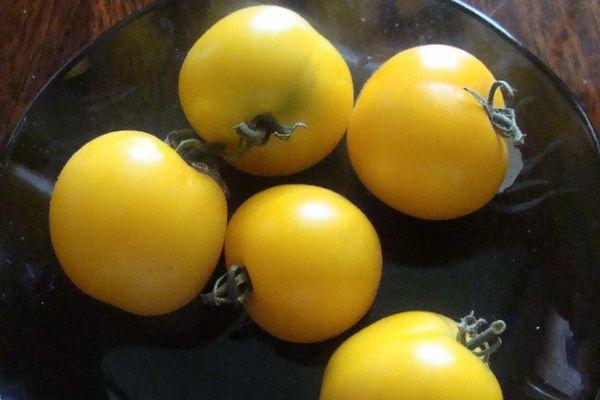
The variety's characteristics and description indicate abundant and uniform harvesting. The compact bush reaches a height of 50-70 cm during the growing season. The leaves are small and dark green.
The tomatoes are flat and round, with a loose texture and barely noticeable ribbing. When unripe, they are green with a small spot near the stem. When ripe, they acquire a beautiful orange-yellow color.
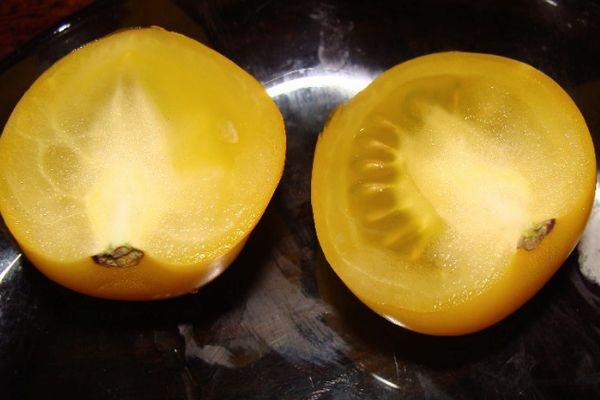
When cut horizontally, two seed chambers are visible. The tomatoes have a honey-tomato flavor. Up to 8 fruits, weighing 30-50 g, ripen per cluster. When grown under plastic cover, the yield reaches 5 kg per square meter.
Due to its poor transportability, this variety is not cultivated commercially, but is grown exclusively in private plots. The bushes have a decorative appearance during flowering and ripening.
The fruits are used for canning and fresh in various dishes. The Honey Bunch tomato variety is recommended for early harvest in regions where nightshade crops are frequently affected by late blight.
Agricultural technology of cultivation
When growing tomato varieties from seedlings, a hydrogen peroxide solution is used to disinfect the seeds and stimulate growth. This solution destroys inhibitors that hinder growth.
The Dutch cultivation technique involves using a mineral wool base. Drainage is placed at the bottom of the container, followed by a layer of mineral soil, and then the seeds are placed on top. They are then covered with a 1-cm layer of sand and vermiculite.
The standard method uses a substrate. Seeds are placed in containers with moistened soil, watered with warm water, and covered with plastic wrap until sprouts emerge.

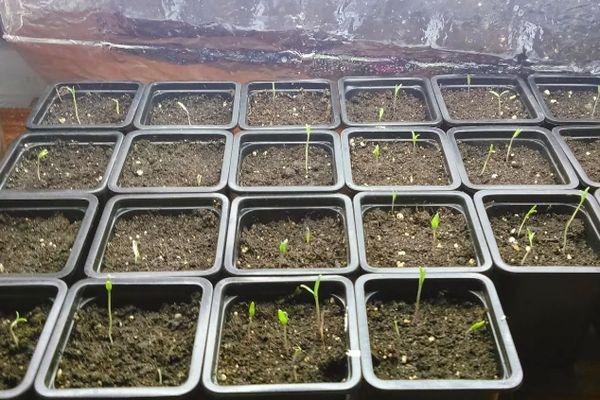
Once 1-2 true leaves have formed, the plants are transplanted into individual peat pots. In their permanent location, the bushes are planted in a pattern that ensures adequate light access for each plant.
The Honey Bunch variety is demanding of soil composition, preferring light, nutrient-rich soil. To ensure a high yield, it is recommended to replace the topsoil annually or plant the bed in a new location.
Organic and mineral fertilizers containing potassium and phosphorus are added to the soil. The bed for the crop is planted in a well-lit area away from direct sunlight.
Basic plant care involves periodically loosening the soil to create a balance of moisture and air around the root system. Water the bushes as the top layer of soil dries out. Excessive moisture negatively affects the quality of the fruit and can cause cracking.
To regulate moisture and ensure drip irrigation, mulching is recommended. Using last year's grass and leaves as mulch enriches the soil with organic components essential for plant development.
To feed the plants, fertilizers are used that contain all the necessary components for the development of tomatoes.
When growing this variety indoors, ensure adequate ventilation. The Honey Bunch tomato is resistant to most diseases but requires protection from biological pests.
Related posts:
 A complete description and characteristics of the columnar pear variety Medovaya.
 Description and pollinators of the Medovaya plum variety, planting and care features
 Description of the Sweet Bunch tomato, reviews, and yield of the variety
 Description of 30 varieties and types of Muscat grapes, planting, cultivation and care
 Description of the Honey Drop tomato variety, its characteristics and yield
 The best eggplant varieties for growing in a polycarbonate greenhouse: planting and care
 Description of the hybrid tomato Chudo-Grozd F1, cultivation of the variety
 Description of the best varieties of black tomatoes for open ground and greenhouses