
The Royal Mantle tomato is a variety bred in Siberia. Growing large, tasty tomatoes in challenging climates is challenging, but breeders are working to develop easy-to-grow and hardy varieties.
General characteristics of the plant
The Royal Mantle variety is indeterminate. This robust bush is characterized by rapid growth, good branching, and the formation of numerous side shoots. The plant can reach a height of 1.5-1.8 meters even when grown outdoors. This complicates care: gardeners must tie up tall plants and shape them by removing side shoots.

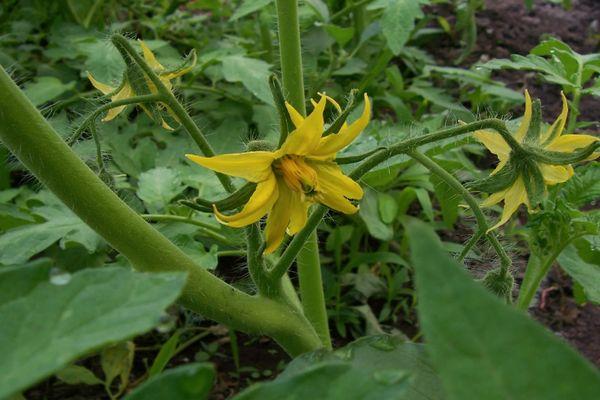
The gardener's efforts are rewarded with a bountiful harvest of large tomatoes. Five to six long flower clusters form on the bush. When six to seven ovaries have formed, it becomes clear that four to seven are approximately the same size, while the others are small or completely undeveloped.
To harvest a large number of high-quality, marketable tomatoes from a bush, a method called 'standardizing' the number of ovaries is used. This method leaves no more than seven of the largest ovaries, located closest to the stem, and removes the ends of the cluster. This method doesn't affect the tomato yield, and the gardener gets larger tomatoes.
Each bush produces approximately 10 kg of large, raspberry-red fruits. Each tomato weighs up to 500 g, but the largest can reach 700 g. It's best to train the bush into 1-2 trunks, as planting becomes too dense. To ensure sufficient light and air flow to the lower tier, it's recommended to remove the lower leaves up to 1/3 of the plant's height.
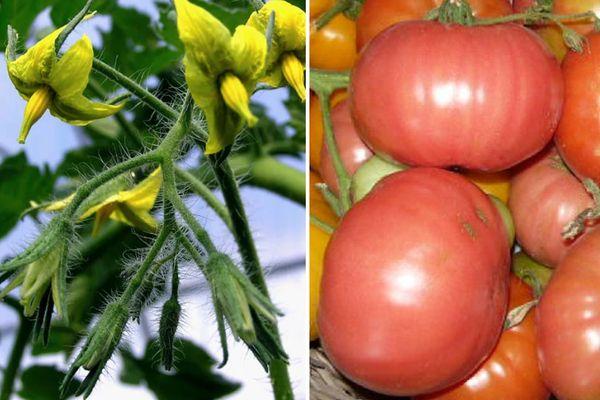
Gardeners' reviews indicate that the Royal Mantle tomato doesn't suffer from reduced yields even with temperature fluctuations or prolonged rainfall. The variety description notes only a significant sourness in the taste of fruits grown during unfavorable seasons. However, for greenhouse owners, weather factors aren't a problem.

The variety is resistant to late blight and other fungal infections. Tomatoes, picked at the milky stage, ripen in boxes in a cool pantry. They don't have the same flavor as outdoor tomatoes, but gardeners can still enjoy fresh tomatoes until mid-winter.
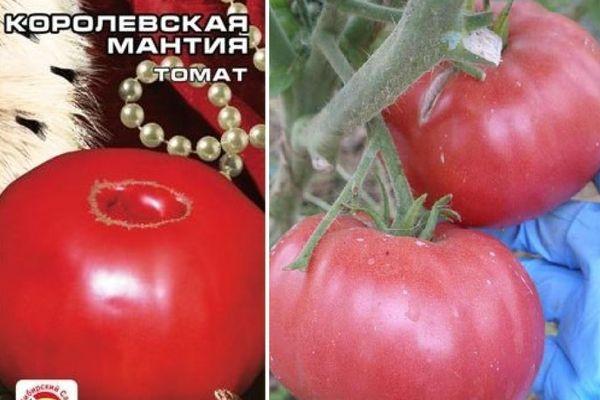
Benefits of tomato fruits
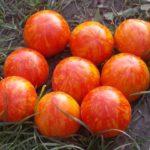
The characteristics of the Royal Mantle tomatoes are similar to those of BIF tomatoes. The large, fleshy fruits contain few seeds. The tomatoes are round, flattened, and ribbed at the stem.
The fruit's skin is firm but not thick. Excessive rainfall can cause tomatoes to crack during ripening. The base of the tomato remains greenish even when ripe, reminiscent of the collar of a king's robe.
The flesh is a rich pinkish-red hue, with a fine texture reminiscent of a melon. The tomatoes have a sweet, slightly tart flavor when ripened on the vine. With excess moisture and insufficient sunlight, the flavor changes to a classic tomato flavor (sweet and sour).
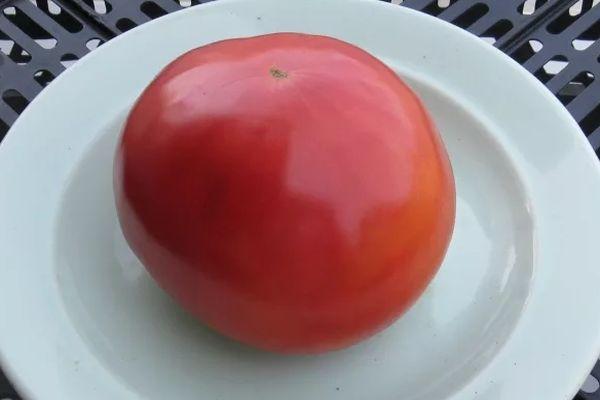
These tomatoes are ideal for salads; they're suitable for eating fresh and processing into juice or sauces. The pulp makes excellent sandwich slices, and large slices can be used to decorate a plate. Tomato wedges look beautiful in a summer salad.
Juice from fleshy tomatoes rarely needs to be reduced. It will be thick and beautiful without it. When reduced, the juice can be used to make lecho and ketchups with various flavorings. Small, unripe tomatoes can also be used in canned salads.
Agricultural technology for large-fruited tomatoes
The Royal Mantle variety is considered an early-ripening tomato (90-110 days before harvest). Seeds should be sown for seedlings no earlier than 50-60 days before transplanting to a permanent location. Sowing is done according to general guidelines, placing the seeds on a layer of soil and burying them to a depth of no more than 0.5 cm. Germination occurs at a temperature of +25°C, with seedlings appearing in 4-5 days.

Pricking out is done when the seedlings have 2-3 true leaves. It's easier to grow seedlings in separate containers so that they can be spaced apart as they grow. When pricking out seedlings in a common container, plant them in a 10x10 cm pattern.
If the seedlings have become elongated, they are placed in 20-cm-deep furrows. This will encourage the plants to develop an additional root system, which will easily provide nutrition for the large bush and numerous fruits. The tops of the young plants are oriented north, and four to five upper leaves are left above the soil surface.
To make tomatoes grow more actively and bloom faster, 1 week after transplanting, fertilize them with a complex mineral fertilizer (Agricola-Vegeta, Kristallon Tomato). The next feeding is done when the first cluster blooms, and then repeat the process 2-3 weeks later. Fertilize at the roots during watering.
Related posts:
 Description of the best varieties of black tomatoes for open ground and greenhouses
 15 simple recipes for pickling tomatoes in jars for the winter
 16 Best Quick Pickled Tomato Recipes for the Winter
 Description of the best Dutch tomato varieties for greenhouses and open ground
 What varieties of tomatoes are best to plant in a polycarbonate greenhouse?
 Description of the best tomato varieties for open ground and greenhouses in the Krasnodar region
 The best tomato varieties for growing in the Leningrad region for greenhouses and open ground
 What are standard tomatoes, description of varieties and cultivation