
The Amethyst Jewel variety is a tomato with an unusual coloring and exotic flavor. It was bred in California, USA, but also grows well in central Russia. The variety is also known as "Amethyst Treasure."
General characteristics of the variety
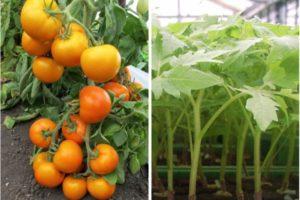
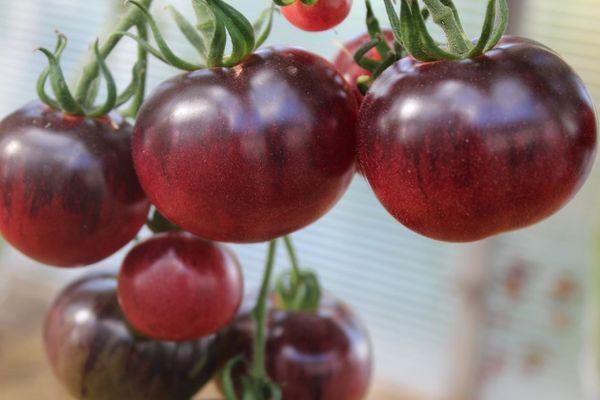
The variety's characteristics and description classify it as an indeterminate tomato. The average plant height in a greenhouse can reach 1.5 meters, but in open ground, it's typically shorter—up to 1 meter. The plant requires staking and training. It's recommended to grow the Amethyst Treasure tomato in 2-3 stems to achieve a higher yield per plant. For dense plantings (in a greenhouse), only one stem can be left (see photo).
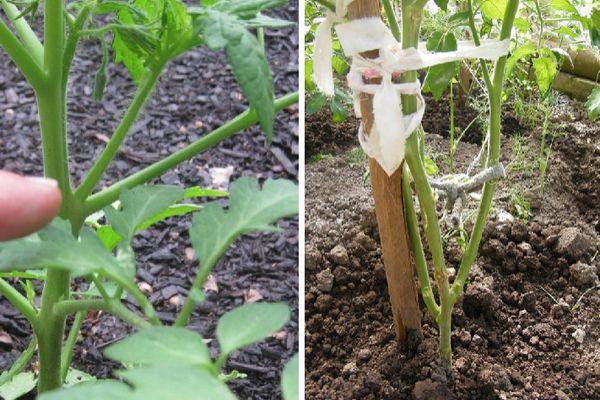
The variety has medium foliage, and the plant doesn't produce excessive foliage. However, it's best to remove some of the lower leaves as the flower clusters form. This allows for greater air permeability and prevents the spread of fungal infections.
The Amethyst Precious tomato variety is a mid-season variety (100-120 days after sowing). Fruiting is extended, allowing tomatoes to be harvested for fresh consumption from mid-summer (the second ten days of July) until frost. Indoors, fruiting continues until October.
The first flower clusters form above the 6th to 8th leaf, and then appear every 2-3 leaf tiers. Despite the small number of tomatoes in each cluster (5-6), a single bush can yield approximately 10 kg of fruit.
The Amazing Fruits of the Amethyst Jewel
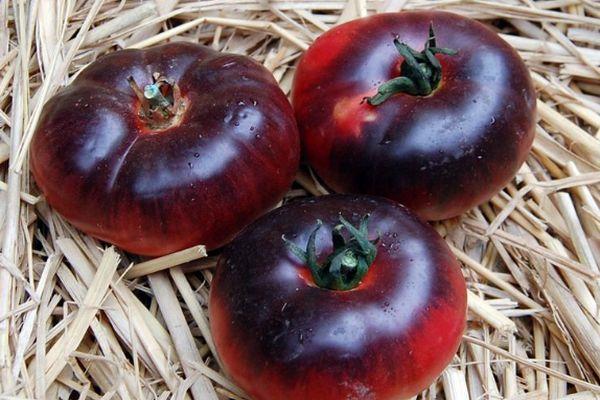
This exotic tomato variety belongs to the bicolor group. The fruit's coloring combines two primary hues, as shown in the photo. Even when unripe, the fruits are dark on the shoulders (closer to the stem), while the top is lighter. The purple hue, continuous near the stem, gradually breaks up into distinct stripes and dots. As the fruit ripens, the dark color remains, but the top turns pink. This combination of colors resembles the interplay of hues in the gemstone amethyst, hence the variety's unique name.
Not all gardeners like the taste of ripe Amethyst Jewel tomatoes. Reviews agree on one thing: the fruits lack the sourness typical of tomatoes. The dessert-like, sweet, almost caramel-like flavor is off-putting to many. Therefore, this variety is not suitable for lovers of traditional tomatoes, but children will certainly enjoy it.
The disadvantages of the Amethyst gem include:
- thin skin;
- the property of cracking with sudden changes in temperature.
But tomatoes harvested completely intact have excellent shelf life and can ripen in boxes for 1-2 months after being picked from the vine. This allows you to extend the shelf life of fresh vegetables from your garden.
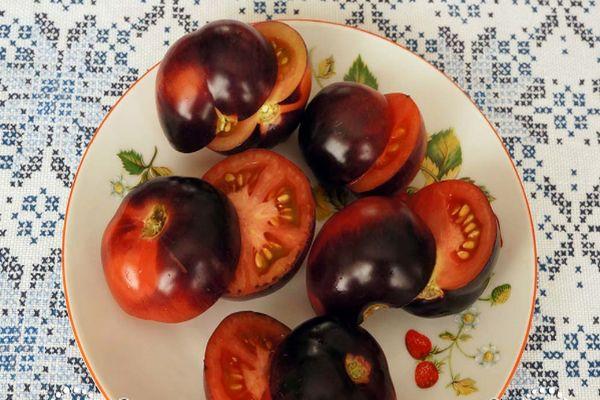
The average fruit weight is 130-200 g. The flat-round shape of the tomato makes it suitable for whole canning. Despite its thin skin, the fruit retains a firm consistency in marinades and does not fall apart. Amethyst Treasure tomatoes can also be used to make juice or lecho, as only the skin has an exotic color. The flesh is a rich pink, with numerous small seed chambers. The unusual flavor of the fruit is also suitable for making jam or preserves.
This variety is not a hybrid. Seeds from plants grown on your own plot can be saved for propagation. But to preserve the color characteristic of the Amethyst Jewel, these bushes should not be planted next to red-fruited varieties.
Agricultural technology of the variety
When grown in a greenhouse, the fruits may be susceptible to gray mold (harvested fruits will rot at the stem). The variety is virtually immune to fusarium, late blight, and other diseases common in central Russia. However, domestic vegetable growers should be aware that it is very sensitive to weather conditions: Amethyst Jewel's yield decreases at both extremely high and low temperatures.
The optimal growing temperature range is between 22°C and 25°C. In regions with cold summers, tomatoes are best grown in greenhouses.

The germination rate of store-bought seeds isn't very high: 4-6 sprouts typically emerge from 10 seeds sown. This should be taken into account when purchasing planting material. Sowing is done at the end of March, using the standard technique:
- moisten the soil in the container thoroughly;
- spread the seeds over the surface;
- sprinkle with dry soil;
- Cover with glass and place in a warm place until germination.
Pick seedlings when they have two true leaves. Plant them in their permanent location in mid-May or early June.
Related posts:
 The best grape varieties for growing in the Urals, planting and care rules in summer
 80 Best Eggplant Varieties for Different Regions with Descriptions and Characteristics
 Descriptions of the 20 best cherry varieties for the Moscow region, their planting and care
 The best eggplant varieties for growing in a polycarbonate greenhouse: planting and care
 Description of the 90 best varieties of beans for open ground with names
 Description of 30 varieties and types of Muscat grapes, planting, cultivation and care
 Description and characteristics of the 60 best sea buckthorn varieties, how to choose depending on the region
 Description and characteristics of the best seeds of pea varieties and types