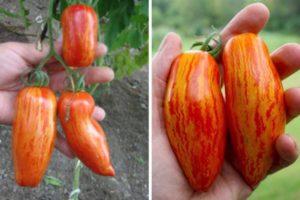
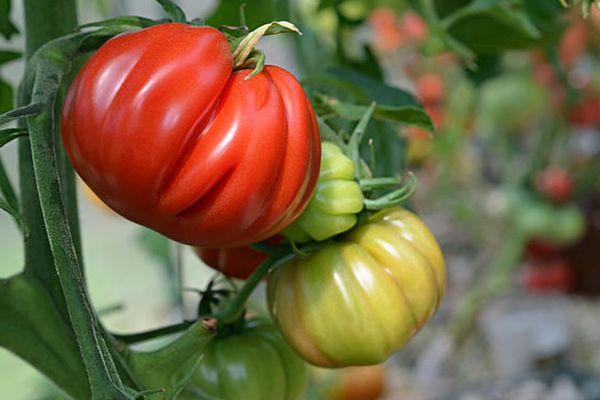
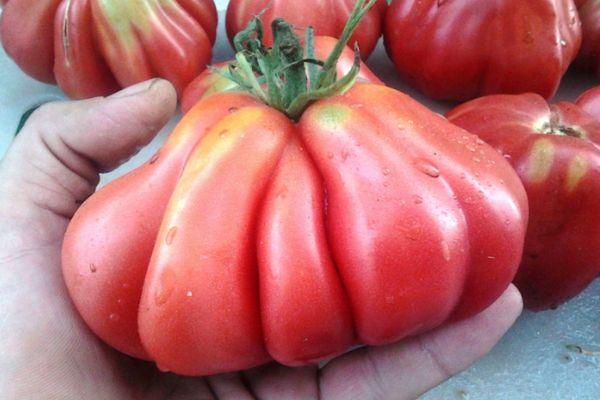
The Tlacolula tomato was brought from Mexico. The fruits have an unusual ribbed shape. When grown properly, each tomato weighs 300 g.
Description of the Tlacolula tomato variety
Below, a description and characteristics of the variety will be presented:
- The Tlacolula de Matamoros tomato is wide at the bottom and narrow at the top. The top of the fruit is yellow, the rest is red.
- The plant is determinate, so these tomatoes must be grown in a greenhouse.
- Tlacolula is an early variety, ripening 90-100 days after sowing.
- The bushes grow up to 2 m in height. They produce clusters of 3–7 tomatoes, on which tomatoes grow.
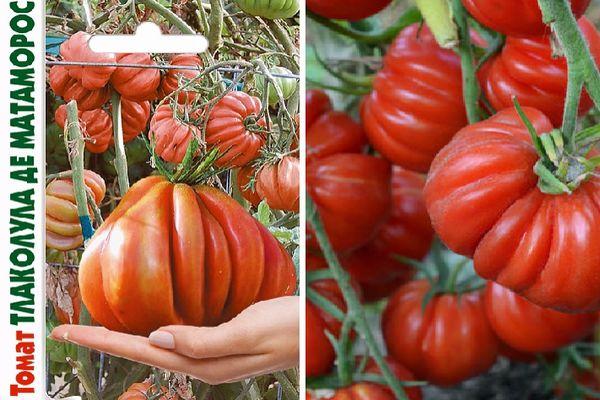
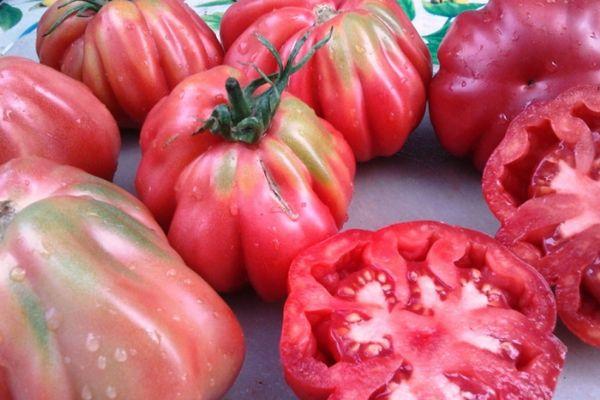
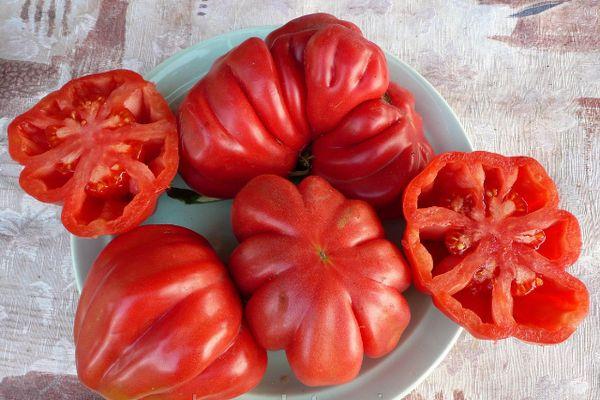
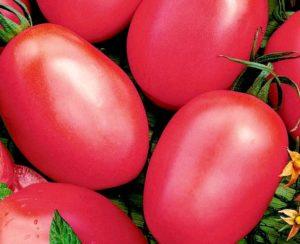
The Tlacolula variety has several varieties. The Pink subvariety is round, with slightly flattened fruits on top. Pear-shaped tomatoes are also sometimes found. The flesh is dense and contains a high glucose content, making it beneficial for diabetics and those with allergies.
The Yellow Tlacolula tomato has juicy, tender flesh with a pleasant sweet taste.
White Tlacolula is rarely grown, requiring considerable time and effort to care for. It has an unusually sweet, fruity flavor.
How to grow Tlacolula tomatoes?
Tomatoes are a collectible crop, so you should buy seeds from specialized stores. Before sowing, check the seeds for germination. Then, treat them with potassium permanganate, leave them in a cool, open place for 2-3 days, and then apply growth stimulants. This treatment usually results in strong seedlings.
The soil should be loose and moist. Before sowing, disinfect the soil to prevent fungal growth. When the seedlings have two leaves, they are pricked out. Water the potted seedlings with settled water as the soil surface dries. The seedlings need to be hardened off before planting in the greenhouse. To do this, place the seedlings outside for a while. This will ensure they are strong and will withstand cold weather.
After 6-10 days, transplant the seedlings into a greenhouse. Plant the seedlings 50 cm apart. The soil layer should be 18 cm deep. Add equal parts humus and turf to the soil. Add 50 g of wood ash mixed with soil to each hole.
The seedlings should be planted in the evening to ensure optimal growth. They should be planted deep in the soil. Once the plants have grown, they are slightly tilted, extending the stems along the bed and covered with soil. Water the plants thoroughly, and after two weeks, treat them with a 1% Bordeaux mixture solution to protect against disease. Then prepare supports or a trellis to which the plants will be tied.
In low light, the bushes are trained into a single stem; in good light, into two stems. Five to six clusters are left on each bush. Once developed, pinch off the top, leaving two leaves above the top cluster. The plant is best watered with warm water. The soil shouldn't be too wet, but tomatoes don't tolerate drought. To reduce soil evaporation, add a 2-3 cm layer of straw or peat.
In the greenhouse, humidity and temperature must be constantly monitored; otherwise, the heat can cause the flowers to dry out and prevent fruit from appearing. Fertilize the soil every two weeks, alternating organic and mineral fertilizers. One bucket of fertilizer is required per square meter of soil.
The harvest is carried out as the tomatoes ripen. If the tomatoes are not yet ripe, they can be placed in baskets and left in a warm place. The riper tomatoes are placed in the center of the basket to speed up the ripening of the remaining tomatoes. In warmer climates, these tomatoes can also be grown outdoors.
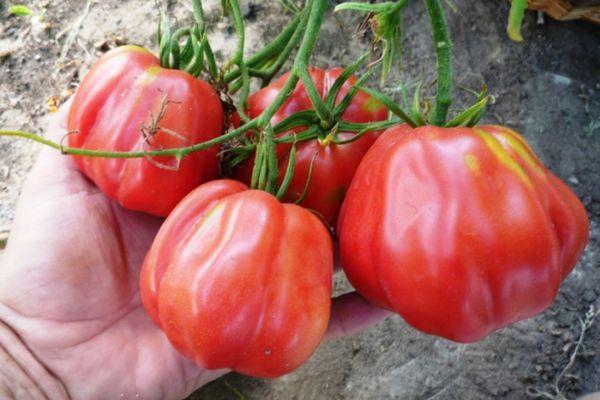
Reviews from those who have grown the Tlacolula variety are generally positive. Gardeners note that the fruits have a delicate, pleasantly sweet flavor. These tomatoes are eaten fresh and used in salads, dressings, sauces, and hot dishes. The excellent taste of this variety makes it widely grown and highly popular among gardeners.
Related posts:
 Description of the best varieties of black tomatoes for open ground and greenhouses
 Characteristics and cultivation of the best varieties of pear-shaped tomatoes
 TOP 17 recipes for pickled sweet tomatoes for the winter
 Recipes for pickled tomatoes in apple juice for the winter – finger-licking good
 11 Best Recipes for Preserving Tomato Slices for Winter
 The 14 Best Tomato and Aspirin Recipes for a 3-liter Jar for the Winter
 Recipes for amazing tomatoes in jelly for the winter, with and without sterilization, you'll lick your fingers
 Delicious recipes for canned tomatoes with honey for the winter, preparation steps