The Volov'i Ushi tomato, the characteristics and description of which are provided below, was developed by scientists from the Semena Altaya agronomic firm and the Center for Breeding Technologies. This variety was added to the State Register of Russian Cultivation in 2010. It is recommended for cultivation both in open fields and greenhouses. These tomatoes have an excellent flavor, so they can be eaten straight from the garden. However, this variety is most often used for making ketchup and preserving whole tomatoes. These tomatoes can be transported over medium distances, but they do not withstand long-term storage.
Some information about the plant
The characteristics and description of the Bull's Ear tomato indicate that it is best used for making salads.
It has the following data:
- The plant bears fruit in late summer (from mid-August to early September). It takes 110-116 days from seedling germination to fruiting.
- Ox's ear has bushes from 0.6 to 0.8 m in height.
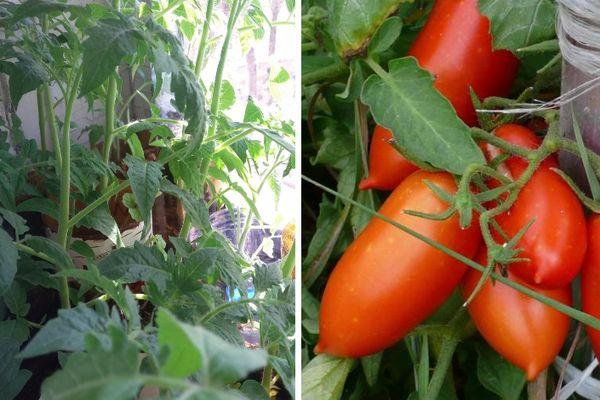
- The plant has standard tomato green leaves. There are a moderate number of them on the stem, giving the impression that the fruit is covered by the leaves.
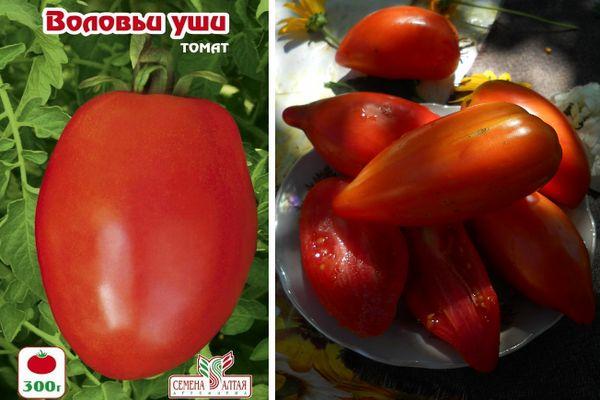
- Ox Ear tomatoes have an elongated cylindrical shape. They have a smooth, uniform color. The fruits are red and fleshy inside.
- A tomato plant contains 4 to 6 seed chambers, but few seeds. The average fruit weight is 0.1 kg, but with proper care, farmers can produce specimens weighing up to 0.2 kg.
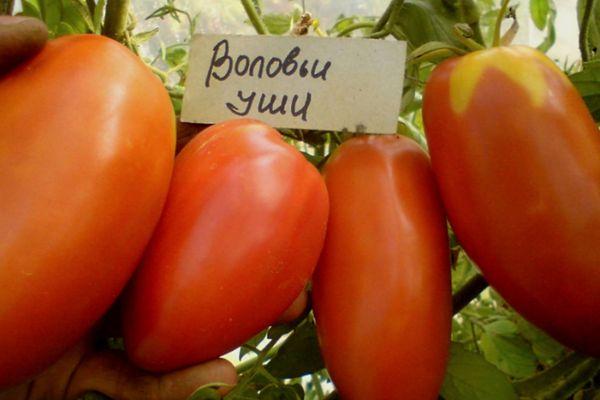
This "bullish" variety produces fruit well. A single cluster can produce 4 to 6 tomatoes, with 5 to 6 clusters growing on a single plant. This tomato's yield is quite high. On average, gardeners get at least 6.5 kg per square meter. Due to the weight of the fruit, the plant's branches sag considerably, so tying the stems to stakes or trellises is recommended.
This tomato variety can be grown outdoors in both southern Russia and the central regions. In Siberia and the Far North, it is recommended to grow this tomato in greenhouses.
How to care for the described plant?
For growing this tomato, it's best to purchase seeds from specialty stores. After sowing the seeds in pre-treated and fertilized soil to a depth of 10-20 mm, water them with warm water. Place the container with the seeds in a room with a suitable temperature. After the seeds germinate and sprouts appear, harden them off by taking them outside. When the seedlings have 1-2 leaves, transplant them.
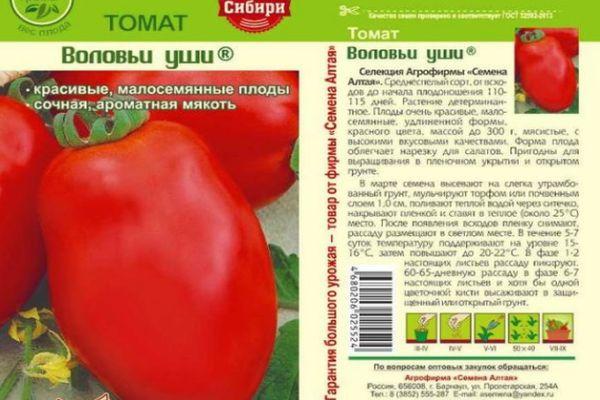
When planting in open ground or a greenhouse, apply a complex mineral fertilizer to the soil first. The seedlings are planted in holes up to 10 cm deep.
Water the plants with warm water in the morning or after sunset, but apply sparingly. Weed and loosen the soil 2-3 times a week. Fertilizer should be applied twice per season. Initially, nitrogen fertilizers and peat or manure are used. After the ovaries appear, the plants are given a complete fertilizer.
Stepchildren should be removed from the stems. Bushes are formed into two stems. After the ovaries appear, the branches of the bushes must be tied to the supports, otherwise they may break under the weight of the emerging fruits.
Ox-ear tomato plants need to be protected from diseases. Prevention is accomplished with special solutions. Fitosporin is the most commonly used. Timely implementation of all agricultural practices also helps boost the plant's immunity. Although this variety is not susceptible to diseases, its plants can be susceptible to root rot and various fungal infections.
If aphids, Colorado potato beetles, or various caterpillars appear in your garden, spray the bushes with solutions that kill the insects and their larvae. You can protect your future harvest by using folk remedies against these uninvited "guests," such as spraying a soap solution on the leaves.
Related posts:
 Description of the best varieties of black tomatoes for open ground and greenhouses
 Description of the best Dutch tomato varieties for greenhouses and open ground
 Description and characteristics of the best indeterminate tomato varieties for greenhouses
 Characteristics and description of the Sprut tomato variety, yield and cultivation
 Description of the best tomato varieties for pickling and canning
 Description of blight-resistant tomato varieties for open ground and greenhouses
 The best varieties of low-growing tomatoes for a polycarbonate greenhouse
 Description and characteristics of non-stepsoning tomato varieties for open ground and greenhouses