
For those who love sweet and large tomatoes, we recommend growing the Leningrad Giant tomato in your garden. This variety is best grown in a greenhouse or open ground, covered with plastic. This will allow you to harvest within three months of the first shoots appearing. Even the first fruits of the Leningrad Giant will delight you with their rich flavor and aroma.
What is the Leningrad Giant tomato?
This tomato variety is an exception to the rule in at least one respect: small plants rarely produce large fruits. The Leningrad Giant variety shatters this theory. Its bush rarely reaches even a meter in height, and the stems bear very few leaves. The first inflorescence appears around the ninth leaf, and the others appear one or two leaves later.
Brief description and characteristics of the variety:
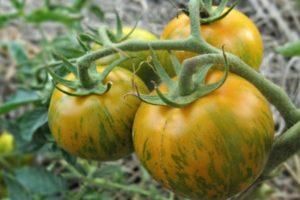
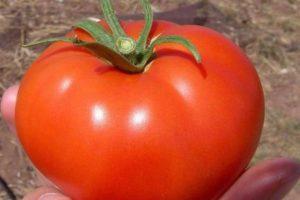
- The fruits of the Leningrad giant have a round, flattened shape, with slight ribbing;
- unripe tomatoes are green and have a dark spot around the stem;
- A fully ripe tomato is pink in color and has a smooth skin;
- the weight of 1 fruit can reach 300 g;
- The tomato tastes sweet, the flesh is fleshy and juicy.

How to grow tomatoes?
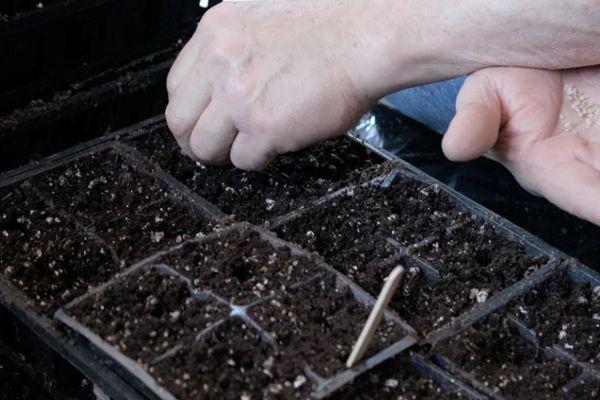
To ensure early fruiting of the Leningrad Giant, tomatoes should be sown in late March. A week and a half beforehand, dig pits in the greenhouse and fill them with hot manure. The fertilizer should be spread tightly in the center and along the sides of the pit, leaving the remaining areas uncompacted. Once the manure has settled, level it and add soil. When the soil temperature reaches 25°C, the seedlings can be planted.

Tomato bushes planted in the ground require careful care.
At first, tomatoes are watered at the roots every five days, and in May, watering increases to daily. Watering should be generous—about a bucket per 1 m² of planting area.
A week after planting, tomatoes need to be fertilized. A mullein solution is used for this. Ammonium nitrate fertilizer (50 g per bucket of water) is also recommended.
If the stems of your bushes turn purple, it's likely the plant is deficient in phosphorus. To compensate, add wood ash to the soil at a rate of 75 g per 10 liters of water.
Sunny days are a great opportunity to remove the film and air out the plants.
Hardening off seedlings occurs a couple of weeks before planting them in their permanent location. Initially, the greenhouse should be opened for 2-3 hours, gradually increasing this time to 8 hours. After seedling growth has completed, it is recommended to reduce watering slightly and moisten the future plants immediately before planting them in the ground.
Leningrad Giant tomatoes are susceptible to a number of infections that you need to be aware of. So, tomatoes often show signs of disease, including:
- browning of vessels on the stem cut;
- formation of round spots with a crack.
As the disease progresses, it risks destroying a large portion of the crop, but it can be controlled. For example, bacterial canker can be prevented by disinfecting the soil in the greenhouse and treating the seeds with corrosive sublimate in advance.

Some diseases of the Leningrad tomato affect the leaves of the plant.
If the leaf blade has curled into a tube and become rough to the touch, this indicates a lack of phosphorus and moisture. It will be impossible to save the seeds of such a tomato plant: leaf curling is a genetic disorder.
The appearance of silvery-white spots indicates an infection. When this sign appears, treat the plant with Bordeaux mixture.
The appearance of brown streaks indicates a streak infection. This disease attacks seeds, so before sowing, carefully select the seed and treat it with a potassium permanganate solution.
Related posts:
 Description and characteristics of Giant tomato varieties for growing in greenhouses and open ground
 Description and characteristics of the Pink Giant tomato variety, yield and cultivation
 The best tomato varieties for the Northwest with descriptions and characteristics
 Description of the best tomato varieties for open ground and greenhouses in the Krasnodar region
 Description of the Raspberry Giant tomato variety, cultivation and care features
 Description of varieties of sowing peas and cultivation, to which family they belong
 Description of the Leningradsky Kholodok tomato, cultivation, and reviews of the variety
 Characteristics of the Leningrad early-ripening tomato and cultivation techniques
Last year I grew this variety. The fruits are very large and the flavor is sweet and rich. My daughter loves them. I only grow tomatoes in greenhouses; they grow better that way and are easier to care for.