
The "Rannyaya Lyubov" tomato is an early-ripening variety. It is characterized by rapid fruit development and low maintenance, but its low yield is considered a drawback. Despite this, consumers appreciate the "Rannyaya Lyubov" tomato for its excellent flavor and the ability to pickle it for the winter. The variety was registered in 2001. It is recommended to grow these tomatoes outdoors and in unheated greenhouses.
For the highest possible yield, this tomato variety is best grown in the southern regions of Russia. In the northern regions, it grows only in a well-heated greenhouse.
Some information about the plant
The characteristics and description of the Early Love variety are as follows:
- The plant's bush can reach a height of 170 to 190 cm when grown under plastic cover in central Russia. In southern regions, bushes reach a height of 200 cm.
- Tomatoes appear 90 days after the first sprouts appear.
- The shoots are 60% covered with leaves, and the leaves themselves, which are medium-sized, are colored in dark shades of green.
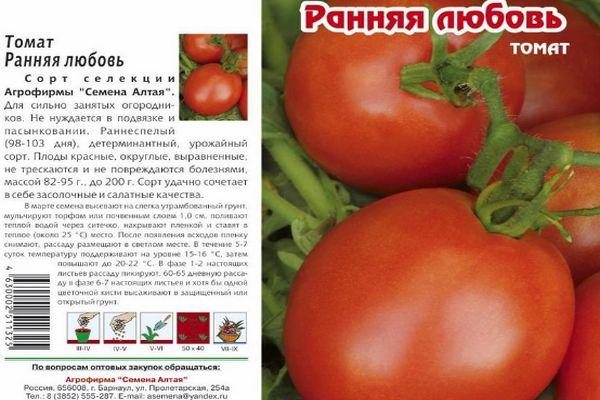
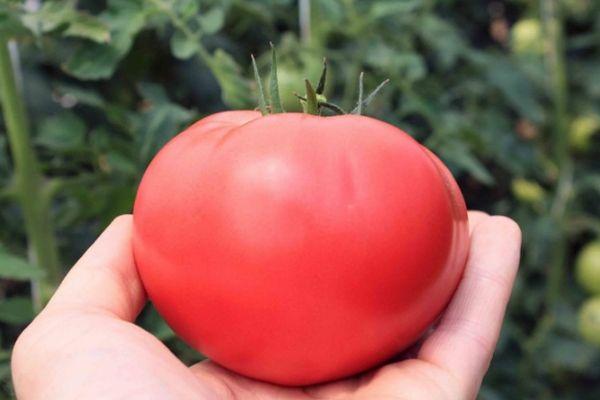
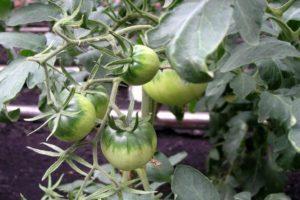
The variety's characteristics and description continue with its fruits. They are raspberry or red. Four to five fruits often ripen on the racemose ovaries. Each fruit weighs approximately 90 g. They are spherical in shape, slightly ribbed. The skin is medium-thick. Some gardeners manage to obtain specimens weighing up to 0.2 kg.
Early Love, described above, has a yield of up to 2 kg per bush.
Photos of this plant can be found in agricultural reference books.
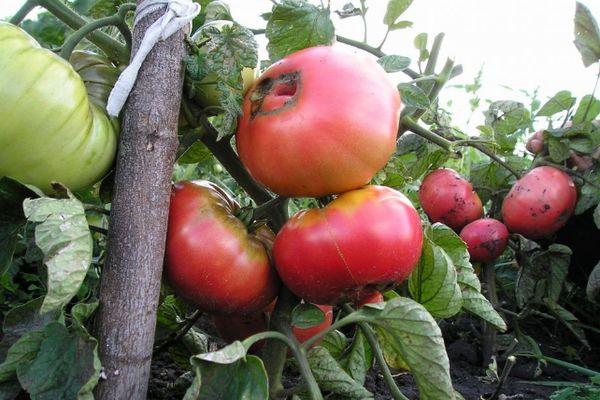
Despite the low yield, reviews of this variety are positive, as gardeners and farmers note the tomato's high immunity to various diseases and most garden pests. The most common tomato disease, late blight, bypasses the Rannyaya Lyubov tomato.
Consumers note the properties of this type of tomato, including its ability to be stored for a long time in cool rooms and cellars. The fruit's skin does not crack, allowing it to be transported over long distances.
Tomatoes of this variety are recommended for canning whole fruits and marinating in barrels. They are used to produce tomato juice, make salads, and are eaten fresh.
How to grow this tomato?
Farmers who decide to grow bushes of this variety should know the peculiarities of growing these tomatoes.
In early March, the seeds should be sown in lightly compacted soil enriched with peat. The seeds should be buried 10 mm deep. It is then recommended to water them with warm water using a sieve.
The seedling trays are covered with plastic film and transferred to a room where the temperature is maintained at around 24–25°C. Once the seedlings have emerged, the film can be removed, and the seedling trays should be illuminated with a special lamp. The room temperature is then lowered to 16°C.
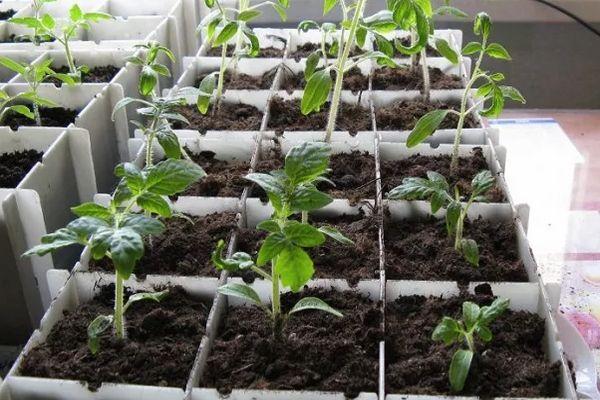
The seedlings are kept in these conditions for a week. After this, the temperature is raised again to 20–22°C.
After 1-2 true leaves appear, the seedlings are pricked out. When they are two months old, have 6 or 7 leaves and a flower bud, and are transplanted into the ground. The gardener does not need to remove side shoots or tie the bushes to supports.
Watering, loosening the soil, and weeding are carried out according to the same method as all tomatoes. Although the plant is unpretentious, it is best to water it with warm water. Fertilizing the bushes is recommended using complex fertilizers containing high levels of phosphorus and potassium.
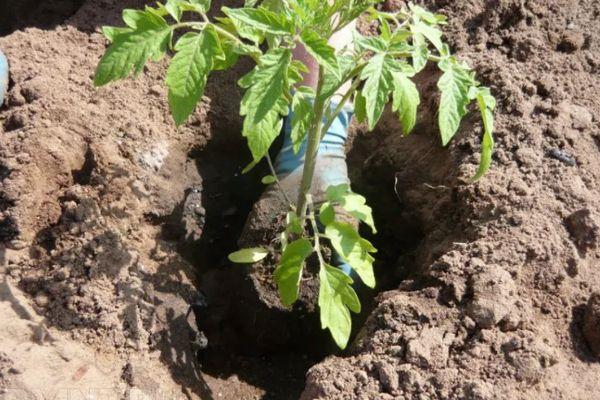
It is necessary to take into account the fact that the plant is capricious about fertilizers during stem growth. The variety's weakness is considered a drawback, but the tomato tolerates low moisture levels well. Two to three bushes are planted per square meter of garden bed, which guarantees a yield of 4-6 kg of fruit.
Related posts:
 Growing specifics and description of the tomato variety My Love
 Description and growing guidelines for the tomato variety Love Earthly F1
 Description and properties of the 50 best varieties of asparagus beans, benefits and harms
 Description of the best early cabbage varieties, cultivation and care in open ground
 Description of the Lyubov f1 tomato and tips for growing it yourself
 Description of the Early Girl tomato and rules for pollinating the plant
 Description and subtleties of growing the plum variety Zarechnaya rannyaya
 Description of the 30 best plum varieties for the Moscow region, planting and care