
The Lyubov f1 tomato has been grown in open fields, under plastic covers, and in greenhouses for 10 years. It belongs to the group of mid-season hybrids. This tomato is used fresh, for garnishing various sandwiches, and in salads. It is also used as a seasoning for soups. The berries are used to make sauce, tomato paste, and ketchup.
Some information about the plant
The characteristics and description of the variety are as follows:
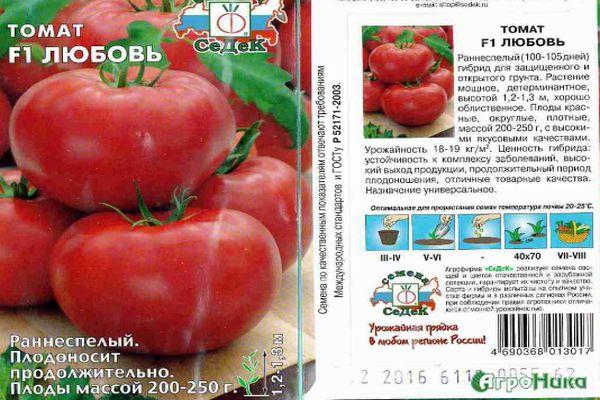
- The first harvest of the described tomato can be obtained 105-110 days after planting the seedlings.
- If the plant is grown in open ground, the height of its bush is 1.1-1.2 m, and when growing tomatoes in a greenhouse, this figure increases to 130 cm.
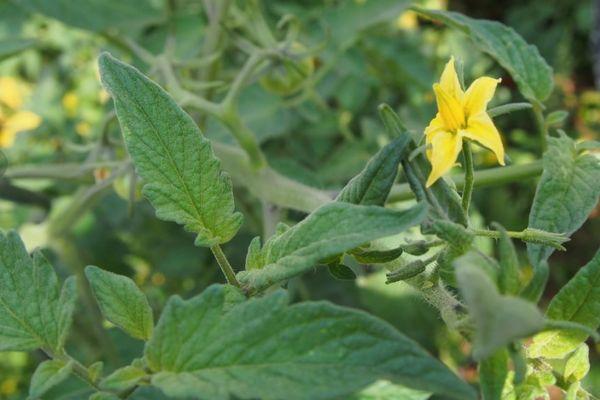
- The bushes produce a large number of medium-sized leaves. The leaves are a standard green color.
- The first cluster forms around 7, sometimes 9 leaves. It's recommended to leave side shoots in these locations to achieve the desired bush shape. The variety description calls for forming a second stem from the remaining shoot. All other side shoots should be removed. They should not be pinched until they reach a length of 5-7 cm. A stump up to 5.0 mm high should be left in the place of the removed shoot.
- Tomato fruits weigh on average from 220 to 250 g. Growing bushes in a greenhouse allows you to get berries weighing up to 0.4 kg.
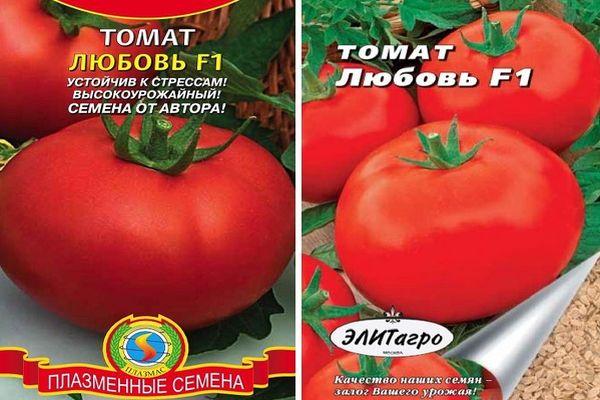
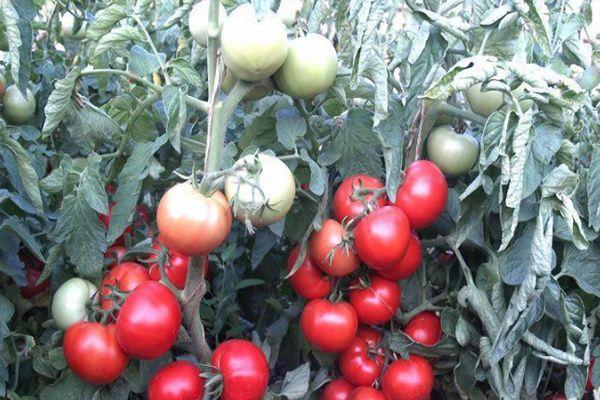
- Lyubov tomatoes are spherical in shape, painted in vibrant shades of red. The berries are uniformly colored, with no green spot near the stem. The skin is thick enough to prevent cracking.
Those farmers who planted and grew the described variety note that the yield of these tomatoes ranges from 16 to 20 kg/m².
The hybrid is resistant to various diseases. The plant does not drop ovaries or flowers in the absence or insufficient moisture.
Gardeners' reviews have shown that this tomato grows well in open ground in southern Russia. In the central part of Russia and Siberia, this variety is recommended for cultivation in greenhouses or plastic film greenhouses. The harvest can be transported over medium distances. The berries can be stored in a cold cellar for 15-20 days.

A drawback of this variety is the plants' heavy dependence on fertilizer. Without or insufficient fertilizer, yields decrease sharply.
How to grow seedlings yourself
If the farmer plans to transplant the seedlings to permanent soil in the last ten days of May, the seeds should be germinated in late March. If the gardener has a polycarbonate greenhouse, the seeds are sown in the first ten days of March, and the plants are transplanted to permanent soil in the last ten days of April. The harvest then occurs in late June.
With this arrangement, large berries will develop on the bushes.
After disinfecting the seeds with potassium permanganate and sifting them with water, they are sown in boxes with tomato soil. A complex fertilizer is added to the soil beforehand. The seeds are watered with warm water. After sprouts emerge, they are pricked out when the seedlings have developed one or two leaves.
Before planting in a permanent bed, young bushes are hardened off for 7 days. Plants are planted in a 0.4 x 0.7 m format. Before planting, the soil in the beds is loosened and disinfected. Then, holes or trenches up to 8 cm deep are dug and filled with a complex mixture containing nitrogen, phosphorus, and potassium.
If the soil in the beds is too dense, it is reduced by adding sand and peat to the soil.
When the soil in the beds becomes acidic, they are treated with dolomite flour or chalk. Lime is recommended to be added to the soil once every 36 months.
Caring for the Love variety
Plants need to be watered every 5 days. Warm, settled water should be applied to the base of the plants in the required volume. Monitor soil moisture. It's best to postpone watering if the soil hasn't yet absorbed the water from the previous watering. Water the plants in the evening, after sunset.
Loosening and weeding are carried out as needed. These procedures are most often performed once every 10 days. It is recommended to remove side shoots from the bushes throughout the growing season. To prevent damage to the plant's branches, the bushes are tied to sturdy supports or trellises.

Fertilize tomato plants up to four times per season. The Lyubov variety is demanding in terms of fertilizer quality. For normal plant development, use a combination of potassium and phosphorus fertilizers, as well as nitrogen fertilizers.
To prevent various diseases, bushes are treated with Fitosporin after transplanting to their permanent location. If symptoms of disease appear, the infected bushes should be destroyed by moving them outside the garden. Diseases should be controlled with medications or folk remedies. Garden pests are controlled with various toxic substances.
Related posts:
 The best eggplant varieties for growing in a polycarbonate greenhouse: planting and care
 Description of the Syzranskaya Pipochka tomato and tips for growing seedlings yourself
 Description of the best varieties of black tomatoes for open ground and greenhouses
 Characteristics of the Siberian Miracle tomato and tips for growing it in your garden
 The best recipes for freezing vegetables at home for the winter
 Is it possible to soak treated cucumber seeds before planting and how to do it correctly?
 Description of the tomato. The right size and growing a hybrid variety yourself.
 When and how to properly transplant tomato seedlings, the best days in 2025