
The Bezrazmerny tomato lives up to its name, gifting vegetable growers with surprisingly large fruits. The plant is sometimes so heavily laden with tomatoes that the bush collapses under their weight. Gardeners won't have to put in much effort to reap an exceptional harvest: this tomato is well-adapted to Russian conditions.
Plant characteristics
The bush is determinate, with independent topping after the 5th or 6th cluster has opened. Stems reach 1.5 m and then stop growing. However, staking the Bezrazmerny tomato is necessary, as the total weight of the ripening berries can be very heavy.
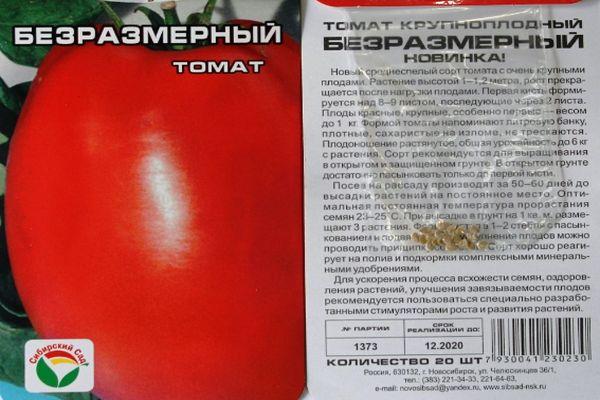
This is a non-standard plant; it can be left untrained, or just two or three of the strongest shoots can be left. For good fruiting, these plants require a lot of space, so no more than three plants per square meter should be planted. If planted too densely, the tomatoes in the lower tiers ripen slowly, inhibiting the development of ovaries on subsequent clusters. As a result, the grower may get a few large fruits, followed by a small, sparse crop.
This mid-season variety takes 115-120 days from sowing to ripening of the first tomatoes. Bezrazmernye tomatoes begin bearing fruit in the second half of July, or in the event of cold, prolonged rains, in early August. Fruiting is extended, so you can harvest until autumn, and any unripe tomatoes can be stored.
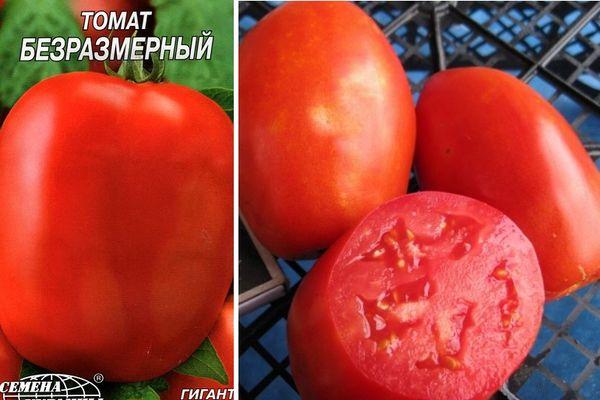
The variety's characteristics and description note its high yield. This figure reaches 6-7.5 kg of tomatoes per bush, but can be higher or lower depending on proper agricultural practices. Timely harvesting of nearly ripe berries on the lower tiers helps slightly increase the yield. In open ground, it's best to harvest them before they reach biological maturity.
Blanched tomatoes have already accumulated sufficient sugar content, and their flavor will not be affected by artificial ripening. The growing ovaries will receive more nutrients and will be larger.
The Bezrazmerny tomato variety is resistant to fungal infections that often affect late-ripening tomatoes (brown rot, Alternaria, etc.). However, with late blight becoming widespread, tomatoes can only be protected from the disease with special treatments. Blossom-end rot can also damage the crop, but this disease affects fruits due to a calcium deficiency and is easily prevented.

Consumer properties of fruits
Three to five ovaries form per cluster, with the first one or two being larger than the others. The tomatoes are ovoid or cylindrical in shape, reminiscent of the Grushovka variety, but Bezrazmerny is significantly larger. Each tomato averages 500-700 g, but some can reach 1 kg.
The skin is thin but strong, and the tomatoes are not prone to cracking when ripe. Slightly unripe berries are easy to transport, and ripe ones keep well in the refrigerator (up to 1 week). At biological ripeness, the tomatoes turn raspberry-pink; in open ground, a greenish tint may persist on the shoulders and base. At technical ripeness, the berries are pale green, with a dark spot.
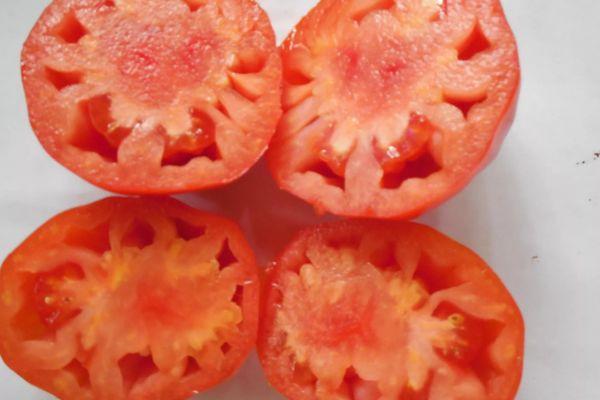
The flesh is grainy and sugary when cut. Its color is slightly lighter than the tomato's skin, a rich pink. The core is uniformly colored, with no lighter center. Numerous small seed chambers are visible when cut. The flesh has a beef-like texture, with a tender and juicy consistency.
Reviews from vegetable growers who have planted this variety attest to the excellent flavor of the fruit. Bezrazmernye fruits are sweet, with a slight tartness that provides a balanced flavor. The aroma is classic, tomato-like.
Delicious tomatoes are great as a salad vegetable. Beautiful slices are perfect for any platter or appetizer, and large slices are perfect for sandwiches. The pureed pulp makes a refreshing gazpacho or hot tomato soup soup, add tomato pieces to any dish that requires this ingredient.

Excess large tomatoes can be processed into tomato juice or puree. The thick, slightly boiled pulp retains almost all the vitamins and makes a good filling for tomato preserves. Due to its low acid content, tomato products made from the Bezrazmerny variety are recommended for dietary and baby food.
How to Grow Dimensional Tomatoes?
To ensure a good harvest, sow the seeds for seedlings in a timely manner. For mid-season varieties, sow them three months before transplanting them to their permanent location. Use a mixture of equal parts soil, humus, and sand as a substrate. To enrich the mixture with calcium and reduce acidity, add 2 tablespoons of chalk or ground eggshells per 10 kg of soil. You shouldn't add too many minerals: excess calcium inhibits the absorption of other nutrients, and the seedlings will grow slowly.

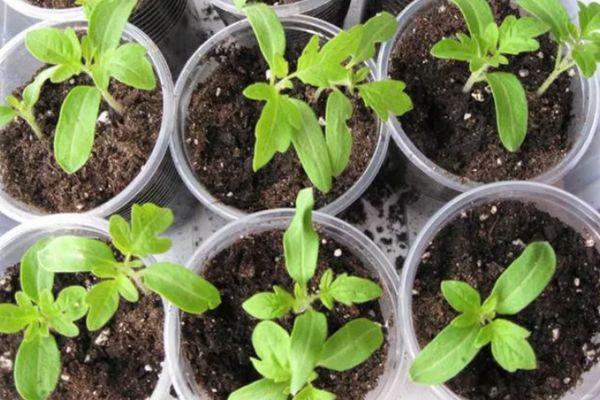
The soil prepared for growing seedlings needs to be disinfected. The easiest way to do this is with a strong, hot solution of potassium permanganate: saturate the soil directly in the container with the liquid. Once it has cooled, you can sow the seeds.
Spread the seeds over the soil surface and cover with a 0.5 cm layer of dry sand. To retain moisture, cover the container with plastic wrap with 2-3 holes and place the seeds in a warm place. When seedlings appear, remove the plastic wrap.
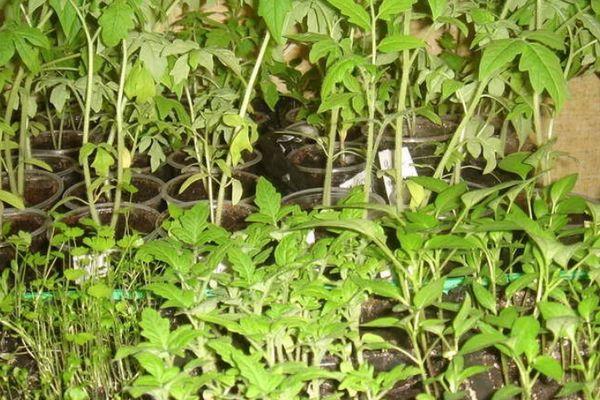
When the seedlings have grown to 2-3 leaves, transplant them into individual pots (0.5 L). Maintain a regular watering schedule and do not allow the soil to dry out. Transplant the 90-day-old seedlings into a greenhouse or vegetable garden using a 40x70 cm pattern. To prevent blossom-end rot from destroying the large tomato crop, add 1-1.5 kg of chalk or another calcareous substance per square meter of soil when preparing the plot.

To form a bush with 2-3 stems, leave two side shoots on the main stem. The first should grow above the first flower cluster that has unfolded, and the next one should only grow after the second cluster has formed.
Related posts:
 The best eggplant varieties for growing in a polycarbonate greenhouse: planting and care
 Methods for planting and propagating cherries at home
 Is it possible to soak treated cucumber seeds before planting and how to do it correctly?
 Carrot care guidelines for outdoor cultivation to ensure a good harvest
 Top 40 DIY New Year's Baking Recipes for 2020
 Causes and treatment of eggplant pests and diseases, how to combat them at home
 The best grape varieties for growing in the Urals, planting and care rules in summer
 The health benefits and contraindications of black currants