The Siberian Miracle tomato was developed by Altai breeders. The variety was added to the State Register of Vegetable Crops in 2007. Siberian Miracle tomatoes are recommended for cultivation in greenhouses, hotbeds, and open fields. The hybrid grows well in both hot and cold weather. Siberian Miracle tomatoes are used in salads, pastes, juices, ketchups, sauces, and canned for winter. The berries' thick skin prevents cracking, allowing the harvested crop to be transported over any distance without loss.
About the plant and its fruits
The characteristics and description of the Miracles of Siberia variety are as follows:
- The vegetative period of tomatoes from the first shoots to fruits lasts 120 days.
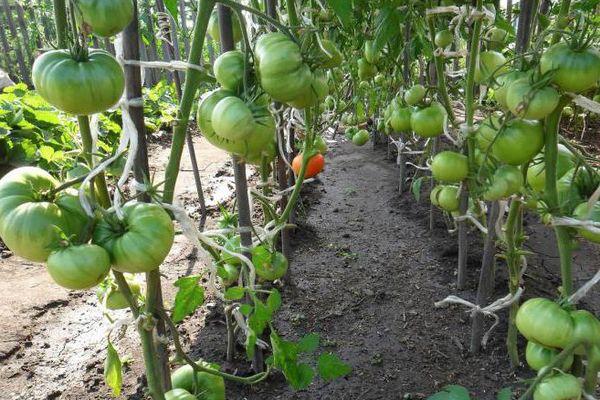
- The plant's bushes are quite tall. In open ground, this figure reaches 1.5 meters, while in greenhouses, the tomato's growth is limited only by the ceiling of the greenhouse.
- Large leaves develop on the stems. They are colored a standard green.
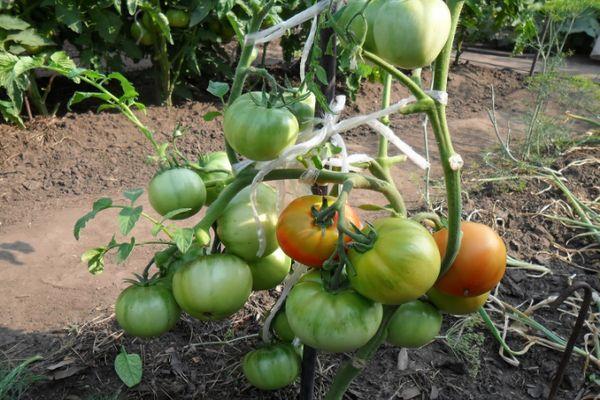
- To prevent the branches of the bushes from breaking under the weight of the berries, it is recommended to tie the stems to stakes at least 150 cm long or to strong trellises.
- The shape of the Siberian Miracle tomato variety resembles an egg.
- The first clusters produce the heaviest fruits. Berry weight ranges from 0.3 to 0.35 kg. The average harvested fruit weight is 0.15-0.2 kg.
- Unripe tomatoes are light green in color, with a dark spot visible on the stem. Ripe berries are red or crimson. Their flesh is quite juicy and firm.
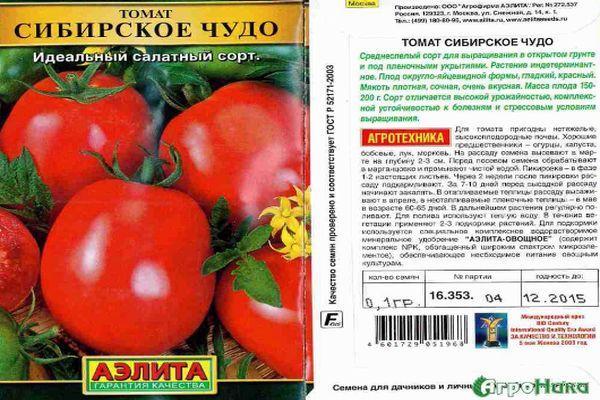
A full description and photo of the Siberian Miracle tomato can be found in various agricultural reference books and catalogs of companies selling plant seeds.
According to reviews from farmers who have planted and grown Siberian Miracle tomatoes, this variety produces high yields both outdoors and in greenhouses. Gardeners report yields of up to 8 kg per square meter of garden bed when growing outdoors. Those who planted in greenhouses received up to 10 kg per square meter. These figures represent the minimum possible yield, as following all agricultural practices and expert advice can increase yields by 30-40%.
Breeders recommend this variety for cultivation throughout Russia. In the south and central regions of the country, the tomato is planted in open fields, while in Siberia and other northern regions, it is grown in greenhouses and hothouses.
Growing tomatoes in your own backyard
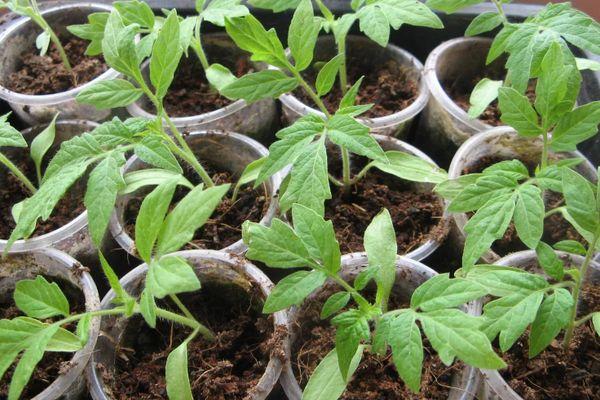
This plant is propagated using seedlings. The seeds are treated with potassium permanganate for 15 minutes and then placed in boxes filled with special tomato soil. The seeding depth ranges from 10 to 20 mm. After sprouts emerge, the boxes containing the seedlings are moved under fluorescent lamps.

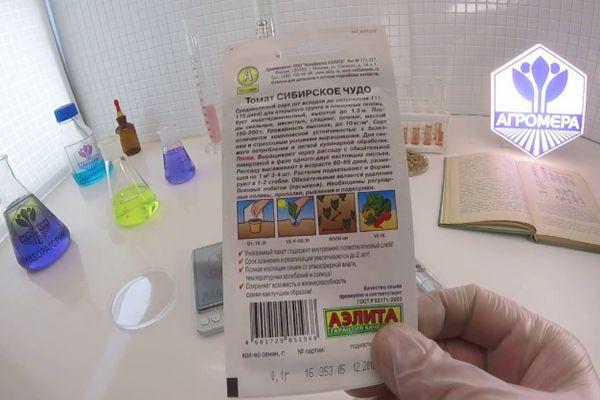
Young bushes are fed with organic matter and watered with warm water. After 1-2 leaves appear, the seedlings are pricked out. The seedlings should be at least 60 days old by the time they are transplanted to their permanent soil.
If growing tomatoes in a greenhouse, it is recommended to plant no more than 3 plants per square meter. When planting in open beds, 4 plants are usually planted per square meter. Side shoots are removed from the stems throughout the growing season. It is recommended to train the plants into single or double stems, regardless of whether they are grown in a greenhouse or outdoors. When doing this, securely tie the stems and branches to sturdy supports.
Caring for tomato bushes
Fertilize plants every 7 days. Complex mineral fertilizers and organic matter are suitable for this purpose. When growing bushes in a greenhouse, it is important to regularly ventilate the room, as this helps combat certain insects and relieves heat stress. Water the bushes with warm water after sunset. This is recommended twice a week. In hot weather, increase the frequency of watering.
The soil in the beds around the plant roots should not dry out. Mulching is recommended to maintain moderate soil moisture and reduce the risk of garden pests.
When signs of disease appear, plants are treated with chemicals that kill fungi and microbes. Diseased leaves and stems are removed and then destroyed outside the garden.
To eliminate weeds, you need to weed the beds once a week. This measure will prevent the spread of late blight and other diseases of nightshade crops.
If garden pests appear on tomato leaves and multiply, experts recommend eliminating them using traditional methods (treating plants with copper sulfate or soap solution) or chemical pesticides. If slugs are spotted in the area, ash flour can be applied to the soil around the tomato roots. Ash helps eliminate the insects and their larvae that feed on the plant's root system.
Related posts:
 Description and characteristics of the miracle cherry hybrid, planting and care of the variety
 Description of the Miracle of the Land tomato, characteristics, cultivation and yield of the variety
 Description and characteristics of Balcony Miracle tomatoes, growing at home
 Description of the Raspberry Miracle tomato variety, its characteristics and cultivation
 Description of the tomato variety Miracle of the Market, features of cultivation and care
 Description of the heart-shaped tomato Miracle of Walford and its growing characteristics
 Description of the Miracle of the World tomato variety, its characteristics and yield
 Description of the remontant raspberry variety Orange Miracle, planting and care