
Popular among gardeners, the June tomato is one of the modern, universal varieties, suitable for cultivation in the most challenging climatic conditions.
Features of the variety
The June tomato plant is a determinate variety. This means that the main stem stops growing after 4-5 inflorescences have formed. After this, the fruits begin to actively fill and ripen. Thanks to this characteristic, the June variety produces a nearly instantaneous harvest.
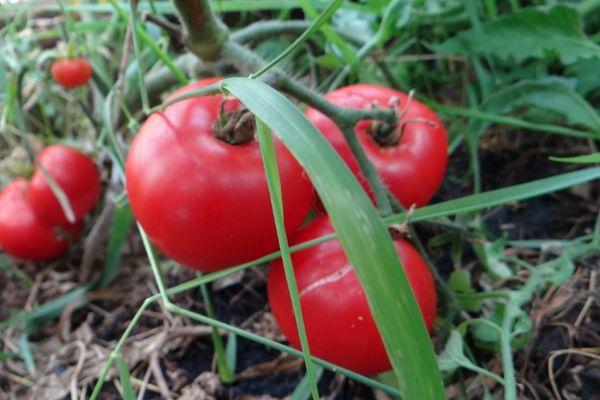
The plants don't exceed 40-45 cm in height. June tomatoes don't tend to produce side shoots and don't require shaping or staking. The stems rarely bend under the weight of the fruit; only the tomatoes from the bottom trusses may end up on the ground.
The June variety is an early-ripening variety. Ripe fruits can be harvested 95-100 days after seedling germination. When planted under plastic covers (in May), the first harvest can be collected as early as the third ten days of June. Growing in open ground slightly delays this period to early July. However, in any case, the main harvest can be completed before the onset of late blight (in the second half of summer). June tomatoes are resistant to verticillium wilt and tobacco mosaic.
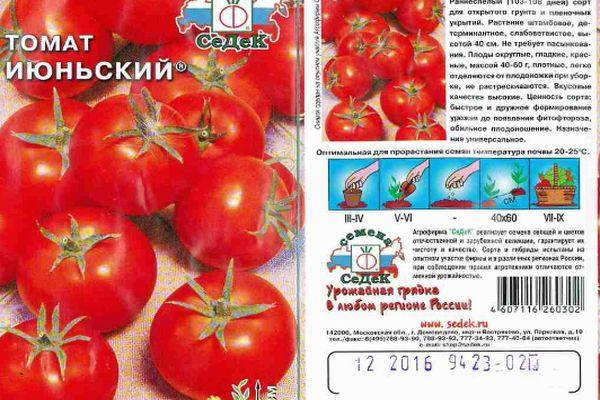
The plant is undemanding and tolerates excess moisture and cold well, especially in unfavorable northern climates, as well as the dry and hot early summer weather in Siberia and the Altai Mountains. The variety's yield is stable, and with dense planting (6-8 plants per unit area), it can reach up to 10 kg.
The June tomato variety is recommended for early harvesting and greenhouse cultivation. Harvesting in early to mid-June allows for rapid planting of other crops. To ensure uniform fruit size and ripening time, it's best to pick the largest tomato on the bottom truss when it's unripe. Gardeners report that this method encourages the remaining tomatoes to ripen quickly and almost simultaneously.
Characteristics of fruits
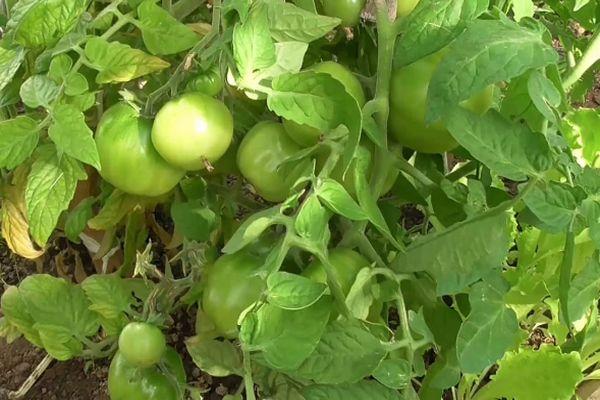
The plant produces neat, multi-fruited clusters containing 7-8 identical, spherical tomatoes. June tomatoes are unribbed and have smooth, uniformly colored skin.
The fruit's skin is thick and strong. The tomatoes are resistant to cracking and rotting during ripening, resulting in a high yield. Small tomatoes (average weight 100-130 g) are easy to transport and keep for a long time.
The fruit's flesh is dense and juicy. Fully ripe tomatoes have a sweet and sour flavor. The aroma is distinctive and distinct.
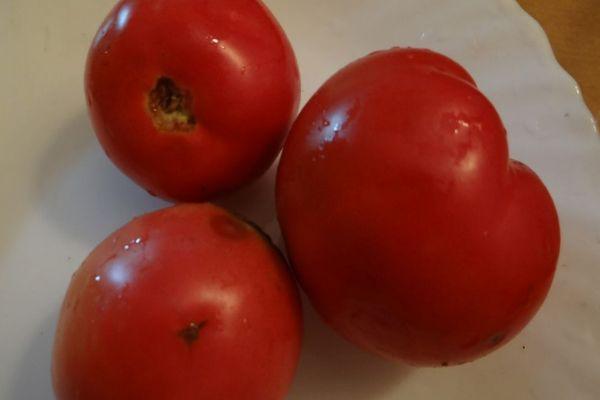
Beautiful, small, and calibrated tomatoes are perfect for whole-fruit canning. The preserves look impressive, especially when combined with vegetables. The tasty and juicy fruits are also suitable for processing. The brightly colored flesh makes it possible to produce juices and sauces of the highest quality.
Due to its early ripening, the June tomato variety is also a sought-after vegetable for fresh consumption. The firm tomatoes hold their shape well in salads or slicing, and are perfect for sandwiches and appetizers. Their thick walls and firm skin make them suitable for stuffing, raw, or baked. The vibrant color of the flesh makes June tomatoes ideal for making sauces, soups, or vegetable caviar.
Agricultural technology of cultivation
The characteristics and description of the variety as early ripening dictate the specifics of growing seedlings:
- sowing seeds should be done no earlier than 50-60 days before planting in the ground;
- when 2-3 true leaves appear, transplant the seedlings according to a 10x10 cm pattern;
- Water the seedlings so that the soil in the box does not dry out.
To avoid blackleg, which can destroy most young seedlings, it's advisable to monitor soil temperature. It shouldn't drop below 16°C, even at night.
June tomatoes are less sensitive to air temperature.
To prevent diseases, you can dust the soil and seedling stems with wood ash. Do this after each watering.
Before planting tomatoes, the soil should be fertilized with a complex mineral fertilizer suitable for this crop (Kemira, Signor Tomato). The early-ripening variety will not require further feeding—the bushes should receive all the nutrients during the short growing season.

Further care consists of timely watering. If the season is dry, the bushes will need to be watered, but not allowing the soil to dry out more than 2-3 cm deep. In practice, watering can be done every 5-6 days. The recommended water consumption is 2-3 buckets per 1 m².
Related posts:
 Description of the best varieties of black tomatoes for open ground and greenhouses
 What is the best way to feed tomato seedlings to make them plump?
 What varieties of tomatoes are best to plant in a polycarbonate greenhouse?
 What fertilizers and when to use for feeding tomatoes in a greenhouse
 Description of the best tomato varieties for open ground in the central zone
 Description of the best tomato varieties for open ground and greenhouses in the Krasnodar region
 The best and most productive tomato varieties for greenhouse cultivation in the Urals, with descriptions
 The best tomato varieties for growing in the Leningrad region for greenhouses and open ground