
The hybrid tomato Taimyr, whose characteristics and description are one of the most discussed topics among gardeners in the northern regions of the country, is a real gift for those forced to grow crops in cold climates and short daylight hours.
Taimyr tomatoes successfully withstand spring and summer cold snaps, quickly recovering and continuing to produce fruit. This variety is recommended for growing in greenhouses and hotbeds. The harvest period continues until the first frost, which pleases lovers of fresh vegetables.
General properties and characteristics
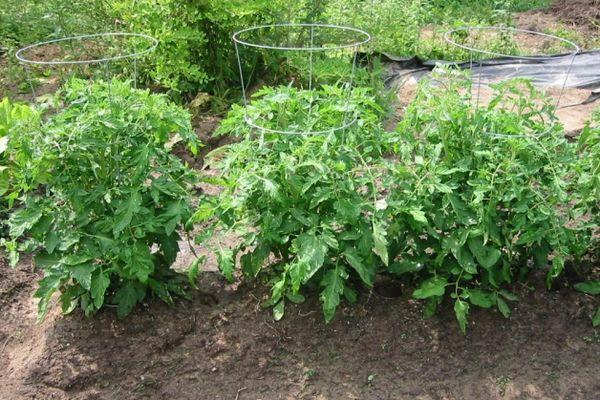
The Taimyr tomato forms sturdy, low-growing bushes up to 40 cm tall. Its well-developed root system extends deep into the soil, where it is reliably protected from freezing temperatures. The crown is sparse, formed by large, dark green leaves. This bush shape ensures good light and ventilation for the ripening fruit.
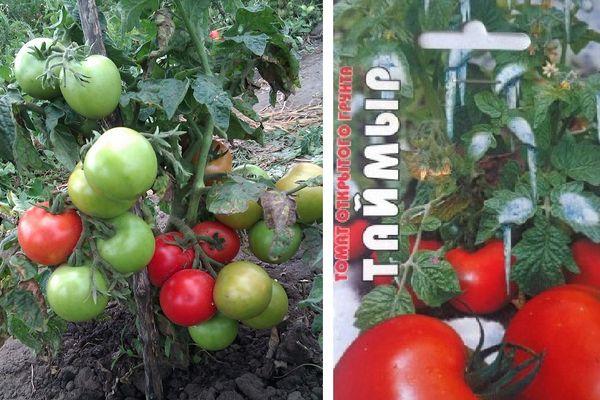
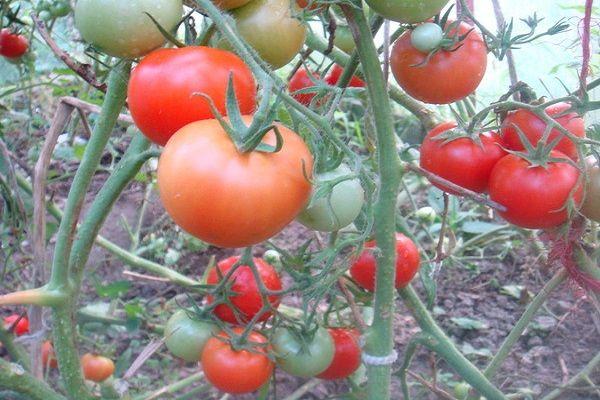
Tomatoes form clusters of 5-7 tomatoes each. Up to four clusters can ripen simultaneously on a single plant.
The main properties of the Taimyr tomato variety are:
- average weight - 80 g;
- shape - regular spherical;
- color - bright red;
- the pulp is dense and sugary;
- taste - distinct tomato;
- shelf life - long;
- minimum yield is 3-4 kg per bush.
Tomatoes have strong immunity to diseases that affect nightshade crops. Bushes successfully resist blossom-end rot and late blight, provided they are regularly sprayed and well-ventilated during hot periods.
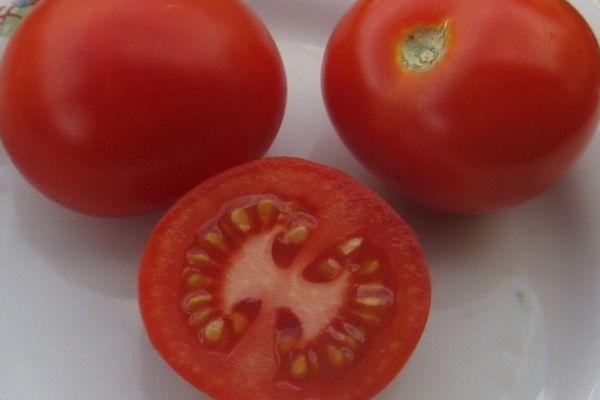
The fruits are versatile in culinary use. The first harvest is served raw, sliced, and in salads. As the ripe fruits grow, they are preserved in jars, salted in barrels, and stored. Surplus produce is successfully sold at wholesale and retail outlets.
Pros and cons of the variety
The main advantage of Taimyr tomatoes is their resistance to low temperatures. This ability allows them to grow a decent harvest until autumn, without worrying about sudden changes in weather.
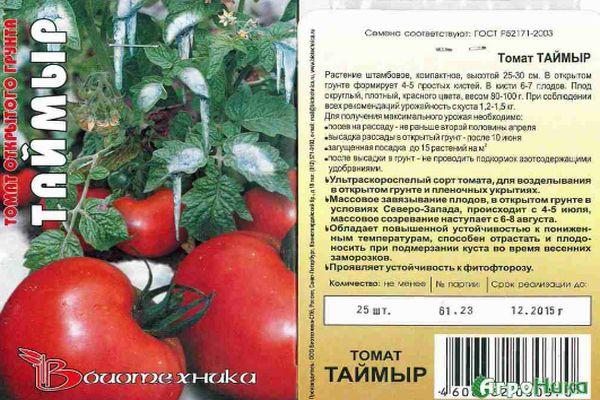
In addition, the variety has the following advantages:
- compact bushes, resistant to wind, supporting the weight of the fruit well;
- the ability to regulate the fruit load on the bushes by removing side shoots;
- early ripening allows to avoid infections that become active by mid-summer;
- there are enough low greenhouses, including collapsible ones, for cultivation;
- good ripening of fruits collected green and brown;
- Tomato tolerance to transportation and storage.
Gardeners have not found any significant drawbacks to the tomatoes. It is recommended to tie the bushes to prevent the dense foliage of closely planted plants from blocking the air supply to the soil. Furthermore, the variety is sensitive to nitrogen fertilizers. Excessive use causes stem growth to the detriment of yield.
Growing and care
Tomatoes can be grown equally successfully from seedlings or by planting seeds directly into the beds of hotbeds and greenhouses.
Seed preparation should be carried out in the following sequence:
- pre-soaking in a warm solution of hydrogen peroxide;
- placing between napkins soaked in a nourishing composition;
- Place in a warm place until germination.
The seeds are planted in peat pellets or pots filled with a nutrient mixture. Drainage is placed at the bottom of the pots to prevent mold, mildew, and excess moisture. The manufacturer recommends a planting depth of up to 20 mm. The seeds are then covered with loose soil, which is immediately moistened with water from a spray bottle.
After the first shoots appear, the pots should be moved to a warm, bright location. Seedlings require 8 hours of light per day for normal growth. After the first leaves form, gradually lower the room temperature, bringing it down to 17°C within a week.
Transplanting seedlings into beds usually takes place in the first ten days of June.
The following activities are carried out on the ground in advance:
- the beds are well loosened;
- planting sites are treated with copper sulfate;
- compost, sand and wood ash are added to the beds;
- holes are made for plants.
The seedlings are transplanted into the holes as a whole plant, with soil still in the roots. 10-15 plants are planted per square meter, depending on the soil fertility. Stake stakes are immediately inserted nearby for support.
Care for this variety involves regular weekly watering, fertilizing, and weeding. To prevent overwatering, regularly loosen and mulch the soil around the roots. Pest control is achieved by spraying the plants with insecticides and watering the area around the bushes.
Related posts:
 The best eggplant varieties for growing in a polycarbonate greenhouse: planting and care
 A review of the best tomato varieties for the Volgograd region
 The best grape varieties for growing in the Urals, planting and care rules in summer
 80 Best Eggplant Varieties for Different Regions with Descriptions and Characteristics
 What tomato varieties are best for growing in the Vologda Oblast?
 Description and characteristics of the sweetest tomato varieties for greenhouses and open ground
 Description of the best varieties of black tomatoes for open ground and greenhouses
 How to control carrot flies with medications and folk remedies