
The Polish-bred tomato variety "Donkey Ears" can be grown both outdoors and in greenhouses in central Russia. However, to achieve a high yield and excellent flavor, it requires appropriate conditions.
General characteristics of tomato
The bush grows without height restrictions, like an indeterminate tomato. Any gardener who has planted rare tomatoes will tell you that fruit set continues throughout the season. Many note that the Donkey Ears variety is tolerant of high greenhouse temperatures, does not shed its flowers, and produces a large number of fruit sets.
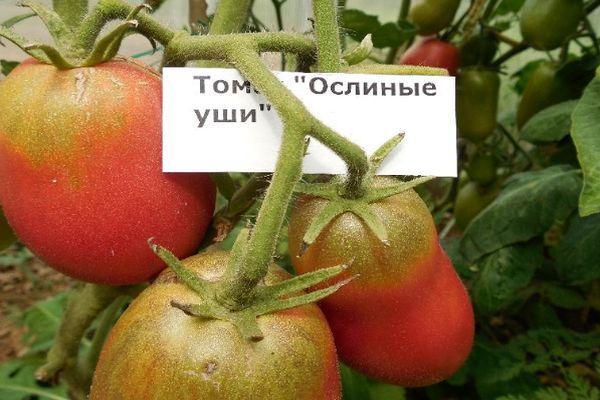
In open ground conditions, the variety's yield may be lower than in a greenhouse. The tomato is poorly adapted to temperature fluctuations and cold precipitation in the second half of summer; the fruits crack and are susceptible to rot. However, in a good sunny location under favorable conditions, the plant can produce good-quality tomatoes.
This characteristic allows us to classify Donkey Ears tomatoes as a variety recommended for cultivation in closed ground: in a greenhouse or film greenhouse.
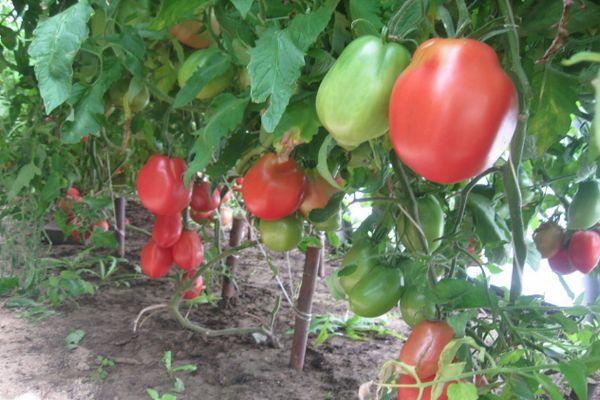
This tall bush can be trained into 2-3 stems; the plant isn't known for its remarkable green growth. The foliage is lacy, with small leaf blades on long petioles that barely thicken the bush. Donkey Ears do require side shoots, although this won't be done very often.
Staking is done as the flower clusters unfold. They form every 2-3 leaves, and it's best to tie them under each inflorescence. Once the plant's ovaries begin to form and ripen, this method will protect the graceful stem from unnecessary strain.
Donkey Ears Tomato Fruits
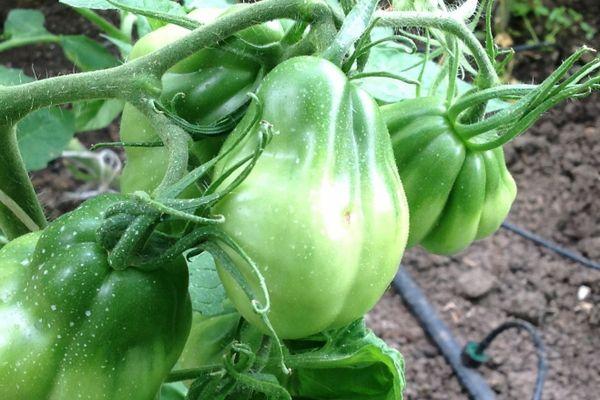
The variety's name derives from the shape of its fruit: plum-shaped tomatoes with a pointed tip, very elongated. According to gardeners, they are slightly flattened on the sides and resemble animal ears. Donkey Ears are 10-12 cm long, weighing up to 250-300 g, but most tomatoes on a truss are slightly smaller, up to 200 g.
Tomatoes are collected in clusters of 4-6 pieces, and the total yield reaches 5 kg from 1 bush.
The skin is a vibrant crimson, but in low-light areas, tomatoes can turn pink. The skin isn't very thick, so the tomatoes are prone to cracking if exposed to excess moisture or sudden temperature changes. The shelf life of ripe tomatoes is poor; to ensure a consistent supply of vegetables, some tomatoes should be picked at the blanched stage, allowing them to ripen quickly indoors.

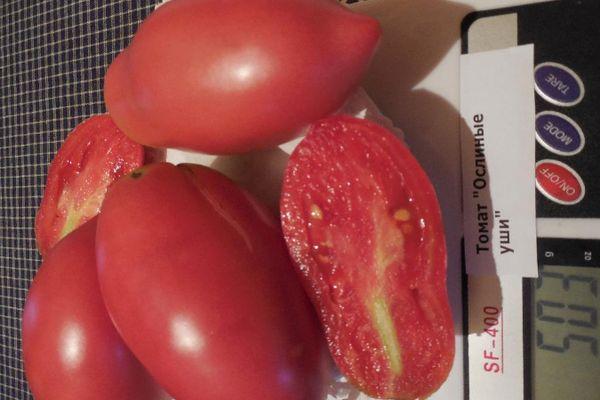
The flesh has a sweet, dessert-like flavor with a delicate tomato aroma. Its flavor is reminiscent of Ox's Heart. The flesh is meaty, not overly juicy, and slightly grainy when cut. The seed chambers are small.
Donkey Ears tomatoes are a salad variety. They're great for snacks, slicing, and sandwiches. Not every gardener dares to preserve them for the winter: the thin skin of the fruit can burst during canning. However, tomatoes can be pickled at the blanched stage of ripeness. They are firm and firm, hold their shape well, and are already colored in shades of pink and green.

The best way to process tomatoes is to make tomato juice or sauces. For this purpose, it's best to choose well-ripened tomatoes. The finished products won't be as vibrant as those made from red varieties, but they will have a pleasant, slightly sweet flavor. This variety is also suitable for sun-drying.
Agrotechnical rules
The Donkey Ears tomato variety is a mid-season variety. These tomatoes are sown for seedlings around mid- to late March, timing the planting so that it is 60-65 days old. The first fruits can then be expected within 1.5 months. Full fruiting and ripening will begin in late July.

The soil for sowing seeds is prepared from equal parts garden soil, sand, and last year's rotted manure or compost (from cucumber beds, for example). To disinfect, the soil in the container should be soaked in a hot, dark pink solution of potassium permanganate. Sow after the soil has cooled.
Spread the seeds over the soil surface and cover with dry sand to a depth of 0.5 cm. Cover the container with plastic wrap and place in a warm place. The tomatoes will sprout in 4-5 days. When the plants develop 1-2 true leaves, transplant them into individual pots of at least 0.5 liters. Further care consists of watering the seedlings as the top layer of soil dries out.
Take a look Also

 Plant in a greenhouse, placing 5-6 bushes per 1 m². For best fruiting, Donkey Ears tomatoes should be fertilized 2-3 times per season with specialized tomato fertilizers (Kemira Plus, Kristallon Tomato). Directions for use and dosage are provided in the package instructions.
Related posts:
 Description of the best varieties of black tomatoes for open ground and greenhouses
 TOP 17 recipes for pickled sweet tomatoes for the winter
 Delicious recipes for canned tomatoes with honey for the winter, preparation steps
 Recipes for amazing tomatoes in jelly for the winter, with and without sterilization, you'll lick your fingers
 15 simple recipes for pickling tomatoes in jars for the winter
 How to grow cherry tomatoes on a balcony: suitable varieties and planting and care guidelines
 11 Best Recipes for Preserving Tomato Slices for Winter
 How to make marinated tomatoes in jars for the winter using a Bulgarian recipe