
Novosibirsk breeders registered the hybrid tomato variety Auria in 1998. Depending on the regional climate, it can be grown in greenhouses and outdoors.
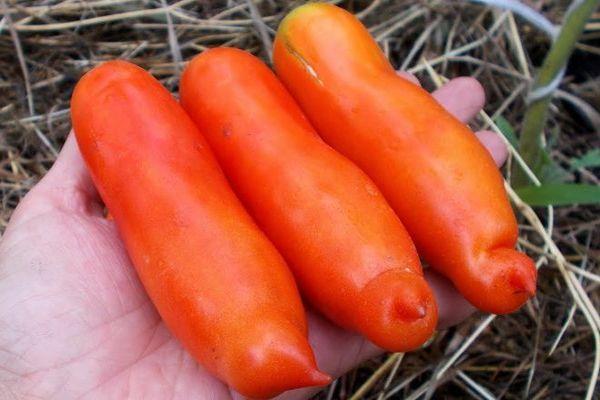
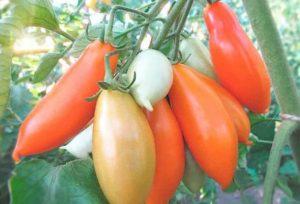
The fruits have an unusual shape. These tomatoes are known by various names among gardeners: "Male Dignity," "Lady's Whim," and others. Their appearance and characteristics will always help distinguish them from others. These tomatoes produce high yields and are renowned for their excellent taste.
Description of the variety
This vegetable crop is considered a mid-season crop, with the time from sowing to harvest taking 100 to 110 days. The ripening period depends directly on climate conditions and growing methods.
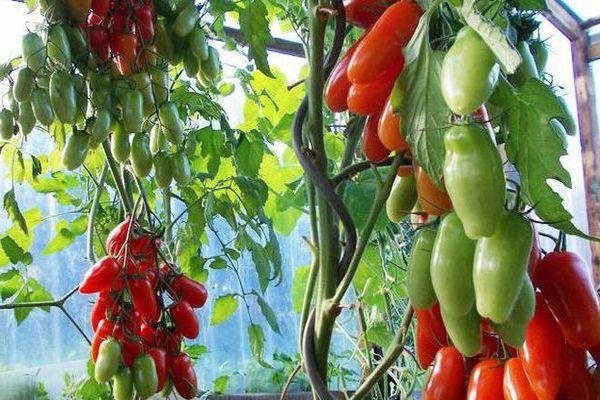
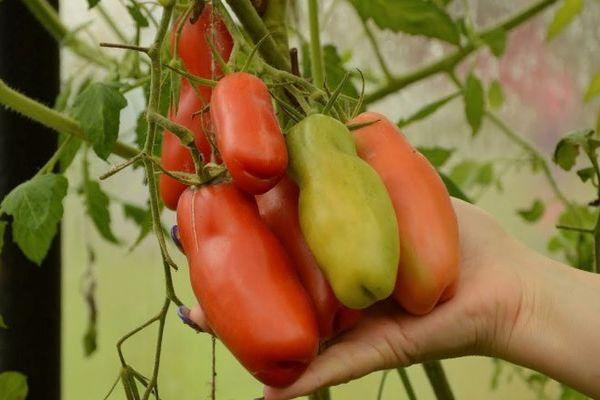
The bushes resemble vines, reaching 1.5–2 meters in height. Sometimes, under plastic, they can grow even taller. The stems and leaves are light green.
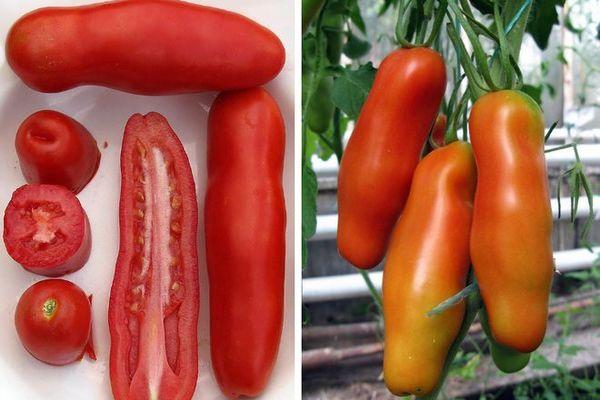
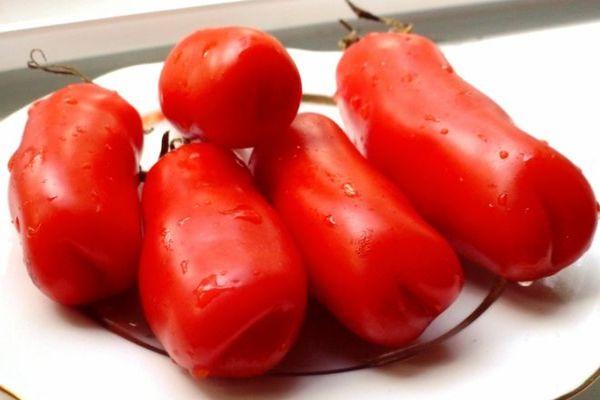
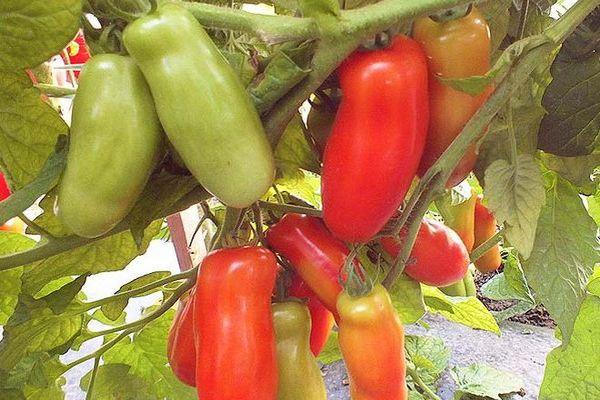
The fruits are oblong, slightly forked at the tip. The average length is about 13 cm, weighing 150–180 grams. Higher-growing tomatoes gain more weight, reaching 200 grams.
When ripe, tomatoes become firm and fleshy, with a small number of chambers and seeds, and a red, shiny skin. They are not prone to overripening or cracking, and they retain their attractive appearance for a long time.
This tomato variety was primarily bred for canning, but judging by reviews, they can be eaten immediately.
Growing
The first thing to do is prepare the seeds in February. They are sorted and the largest ones are selected. Then, a salt solution is prepared. The seeds are soaked in it for 15 minutes. The floating seeds are removed, and those remaining on the bottom are washed and dried.
Next, the seeds must be disinfected. A 1% solution of potassium permanganate is diluted in a jar, and all the collected material is placed there for 20 minutes.
Experienced gardeners then soak the seeds in warm water, after wrapping them in a piece of cheesecloth. It's important to remember that the water shouldn't completely cover them; only 50% is sufficient. The process takes approximately 12 hours, during which time the water is changed three times.
The next step is germination. The seeds are placed on a damp cloth and placed in a warm place. They are then hardened in the refrigerator for 12 hours, then warmed again for the same amount of time. This process is repeated 3-5 times. This procedure will allow the plants to withstand temperature fluctuations in the future, develop better, and produce a larger harvest.
Seeds are sown 60–62 days before planting seedlings; for greenhouses, 45–55 days before. To disinfect the soil for the greenhouse, it is watered with a thick solution of potassium permanganate, then heated in the oven for 20 minutes at 170–190 degrees Celsius. The soil in the boxes is then left in the open air for two weeks.
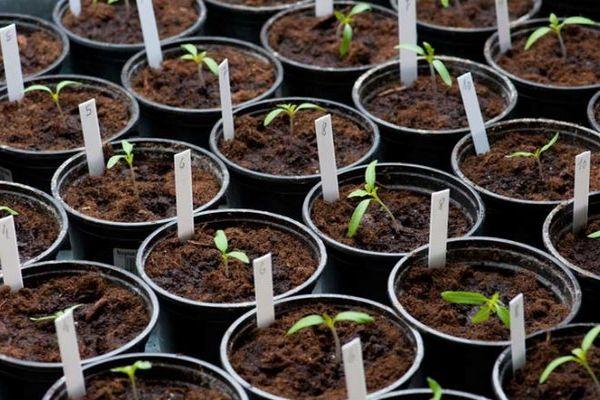
The seeds are spread at least 1 cm apart. The boxes are covered with plastic and placed in rooms where the temperature is approximately 28 degrees Celsius. Until the first shoots appear, the seeds are aired for half an hour daily, and watered as needed. As soon as sprouts appear, the film is removed and the temperature is reduced to 20 degrees.
Caution! Seedlings require adequate light. If sunlight is insufficient, use special lighting. Care instructions
The yield depends on how well the seedlings are cared for. Water the seedlings with a spray bottle once a day (twice in hot weather) to avoid damaging the delicate stems and roots. It's important not to overwater the plants, as high humidity encourages fungal growth.
Seedlings must be fed. Fertilizer, such as fermented cow manure or bird droppings, is first applied 21 days after germination. Fertilizer is applied in the morning. Pricking out is also done at this time.
The Auria tomato needs to be side-sonned. One side-son is left on the plant as a second stem. Other shoots and excess leaves are removed.
The bushes must be tied to a support and the branches must be propped up.
Advantages and disadvantages
The Auria variety has the following positive qualities:
- Good tolerance to temperature changes and lack of moisture.
- Resistance to many diseases.
- High yield rate.
- Excellent taste.
- Long-term fruit integrity.
The disadvantages of Auria include the following:
- Fragility of plants.
- Seeds are not sold in all stores.
- Incompatibility with some fertilizers.
Pests and diseases
The description of this tomato variety claims strong disease resistance. However, in reality, bushes in acidic soil often suffer from blossom-end rot. This problem can be prevented as follows:
- Water more often.
- Treat plants with a 1% solution of copper sulfate and lime 2–4 times during the summer.
- Reduce soil acidity by adding dolomite flour.
This tomato variety is susceptible to pests such as aphids, spider mites, and whiteflies. These are best controlled with Strela. The plants are resistant to many infections, but can be susceptible to dry spot. Antracol and Tattu are effective against this.
Harvesting and storage
It is important for every gardener that the harvested tomatoes do not spoil for a long time.
This can be achieved by following these rules for storing vegetables:
- make your own from wood or buy new boxes;
- carefully place dry and healthy fruits in them;
- cover with a lid on top, without damaging the tomatoes;
- Leave the harvest in a cool and ventilated area.
Auria tomatoes resist cracking during ripening, harvesting, and storage. The fruits retain their flavor and attractive appearance for a long time.
Gardeners' reviews
Antonina Vasilievna, 61 years old, Tyumen:
"I grow Auria tomatoes exclusively for winter preserves. I'd like to point out that the yield is very good; I only need five plants. In my personal opinion, they're not at all suitable for salads and other dishes. Their flavor is okay, a C, but other varieties are better."
Elena, 38 years old, Krasnoyarsk:
"I plant Auria under plastic. The plants reached a maximum height of 2 meters. I agree with the first reviewer that the tomatoes are wonderful for pickling. Last year I had a bumper harvest, so I tried selling the surplus, but few people bought them because of their unique shape. They're completely different from regular tomatoes. People just smiled and chose the familiar round ones."
Vitalina, 29 years old, Penza:
"I've been planting this variety since 2016. I loved it and still love it. They grow juicy and sweet, and we eat them straight from the bush."
Sergey, 49 years old, Volzhsky:
"Last year, I planted seven tomatoes in the ground. The tomatoes started ripening much earlier than expected, and we harvested them almost before the first frost. We didn't do much to tend them, just fertilized them and picked off the excess leaves. Our neighbors came to our garden, as if they were visiting a museum, to see this wonder."
Zinaida, 42 years old, Ulyanovsk:
"This tomato variety is amazing, considering the yield and ease of care. Everyone talks about pickling them or using them in salads. Have you tried drying them? It's pure pleasure. The fruits have very few seeds, yet they are fleshy, juicy, and sweet! And their shape is a bonus! I constantly surprise my guests."
Galina Stepanovna, 53 years old, Profanovo village:
"I liked Auria. I tried growing tomatoes in greenhouses and in a garden bed. I'll say right away that under the plastic, they turned out a bit dry. But they were even 25 centimeters long! The plants that grew without plastic produced much tastier tomatoes."
Anastasia, 31 years old, Novokuznetsk:
"I only recently started gardening, so I'm not much of a gardener yet. I planted Auria last year. They were growing in a large greenhouse, and by the end of August, I was tying them to the ceiling because they were too long. I didn't fertilize them at all, and I didn't notice any pests; I just had to remove the yellow leaves. I highly recommend this variety!"
Related posts:
 Description of the best varieties of black tomatoes for open ground and greenhouses
 TOP 17 recipes for pickled sweet tomatoes for the winter
 The 14 Best Tomato and Aspirin Recipes for a 3-liter Jar for the Winter
 Recipes for amazing tomatoes in jelly for the winter, with and without sterilization, you'll lick your fingers
 Delicious recipes for canned tomatoes with honey for the winter, preparation steps
 How to make marinated tomatoes in jars for the winter using a Bulgarian recipe
 11 Best Recipes for Preserving Tomato Slices for Winter
 How to grow cherry tomatoes on a balcony: suitable varieties and planting and care guidelines
I appreciated these tomatoes for their ease of care; they haven't had any problems in five years. They're a productive variety, and they come with a growth activator. BioGrow It's getting even better. The flesh is sweet, meaty, and aromatic. They're great for both eating and preserving, especially those that require whole fruits. They don't fall apart in salads, and the pieces stay intact. They store well, without blemishes or cracking. I grow them delicious and juicy both in the greenhouse and in the garden. Even if I sometimes pick them unripe from the garden, they quickly ripen at home without losing their flavor.