
The Belle F1 hybrid tomato was developed in the Netherlands and has thrived in our country. Gardeners and consumers alike appreciate its low maintenance, high yield, and excellent marketability. Belle F1 tomatoes are recommended for growing outdoors, under glass and plastic covers. The variety tolerates temperature fluctuations, drought, and rainy periods well. Let's look at the key properties of Belle F1 tomatoes, as well as their cultivation and care. This will help you get a good harvest of delicious fruit.
General properties of tomato
Belle tomatoes are an early-ripening, high-yielding hybrid. The plants are medium-height, reaching 150 cm. The trunk is knobby, thick, and robust. The root system is well developed, supporting the plant securely and ensuring nutrient delivery. Farmers report that the bushes are wind-resistant and support the weight of ripe tomatoes reliably. The crown is moderately dense, and the leaves are medium-sized and dark green. They provide sufficient shade to prevent sunburn and protect the tomatoes from hail.
The harvest ripens evenly throughout the gardening season.
The characteristics of the fruits are as follows:
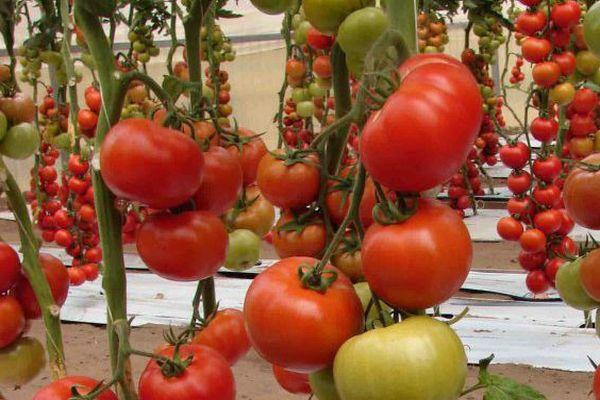
- clusters are long, 7-9 pieces, along the entire height of the bush;
- number of bunches - 5-6;
- the average weight of a ripe tomato is 150 g;
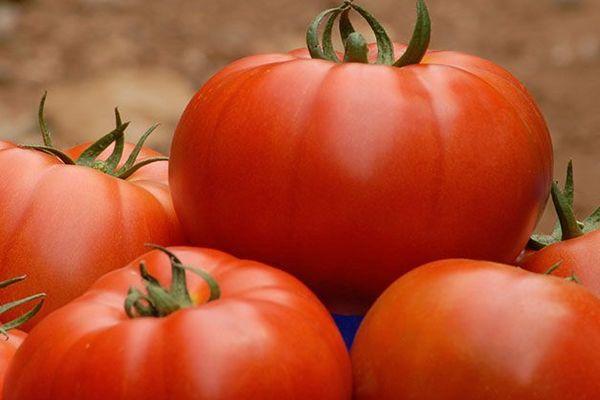
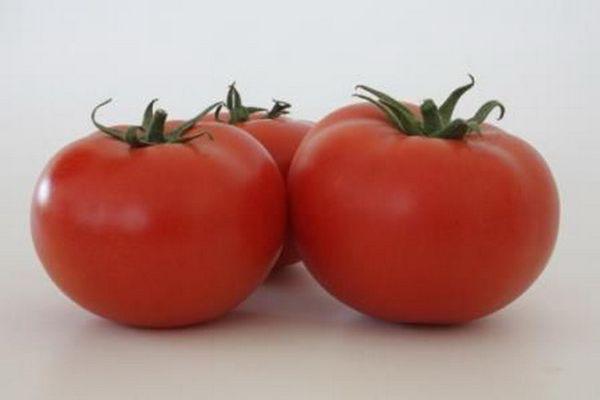
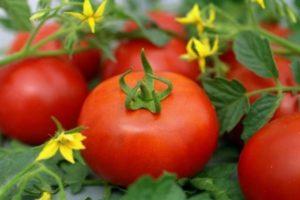
- shape - round, slightly flattened, with slight ribbing at the stalk;
- color - rich red;
- the skin is thin and glossy;
- the pulp is fleshy and juicy;
- taste - typically tomato, sweet, slightly sour.
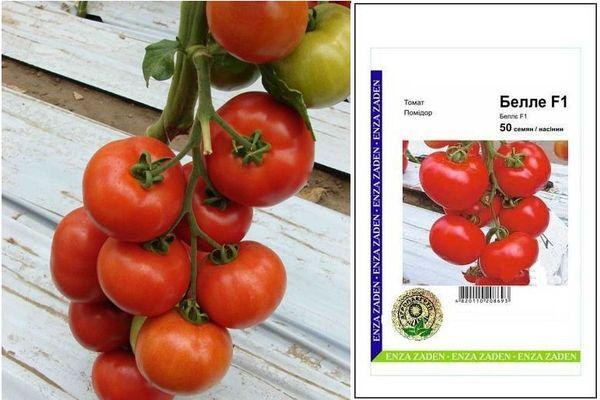
Belle tomatoes are characterized by good yields. On average, one bush produces at least 6 kg of delicious and beautiful tomatoes.
The fruits are uniform in shape and size. They travel well in crates and in bulk. This quality is exploited in sales, and tomatoes sell out quickly. Chefs use them to make sliced tomatoes, salads, purees, sauces, and ketchups. Tomato juice is healthy, containing many minerals and vitamins. Tomatoes are also used for canning in glass jars, wooden barrels, and plastic barrels.

Advantages and disadvantages of the variety
The positive properties of the Belle tomato have been highly appreciated by domestic gardeners and food lovers.
These include:
- fruits ripen by the end of spring;
- pleasant and refined taste;
- resistance to hot and cold weather;
- high yield;
- resistance to most diseases of vegetable crops;
- excellent shelf life, allowing the fruits to be stored for a long time.
A disadvantage is the difficulty in maintaining the right conditions for growing seedlings and the need to tie up the bushes. It's important to note that Belle tomatoes are a cross between several varieties. They are intended for one season only. The collected seeds will not have the properties of the parent plants.
Growing and care
Depending on the climate zone, sowing occurs in the second or third ten days of March. In northern regions, this is done in early April. The seeds do not require any preparation. All disinfection and nutrient enrichment procedures were carried out at the breeding site. Sealed foil packaging reliably protects the planting material from external influences.
The seedling soil consists of garden soil, peat, and humus. It should be moderately moist but not soggy. The seeds are planted in a 15-20 mm deep hole, covered with soil, and covered with plastic wrap. Once the first sprouts appear, the containers are placed in a bright, warm location. If natural light is insufficient, use table lamps. The seedlings are watered regularly with warm water as a dry crust forms on the soil.
The seedlings are moved to the beds after the first inflorescence and several permanent leaves appear.
One of the requirements of agricultural technology is the correct planting pattern: bushes are planted at a distance of 40-50 cm from each other.
First, dig holes, then fill the base with drainage and a mixture of humus, charcoal, ash, and fertilizer. Around each hole, create a protective barrier against underground insects. Potassium permanganate or copper sulfate solution is used.
Seedlings and adult plants require constant care.
Care consists of the following activities:
- daily watering with settled warm water after sunset;
- monthly application of organic, mineral and combined fertilizers;
- removing stepchildren and excess foliage;
- spraying plants with insecticides against pests;
- weeding;
- mulching and loosening the soil.
Under favorable weather conditions and if cultivation and care rules are followed, the first tomatoes appear already at the beginning of summer.
Related posts:
 Description of the best varieties of black tomatoes for open ground and greenhouses
 Description of the best Dutch tomato varieties for greenhouses and open ground
 TOP 17 recipes for pickled sweet tomatoes for the winter
 Delicious recipes for canned tomatoes with honey for the winter, preparation steps
 How to grow cherry tomatoes on a balcony: suitable varieties and planting and care guidelines
 15 simple recipes for pickling tomatoes in jars for the winter
 Recipes for amazing tomatoes in jelly for the winter, with and without sterilization, you'll lick your fingers
 11 Best Recipes for Preserving Tomato Slices for Winter