
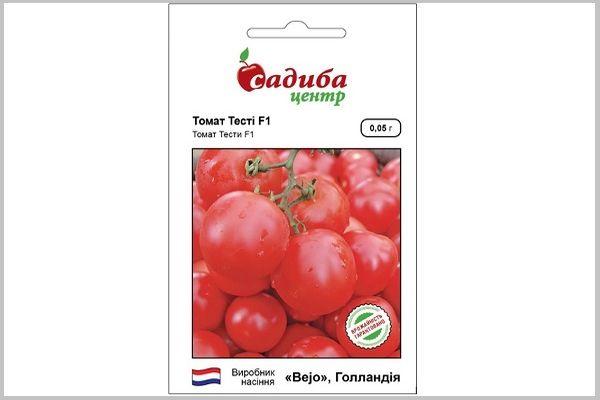
The Testi f1 tomato is recommended by breeders for beginning gardeners. This hybrid produces a good harvest with minimal plant care. Furthermore, the variety is resistant to adverse weather conditions. It can be grown in open ground, greenhouses, and greenhouse complexes.
Technical data of the plant
The characteristics and description of the Test are as follows:
- The vegetative period of tomatoes from seedlings to the first harvest lasts 100 days.
- The height of the Testi bush ranges from 150 to 250 cm. To limit growth, the plant's top is pinched at the desired height. It has a strong stem with a medium number of leaves on the branches. The leaves are short and dark shades of green.
- The plant's clusters are simple, with ovaries appearing almost simultaneously. Five to eight fruits develop on a single cluster. Testi tomatoes have a good root system, which promotes rapid growth.
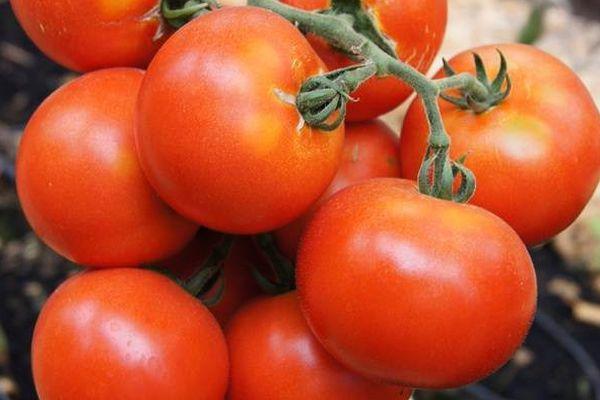
- The weight of Testi berries ranges from 0.1 to 0.12 kg.
- They resemble a red ball in shape. The skin is quite thick, and the fleshy pulp has a sweet taste.
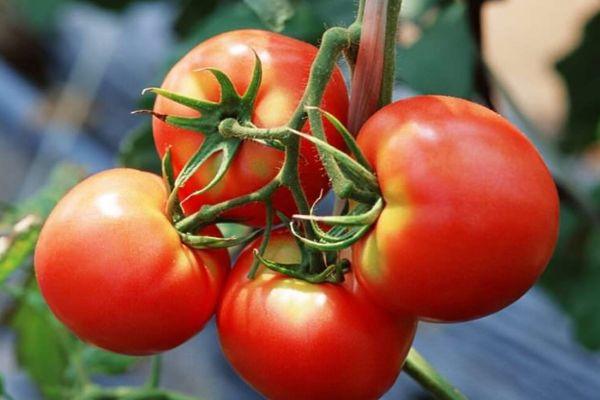
Farmer reviews indicate that each planted bush can yield 4.5 to 5 kg of fruit. The harvest is in July when grown in a greenhouse. If the tomato is grown outdoors, the harvest is in August.
Due to the dense skin, Testi tomatoes can be transported over long distances. This variety can be stored in a cool place for 14-20 days.
Testi tomatoes are eaten fresh, used in salads, and preserved for winter. Manufacturers purchase the fruits of this tomato variety to produce tomato paste, juices, sauces, and ketchup.
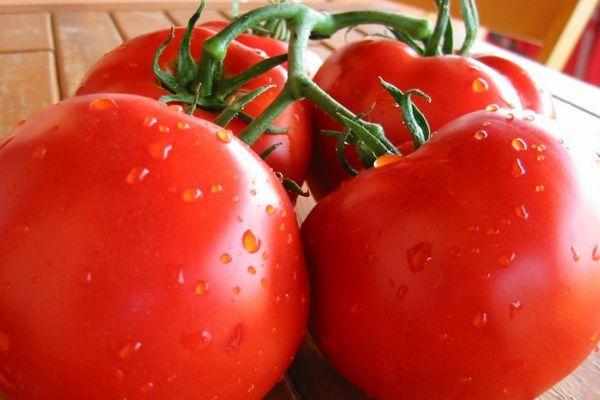
Testi is recommended for open-air cultivation only in the southern regions of Russia. In the central regions, it should be grown in plastic greenhouses or unheated hothouses. In Siberia and the Far North, Testi grows well in heated greenhouse complexes.
Breeders recommend growing Testi to beginning gardeners in climate zones such as the North Caucasus, Ukraine, and Moldova.
How can a novice gardener grow this tomato?
According to farmers who have been growing Testi for several years, this variety should be propagated from seedlings. After purchasing the seed stock and treating the seeds with a weak solution of potassium permanganate, they are planted in containers with special tomato soil in the last ten days of March.
After sprouts emerge, they are pricked out when the stems have developed 1-2 leaves. Water the seedlings with warm water. Fertilize them once during their growth period with organic fertilizer.
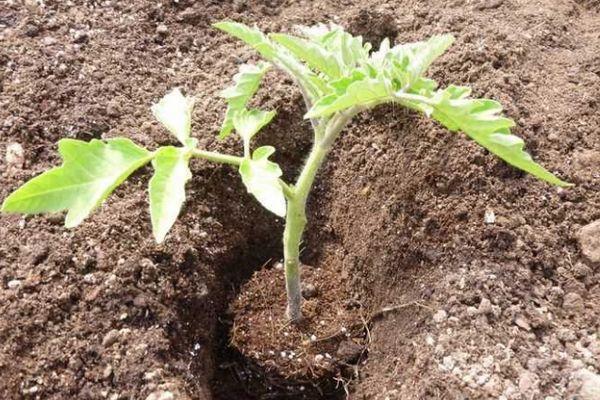
After the seedlings are 55-60 days old, they are transplanted into permanent soil. The seedlings are transferred to the greenhouse in mid-May, and to the open garden beds in the last ten days of that month.
First, the beds are loosened and nitrogen fertilizer is added to the soil. The bush is formed from 1-2 stems. After this, side shoots must be removed each time. To prevent the tomato branches from breaking under the weight of ripe fruits, it is recommended to tie them to supports.
The testes need to be fed 3 times during the entire growing season with nitrogen, potassium, phosphorus and organic fertilizers.
To ensure adequate oxygenation of plant roots, the soil in the beds should be loosened regularly (twice a week). To prevent weeds from damaging the crop, farmers should regularly hill the beds.
Water the bushes after the soil beneath them has dried out. This is done with warm water early in the morning or evening. Tomatoes are most often watered in hot weather.
Testi is resistant to temperature fluctuations and can quickly recover from mechanical damage. Breeders recommend this tomato for beginners due to its resistance to diseases such as fusarium, cladosporiosis, and tobacco mosaic virus. Other diseases are protected by treating the leaves with special chemicals. Fitosporin is most often used for this purpose.

If a gardener notices pests such as the Colorado potato beetle, aphids, caterpillars, or slugs in their plot, they can be destroyed using toxic chemicals, adding ash flour to the soil, or using folk remedies (spraying tomato leaves with soapy water).
Related posts:
 Characteristics and description of the Sprut tomato variety, yield and cultivation
 Description of the best Dutch tomato varieties for greenhouses and open ground
 Description of the best varieties of black tomatoes for open ground and greenhouses
 Description and characteristics of the best indeterminate tomato varieties for greenhouses
 Description of blight-resistant tomato varieties for open ground and greenhouses
 Description of the best tomato varieties for pickling and canning
 Characteristics and description of the De Barao tomato variety, yield and cultivation
 The best varieties of low-growing tomatoes for a polycarbonate greenhouse