
Gardeners praise the UFO pattypan squash for its high yield and delicious flavor. However, most Russian vegetable growers don't plant this healthy vegetable, preferring more familiar cucumbers and zucchini.
General characteristics of the plant
The UFO squash variety consists of two varieties. Seed shops sell the white and orange UFO varieties. Each has its own characteristics, but they generally describe the appearance and flavor of the fruit.

The NLO squash variety's bushes don't form vines. This is a distinct advantage over pumpkins or cucumbers, as they require much less space for planting. However, NLO squash has leaves with well-developed blades and long petioles, allowing the plant to reach a total height of 70-80 cm. No more than 5-6 plants can be planted per square meter.
The NLO variety is an early-ripening variety. The first fruits, reaching technical maturity, can be harvested in as little as 40-50 days. These vegetables are usually not allowed to reach biological maturity, being eaten young before the seeds have developed and the rind has corked.

The plant is undemanding when it comes to growing conditions. The main factor that can influence the fruit yield is the amount of light in the garden bed. It's best to plant squash in a spot that receives full sun most of the day. Squash grows well in loose, fertile soil, but the UFO harvest will also be rewarding in more challenging, dense soils. Only saline soils with poor natural drainage do not tolerate squash well.
Squash squash are resistant to many diseases of cucurbits. The NLO variety is virtually immune to root rot and is resistant to powdery mildew and downy mildew. During rainy seasons, some squash left to mature (for example, for seed) may be damaged, but the young squash simply doesn't have time to rot or be damaged by fungus.
The average weight of a single squash at biological maturity is 400-500 g, and its diameter reaches approximately 20 cm. Vegetables are rarely grown to this size. Cucumbers with a diameter of 3-5 cm and a weight of approximately 100 g are suitable for consumption. The yield of such vegetables can be approximately 6-7 kg per 1 m².
Consumer qualities of fruits
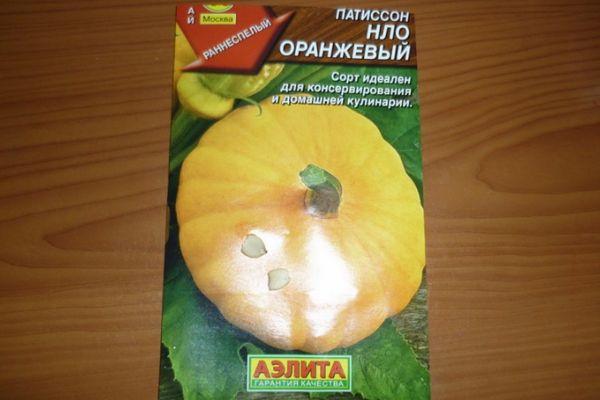
The fruit of the NLO squash is a small, disc-shaped pumpkin with distinct ribs. The upper and lower parts are symmetrical. Fruit color varies depending on the variety:
- In technical ripeness, the orange UFO has a yellow, uniformly colored rind; as it ripens, its hue becomes more saturated; by the time it reaches biological maturity, the fruits acquire an orange-yellow color;
- The unripe fruit of the white UFO is greenish and turns white over time.
The skin of the squash is delicate and barely noticeable when eaten in any form. It does not protect the fruit from wilting or damage during transportation, so harvested squash should be used within 3-4 days. As the squash grows, the skin hardens, and the fruit retains its marketable appearance for a long time. A mature vegetable can be stored for several months in a cool pantry, although smaller varieties, including the UFO, are rarely used for winter storage. The skin does not become too thick when ripe.

The flesh of young squash is tender and pleasantly flavored; the orange UFO variety is reminiscent of yellow zucchini. White UFOs are more bland and grassy. As they grow, the fruit remains fleshy, although the interior fills with large, hard seeds.
The main purpose of squash is to prepare vegetable dishes. The flesh of young squash can be included in salads and fresh, but it is most often cooked before consumption. The fruit's exotic shape makes it possible to create unusual portioned hot appetizers; squash can be stuffed with meat and vegetables, baked in the oven or grilled.
Larger squash are seeded, and the flesh is used like zucchini or pumpkin: for stews, ratatouille, casseroles, and omelets. Squash can be used to make vegetable caviar, breaded slices, and pancakes. This tasty, potassium- and vitamin-rich vegetable is prepared in a similar way to zucchini.

UFO squash is preserved for the winter. The smallest (up to 5 cm) green squash is used for canning. The original-looking fruits also decorate jars with assorted whole pickled vegetables, and the festive table. Overripe ovaries are used to make marinades and pickles (sliced), or processed into caviar and appetizers. Squash goes well with tomato sauce and can be used in lecho. Fried slices in tomato sauce and other preserves are delicious.
Agricultural technology of the variety
Early-ripening vegetables can be grown without seedlings even in central Russia or Siberia. Prepare the plot in advance by digging in one bucket of compost per square meter and applying a complex mineral fertilizer such as Agricola Vegeta, according to the instructions. In very dense, damp and saline areas, it is better to make high beds and add 1-1.5 kg of dolomite flour, chalk or gypsum per 1 m² to the soil for planting.
Orange and white UFO squash varieties are sown directly into the ground after the last frost. The seeds are large, so they should be planted 2-3 cm deep, 1-2 seeds per hole. If you have any doubts about the quality of the seeds, you can pre-germinate the seeds by placing them in a damp cloth.
In a warm place (around 30°C), the new seeds will hatch in 2-3 days. Don't wait until the roots are too large; it's enough for the pointed end of the seed to crack, revealing a 1-2 mm long root tip in the crack.
By this time, the soil is sufficiently warmed, and seedlings emerge within 7-10 days without additional cover. In very dry and hot weather, it's important to ensure the soil in the holes doesn't dry out or crust over. Water in the evening, using warm, settled water.

If you want to get an even earlier harvest of squash in open ground, you can use the following methods:
- Seedling method. Seeds are germinated and planted in paper pots 3-4 weeks before planting. Transplant carefully, without disturbing the root ball.
- Using temporary cover. Seeds are sown around mid-May, placing arches with covering material over the bed. You can create warm beds using manure, as you would for cucumbers.
Before the flowers appear, the main care consists of watering the plants. Care should be taken when loosening the soil under the bushes, as the root system is shallow, and squash, like all pumpkins, responds to damage by stunting growth.

Once the bushes bloom, feed them with a fertilizer containing potassium and phosphorus. A solution of wood ash (500 g per 10 liters of water) is suitable; apply it under the roots at a rate of 0.5-0.7 liters per bush. Gardening stores also sell granules of monopotassium phosphate, potassium sulfate, superphosphate, and others. Use these products according to the instructions. Repeat the feeding after three weeks to ensure the bushes continue to bear fruit actively.
The green shoots are harvested as they grow to 3-5 cm. If desired, they can be left to grow larger, but then the bush will bear fruit less vigorously.
Related posts:
 11 quick and delicious recipes for pickling squash for the winter that will make you lick your fingers
 How to quickly and deliciously pickle squash for the winter, with jarred recipes
 Recipes for squash and zucchini preserves for the winter, including marinating and shelf life
 9 delicious recipes for pickled squash and cucumbers for the winter
 Growing and caring for squash in open ground, when to harvest and why they rot
 TOP 22 delicious recipes for making pickles for the winter at home
 Simple recipes for squash caviar in a slow cooker and on the stovetop for the winter, you'll lick your fingers
 The best grape varieties for growing in the Urals, planting and care rules in summer