
Many Russians are interested in the question regarding How to grow a pumpkin On the balcony, as this product is extremely popular. It can be used to prepare a wide variety of dishes. Moreover, pumpkin is so versatile that it can be used in first courses, main courses, appetizers, and even desserts.
It's no surprise, then, that people try to grow pumpkins in their gardens whenever possible. But if you don't have land or don't live in a place where you can grow the orange fruit, don't despair. Pumpkins can even be planted on a balcony. However, certain guidelines must be followed, as this vegetable requires special attention.
Many experts say you can harvest a decent pumpkin crop at home. However, it's important to keep in mind that this plant often grows wild, so compact varieties are recommended for a balcony. There are several varieties of ornamental pumpkins. They grow small but can produce a decent harvest.
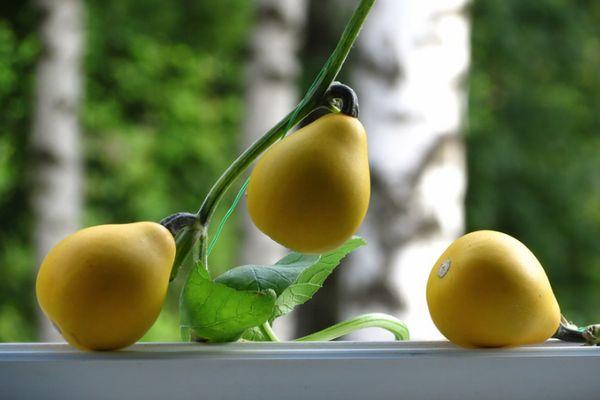
How can you grow a pumpkin on your balcony?
Not every pumpkin variety is suitable for container planting. Therefore, those who want to grow a decent harvest without much effort need to carefully select the variety. This will ensure the plant takes root well and produces abundant fruit. However, balcony pumpkin varieties require special care.
The main thing to remember is that this crop is extremely heat-loving. Therefore, you can only grow a good pumpkin on a balcony facing southeast or south.
For planting, use deep containers filled with a special soil with a moderate acidity. Pumpkins thrive in soil with a pH of no more than 6.5. You can also make a suitable mixture yourself. To do this, take 1 part sand, the same amount of soil, and sawdust. To these ingredients, add 4 parts each of peat moss and humus, 4 tablespoons of ash, and mix thoroughly.
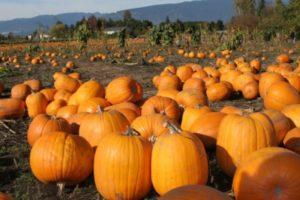
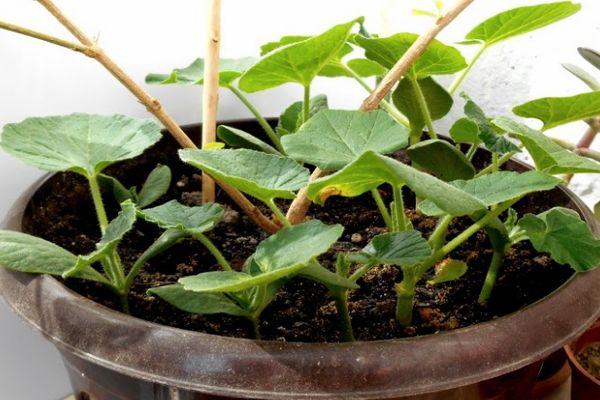
Next, you can plant the seeds. They should be soaked in warm water for 3 hours. If any seeds float to the surface, discard them immediately. The next step is hardening. The soaked seeds are moved to a cool place for 4 hours.
The best time to plant seeds is mid-May, when the weather is nice and sunny. Avoid planting the seeds too deeply, as this will slow germination. After planting, cover the trays with plastic wrap for maximum effectiveness. This creates a greenhouse effect, allowing the seeds to develop properly.
Gradually, the plant will spread across the plastic. Once the covering is removed, you can immediately tie the pumpkin to the trellis. Creating a decorative screen will not only create a pleasing visual effect but also allow the plant to receive maximum sunlight.
If desired, you can use a separate pot for growing pumpkins instead of a large box. Peat pots are very popular; they can be dug into the soil, dissolving the pot and creating a fertilizing effect. The key is to avoid damaging the roots when transplanting the seedlings.
Caring for pumpkin
Just two weeks after the sprouts appear, fertilize the soil. A nutrient solution is best for this. Take 100 g of urea, 1/4 tablet of a complete fertilizer, 100 g of potassium sulfate, and 20 g of superphosphate. Dissolve all of this in water and pour it into the soil. Each plant should use about 2 liters of fertilizer. Repeat this process every 10 days.
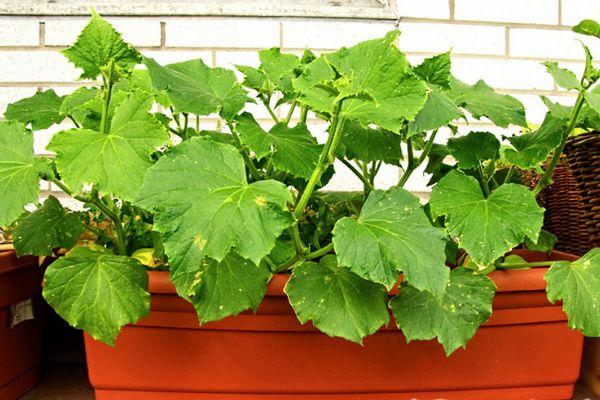
For pumpkins growing on a windowsill, the basic care guidelines are the same as for plants in open beds. The soil in the pots needs not only to be fertilized and watered, but also loosened, as without sufficient oxygen, a good harvest will be impossible. If weeds appear, they should be removed immediately, as they can rob the pumpkin of its nutrients.

When the weather outside becomes consistently good, be sure to open the windows to ensure proper air circulation on the balcony. It's important to keep the plants from getting too cold. Otherwise, you won't be able to harvest a good crop.
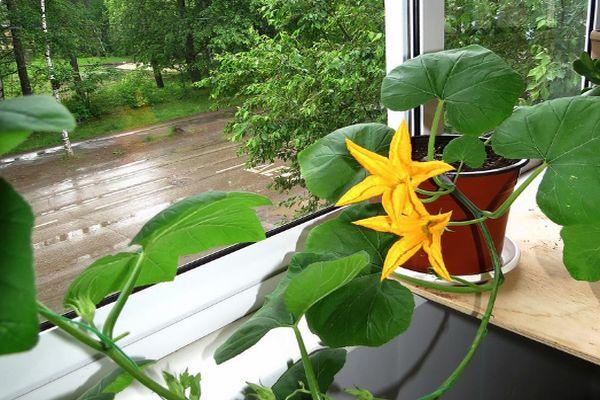
It's also worth remembering that many pumpkin varieties require bee pollination. Insects are unlikely to find their way onto a balcony, so home gardeners will have to do the work themselves. Male pumpkin flowers are distinguished by a longer stem. The beginnings of fruit are always visible on female pumpkins.
To perform pollination, use a soft brush to remove pollen from the stamens of male flowers. It is then transferred to the pistils of female flowers.
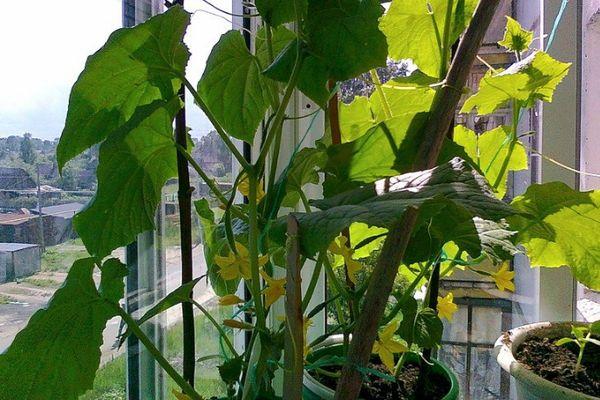
All that remains now is to care for the plant and harvest. Once the pumpkin plants have finished their growing season, you should cut off the stems, discard the soil, and disinfect the containers so they are suitable for further use.
The best varieties of balcony pumpkins
Not all varieties and hybrids of this crop grow in pots or containers. Pumpkins can be divided into three main types: bush, short-stemmed, and long-stemmed.
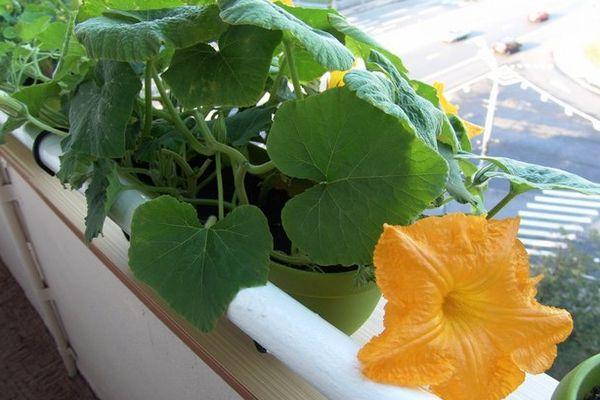
The largest harvest can be obtained using the latter type of seeds. However, it's important to keep in mind that this type of pumpkin requires a large amount of soil, so the containers should be quite large. Furthermore, be prepared for a wall of pumpkin vines to soon appear on your balcony.
Small-stemmed or bush varieties don't produce abundant harvests. They often produce small fruits, but these hybrids are considered ideal for apartment balconies. Growing them will create a decorative effect and allow you to enjoy a pumpkin you've grown yourself.
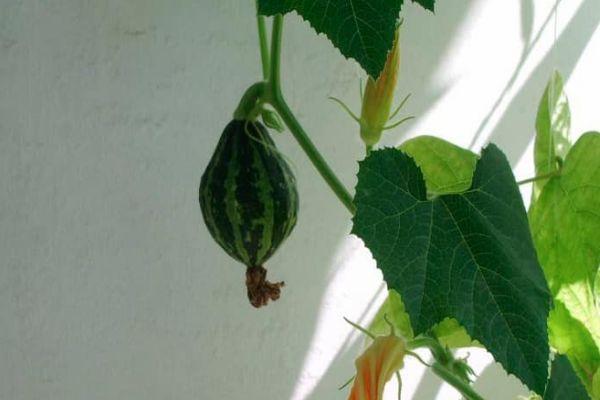
One of the most popular small-fruited pumpkin varieties is the Orange. This variety produces small fruits weighing no more than 250 g. The Baby Boo hybrid is also popular. These plants produce small pumpkins no larger than 10 cm.
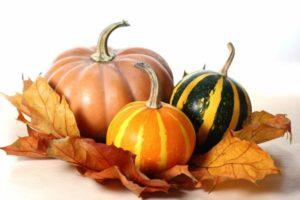
A very interesting option for home growing is the Klein Bicolor. This variety allows you to grow a pear-shaped pumpkin on your balcony. Its main distinguishing feature is the two-toned fruit: the top of the pumpkin is bright yellow, while the bottom is dark green. The fruit grows to no more than 12 cm in length.
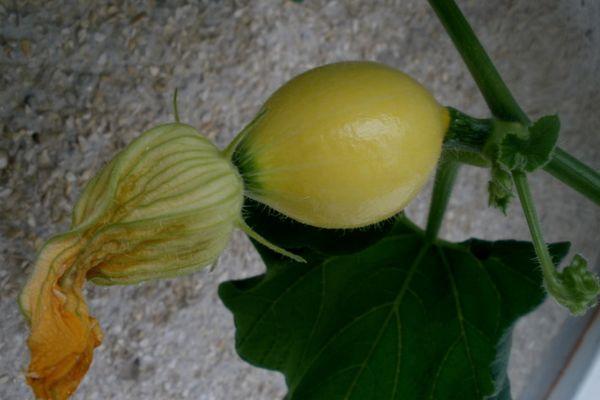
Although these pumpkins grow very small, they are quite edible and delicious. Most importantly, these varieties don't grow more than 1 meter tall, making them very convenient to grow on a balcony.
WITH bush varieties of pumpkins can be grown up to 2 kg. But such plants require more space for planting.
Related posts:
 Growing and caring for pumpkins in open ground, planting rules for a good harvest
 50 Best Pumpkin Varieties with Descriptions and Characteristics for Outdoor Planting
 Why do pumpkin ovaries turn yellow, fall off, and rot in open ground, and what can be done about it?
 How often should you water pumpkins in open ground in August during hot weather?
 How to shape and pinch pumpkins in open ground to get a good harvest
 Description of the 20 best varieties of large-fruited pumpkin, growing and care rules
 Description of the long-fruited pumpkin Pink Banana and cultivation techniques
 14 step-by-step recipes and instructions for making pumpkin compote for the winter