
- What is butternut squash?
- Energy value and composition
- Beneficial properties
- Suitable climate and region
- Popular varieties of butternut squash
- Augustine
- Arabatskaya
- Peanut butter
- Barbara F1
- A blade of grass
- Vita
- Vitamin
- Guitar
- Pearl
- Golden Pear
- Spanish guitar
- Marina from Kioja
- Honey Princess
- Marble
- Muscat de Provence
- Nutmeg
- New product
- Nut butter (Butternut)
- Palav Kadu
- Prikubanskaya
- Provencal
- Trombone
- Hokkaido
- Candied
- Chudo-Yudo
- Features of growing butternut squash
- Choosing time and place
- Preparation of planting material
- Preparing the site for planting
- The landing process
- How to properly care for the crop?
- Watering rules and necessary fertilizers
- Weeding and loosening the soil
- Pollination
- Formation of whips
- Diseases, pests and methods of protection against them
- Diseases
- Bacteriosis
- Powdery mildew
- Root rot
- Anthracnose
- Yellow mosaic
- Pests
- Spider mite
- Melon aphid
- Slugs
- Wireworm
- Pumpkin propagation methods
- Harvesting and storage of crops
Growing butternut squash produces a healthy plant with excellent flavor. It belongs to the Cucurbitaceae family and is considered an annual. Fruit shapes vary, including round, oval, and pear-shaped. The plant is characterized by high yields and excellent flavor. The fruit has juicy flesh and a vibrant skin.
What is butternut squash?
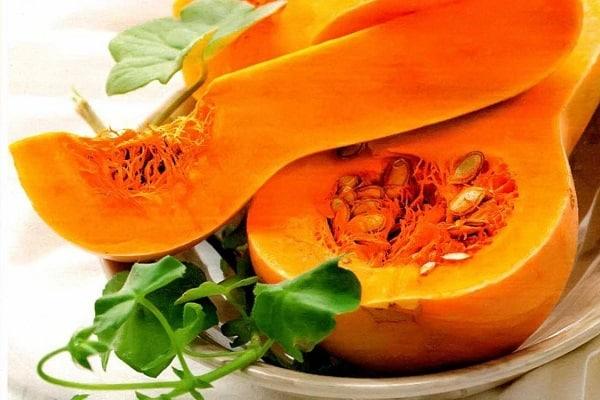
The plant belongs to the Cucurbitaceae family. Many people claim that butternut squash has the best flavor. The vegetable has juicy, fibrous flesh. It is characterized by a light orange hue and a sweet taste. The fruit has a thin skin that peels easily with a knife..
The plant's shape varies—round, ribbed, oval. Depending on the variety, the crop can have different shades. The plant is native to Mexico. Its fruits can be very large, each weighing up to 100 kilograms.
Energy value and composition
Pumpkin is low in calories. 100 grams of the product contains no more than 45 kilocalories. The plant's fruits have a rich nutritional composition, containing vitamins B, C, E, and PP. Pumpkin also contains a large amount of magnesium, potassium, phosphorus, and calcium.
Beneficial properties
Butternut squash varieties have many beneficial properties. These include the following:
- there is no cholesterol in the fruits;
- the vegetable is low in calories;
- helps remove harmful elements from the body;
- has a diuretic effect;
- strengthens the immune system;
- improves the functioning of the visual organ due to the content of carotene;
- normalizes the functions of the heart and blood vessels due to the presence of potassium.
Suitable climate and region
Muscat varieties are generally recommended for cultivation in the south. However, there are varieties that can be planted in central Russia. These include the following:
- Vita;
- Prikubanskaya;
- Pearl.
Popular varieties of butternut squash
This crop has many varieties. They differ in size, shape, purpose, and composition.
Augustine
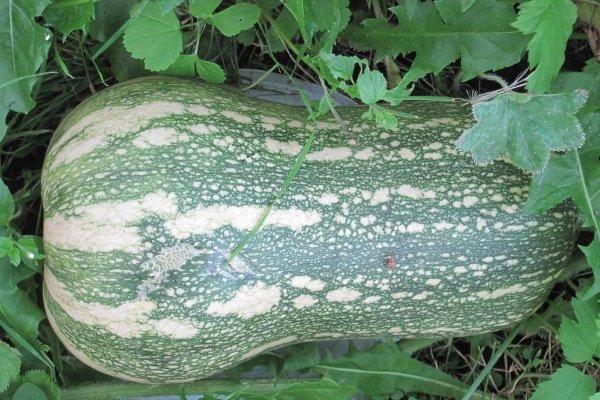
This is a high-yielding variety. The pumpkin ripens 105 days after planting. It has a cylindrical shape and a green hue. It can be eaten fresh or cooked.
Arabatskaya
This plant has a mid-late ripening season. The fruits reach 8 kilograms in weight. They are covered with light orange skin. The flesh is firm and juicy. The pumpkin can be stored for up to 4 months.
Peanut butter
This early-ripening variety is the work of German breeders. The fruits are pear-shaped and weigh up to 4 kilograms. The skin is creamy, and inside lies bright and juicy flesh.
Barbara F1
This is the highest-yielding Muscat variety. The plant is disease-resistant. The pumpkin has a firm skin and ripens quite early. The harvest can be completed in as little as 85 days.
A blade of grass
This is a flat pumpkin with a gray skin that becomes lighter as it ripens. The crop is characterized by sweet orange flesh.
Vita
The crop is considered mid-season. The growing season is 115 days. The skin has a gray tint. The fruit weighs up to 4.5 kilograms. The flesh is considered quite juicy and has a pleasant aroma.
Vitamin
This is a fairly late variety. The fruits are ready to eat after 140 days. They are distinguished by their elongated oval shape and thin skin. Inside is orange flesh with a slightly sweet flavor.
Guitar
This variety is considered mid-season. The harvest can be completed in 110-120 days. The fruits are elongated and have rich orange flesh. With proper care, this pumpkin can weigh up to 8 kilograms.
Pearl
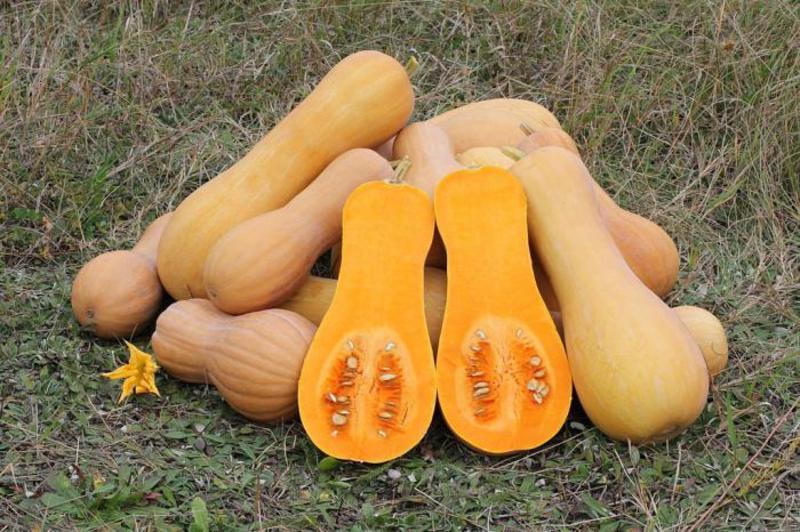
This variety is mid-late. It is distinguished by its orange skin and cylindrical shape. Inside is juicy, sweet, orange flesh. The growing season is 110 days.
Golden Pear
This pumpkin is characterized by bright orange fruits. They are shaped like a teardrop. The plant matures in 95 days. The pumpkin has orange flesh with a chestnut flavor. It produces small fruits weighing approximately 2 kilograms.
Spanish guitar
This fruit has an unusual shape, resembling a guitar. It can reach up to 1 meter in length and weigh 5-10 kilograms. This variety is characterized by yellow-green skin and orange flesh.
Marina from Kioja
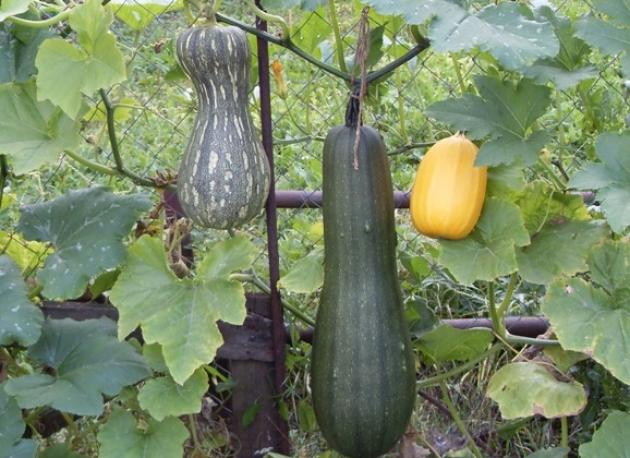
This variety is characterized by a flattened rind and a rounded shape. It is considered a mid-late variety. Its growing season is 130 days. The pumpkin grows to a large size, weighing up to 12 kilograms.
Honey Princess
This is a mid-season plant, ripening 115 days after planting. The crop is quite vigorous, so it's necessary to plant the bushes at a wide distance. The fruits reach 4 kilograms.
Marble
This mid-season variety ripens in 130 days. The fruits are round and slightly flattened. The plant has a marbled coloration of green and gray. Inside is sweet orange flesh.
Muscat de Provence
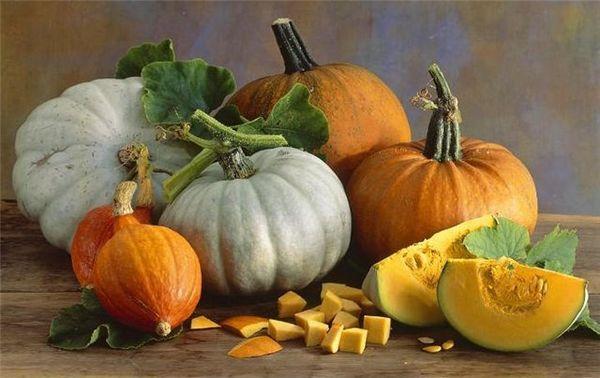
This mid-late variety ripens in 120 days. It is characterized by a thick skin, which ensures a long shelf life. The fruits can reach 8-10 kilograms and contain rich orange flesh.
Nutmeg
This plant is characterized by beautiful orange fruits. They are oblong in shape and ripen in 140-150 days. The flesh is orange in color and contains many vitamins.
New product
The crop has a medium ripening period. The growing season lasts 115 days. The fruits are cylindrical with a slight thickening. Each vegetable weighs up to 6-7 kilograms.
Nut butter (Butternut)
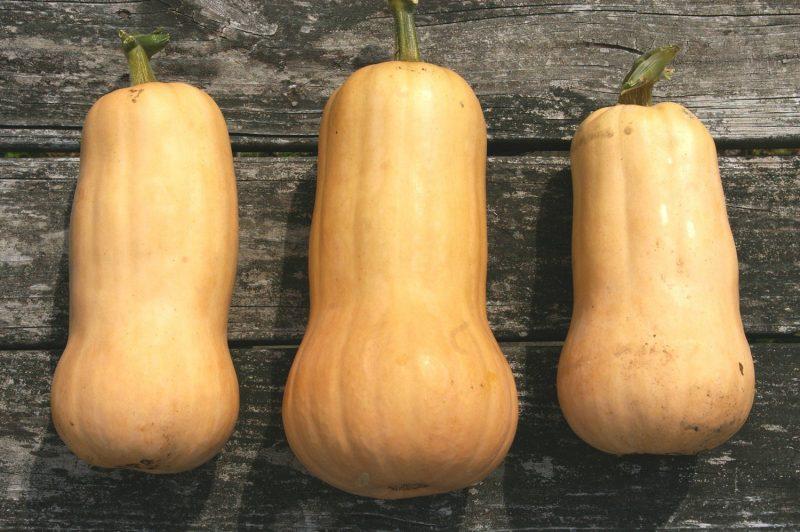
This variety is considered early-ripening. Its growing season lasts 90 days. The fruits are oblong in shape. Their distinctive feature is the formation of seeds at the bottom, which increases the volume of the pulp.
Palav Kadu
This variety is considered late-ripening. Its growing season lasts 150 days. Therefore, the plant is propagated from seedlings. The fruits are round and ribbed.
Prikubanskaya
This plant produces pear-shaped fruits and is considered a mid-late season. It takes 115 to 140 days to ripen. The average fruit weight is 2.5 kilograms. They are characterized by a thin skin.
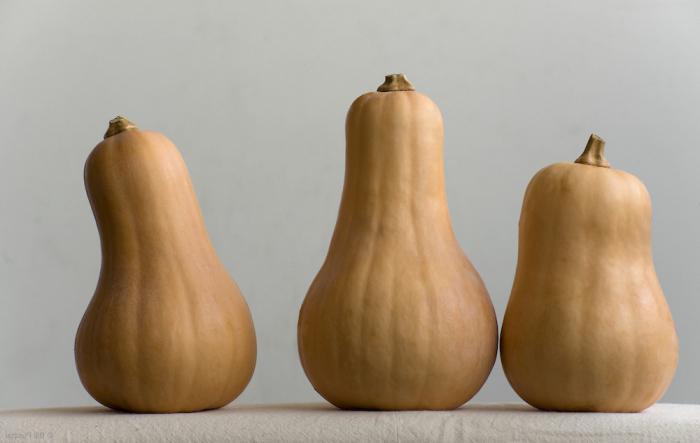
Provencal
The fruits are characterized by a round, slightly flattened shape. The pumpkin has a thin, ribbed orange skin. The growing season is 120 days. The fruits weigh up to 8 kilograms.
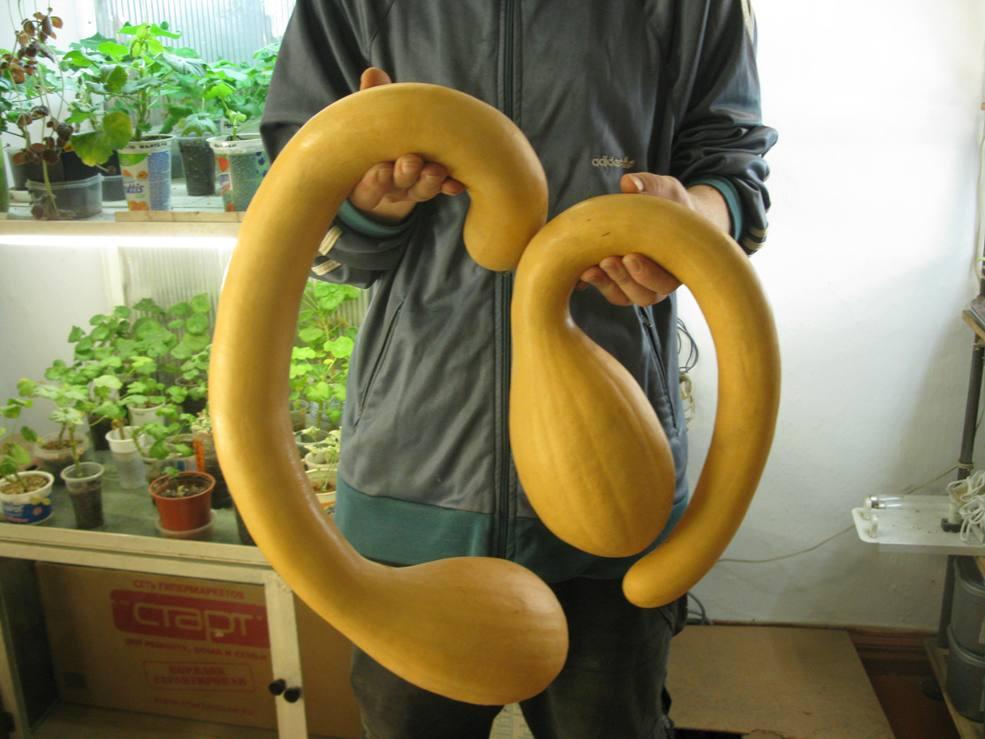
Trombone
This pumpkin has a unique twisted shape and impressive length. The flesh is a rich orange hue and delicious flavor. The fruits can be stored for more than a year; they ripen in 110 days.
Hokkaido
This variety is considered early maturing. It comes in a variety of shapes—round, flattened, and pear-shaped. The fruits weigh 0.7–2.5 kilograms. The flesh can be yellow or almost red.
Candied
This vegetable has wide, slightly flattened fruits. It is a mid-late variety. The growing season lasts up to 140 days. The fruits weigh up to 5 kilograms.
Chudo-Yudo
This unique vegetable can be eaten raw. It contains a lot of sugar and carotene. The pumpkin is oval in shape and weighs 6-8 kilograms. The skin is orange and has an interesting mesh pattern.

Features of growing butternut squash
To obtain a strong plant, it is necessary to take into account the main features of its cultivation.
Choosing time and place
It's recommended to plant pumpkins in a raised, well-lit location. The plant requires spacious beds. It's best grown from seedlings. For this, seeds are sown in individual containers at the end of April. They are transplanted outdoors in early June.
Preparation of planting material
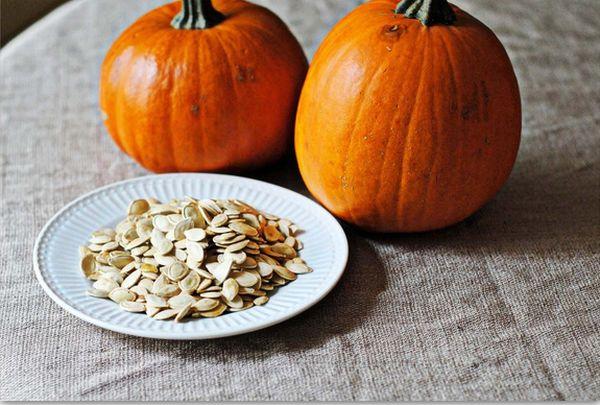
To prepare the seeds, you need to do the following:
- soak in hot water for several hours;
- wrap in a damp cloth;
- Place in the refrigerator - on the bottom shelf.
Preparing the site for planting
The bed should be prepared in the fall. It's recommended to dig it thoroughly and add superphosphate and rotted manure. These steps should be repeated in spring. It's recommended to use ammonium nitrate.
The landing process
Pumpkins should be planted outdoors in late May or early June. It's important for the soil temperature to reach 12 degrees Celsius.
The distance between seedlings should be at least 0.6 meters. However, depending on the variety, it can be greater.
The hole should be 10 centimeters deep. It's recommended to water each pumpkin before planting. Then, the plants can be planted.
How to properly care for the crop?
In order for a pumpkin to develop well, it needs to be provided with high-quality and comprehensive care.
Watering rules and necessary fertilizers
Before fruit set, pumpkins should be watered once a week. Then, switch to watering every 1-2 weeks. The water should be warm and settled.

Using cold water carries a risk of spreading diseases. It's best to avoid watering a couple of weeks before harvest.
Weeding and loosening the soil
It's recommended to loosen the soil after each watering. This should be done to a greater depth between rows and to a lesser depth near the plants. Timely weed removal is also crucial, especially before the pumpkins begin to actively develop.
Pollination
In bad weather, there are usually no insects pollinating plants. In this situation, the procedure is carried out manually. It is recommended to do this in the morning on a cool day. To do this, take a male flower, remove the leaves, and touch the stigma of a female flower with the stamen. You can transfer the pollen with a soft brush.
Formation of whips
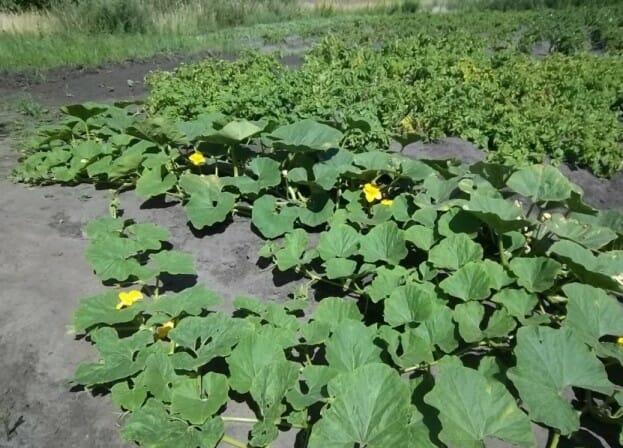
Pumpkins produce a large number of ovaries, but they don't provide them with adequate nutrition. To ensure a good harvest, leaving 2-3 fruits is sufficient. The formation process also requires following these rules:
- the stems need to be pinched - this is done 0.5 meters from the ovary;
- get rid of excess shoots;
- straighten the vines and sprinkle them with soil.
This manipulation will help the plant form new roots, which will provide it with additional nutrition.
Diseases, pests and methods of protection against them
Pumpkins can be susceptible to dangerous diseases and pest attacks. In such situations, immediate action is required.
Diseases
Pumpkin rarely encounters diseases., as it has excellent immunity. However, sometimes diseases still develop.
Bacteriosis
When infected, dark green spots appear on the leaves. An oily substance can be seen on the underside. After some time, the leaves dry out. The disease also causes fruit deformation. Copper sulfate and Bordeaux mixture help combat bacterial blight.
Powdery mildew
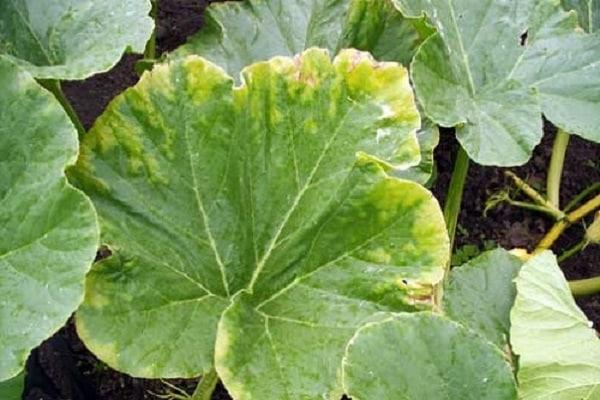
The leaves become covered with white spots. Over time, a white coating develops. The disease leads to fruit deformation and drying out of the plant. Sodium phosphate and colloidal sulfur help combat the disease.
Root rot
The root system suffers first. It turns brown and cracks. Then the leaves turn yellow, and the pumpkin stops growing. Treatment involves Fundazol and Previkur. The plant can also be sprinkled with wood ash.
Anthracnose
As the disease progresses, leaves become covered with brown spots. After some time, they crumble, and holes appear. As a result, the foliage dries out. Bordeaux mixture helps combat the disease. Copper oxychloride can also be used.
Yellow mosaic
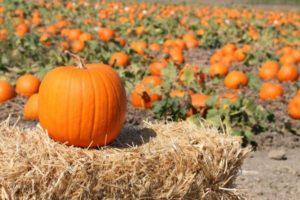
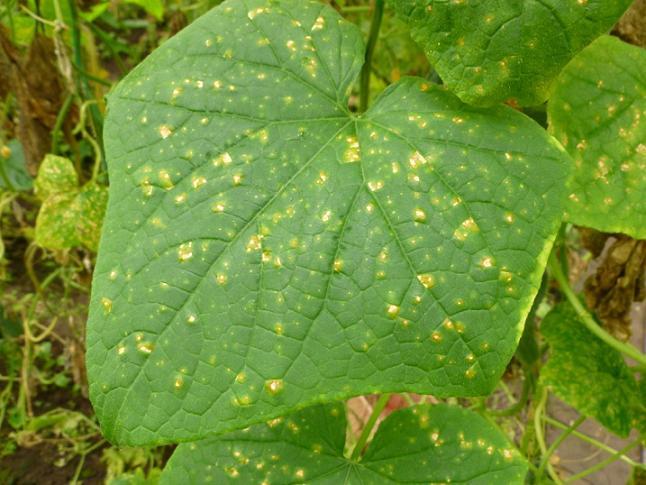
The leaves become covered with small yellow spots. The plant's growth is stunted. Farmaiod-3 helps combat this problem.
Pests
Pumpkins sometimes face pest attacks. It's important to identify and treat them promptly.
Spider mite
This parasite sucks all the juices out of the crop. The mites can be seen on the underside of the leaves. Malathion can help control it.
Melon aphid
Pest colonies attack the undersides of leaves and feed on their sap. As a result, the plant dries up. Malathion helps combat this problem.
Slugs
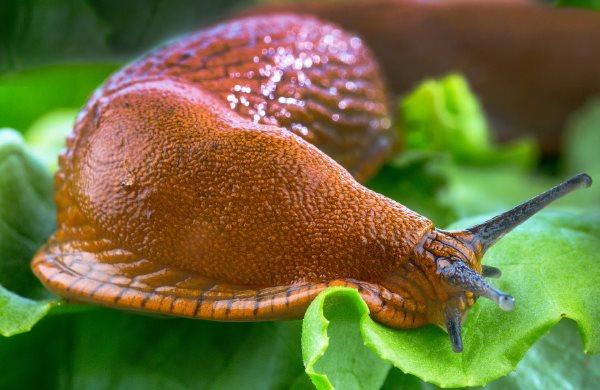
These pests eat young shoots. Ash and garlic infusion can be used to control them. The product Groza is also suitable.
Wireworm
The pest is dangerous to the roots of young plants. It is recommended to remove it mechanically using bait. In severe cases, use Bazudin.
Pumpkin propagation methods
It's recommended to plant pumpkin seedlings. This should be done at the end of April. Fill a 10-centimeter container with soil mixed with humus. Place two seeds per container and store in a warm place.
It's recommended to harden the plant before planting. It should be transplanted outdoors when 3-4 leaves appear.
Harvesting and storage of crops
It's recommended to harvest the fruit before the cold weather sets in. This should be done in dry weather using pruning shears. It's important to leave 3-4 centimeters of the stem.
Pumpkin can be stored at room temperature. However, 12 degrees Celsius (55 degrees Fahrenheit) is ideal. Butternut squash is a tasty and healthy plant that is very popular among gardeners. To grow this crop, follow the recommendations of experienced gardeners.
Related posts:
 50 Best Pumpkin Varieties with Descriptions and Characteristics for Outdoor Planting
 Description of the 20 best varieties of large-fruited pumpkin, growing and care rules
 Why do pumpkin ovaries turn yellow, fall off, and rot in open ground, and what can be done about it?
 Growing and caring for pumpkins in open ground, planting rules for a good harvest
 The best grape varieties for growing in the Urals, planting and care rules in summer
 Descriptions of the 20 best cherry varieties for the Moscow region, their planting and care
 Description of 16 varieties of ornamental pumpkins and cultivation features
 Description and characteristics of the 27 best plum varieties for the Urals, planting and care