
The crops grown by gardeners are used in food production everywhere. Vegetables are used to make delicacies, and preserves for the winter are made, enriched with essential vitamins. Some farmers grow unconventional and less common crops (for example, pumpkin). In this case, it's important to consider when to harvest ripe pumpkins from the garden to prepare them for home canning or cooking.
Fruit ripening period and its dependence on variety
When should you harvest? It all depends on the plant variety. There are three main groups of vegetables:
- Early ripening pumpkins (varieties with a short growing season, lasting 90-105 days).
- Mid-season varieties (the ripening period for these pumpkin varieties is from 110 to 120 days).
- Late-ripening crops (these plants mature in about 200 days). This variety of large-fruited pumpkins requires time to gain weight.
The latter varieties are recommended to be grown in suitable climatic conditions, as frost or sudden temperature changes also lead to rapid spoilage of the crop.
Mid-season varieties are often used for the middle zone, as the fruits are impressive in size and can be stored for a long period of time (up to six months, provided that the rules of cultivation and harvesting are followed).

What indicates the ripeness of the fruit
It's recommended to pick pumpkins from the bush only after they're fully ripe. You can determine ripeness by the following distinctive signs:
- signs of ripening, first of all, include the presence of a dried stalk (acquires a woody hue);
- Along with other vegetables and fruits, mature crops acquire a characteristic bright color;
- In addition to color, common mid-season varieties, which include vegetables that take over 3 months to mature, develop a thick skin (difficult to cut);
- Drying of stems and leaves is observed, as the fruit draws all the moisture from the plant bush.
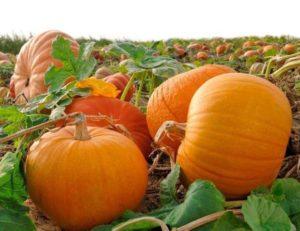
If such characteristics are observed, it is likely that the fruits are ripe and can be harvested and subsequently used for food or canning.
If necessary, the pumpkin can be cut unripe and then placed in storage, where favorable conditions will be maintained, which will help the unripe fruits ripen.

Pumpkin should be stored separately from other vegetables and fruits, as these varieties are sensitive to the ethylene vapors released, causing them to spoil quickly.
How to store vegetables so they ripen
If unripe fruits are stored, favorable conditions must be maintained. Let's look at the basic recommendations to ensure the fruit's flesh retains its nutrients and vitamins:
- Long-term storage can be achieved only by cutting off the unripe fruit of the plant in time (usually the fruit is removed 2-3 weeks before ripening);
- grabbed frozen pumpkin will have to be used immediately, as it will not be stored for long;
- the harvested fruit must be immediately placed in a dark storage area where there is no natural light or sunlight;
- overripe vegetables, or those cut before the due date, will not be stored for more than two months;
- the storage facility must maintain the required temperature (acceptable storage limits are 7-18 degrees);
- vegetables are laid out on a wooden surface without touching each other;
- For long-term storage, nutmeg varieties are used, which do not lose their taste over time.

If suitable conditions are created, the harvested crop will contain the necessary nutrients and vitamins for a long time.
Damaged fruits are not used for storage, as they quickly lose vitamins and beneficial properties.
Harvesting according to the lunar calendar and calculation
Experienced gardeners who regularly garden rely on the lunar calendar when growing and harvesting. It takes into account regional characteristics, as well as the order of planting, transplanting, and care. The moon exerts an invisible, natural influence on all living things, which is why pumpkin planting is often done within the conditions prescribed by this calendar. The values of this calendar change annually, requiring new calculations.

Calculating the best time for planting doesn't require you to do it yourself, as experienced scientists can do this for you. You can obtain more precise planting information by purchasing a lunar calendar.
It is recommended not to follow the advice blindly, as it does not always take into account the specific climatic conditions of the region, and favorable days and weather conditions do not always coincide. However, planting is done as closely as possible to the advice.
Tips from an experienced gardener
Experienced gardeners regularly share their recommendations with the world.
Let's take a look at the most useful advice from experienced farmers:
- Pumpkin harvesting depends on the variety of fruit (the vegetable harvesting period can stretch over several days or weeks).
- It is necessary to collect the fruits correctly so that the stalk remains on them, from which the nutrients will be sucked out completely.
- To harvest the fruits, choose a dry day when there is no precipitation.
- To ensure the harvested crop lasts a long time, it is recommended to harvest the pumpkin on time, preventing it from becoming overripe.
- Immediately after harvesting, the fruits are placed in storage to be stored for an extended period of time.
- Ripe pumpkins are stored separately from other vegetables and fruits, without touching each other.
When storing vegetables, it is recommended not to cut off the stems, but to twist them against their axis, which will allow the pumpkins to retain their juiciness and flavor for longer.
Related posts:
 Description and characteristics of the best seeds of pea varieties and types
 When to harvest leeks from the garden for storage, ripening times
 80 Best Eggplant Varieties for Different Regions with Descriptions and Characteristics
 How to propagate and grow peas, cultivation technology, and care in open ground
 The best eggplant varieties for growing in a polycarbonate greenhouse: planting and care
 When should onions be harvested for storage in 2025 in the Moscow region?
 When to harvest onion sets, family onions, and turnips in the Urals in 2020, timing
 The ripening time of grape vines by variety, how to speed up the process, and what to treat the plant with
