
The unusually shaped Jumbo Pink Banana Squash, or Pink Banana pumpkin, is an exotic melon. Unlike the round pumpkins common in Russia, it produces elongated, zucchini-like fruits. This variety was developed in the United States and has been known for about 100 years, but it has only recently arrived in our country.
General characteristics of the plant
The bush has long vines, with one pumpkin occupying an area approximately 5 m in diameter and climbing vigorously along supports. The sturdy vines support the weight of the ripening fruits. During flowering and ripening, the Pink Banana becomes very decorative.
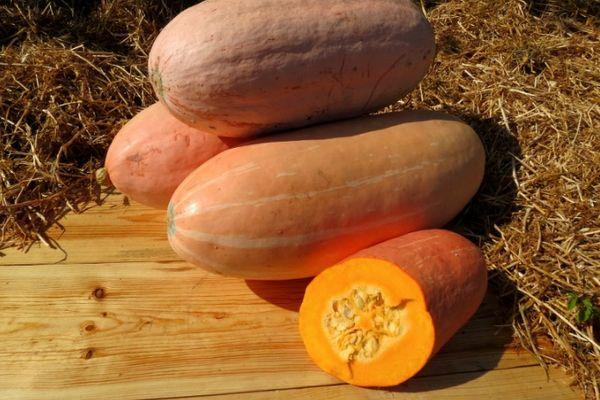
The Pink Banana pumpkin variety can produce numerous fruits throughout the summer if provided with suitable conditions. Even in an unfavorable location, it will reward its owner with one or two large, distinctive-looking fruits. The plant is resistant to most diseases caused by pathogenic fungi, rarely suffers from root rot, and tolerates temperature fluctuations well. In Russian conditions, it is quite suitable for outdoor cultivation.
The yield of 1 bush varies depending on the care provided to the Pink Banana pumpkin, and ranges from 10-15 to 50-60 kg.
With proper cultivation practices, up to three fruits can form and reach full ripeness on a vine; the remaining ovaries don't have time to fully develop, and their rinds don't harden. They are edible, although they lack the sweetness of fully ripened pumpkins. These pumpkins cannot be stored, but they can be processed.
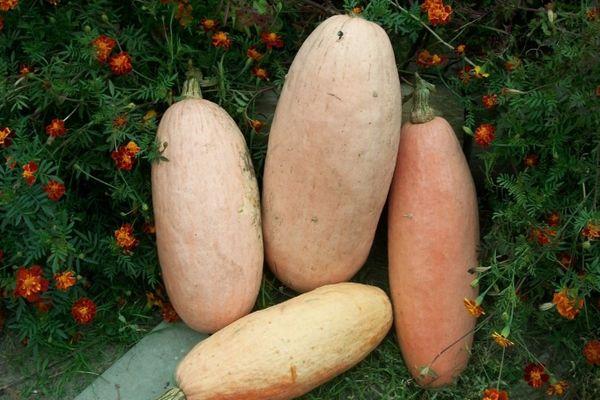
To produce record-breaking pumpkins, it's recommended to train the plant into 2-3 vines, leaving 1-2 ovaries on each. Once these vines have formed, restrict the bush's growth by pinching the vine tips. Training allows you to grow a more compact plant that takes up less space without sacrificing yield. The quality of the pods will be much higher in this case.
Consumer properties of fruits
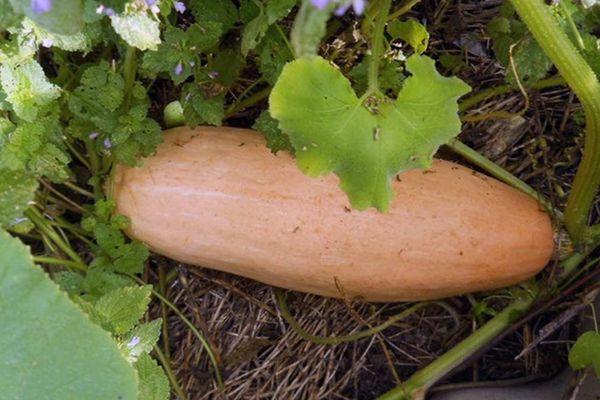
The shape of the ovaries, even on a single plant, can vary. Most often, Pink Banana fruits resemble a long (up to 1.2 m), but not too thick, squash with a pointed "nose." The length-to-thickness ratio of such a banana is typically 4:1. Some pumpkins may have a gentle curve, reminiscent of the fruit from which they are named.
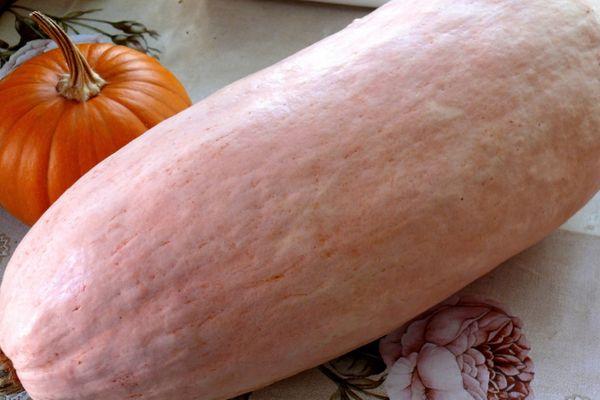
The rind is quite dense, light pinkish-yellow, and soft when ripe. As the Pink Banana pumpkin ripens, the skin hardens and hardens when it reaches biological maturity. By this time, it takes on the variety's characteristic pink color with an orange tint. When cut, the rind crisps under the knife.
The pumpkin's flesh is orange, fiberless, and smooth. Gardeners report excellent flavor: the flesh is tender and distinctly sweet, with a subtle pumpkin aroma. The fruit is rich in valuable nutrients and microelements, including a high concentration of beta-carotene, which gives the flesh its color.
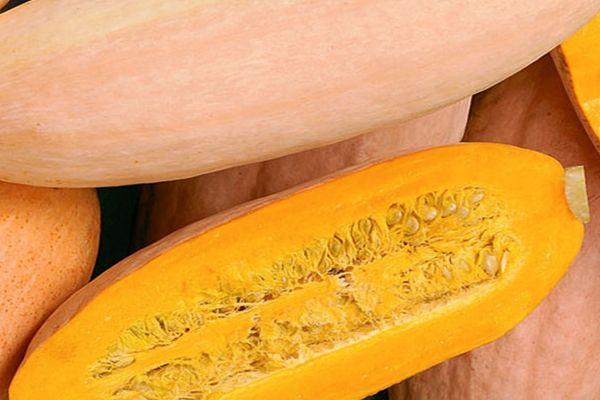
Vegetable growers note that the delicious flesh of the ripe fruit can be eaten raw and included in salads and appetizers. Children love this sweet vegetable. Pumpkin can be used in a variety of delicious dishes: baked slices with mayonnaise or sour cream, made into pumpkin porridge, or baked into pies with its sweet and fragrant flesh.
When cooked, its flavor becomes even more pronounced, and the aroma acquires fruity notes. Many note that pink bananas are not well-suited for meat dishes precisely because of their sweet taste.
Pumpkins picked at biological ripeness (with a firm rind that can't be damaged by a fingernail) can be stored fresh. They keep well until spring without losing their nutritional value or flavor. Gardeners even believe that Pink Bananas develop their best flavor after 1-2 months of storage. Pumpkins picked at technical ripeness, with a soft rind, are processed, as they can only be stored for a maximum of 1 month.
Long pumpkin fruits are used to make delicious pumpkin juice, preserves, jellies, and delicious candied fruit. Pumpkin pulp can be used in vegetable caviar. The easiest way to preserve pumpkin is to flash-freeze the sliced fruit.
Agricultural technology of the variety
Pumpkins have a long growing season and begin to ripen 120-125 days after sowing. Vegetable growers in central Russia often use seedlings to grow Pink Banana in their garden beds, but seeds can also be sown directly into the ground using insulated beds and plastic covers.
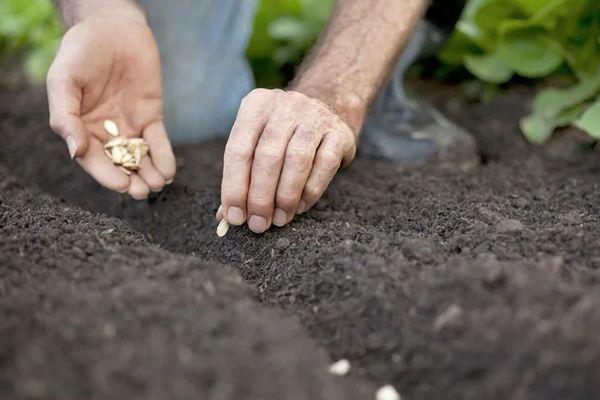
Sow seeds for seedlings in early April. Like all related crops, pumpkins' root systems are sensitive to damage during transplantation, so they should be sown in individual pots, one seed per pot. When planting in the ground, carefully remove the plant from the container without disturbing the root ball. Peat pots should only be used if watered generously for the first 2-3 weeks after planting to allow the container walls to soften.
For seedlings, prepare fertile and permeable soil from equal parts humus, sand, and garden soil. Pumpkin seedlings are rarely susceptible to blackleg disease and can only be affected by soil temperatures below 12°C. To avoid sowing empty seeds and to wait for the shoots to germinate faster, the grains are soaked and sprouted before sowing.
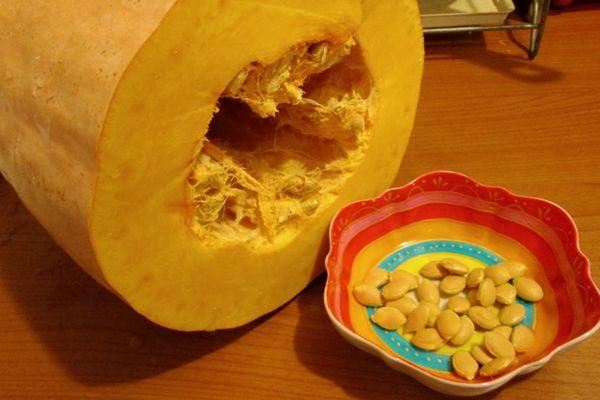
Pink banana seeds have an unusual shape. The rim of the seed is thickened and appears cracked, as if it were germinating. Select heavy, plump seeds and soak them in warm water for 1-2 hours. Then wrap the seeds in a damp cloth and leave them in a warm place until the roots emerge. This may take several days, and the cloth must remain damp during this time. When a crack appears at the pointed end of the seed and the root tip is visible, place the seeds in pots, planting them 2-3 cm deep.
Place the seeded cups in a warm location (+25°C) and monitor the moisture of the top layer of soil, preventing it from drying out or forming a crust. Within a few days, a pair of robust cotyledon leaves will emerge. During this time, the pumpkin will require plenty of light and warmth. By the time it's time to plant in the garden, the seedlings should have 3-5 leaves.
When sowing in soil, the seeds are germinated as for seedlings. Pumpkins can be sown in a greenhouse insulated with fresh manure, which will warm the beds in case of cold weather. Place arches over the insulated beds and cover them with lutrasil or plastic. Pumpkins can be sown around mid-May, but you'll need to monitor weather forecasts and, in case of frost, additionally cover the greenhouse with insulating straw mats.
When growing pumpkins, it's important to provide them with sufficient nutrients. To achieve this, the soil in the beds is fertilized with complex fertilizers such as Kemira Lux, Fertika, and Agricola, which contain potassium, phosphorus, and nitrogen in the right proportions and are enriched with micronutrients. During flowering and fruiting, the plant can be fed with phosphorus-potassium fertilizers (monopotassium phosphate, potassium sulfate, superphosphate, or ready-made pumpkin mixes).
Related posts:
 Growing and caring for pumpkins in open ground, planting rules for a good harvest
 50 Best Pumpkin Varieties with Descriptions and Characteristics for Outdoor Planting
 Rules for growing pumpkins on a balcony at home and how to choose the right variety
 Why do pumpkin ovaries turn yellow, fall off, and rot in open ground, and what can be done about it?
 How often should you water pumpkins in open ground in August during hot weather?
 Description of 25 varieties of butternut squash, cultivation and care in open ground
 Description of the 20 best varieties of large-fruited pumpkin, growing and care rules
 Description of Butternut pumpkin, features of cultivation and care