
Butternut pumpkin is a hybrid of cultivated butternut squash and wild African plants, developed in the mid-20th century in the United States. The variety has proven quite resilient even in central Russia. Gardeners who have tried growing Butternut pumpkin in their gardens have been pleased with both the appearance and taste of the fruit.
Description of Butternut Squash
The bush is not particularly vining, with shoots 2-2.5 m long; they climb well on natural supports. The fruit is not very heavy, so the pumpkin vines can withstand the weight. The bushes can be planted 60-70 cm apart, but it's best to select a spot where the pumpkin vines won't interfere with the growth of other crops.
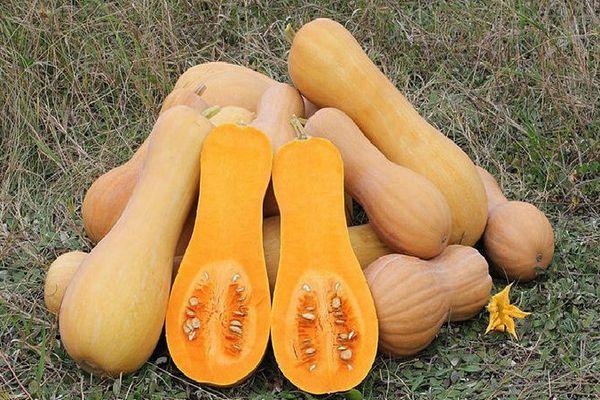
Pumpkins and potatoes are the only plants that grow well together. The vines spread along the soil beneath the plants, and the vegetables don't interfere with each other at all. The harvest can be done simultaneously.
Despite its heat-loving nature, the Butternut pumpkin grows even at the latitude of St. Petersburg and the Leningrad region, producing several large fruits during the short, cool summer. The pumpkins reach biological maturity by the first frost. Unripe fruits can also be picked and used for preserves or left to ripen in the pantry.
The variety description notes the Butternut pumpkin's resistance to root rot. In regions with cool summers, the plant can be planted in a warm bed to prevent the soil beneath the roots from cooling during prolonged cold spells and prolonged rainfall. Under these conditions, the plant will be immune to fungi and bacteria.
The variety is also resistant to powdery mildew and downy mildew.
The plant's primary requirements are watering and fertilizing. Fruit formation and growth increase the plant's need for potassium and phosphorus, which accumulate in the pumpkins and impart the beneficial properties for which this crop is prized. Plenty of moisture is necessary for fruit development. Without sufficient water, pumpkins will experience poor growth and fruiting.

The variety yields up to 12-15 kg per bush. With different vine training, you can produce several large pumpkins weighing up to 4-5 kg or many individual fruits weighing around 1 kg. The plant's adaptability makes it popular with both large-fruited pumpkin lovers and those who prefer smaller varieties.
Types of pumpkin
Butternut squash, or butternut squash, differs from the varieties familiar to Russians by its distinctive flesh flavor with subtle hints of nutmeg. Butternut squash also boasts a high sugar content, making it sweeter than table pumpkins. Butternut squash, or elongated pumpkins, are characterized by a tender, fibrous flesh. All this makes the butternut squash a very tasty vegetable.
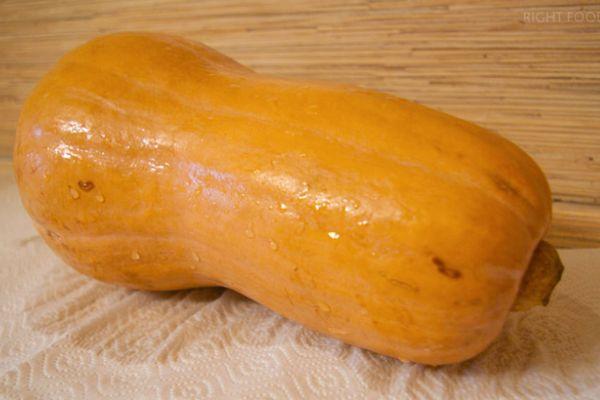
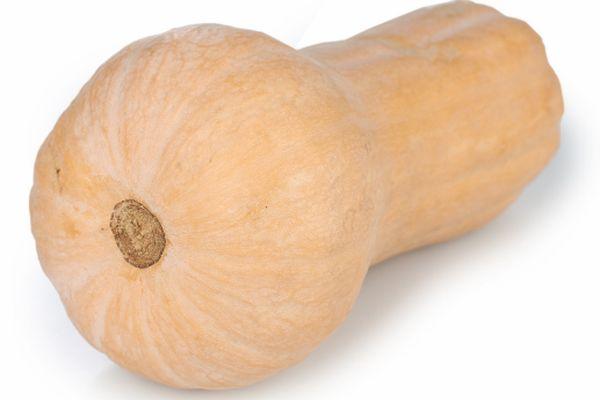
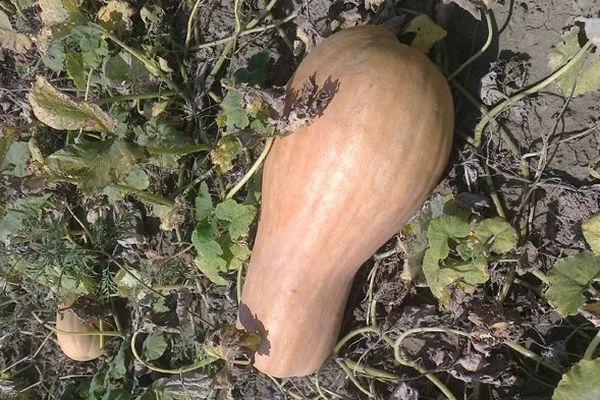
A distinctive feature of the variety is its pear-shaped fruit. The unripe pumpkin is greenish in color, but becomes yellow-orange as it matures, and a pleasant pinkish-orange hue as it matures. The rind is firm but not thick. There is virtually no hardened layer beneath, so even a small fruit yields a large amount of pulp.
At technical maturity, the rind has already become firm, but can still be damaged by a fingernail. At this point, the fruits can be picked and stored for a short period. For winter storage, wait until the rind has completely hardened.
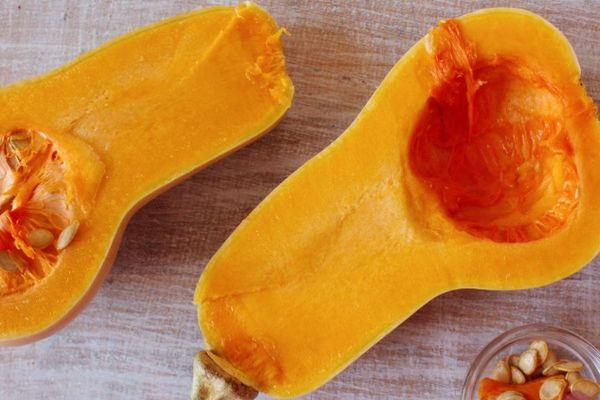
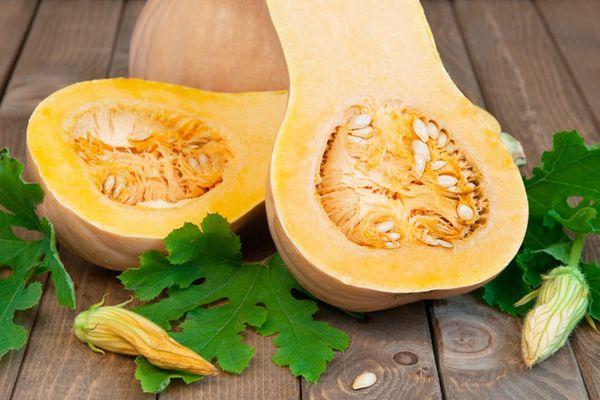
The flesh is soft and juicy, tender and sweet. The aroma is distinctive for butternut squash and is distinct. Gardeners' reviews particularly note the location of the seed chambers only in the lower third of the fruit, where they are slightly thicker. The rest is uniform and contains only pulp.
Consumer qualities of fruits
Thanks to its flavor and rich pulp, pumpkin is beneficial for both children and adults on a diet. However, it is not recommended for those with hyperacid gastritis or allergies.
Butternut squash can be used to make delicious cream soups, porridges, pancakes, and casseroles. The juicy flesh is also eaten fresh, in salads and sliced. Pieces of the vegetable can be used to decorate vegetable canapés and gourmet appetizers. Pumpkin makes delicious candied fruit, which is especially popular with children.
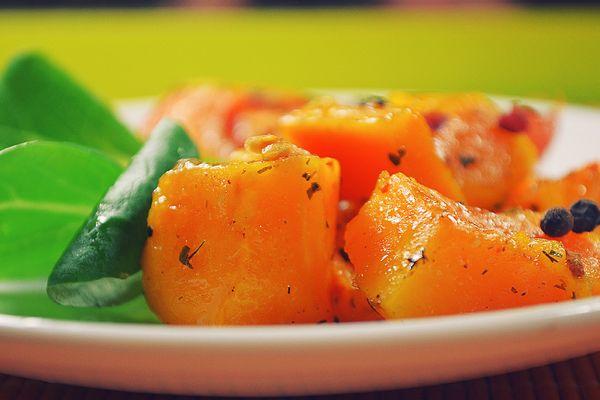
Pumpkin is an unrivaled food for winter preservation. Vegetable juice preserves all the beneficial properties of the fresh fruit, and the jam rivals fruit preserves. Pumpkin pieces can be incorporated into delicious appetizers and lecho, and can be used to make delicious caviar and puree. Ripe pumpkins can be stored until spring, so you can enjoy fresh pumpkins and pumpkin-based dishes well into winter.
Agricultural technology of the variety
Pumpkin seeds can be sown directly into the soil. To do this a little earlier, prepare warm beds with compost or manure in the fall, just like for planting cucumbers. Dig the holes immediately and fill them with fertile soil. Once prepared, cover the bed with clear plastic. This simple measure will allow the biofuel to begin warming the soil in early spring. By mid-May, the site for planting pumpkins will be ready.
There's no need to remove the plastic film. Holes are made in it over the soil holes and pre-sprouted seeds are planted. The seeds are planted at least 2-3 cm deep. Given the climate, it's best to install hoops over the bed to provide temporary cover in case of recurring frosts. With this planting method, flowering will begin around mid-July, and the first fruits will appear in early August.
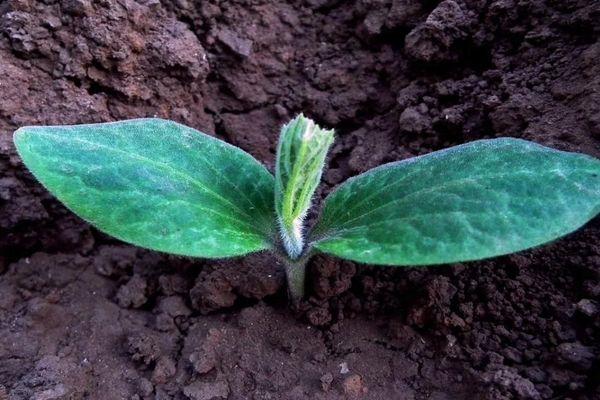
If you don't want to create heated beds, or if you purchased the seeds in the spring, you can use the seedling method and sow pumpkin seeds in pots with a soil mixture of equal parts humus, sand, and garden soil. Sow approximately 1-1.5 months before planting the seedlings in the beds. Transplant the plants to their permanent location when they have 3-5 true leaves, spacing them 60-70 cm apart, around the first ten days of June.
When the flowers appear, you can try pollinating them by hand, picking the open stamens from the male flowers in the morning and transferring the pollen to the pistils of the female flower. To ensure success, repeat the process the following day. This method guarantees pollination, unlike pollination by bees, which may not fly in bad weather.
 When growing ovaries appear on the bush, you need to remove the shoots that do not have them. Leave 2-3 pumpkins on each vine, and pinch off the tops. This will help the plant produce 6-7 large fruits, each weighing about 2 kg.
Leaving the pumpkin untrained can result in many small ovaries that will partially ripen before frost, averaging around 1 kg in weight. Some pumpkins will remain unripe.
Watering the pumpkin Only during the period of vigorous growth of vines and ovaries. Water 1-2 times a week. After flowering begins, dissolve 2-3 handfuls of wood ash, rich in phosphorus and potassium, in water every 15 days. This can be replaced with granular superphosphate, monopotassium phosphate, or complex mixtures such as Agricola, Kemira, etc. Watering should be stopped 2-3 weeks before harvest to allow the pumpkin to complete its growing season and develop a hard skin on the fruit.
Related posts:
 Growing and caring for pumpkins in open ground, planting rules for a good harvest
 50 Best Pumpkin Varieties with Descriptions and Characteristics for Outdoor Planting
 Rules for growing pumpkins on a balcony at home and how to choose the right variety
 Why do pumpkin ovaries turn yellow, fall off, and rot in open ground, and what can be done about it?
 Description of the 20 best varieties of large-fruited pumpkin, growing and care rules
 How often should you water pumpkins in open ground in August during hot weather?
 Description of the long-fruited pumpkin Pink Banana and cultivation techniques
 Description of 25 varieties of butternut squash, cultivation and care in open ground