
Bulb onions are grown in various regions today, including the Moscow region. At a certain point, the harvesting season begins, but many beginning gardeners are unsure when to begin harvesting onions in 2025 in the Moscow region. To avoid the mistake of digging up onions too early or too late, it's recommended to learn the rules for determining when onions are ready to be harvested.
Determining whether onions are ready for harvesting
Valuable information about When to dig up onions, is provided by the seed producer. Each variety has its own harvest maturity period, so this indicator must be taken into account when determining the readiness and maturity of the bulbs.
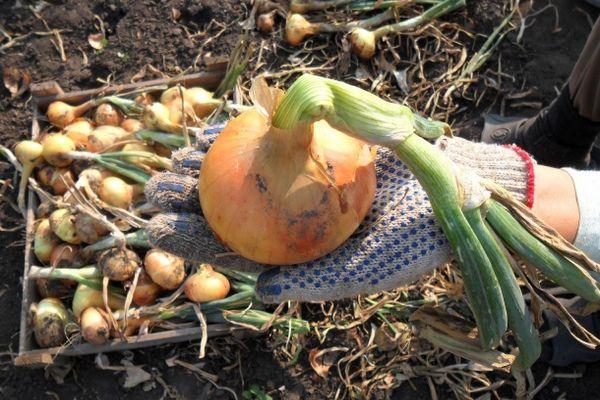
The plant gives clues about the possibility of harvesting in the form of the following signs:
- the plant stem becomes soft and loses elasticity;
- the bulb in the neck area dries out;
- the plant is not capable of forming succulent feathers.
When determining planting and harvesting dates, consider the region's climate and the gardening season. During hot summers, harvesting times are typically 7 days shorter than recommended by the manufacturer.
The time to harvest onions with colored bulbs can be determined by the intensity of the bulb's color. If the resulting bulb's hue matches the manufacturer's specifications, it's time to consider harvesting.
Preparing onions for harvesting
Harvesting is not done during rainy seasons, as it's much easier to dig up the bulbs in the absence of precipitation, they dry more easily, and they store better. In the Moscow region, onion harvesting can begin when new shoots have stopped growing and 70% of the shoots are on the ground.
Preparatory work consists of the following:
- At the beginning of July, the greens are carefully pinned to the surface of the ground, which increases the likelihood of obtaining large-sized bulbs;
- 7 days before harvesting, stop watering;
- You can rake away some of the soil from the heads.
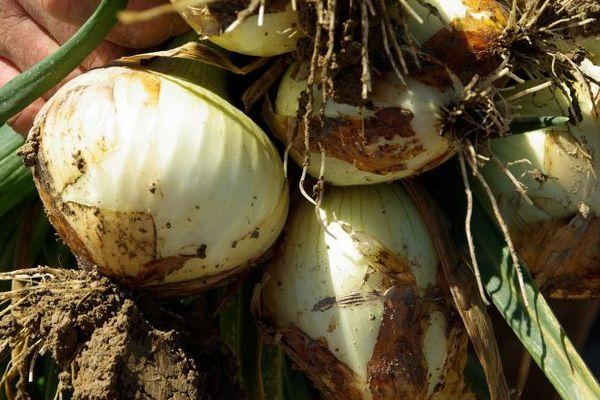
The vegetable should be dug up when obvious signs of stem lodging appear. At this point, the heads accumulate the greatest amount of nutrients, after which they stop feeding and, after a while, enter a dormant state. To do this, dig under the stems with a shovel.
When and how to harvest onions
The answer to the question of when to harvest onions in the Moscow region depends on several factors, the most important being the plant variety and the region's weather conditions. With many varieties of onions available on the garden market today, it's important to follow the ripening time for each specific variety. It's also important to consider weather conditions, which directly impact harvest timing.
The classification of onions based on ripening speed is as follows:
- early maturing - from planting to harvesting takes from 70 to 85 days;
- mid-season - the harvest period varies from 90 to 100 days;
- late - collection is possible only after 120 days.
Taking into account regional conditions, early varieties are usually harvested in mid-July, mid-season varieties in late July and early August, and late-season varieties require harvesting in mid-August.
Early onion varieties are planted primarily for their greens, as the bulbs don't store well. When planting late and mid-season varieties, keep in mind that in the hot summers of the Moscow region, onions ripen one to two weeks earlier than the seed manufacturer's recommended time. Bad weather can also prolong the ripening time.
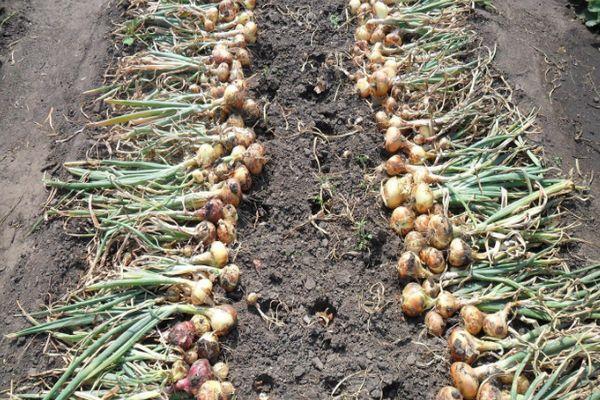
Late-season varieties are not recommended for open-field cultivation in the region, as rains begin in August, depriving the plant of the chance to produce good-quality bulbs. The following onion varieties are the most popular for growing in the Moscow region:
- Strigunovsky;
- Robusta;
- Belovezhsky.
Experienced gardeners in the Moscow region can quickly determine the potential harvest time. Healthy plants and enlarged stems indicate that the harvest time has not yet arrived. Massive lodging of the stems and their active yellowing indicate the onset of harvest time. Yellowing does not always indicate that the turnips are ready and often appears as a result of plant infection, so before harvesting, it is necessary to dig up one bulb and inspect it.
Don't wait until the onion stems are completely dry, as this will cause the bulbs to become overripe and won't store well. Harvesting in the Moscow region begins in late July and continues until the last days of August, provided the summer is warm and not rainy.
Drying
Before harvesting onions Check the root collar—once it's dry, you can begin digging. For digging, it's recommended to use a shovel or pitchfork, using which to carefully remove the bulbs from the ground. A pitchfork is considered a more convenient option, as it allows for deep digging and minimizes the risk of damaging the bulbs.
Even minor damage to the bulb should be set aside for immediate consumption. Such bulbs cannot be stored; they spoil quickly and can lead to the loss of healthy bulbs.
It is worth immediately selecting for eating onions with a thick neck and fragile scales, since such heads will not be able to be stored.
Don't clear the heads of soil by hitting them against the ground or against each other. This will also severely damage the turnips. Don't pull the heads by the remaining stems, as this will damage them and reduce their shelf life.
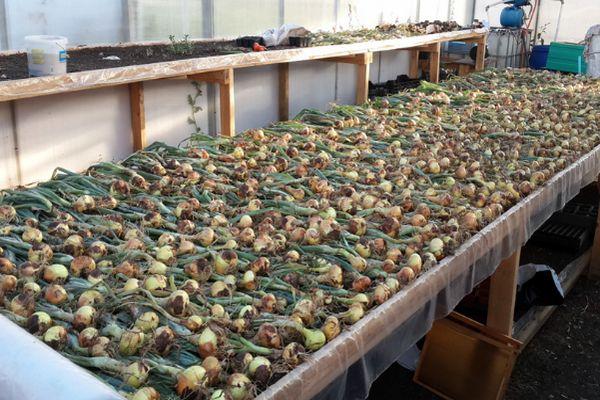
After digging, the harvest is spread out on a dry, level surface to dry. In the absence of precipitation, it is recommended to take advantage of natural heat and sunlight. Drying times can vary slightly, but generally take 10 days. If outdoor storage is not possible due to precipitation, the onions are spread out in a garage, attic, or on the floor.
The final stage is cutting off the remaining leaves of the plant, leaving 5 centimeters from the neck.
Storing onions in winter
Once the turnip heads have been collected and thoroughly dried, they need to be stored permanently. Bags, crates, nets, and boxes are all suitable for this purpose. Storing turnips in bags is not recommended, as they don't receive sufficient air circulation, causing them to rot. Keeping turnips in plastic bags is unacceptable, as the lack of circulation will result in rapid yield loss.
Not recommended store onions In a cellar or garage, or on the ground. The heads absorb moisture well, which ultimately leads to their rapid deterioration.
After harvesting, it's important to periodically inspect the harvested crop. Fruits with defects or signs of rot should be removed immediately, as they can quickly cause damage to nearby turnips.
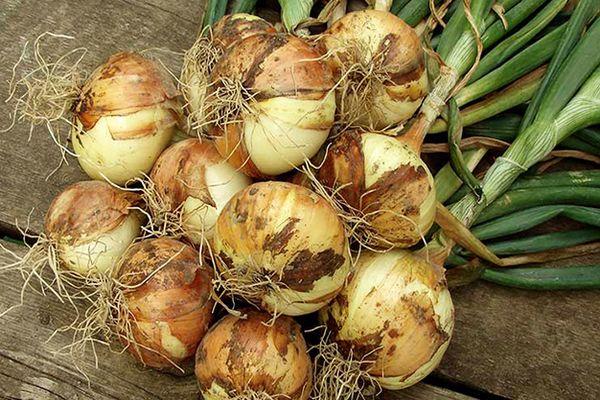
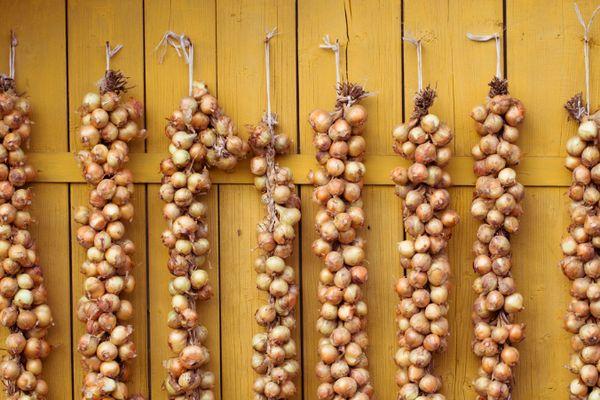
Some gardeners store onions using braiding. In this case, the stem is left near the neck, and the leaves are braided, after which the crop is hung in an area with free air circulation. Onions thrive at temperatures of 20°C. C, while the owner benefits from air disinfection. The downside is that high humidity can cause the bulbs to rot, leading to bulb damage and the risk of gnats.
When to harvest onions in 2025 according to the lunar calendar
Many gardeners rely on the lunar calendar before harvesting their crops. The moon's influence on flora and fauna is a proven fact, so taking this factor into account when harvesting crops can lead to better storage of bulbs. According to ancient traditions, root vegetables are best harvested during the waning phase.
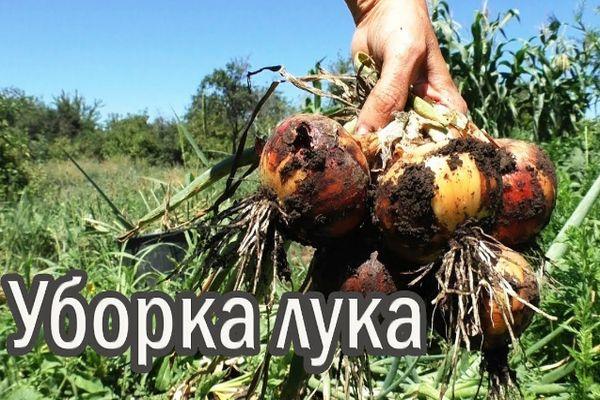
For gardeners in the Moscow region, the waning moon falls between July 20 and August 10. Therefore, when determining when to harvest onions in the Moscow region, it's recommended to choose a date within this range. When setting a harvest date, consider the region's weather forecast for this period and choose days without precipitation.
Tips for harvesting and storing onions
It's recommended to harvest onions from the garden for storage on time. If they're dug up early, the plant doesn't have time to form heads with a good layer of scales. The neck remains open and vulnerable to various pathogens, causing the onions to spoil quickly.
Delays in harvesting can lead to cracking of the scales. This will trigger new root growth, which will adversely affect storage quality.
In some cases, onions don't fully ripen by the end of the season, and in this case, a few tricks are used. Before digging up the onions, it's worth following these recommendations:
- 2 weeks before the expected harvest date, stop watering the beds;
- After the feathers have stopped growing, it is advisable to free the bulb and rake the top layer of soil a little, which will facilitate better penetration of heat into the heads;
- It is recommended to lightly press down the flower stalks as they wither, which will prevent the formation of new flower stalks and redirect the flow of nutrients.
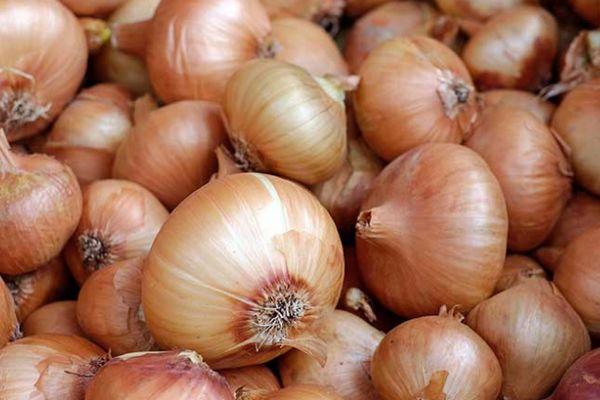
Traditional white onions are better for long-term storage, as red varieties are inferior in this regard. "Hot" varieties, which are literally a tear-jerker to handle, have a longer shelf life. Sweet varieties are more susceptible to various diseases and therefore have a shorter shelf life.
It's recommended to store only one variety of onion in one place. During periodic harvest checks, remove not only defective but also sprouted onions. During winter and early spring, the sprouted onions can be planted in the ground to grow onions indoors.
The harvest will keep in containers and in rooms with good air circulation. To increase storage life, some gardeners dust the heads with chalk or cauterize the roots. The optimal temperature for storing turnips is considered to be 0°C. C. It is not recommended to store onions together with potatoes, beets, and carrots, as they require high humidity, which negatively affects the condition of the onions.
Related posts:
 When to harvest leeks from the garden for storage, ripening times
 50 types and varieties of perennial onions with descriptions, cultivation, and care
 Description of the best varieties of onions, planting and care in open ground
 How and when to plant onions to get large bulbs
 The beneficial properties of white onions, description of varieties, cultivation and care
 When to harvest onions planted in autumn and spring from the garden for storage, how to determine the timing
 Description of the Exhibition onion variety, growing from seedlings, planting and care
 Description of purple onion varieties, their beneficial properties, storage methods, and harvesting times