
In the height of summer, no one thinks about the availability of dill. But in winter, many suffer from its absence. While this spice is easy to find in supermarkets, it has virtually no aroma or flavor. However, by spending a few hours harvesting dill at home in the summer, you'll enjoy it to the fullest during the cold winter months. Today, we'll discuss how to prepare dill at home for the winter.
Composition and beneficial properties
The seasoning contains a number of beneficial substances. First and foremost, it contains fiber and vitamins B and C. Folic acid, which is abundant in the product, is very beneficial, especially for children and pregnant women. Men also benefit significantly from the acid, which helps normalize sperm production.
Dill is rich in various flavonoids, carotene, and fatty oils. The presence of essential oils improves the production of bile and digestive enzymes. It also disinfects the digestive tract and genitourinary system.
It's no wonder that dill water has long been used to relieve colic in infants and restore intestinal function. The presence of magnesium and iron improves blood circulation.
Despite processing such as canning, dill retains ascorbic acid, potassium and fiber.
It's very beneficial to use as an anti-inflammatory and for oral hygiene. Dill improves appetite and digestion, and reduces the number and frequency of cramps.
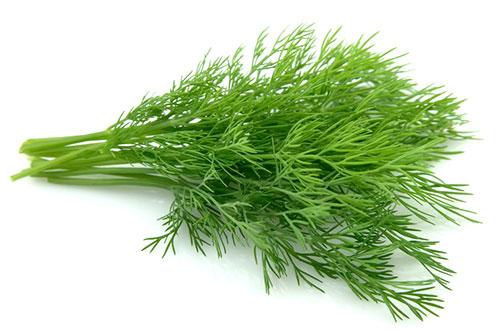
Many people are familiar with dill as a diuretic, while others enjoy its expectorant properties. It helps relieve stress and speeds recovery after intense mental stress. Some women use dill as a weight loss aid. 100 grams of dill contains only 40 calories.
Preparing the necessary ingredients
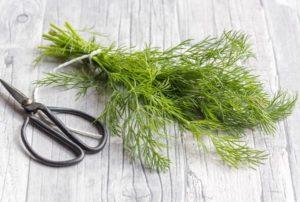
To prepare dill for winter, select only fresh, succulent sprigs. Watch out for yellow branches or stuck-together leaves—these indicate the product is stale. If there are stems or other large shoots, remove them with a knife or scissors.
The greens should be thoroughly rinsed under cold water several times. This will ensure that all dust, dirt, and soil are removed. While washing, turn the bunch in your hands several times, making sure to wash the central part, which is hidden by other branches.

Next, dry the herbs. Avoid oven drying, as this will destroy most of the beneficial substances and cause the herbs to become, at best, tough, or, at worst, yellow. Hanging is the most common drying method. Be sure to wrap the bundle in cheesecloth. This will prevent dust from settling on it.
Take a look Also
Methods for preserving dill for future use
There are many ways to prepare this spice for winter storage. Everyone chooses the most convenient method based on their own resources (time, drying location, or freezing). The most common methods are listed below. These include drying, freezing, canning, pickling, and preserving in oil or salt. Explore them and decide which one you prefer.
Drying
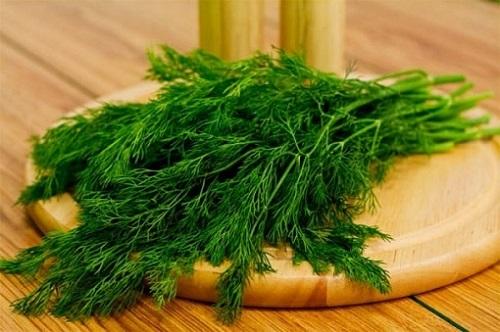
This method will require the most time and effort. Before you begin, consider where in your home you can lay out the dill sprigs on a large horizontal surface. Be sure to keep in mind that the location should be dark, ventilated, and not damp. A small pantry may be suitable, as long as it has a reliable ventilation system.
Or do you have a small corner of the house that can be closed off for a couple of days? In any case, drying won't take more than three days. First, wash the sprigs, lay them out to dry, and then chop them finely. Place them in the prepared drying area and leave them there until the herbs are completely dry. Then transfer the resulting spice to a small jar.
Important! If the sun does hit the greens while you're working, they will wilt, turn yellow, and become tough.
If you've found a suitable spot but can't find a horizontal surface to dry your herbs, there's an alternative. Gather the washed and dried herbs into several bunches, wrap each in cheesecloth, and hang them vertically.
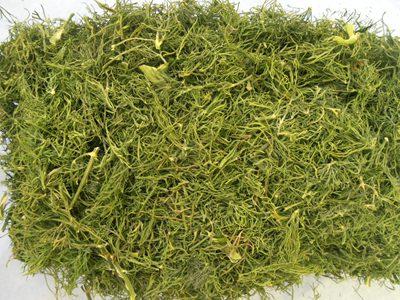
Fans of dried fruits and vegetables can purchase an electric dehydrator, which can do the job in just a few hours. This device uses cold air and a strong wind to dry, preserving the maximum amount of nutrients.
Freezing
Freezing herbs in the refrigerator doesn't take much time or effort, but it does require space. In this case, having a separate freezer compartment is invaluable. This way, you can prepare your favorite dishes with fresh herbs this winter, preserving their rich, spicy aroma and flavor. Various methods are described below. freezing dill:
- Chopped. Clean, dried dill is finely chopped, placed in plastic containers or regular bags, and placed in the freezer.
- In sprigs. Follow the same steps, but don't cut the dill. Cut only the thickest stems. You can wrap them in a bag, foil, plastic wrap, or place them in a plastic container.
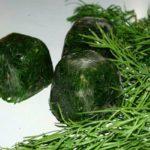
- In ice cube trays. Wash, dry, and finely chop the herbs. Place the green mixture in the trays, filling the bottom and top with water, sunflower oil, olive oil, or softened butter. Freeze them, remove them from the trays, and place them in a plastic bag.
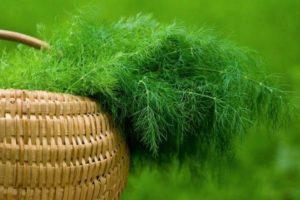
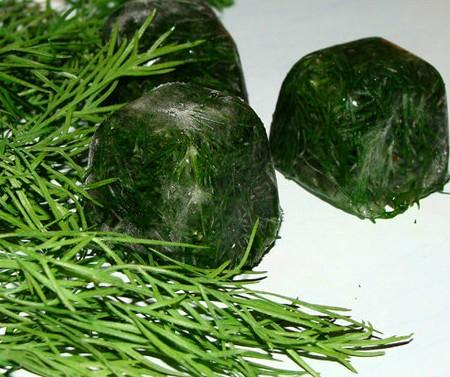
Important! If you chop herbs in a blender rather than with a knife, they will have a puree consistency and will freeze even without adding liquid.
Conservation
Preserving greens is sometimes done without sterilizing the jars. The peak season for preserving this product for the winter is mid-summer. Let's take a look at how this process works.
Select fresh, juicy herbs, free of yellow or matted stems. Wash them thoroughly and hang them to dry until completely dry. After harvesting, trim off any thick stems and chop the herbs into small to medium-sized pieces. If you're using a liter jar, prepare 450 grams of dill and 100 grams of salt. Fill the jars, alternating salt and dill, right up to the top of the jar. Remember, the salt should be the top layer.

Important! Observe the proportions: salt should make up 20% of the total volume in the jar.
Pickled in jars for the winter
Pickling is suitable for those who don't have the means to dry or freeze their herbs. This method, although it requires some heat treatment, preserves the herbs' beneficial properties and distinctive aroma, and, thanks to the addition of other ingredients, it also acquires a unique flavor.
The downside is that, unlike other methods, this method requires the presence of auxiliary ingredients, without which marinating will not work.
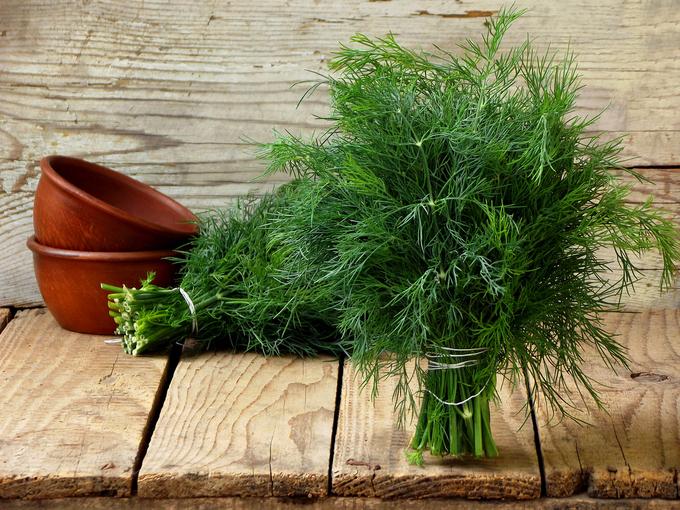
So, to pickle dill, prepare the following ingredients:
- Fresh dill – 0.8 kilograms.
- Water – 0.5 liters.
- Sea salt – 5 teaspoons.
- Granulated sugar – 10 grams.
- Allspice – 6 peas.
- Bay leaf – 2 leaves.
- Vinegar 6% – 0.25 liters.
Prepare sterilized bottles using your preferred method. Inspect the herbs and remove any yellow or wilted leaves. Wash fresh herbs several times, carefully sorting through the blades to ensure they are clean on all sides. Then, finely chop the blades. Arrange the mixture in the containers.
Next, prepare the marinade. Place all the remaining ingredients in an enamel saucepan, bring to a boil, and simmer for another 6 minutes. Carefully pour the brine into the dill-filled bottles and cover with lids. Next, place the bottles in the iron saucepan (be sure to place a towel or other cloth on the bottom). Fill the saucepan with water, set over low heat, and sterilize for half an hour.
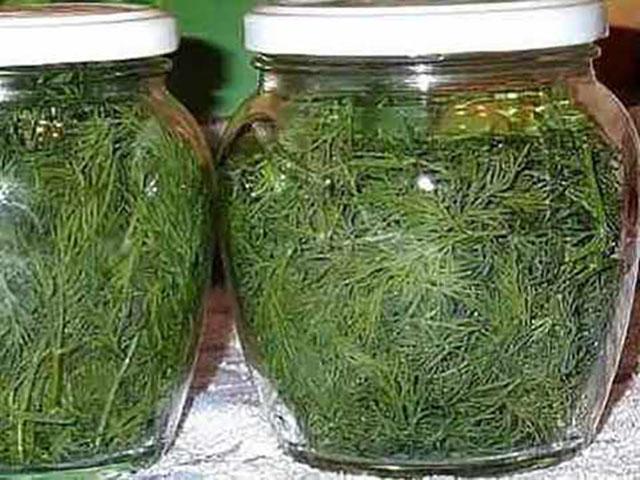
Then remove the bottles from the pan (very carefully, they'll be hot), immediately seal the lids, turn them upside down, cover with a blanket, and leave overnight. If the bottles are still warm in the morning, wait until the jars reach room temperature. Then store the jars.
Storage method in oil
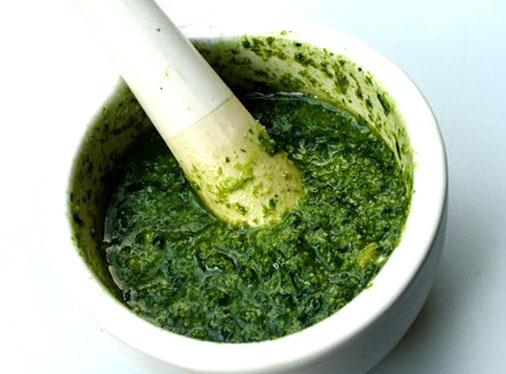
A fairly popular way to preserve herbs, fragrant, fresh, and juicy, until winter. To prepare this dish, you'll need only one kilogram of dill and one liter of sunflower oil.
The method of preparation is quite simple:
- Wash the grass on all sides, let it dry, and chop it into thin twigs.
- Add a small amount of oil to the container and stir.
- Add the remaining oil in a thin stream, stirring constantly, until the consistency becomes mushy.
- Sterilize the bottles, fill them with our mixture, and pour oil on top.
- Roll up and store in a cellar or refrigerator.
Dill with salt for the winter
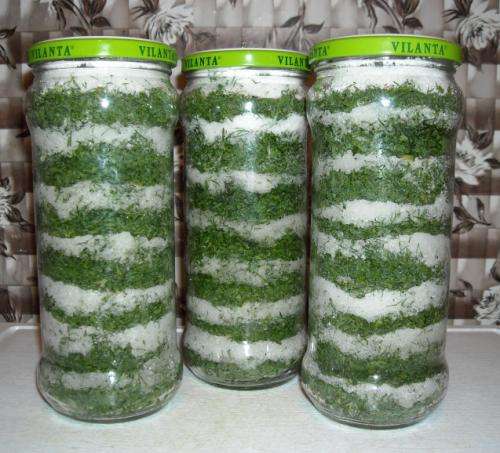
To prepare salted greens for the winter, you only need dill (1 kilogram) and 500 grams of salt.
Important! Pay attention to the proportions; this is the key to pickling.
Sort the herbs, leaving only the thin sprigs of greenery. Wash a couple of times and chop finely. Add salt to a 50-millimeter-thick layer in a prepared container (jars are best). Alternate with herbs, spreading the salt to a thickness of just under one centimeter. Once the jar is filled to the top, add salt. Close the bottle and shake it well to distribute the salt evenly among the herbs. That's it—you're ready to store the mixture in a cool place and enjoy.
How to choose the best way to preserve all the vitamins in greens
To understand which method is better, use the following hint:
- Salted and dried spices are suitable for serving as part of a salad.
- To avoid losing valuable vitamins, add this seasoning at the very end of cooking and do not allow it to boil.
- If you are adding herbs when baking bread, you will need a frozen or salted variety.
- Any type can be used for preparing hot dishes, soups, and appetizers. Make sure the ingredient proportions are correct.
Important! Try making a mix by combining dill sprigs with parsley, basil, cilantro, and other green herbs. These mixes are great for adding to salads, or simply to add a fresh new flavor to a familiar dish.
Related posts:
 Description of the best dill varieties for open ground and for greens, what the plant looks like
 Recipes for pickling fresh dill for the winter at home in jars, proportions, and storage
 How to freeze dill in the refrigerator for the winter: the best recipes
 How to keep dill fresh for the winter at home, the best ways
 How to dry dill at home for the winter
 How to keep dill fresh in the refrigerator and freezing methods at home
 Can you freeze arugula at home and how can you preserve it for the winter?
 Characteristics and description of the Alligator dill variety
To make dill grow faster and the greens be bright green, without any signs of yellowing, I use BioGrowI harvest several dill crops each season, which I then sell. I always freeze the required amount of the herb, as this preserves its flavor and aroma better.