
Dill is one of the most common and undemanding crops, grown throughout our country. Dill varieties are so diverse that you can find the perfect one for any purpose and climate. This aromatic herb can be grown year-round, outdoors in summer and on a windowsill in winter.
Features of culture
Among the crops belonging to the Apiaceae family, there are two types of dill: medicinal (or fennel) and fragrant (grown in the garden). Fennel is a perennial plant, unlike the common annual used for food and preserves. Everyone knows what garden dill looks like, with its leaves and seed-bearing umbels. To get an idea of what fennel looks like, just grow some bush dill in your garden.
There are many varieties of dill, grown for various purposes (harvesting the greens, producing umbrella-shaped inflorescences for pickling vegetables, and harvesting useful seeds). Certain varieties of this fragrant plant can produce a very good harvest from just a few grams of seed. Some varieties can yield up to 200 grams of greens from just 1 gram of seed.
With proper care, temperature and humidity, getting greens and seeds will be easy.
Dill is best grown in a sunny location, in fertile soil, at a favorable temperature of 18-20°C. In open ground, the bushes will reach 1.5 meters in height, and in a greenhouse, they can reach up to 3 meters.
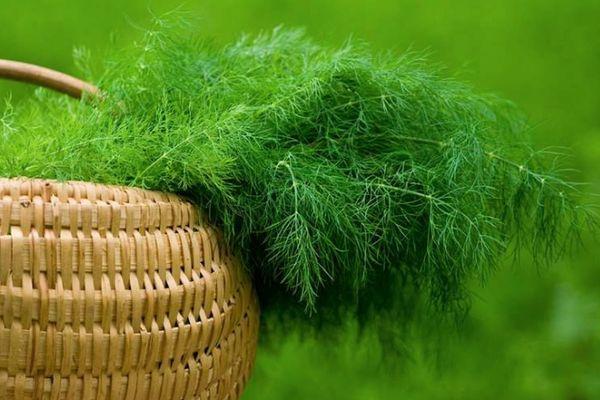
Early ripening varieties
Early dill varieties are usually sown after the snow melts or even before winter. They differ from late varieties in that they produce their first leaves within 4-6 weeks. Planting this type of dill for greens is advisable if you want to enjoy the aromatic, fresh seasoning from your own garden in the spring. However, early varieties tend to form inflorescences quickly, so they are chosen for harvesting the umbels, which are then used for home canning, and for seed production. A very large harvest of leaves is not possible.
Dill Grenadier
Among early-ripening varieties, Grenadier can produce a very high yield, with the first leaves appearing just 28-30 days after planting. Within three months, the seeds develop into umbels. The bushes, with a dense rosette of foliage, reach a height of up to 30 centimeters. The best time for sowing is April. This variety requires little care, yet produces a high yield.
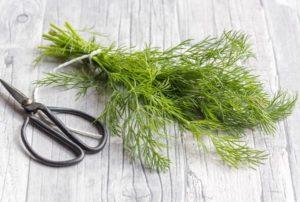
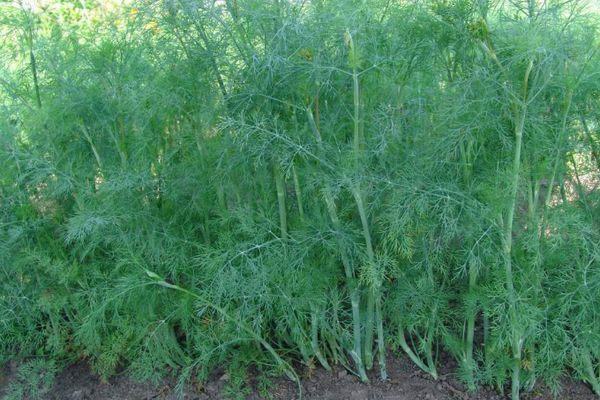
Gribovsky dill
This variety is rightfully popular among many gardeners in central Russia. It is widely planted due to its high resistance to diseases and pests. Furthermore, it tolerates low temperatures and produces a bountiful harvest even during cold summers. It is one of the few varieties suitable for open ground, allowing for multiple plantings from April to June. It produces dark green, bushy foliage reaching 25-30 centimeters in height, with umbels reaching 60 cm.
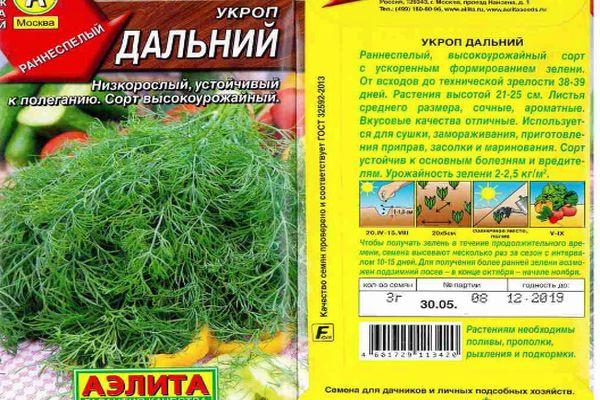
Dill Far
After planting the seeds, the first leaves can be harvested in 40-45 days. This greens variety produces excellent fruit, and its fruits are used for food, spices, and drying. Dalniy is prized for its "immunity" to diseases and pests. The early harvest is green, and in the light, the leaves appear waxy.
Dill Redoubt
Redut is considered one of the most aromatic and rich varieties. The first edible leaves appear 40 days after planting the seeds, and up to 30 grams of greens can be harvested per plant per season. A square meter of plant can yield approximately 1.2 kilograms of edible fruit and up to 2.0 inflorescences for spice.
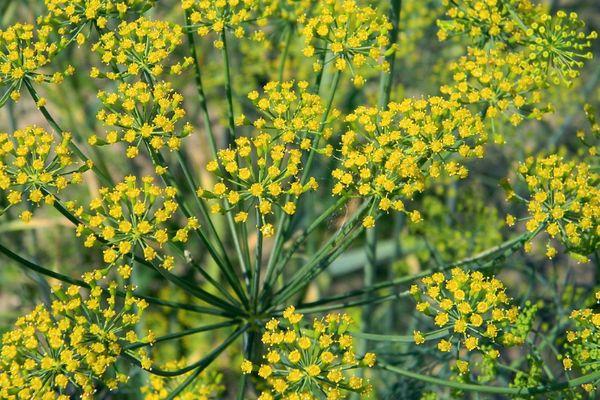
Dill Umbrella
This plant produces greens throughout the growing season, so you can harvest at least 5-6 kilograms in 2-3 months. The seeds are planted in March or April, planted a couple of centimeters deeper into the soil than other varieties. This ensures the seeds receive the moisture they need for growth. You can enjoy fresh greens as early as May.
Mid-season varieties
Many mid-season dill varieties produce green foliage within 1.5 months. They are distinguished by the fact that even during flowering, new leaves continue to gradually grow on the bushes. This allows the best varieties to produce a high yield of greens.
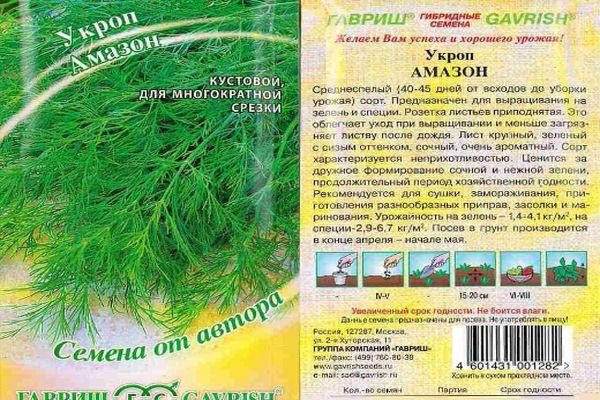
Dill Amazon
This bush variety is planted in the warm spring, around April or May. It produces a very high yield. Harvesting begins 45 days after planting. This easy-to-grow variety has dark green leaves, suitable for freezing and drying.
Lesnogorodsky dill
The greens harvested from the Lesnogorsky variety are rich in vitamins C and A. This variety continues to be harvested until late autumn. Even after the seeds have ripened on the bushes, it continues to produce new greens. This explains its high yield. Lesnogorsky also attracts gardeners because it is extremely resistant to diseases and various pests.

Richelieu dill
In addition to being pest-resistant, this variety is beloved by cooks for its rich, fragrant aroma and unique appearance. Its leaves have a slightly lacy shape, and the bush itself can grow up to 130 centimeters tall. It is sown several times during the season—from April to August, every two weeks. Thus, after 48 days, the first crops begin to yield, followed by a conveyor belt of new greenery appearing on new young plants 10-14 days later.
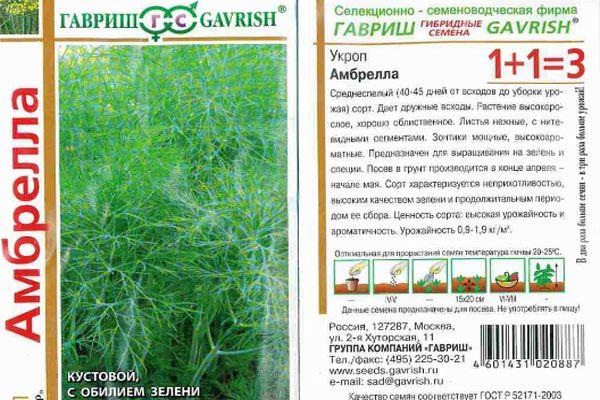
Dill Umbrella
This variety features large, dissected, vibrant green leaves that emerge from tall stems. The first greens appear in about 40-48 days. Each plant yields about 20 grams of greens. The 15-20 cm umbels have a strong, slightly pungent aroma. The spices are harvested 2.5-3 months after planting.
Dill Max
A fairly compact variety with medium-height stems. It can be planted in the spring when the soil temperature reaches 8°C; it emerges in 10 days. The first greens are harvested 1.5 months after planting, and one bush can produce approximately 30-40 grams of leaves per season. Max is very easy to grow and produces a harvest with a subtle, pleasant aroma.
Late-ripening varieties
All late-ripening dill varieties can be divided into mid-late and late-ripening. These greens take a long time to mature, producing flowers and seeds only 3-4 months after germination. Therefore, they are characterized by a high yield of green matter, which can be harvested throughout the entire season, until the seeds ripen.
Alligator Dill
A bush plant. The first greens appear six weeks after sowing, and they are harvested from June to September. Many people love Alligator for its late emergence of umbels and seed ripening. This is because the greens can be harvested several times throughout the period before ripening. A total of 2.0-3.2 kilograms of green mass per cubic meter is harvested per season.
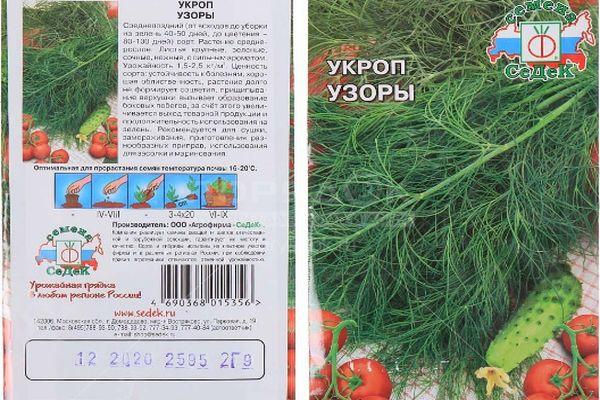
Dill Patterns
A mid-season variety that produces large, fragrant leaves growing from the root to the upper umbels. The entire green mass matures two months after planting, when the stem reaches a height of approximately 1.5 meters. It is distinguished by its high vitamin C content and disease resistance.
Dill Buyan
Buyan is a mid-late variety. Its long growth period allows it to develop an impressive foliage. Because of its bushy growth, seeds should be planted further apart than usual. When harvesting, remove the larger leaves first, leaving room for the smaller leaves to grow.
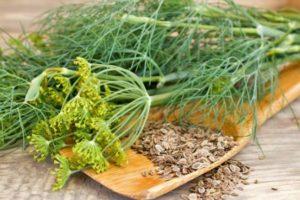
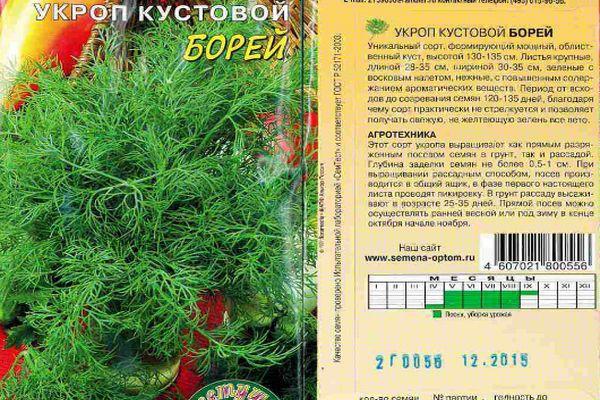
Dill Borey
One of the most productive varieties. You can grow up to 4.5 kilograms of greens per meter, and up to 3 kilograms of spices. Two months after planting, the dark green leaves are harvested; they emit a strong, spicy aroma and retain their freshness for a long time. Umbels appear 70-100 days after germination.
Dill Kibray
A bush variety of mid-late maturity, it produces its first harvest in just 30 days. It is recommended to grow it under plastic or in a greenhouse, otherwise it may not ripen. The earliest time to harvest the spices is 70 days. The umbels have a large diameter, so the seeds are planted approximately a third of a meter apart. Once seedlings emerge, thinning is recommended to maintain the distance between them.
High fertility and resistance to fungi make Kibray one of the most beloved and widespread plants.
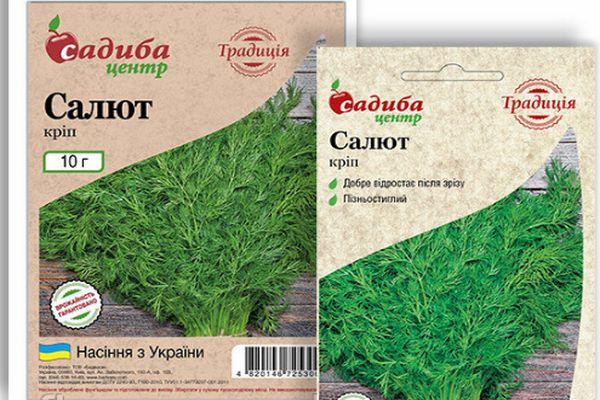
Dill Salute
A bush variety that doesn't develop a stem very much. This makes it suitable for growing in greenhouses or on windowsills. Up to 30 leaves form simultaneously on the rosette, and the bush itself grows 35-40 centimeters wide. The first leaves appear after about 1.5 months. It is not suitable for canning, as the late ripening prevents seeds from forming. Yields up to 4.5 kilograms of green foliage per square meter.
Kutuzovsky Dill
Kutuzovsky is characterized by its rich aromatic qualities, rich flavor, and high yield (up to 60 grams per bush). This late-ripening dill variety produces multiple harvests of light-green leaves. The stems grow up to 1 meter tall, and the inflorescences are 15-20 centimeters in diameter.
Growing aromatic, healthy greens in your own garden isn't all that difficult. Simply choose the right variety for your needs and follow the growing instructions.
Related posts:
 How to choose the best dill varieties for growing greens without umbrellas in open ground and greenhouses
 80 Best Eggplant Varieties for Different Regions with Descriptions and Characteristics
 Description of the 40 best varieties and types of parsley, what the plant looks like
 Characteristics and description of the Alligator dill variety
 Descriptions of the 20 best cherry varieties for the Moscow region, their planting and care
 Description of the 90 best varieties of beans for open ground with names
 How to freeze dill in the refrigerator for the winter: the best recipes
 50 types and varieties of perennial onions with descriptions, cultivation, and care
I usually plant Buryan or Borey, and I've tried various additives and fertilizers to speed up growth. This is my first year using fertilizer. BioGrowThe results were more than satisfactory. Does anyone else have experience using this bioactivator?