
Since dill is an easy-to-grow crop, there are no special problems with growing it. Scatter the seeds in the garden beds in the spring, and the tender, aromatic leaves are always at hand, and by fall, the umbels will come in handy for pickling and salting. However, dill takes a long time to germinate and doesn't provide lush greenery all summer long. And yet, it's so nice to have this delicious herb for salads in the spring. For example, it's quite possible to plant dill before winter in the Moscow region and reap an early spring harvest.
Zoning
For each climate zone, specific ones are selected varieties of dill, especially when it comes to winter sowing. Buying any package of seeds and scattering them in the fall is unwise. After all, each variety differs in ripening time, foliage density, aroma, and flavor.
Breeders offer a fairly wide range of varieties zoned for specific areas. Varieties for central Russia, including the Moscow region, are most popular among gardeners. They possess the characteristics necessary for a temperate climate:
- good germination;
- friendly return of green mass;
- rapid growth;
- adapted to low temperatures and their fluctuations.
Dill has low germination energy. Its seeds germinate very slowly, like other members of the Apiaceae family. Sowing in the fall softens the seed coat more quickly, allowing the sprouts to emerge as soon as the weather warms.

Varieties for the Moscow region
When purchasing seeds of a particular variety, keep in mind that early varieties have a small green mass and quickly lose marketability, as they are designed to produce early greens. Late varieties are large, well-leafed, and have a large mass. They take longer to produce a harvest, but also produce it over a longer period. Bush varieties, also considered late-ripening, have appeared on the market. They are considered the best because they produce the maximum amount of greens.
For open ground
Mid-season and late-season varieties, planted in the winter, grow best outdoors. Mid-season varieties include Sevastopolsky, Gerkules, Iney, and Dill. Their delicate leaves will appear later, but will delight you with their richness and abundance.
Late-ripening dill varieties for the Moscow region include 'Kutuzovsky,' 'Uzory,' 'Borey,' 'Salut,' and 'Moravan.' Although they are called late-ripening, they will appear earlier than varieties sown in the spring.
If you take one packet of seeds with different ripening times, you can create a green conveyor belt, producing lush greens all summer long. But this is only true for spring and summer planting.

For the greenhouse
Early varieties such as Pikanty, Aurora, Ranee Chudo, Udarnik, Grenadier, and Vologda Lace are used for fall sowing in greenhouses. They produce fragrant, tender greens in the shortest possible time, which is important when vitamin deficiencies occur in early spring. These varieties are ideal for growing dill commercially.
In a greenhouse, the soil cools down slower and warms up sooner. However, when planting, keep in mind that the seeds must not germinate in the fall, otherwise the young seedlings will die at the first frost.
Therefore, the greenhouse sowing dates are pushed back to November.
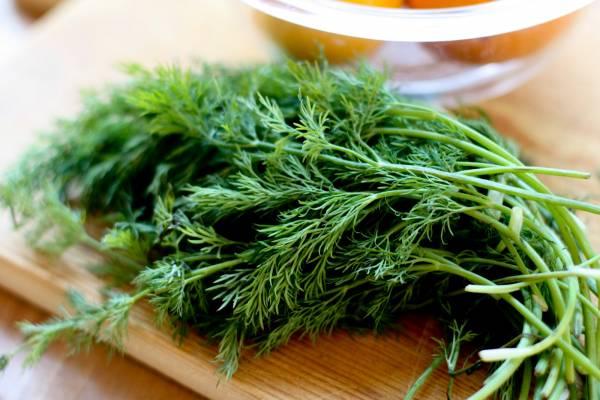
How to plant dill in winter
Autumn planting is not much different from spring planting, but there are still some points to consider:
- Seeds are sown slightly deeper than the standard method. While the seeding depth is 1.5 cm in spring, it's 2 cm in fall.
- The rule is that the distance between rows should be 15-20 cm, and between plants - 5-7 cm.
- On the eve of frost, the beds are covered with mulch so that the top layer of soil does not freeze.
- Use more than one packet of seeds, as consumption is 20-25% higher when planting in the fall. A larger quantity is necessary to account for all overwintering risk factors.
Typically, when sowing before winter, entire beds or parts of them are used. In this case, crop rotation is taken into account. Good predecessors for dill include cucumbers, cabbage, and tomatoes. It is not recommended to plant this herb after parsley, carrots, and celery (close relatives).
How to plant correctly in the Moscow region
The best time to plant dill before winter in the Moscow region is late October to early November. The soil temperature should be around freezing. This will prevent the seeds from germinating, allowing them to survive the winter and begin growing in early spring.
Preparation of seed material
Before fall planting, seeds should be hardened off: stored on the bottom shelf of the refrigerator for a week. They also need to be disinfected by placing them in a weak solution of potassium permanganate for half an hour.

These methods are important because they will spend the winter in the ground. During this time, they should not freeze or become diseased. Although dill is a frost-hardy plant, freezing of seeds in temperate climates is possible during winters with little snow or severe frosts.

Sowing
The area for dill must meet the following requirements:
- be in an open, sunny place;
- do not place planting beds in lowlands, otherwise the seeds will get soaked;
- The soil should be loose and fertile.
Soils in the Moscow region don't meet all the necessary requirements, so fertilizing and loosening the soil during spring growth are essential. Seedlings will emerge as early as +5°C (41°F), and they're not susceptible to spring frosts.
If the beds are ready but there was a delay in sowing, the seeds can be used in December (assuming a thaw has passed). The snow is scattered over the beds, the seeds are "scattered," and covered with soil, mulch, and snow.
How to care
Caring for dill In the Moscow region, traditional methods are used, given that the spice is relatively easy to grow. It will provide gardeners with early greens with minimal effort and time.
Watering
This is necessary later, when the foliage begins to grow. In early spring, this procedure is unnecessary, as the soil is well-moistened by meltwater. Water as the soil dries. Drip irrigation or irrigation can be used. Dill also responds well to foliar spraying.
Top dressing
Dill can accumulate minerals in its leaves, so don't overdo it with mineral fertilizers. Since the plant's growing season is short, lasting up to 40 days, 1-2 applications are sufficient.

The maximum dose per 1 sq. m. is:
- 10 g potassium salt;
- 15 g ammonium nitrate;
- 10 g superphosphate.
The application is one-time and the specified rate should not be exceeded.
Organic fertilizers are a good choice: mullein or bird droppings, which are infused and diluted in standard proportions.

Weeding
As dill bushes grow, they can become overrun with weeds. It's important to remove them promptly, otherwise the spice will stretch out, losing its rich flavor and aroma. Weeding is done as needed.
Diseases and pests
Dill's delicate greens are often susceptible to fungal infections. Once infected, the yield is quickly lost, so timely treatment is essential. Better yet, follow the necessary preventative measures:
- choose an open, well-ventilated area for planting;
- we prepare the seeds using disinfection techniques;
- do not plant too densely, thin out the seedlings if necessary;
- We don't just pull out the weeds, we also remove them from the area.
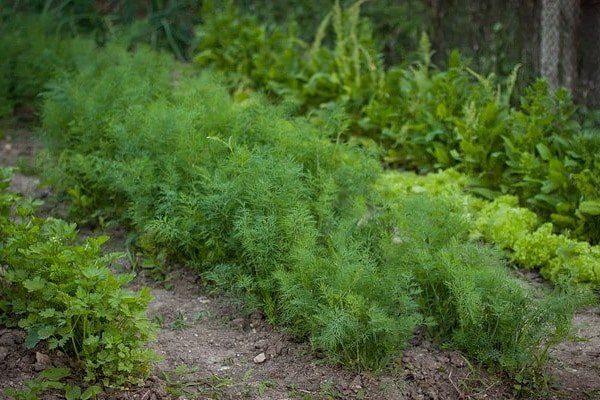
These simple tips will help prevent diseases, although in practice, dill rarely gets sick. Pests that can infest dill include aphids, parasol moths, and carrot psyllids.
Collection and storage
Young bushes up to 5 cm tall are suitable for harvesting. They are harvested selectively, or the entire row is removed at once if replanting is planned. They are dried under a well-ventilated shelter or in ovens at +30°C (86°F). However, the best storage method is freezing. This preserves the greens' color, flavor, and juiciness.
Growing dill in the Moscow region for the winter It's not that difficult if you approach it with passion. Once you try this new technique, you won't be able to give it up. And fresh, early greens will always be on your table.
Related posts:
 Description of the best dill varieties for open ground and for greens, what the plant looks like
 Is it possible to soak treated cucumber seeds before planting and how to do it correctly?
 How to properly plant dill in open ground and a greenhouse: secrets of agricultural technology
 Characteristics and description of the Alligator dill variety
 The best eggplant varieties for growing in a polycarbonate greenhouse: planting and care
 Recipes for pickling fresh dill for the winter at home in jars, proportions, and storage
 How to choose the best dill varieties for growing greens without umbrellas in open ground and greenhouses
 The best recipes for preparing and storing dill for the winter at home