
- Reasons for the appearance of aphids on dill
- How to tell if there are aphids on dill
- Methods of control
- Folk remedies for aphids control
- Herbal infusions and decoctions
- Soap
- Ash infusion
- Ash solution
- Vinegar
- Ammonia
- Baking soda and salt
- Biological products against aphids
- Chemicals
- Physical methods
- How to get rid of cut dill
- Preventive measures
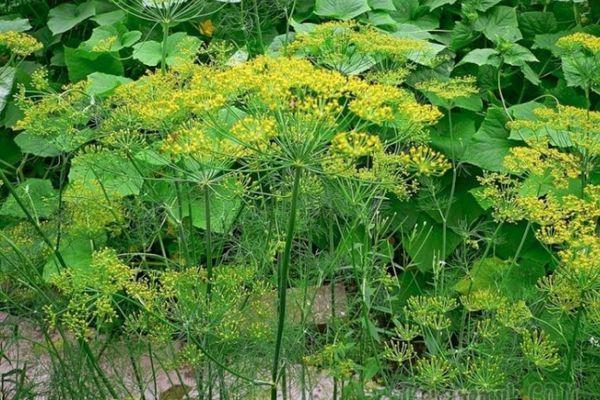
Aphids on dill are a very common crop damage. During a single season, the pest can produce up to 18 generations of offspring. Dill is attractive to insects due to its succulent stems and leaves. Damage by aphids can be identified by the presence of sweet, sticky marks on the plant, as well as the shed outer covering of the plant—whitish, ash-like scales.
Reasons for the appearance of aphids on dill
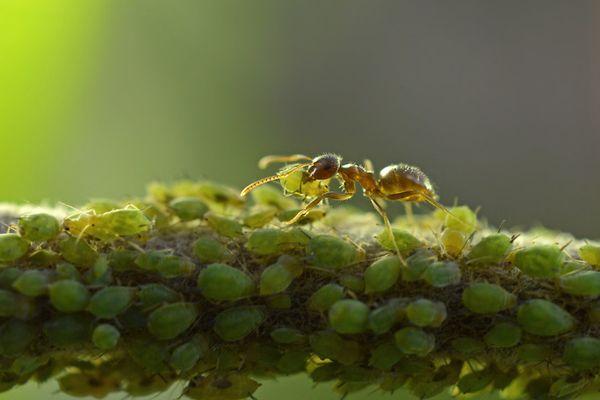
Ants are the main carriers of the pest. They use aphids as a food source (they drink the sweet juice secreted by the beetles), tend the colonies, and transfer the insects to the anthill during the winter. With the arrival of spring and the emergence of seedlings, the ants disperse the aphids. dill pests and other cultures.
How to tell if there are aphids on dill
If a significant infestation of pests occurs on a crop, they can be detected at first glance. These insects live in colonies on agricultural crops. Significant infestations of green beetles on dill are a characteristic sign of pest infestation.
Another sure sign of plant infestation is the presence of aphids—a sap secreted by the aphids. It has a honey-like scent and a sweet taste.
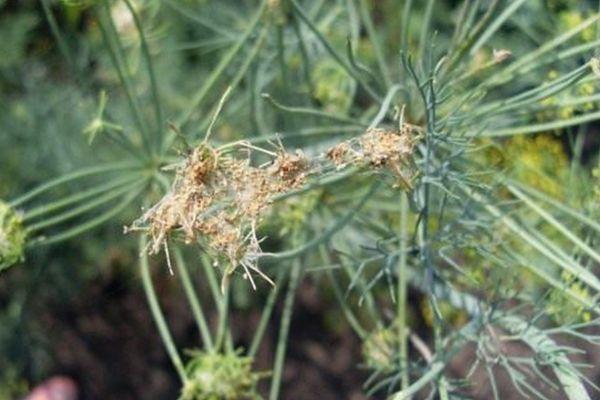
The presence of aphids can also be detected by wilting and yellowing of the plant's branches. The pests feed on the plant's sap, causing the leaves to dry out.
Methods of control
Today, there are many ways to combat aphids and other pests. A wide range of products for this purpose is available on the market. However, caution is required, as treated crops are consumed by children and adults. It's important to understand the safest methods for treating dill against pests.
Folk remedies for aphids control
Folk remedies offer a variety of treatments for dill, all of which are considered the safest, as the formulas contain only ingredients harmless to humans. A drawback of folk remedies is their lower effectiveness compared to chemical treatments. However, it's best to begin pest control with safer methods.
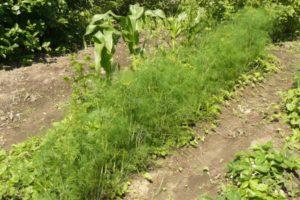
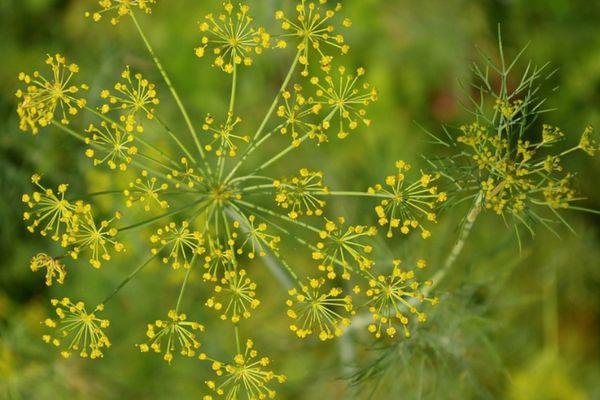
After using any folk remedies to control aphids, avoid watering the plant for 2-3 days. Avoid using these methods during rainy seasons.
Herbal infusions and decoctions
To combat aphids, you can use infusions and decoctions of ground dried tobacco leaves. They have an insecticidal effect.
To prepare the infusion, you will need to add water to a jar with tobacco in a ratio of 1 to 10, let the mixture sit for 2 days, then add water (1 to 3) and add shavings of laundry soap to the mixture at a rate of 40 grams per 10 liters.
The decoction is prepared in a similar manner. Ground tobacco is poured into water in a ratio of 1:10, and the mixture is boiled on a gas stove for 30 minutes. The decoction is then left to stand for 24 hours. Then, water (1:3) and soap are added.
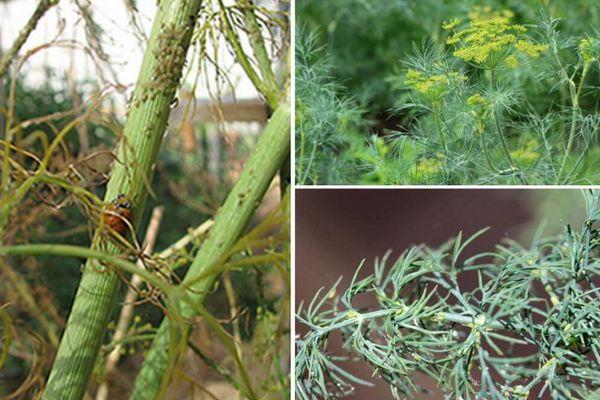
Chamomile and tomato tops have also proven themselves to be effective in fighting pests.
You can make an infusion from chamomile. To do this, add 100 grams of dried chamomile flowers to 1 liter of water and let the mixture steep for 12 hours. Before spraying the area, add water to the infusion in a ratio of 1:3 and sprinkle with shavings of laundry soap. Continue spraying until the pest disappears.
A decoction can be made from dried tomato tops. Add this component to 10 liters of water, boil the mixture for at least half an hour, and then let it cool. Before use, dilute one part decoction with five parts water, adding 40 grams of shavings of laundry soap per 10 liters.
Soap
This method is the simplest and requires little effort. To prepare the solution, simply mix water with laundry soap at a ratio of 10 liters of water to 300 grams of soap. Before treatment, dilute the mixture in 10 liters of warm water.
The procedure should be carried out in the evening until the insects have completely disappeared.
Take a look Also

Ash infusion
Ash can not only help prevent and control aphids, but also serve as an excellent plant fertilizer. Simply add special mineral mixtures.
To prepare the infusion, dilute 3 kilograms of ash with 10 liters of boiling water and let the mixture steep for two days. Then strain the mixture through cheesecloth and add 45 grams of soap shavings. Stir the infusion thoroughly until the soap dissolves. Perform the treatment in the evening.
Ash solution
To make an ash solution, you'll need to prepare it first. This involves sifting 400 grams of the ash through a sieve. Next, pour boiling water into the container with the ash. Boil the mixture on a gas stove for at least half an hour. Then strain the solution, add 10 liters of cold water and soap shavings.
It is better to process dill in the evening.
Vinegar
Dill should be treated with vinegar throughout the season, once every 2-3 days. Spraying should be done very thoroughly to ensure no plants are left untreated.
To prepare a vinegar solution, you will need to dilute 1 tablespoon of the component in 10 liters of water.
Ammonia
The recipe is very simple: just mix 1 tablespoon of ammonia thoroughly with 1 liter of water. Spray no more than 3 times over 7 days.
Baking soda and salt
To prepare the solution, use only baking soda; the calcined product has an increased alkaline effect, which will contribute to the death of the plant.
Dissolve 3 tablespoons of baking soda and half a bar of laundry soap in a bucket of water. Apply only in the evening to avoid burning the plant.
Another folk remedy for aphids is a solution of table salt and mustard in water. Take 100 grams of each dry ingredient and dissolve them in a bucket of water. Repeat the treatment no more than once every 7 days.
Biological products against aphids
Biological mixtures for treating greenery will not only help get rid of aphids but also pose no harm to humans. However, treated plants should only be consumed 7 days after spraying.
The most effective drugs are:
- Arrow;
- Fitoverm;
- Biotlin;
- Entobacterin;
- Confidor Extra.
The recipe for diluting these products in water is indicated on the packaging. After treatment, the duration of action can vary from a couple of days to several weeks.
Chemicals
The safest chemical treatment methods are to treat greenery with superphosphate and potassium chloride. Prepare 30 grams of the mixture in a 2:1 ratio, add it to a 10-liter bucket of water, and stir.
The solution is thoroughly sprayed on the dill; after 7 days the procedure will need to be repeated.
Physical methods
These methods are considered the most effective, but also labor-intensive, and include:
- manual pest control;
- wash off aphids with a stream of water from a hose;
- installation of plastic flasks on bushes to prevent the penetration of bugs.
How to get rid of cut dill
Is it safe to eat cut dill that has aphids on it? If the infestation is minimal, the greens can be eaten after thoroughly rinsing under running water. However, if the sprigs are heavily infested, they should be discarded.
Preventive measures
To prevent aphid infestation, follow these tips:
- Sow dill every year in different areas of the garden. Repeat sowing should be done no sooner than every 3 years;
- fertilize with special minerals and organic matter;
- Conduct an external inspection of dill for the presence of pests.
Therefore, today there are many methods of pest control, you just need to choose the right one.
Related posts:
 How to control aphids on raspberries during flowering and fruiting, what to treat them with
 Description of medications and folk remedies for treating pears to get rid of aphids
 How to treat peppers for aphids, how to fight them with folk and chemical remedies
 How to control aphids on cherry trees using medications and folk remedies
 Causes and treatment of eggplant pests and diseases, how to combat them at home
 How to control aphids on beets using folk remedies in open ground, what to treat with
 How to get rid of aphids on cherry trees and what is the best treatment after flowering?
 How to treat zucchini if they have aphids, using folk remedies and chemicals to control them