
For amateur gardeners and farmers who grow herbs, the question of how to prolong the life of dill in the garden is pressing. Rapid ripening changes the plant's structure and color: the stems become stiffer and quickly turn yellow. How to harvest a bountiful crop and preserve the fragrant stems? the right variety of dill will help with greens without umbrellas.
Are there varieties without umbels?
The answer to this question is no. It's impossible to develop a dill variety without umbels, as they are used for plant propagation.
However, enterprising breeders have developed varieties of dill in which the ripening process takes longer, and consequently, the seed umbels appear later.
Varieties of dill
Today, you can choose dill based on your preferences and planting purposes. There are two major groups:
- bush;
- on the greens.
Bush dill Grows as a bushy shrub. With proper care, it produces a large harvest. This variety has a very long seed maturation period. In areas with harsher climates, the umbels on the bushes barely have time to form.
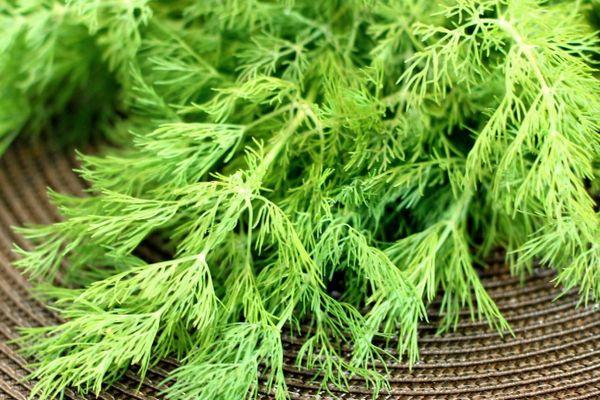
Dill has a distinct aroma and is highly productive. Its small sprigs are a rich green color.
Depending on growing conditions, there are also varieties for open ground, greenhouses and indoor cultivation.
For growing on a windowsill
Many housewives dream of having their own garden on their windowsill. Gribovsky Dill and Grenadier were specially developed for this purpose. They sprout quickly.
The Gribovsky variety thrives in apartment conditions and requires little care and watering. The only requirement for a good harvest is fertile soil.
Grenadier greens have long been a favorite on the windowsills of those who appreciate fresh greens. Its yield depends on the frequency of watering (2-3 times a week).
Other varieties suitable for growing at home: Gourmet, Richelieu, Salute, Russian Size.
Containers for planting should be oblong in shape, with a deep bottom on which drainage is laid.
For open ground
In warm climates, gardeners grow herbs without the use of additional equipment. Suitable for planting outdoors are:
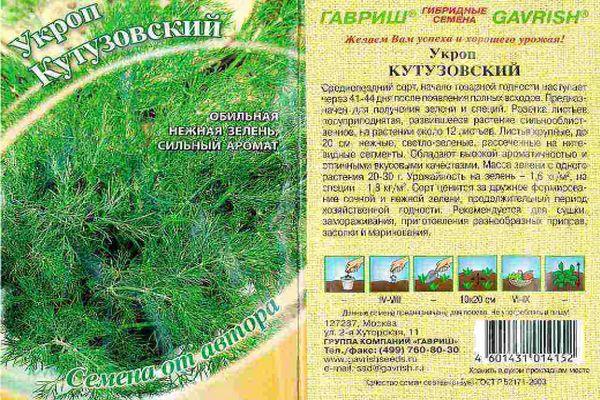
- Kutuzovsky dill produces a good harvest. The plant's bushes are fluffy, with large, rounded leaves. It has a rich aroma and excellent flavor.
- Max. The variety's name speaks to its prolific yield. A single bush can yield up to 50 grams of dill. This herb grows as low branches with diamond-shaped leaves no taller than 15 cm.
- Dalny is characterized by its resistance to diseases and pests, making it a favorite among many gardeners. Dill grows up to 30 cm in height and divides into several stems. It takes 1.5 months to mature.
Take a look Also
For the greenhouse
Greenhouses are used to grow plants that don't require much light. These varieties include:
- This plant grows up to one and a half meters tall. Its name comes from the characteristic whitish coating on the ripe dill leaves. The greens remain fresh for a long time. The umbels ripen very late.
- Kibray is a variety for those who value time. Dill yields a harvest in just 25 days after planting. The juicy, bright leaves have a delicate flavor.
- Umbrella is a tall plant. In greenhouses, its maximum height can exceed 2 meters. The harvest can be completed in 1.5 months.
Early ripening varieties of dill
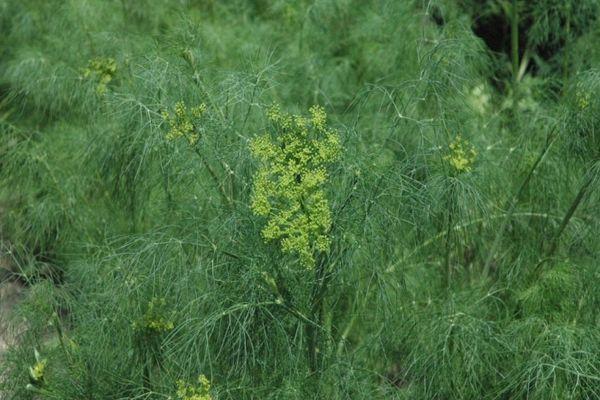
Early-ripening varieties allow for a quick harvest. The first green shoots can be harvested as early as May. This type of dill's advantage is also its disadvantage: it ripens quickly and produces umbels.
The best early ripening varieties:
- Redut produces a high yield—up to 50 grams per bush. It's very aromatic and perfect for pickling.
- The parasol will delight you with its lush foliage in late spring. It grows into bright green rosettes. Grow it in high-humidity conditions and fertilize with nitrogen for optimal growth.
- Gribovsky is suitable for both windowsill and open ground cultivation. It thrives in fertile soil and produces a good harvest.
Mid-season
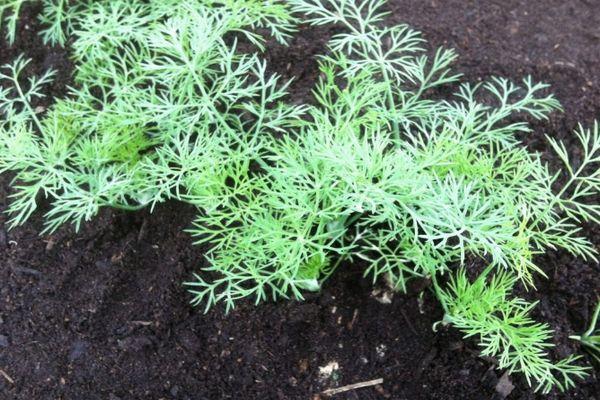
The optimal option for harvesting a good crop quickly. The difference in ripening time, compared to early plants, is only 15 days. However, the green mass is significantly larger. This advantage encourages gardeners to choose mid-season varieties.
Popular types:
- Richelieu is a herb used for spice preparation. Dill grows into a tall, voluminous bush, over 1 meter tall. Its fluffy rosettes are covered with large leaves. The umbels appear in the first half of summer.
- Amazon is a very productive variety. A single plant can yield up to 65 grams of greens. It is often used for canning.
Late-ripening varieties
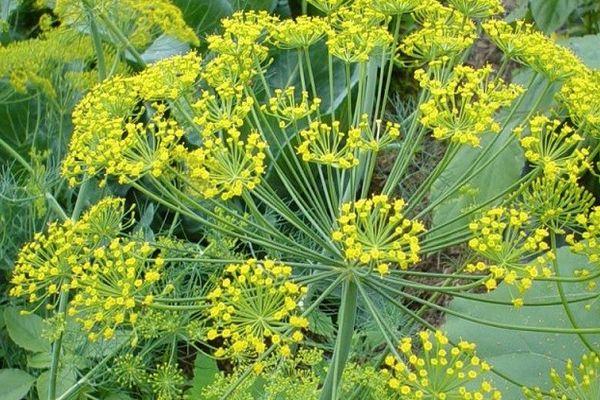
Often used in winter preserves, dill ripens in early autumn, refreshing the dinner table with the enticing aroma of fading summer.
The most common varieties:
- The 'Ozornik' ('Mischievous') plant is an easy-to-grow plant. Its diamond-shaped leaves are covered with a bluish bloom. The bush grows up to 1.3 meters in height and produces a good harvest.
- Alligator doesn't produce umbels until autumn, allowing for multiple harvests from a single plant. The seedlings grow to a height of no more than 0.3 meters. The greens are richly green and have a vibrant aroma.
How to plant
Planting dill is a fairly simple process. To achieve a high yield, you'll need to follow a few simple rules:
- prepare seeds;
- take into account the sowing time;
- provide the necessary care (depending on the variety).
Seed preparation
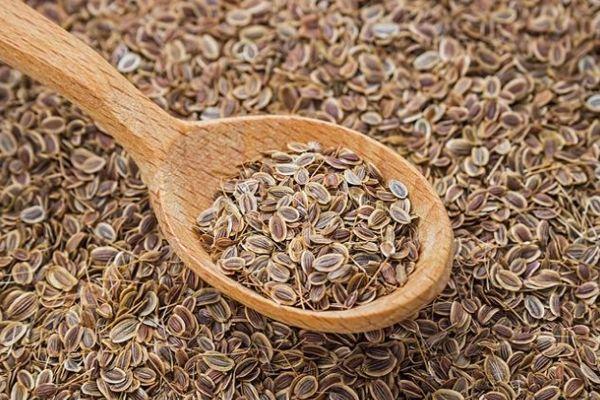
To ensure rapid germination, the seeds need to be prepared in advance. You'll need a small plastic container. Place a small piece of cloth or bandage inside, and then sprinkle the dill seeds over them. The cloth should be thoroughly moistened with water. Then cover the container with a lid and place it in a sunny spot for two days. Remove from the container and let it dry.
Sometimes a couple of crystals of potassium permanganate are added to the water.
Timing of sowing dill
Auspicious time for sowing dill The season begins around mid-April. Temperatures during this period should not drop below zero degrees Celsius. In regions with harsher climates, planting greens begins in mid-May.
A greenhouse allows you to grow fragrant sprigs year-round. The only requirement is that the temperature should not drop below 10 degrees Celsius.
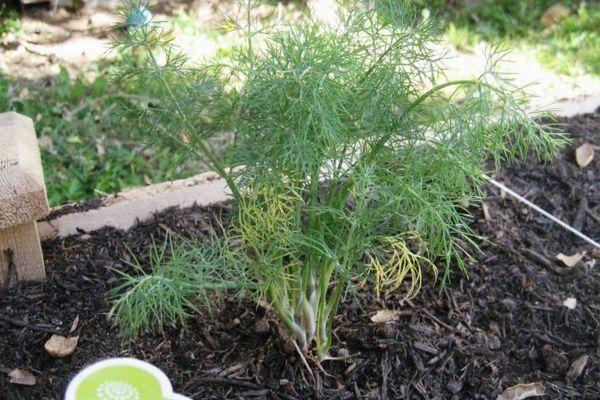
In the prepared bed, make shallow holes 30 cm apart. Plant the seeds in these holes. Fertilizing the soil is recommended for favorable germination.
Care
Dill seedlings require regular watering—up to three times a week. Warm water is suitable.
When the height of the bushes reaches 10 cm, they should be thinned out: leave a distance of 20 cm between plants and remove shoots.
After watering, it is recommended to loosen the soil with a hoe and clear the beds of weeds.
How to harvest and dry dill
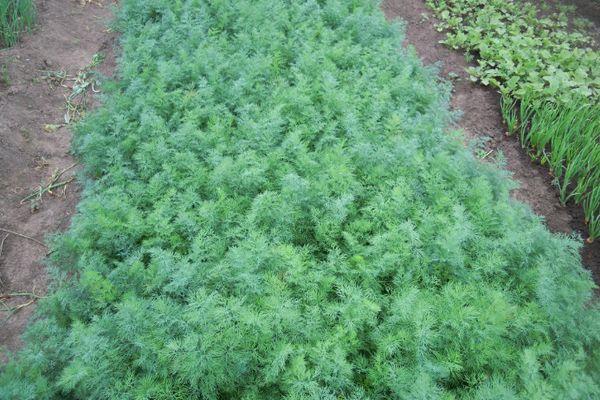
The harvest period depends on the variety chosen. Mid-season and late-season varieties are harvested from mid-summer to early autumn.
The bushes are pulled from the ground along with their roots. The roots are cut off, and the fresh greens are dried in direct sunlight.
Dill diseases
Dill is susceptible to harmful fungal diseases. The most common causes of crop damage are:
- Downy mildew affects the upper part of the plant. This is a very common disease that damages many plants related to dill. The mycelial fungus forms a web-like coating, which later covers all above-ground parts of the plant with a white film. The greens lose their flavor. The fungus spreads through infection from infected weeds or damaged garden plants left unharvested.
- Downy mildew resembles powdery mildew in its appearance. It thrives in high humidity and relatively cool temperatures (up to 20 degrees Celsius). It attacks the plant stems, drying them out. The outer surface of the leaves turns yellow and brown, while the undersides become covered with a whitish coating. All parts of the plant (leaves, stems, seeds, and umbels) are affected. Gradually, the plant becomes lifeless.
- Black spot is typical for non-chernozem regions, including the Volga region and Krasnodar. The disease appears on young seedlings, affecting the stems with elongated black spots. It gradually spreads to the stems, leaves, and even roots of the bush. The fungus survives on the plant for no more than two weeks, but reinfection can lead to recurrence. The pathogenic fungus enters the soil from unharvested infected plants and weeds, and is spread by rain, wind, and insects. the disease affects dill At the ripening stage, the seeds become carriers of disease and lose their germination capacity.
- Cercospora leaf spot is a fungus that attacks the above-ground parts of dill. It causes brown or black spots on the stems, extending along the blood vessels. After the spores mature, the spots become coated with a white coating. It is also spread through infected weeds and unharvested stems.
- Blackleg. This disease is more common in greenhouse-grown plants. It begins with infected seeds. Black spots appear on the root stalk, and later, the stem, lacking sufficient nutrients, dries out. This disease destroys up to 50% of seedlings. Causes include excessive moisture, insufficient soil loosening, soil acidity, and poor thinning.
Take a look Also
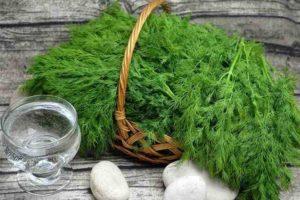
Fresh dill adds a beautiful touch to many culinary dishes and is an indispensable part of winter preparations. This aromatic herb offers excellent flavor and beneficial properties. This seemingly easy-to-care-for plant requires proper care. Its green shoots are often grown commercially. Choosing the right variety will help you reap a bountiful harvest.
Related posts:
 Description of the best dill varieties for open ground and for greens, what the plant looks like
 Recipes for pickling fresh dill for the winter at home in jars, proportions, and storage
 How to freeze dill in the refrigerator for the winter: the best recipes
 Characteristics and description of the Alligator dill variety
 Basic rules for growing and caring for dill: how many days it takes for it to sprout, how it grows, and when it ripens into greens
 Growing bush dill for greens, describing its varieties, and harvesting
 How to grow dill in a greenhouse in winter, the best varieties, why the spice gets sick, and how to sow them correctly
 How to dry dill at home for the winter