
- Timing of sowing basil seedlings
- Soil composition for seedlings
- Conditions for growing seedlings at home
- Sowing
- Caring for seedlings
- Proper lighting
- Drainage
- Watering
- Top dressing
- Dive
- Pinching
- Potential problems with basil seedlings
- The seeds do not germinate
- The seedlings are falling
- It doesn't grow.
- Pulling
- Blackleg
- Yellowing of leaves
- Spots on leaves
- Planting in open ground
- Conclusion
Planting basil seedlings is one way to propagate this herb. A novice gardener will need to know the basic steps—choosing a location and time, preparing the soil, and detailed instructions for planting seeds and caring for the seedlings. With this information, a gardener will be able to grow a harvest of tasty and healthy leaves.
Timing of sowing basil seedlings
Depending on the region, not only the planting timing but also the propagation method vary. In the southern region, early sowing of seeds in open ground is preferable, while in the rest of the country, growing basil seedlings is the primary propagation option. For residents of the Moscow region and northern regions, pre-growing the plants is the only option for planting basil and harvesting its fragrant foliage as early as midsummer.
Here's a suggested way to calculate planting dates: in temperate climates, the risk of sudden frost is eliminated by late May. Subtract 60 days (the time it takes for the seedlings to grow before planting) from the intended planting date to obtain the exact date for planting the seeds in seedling trays. If transplanting is required, add an additional week to the 60 days.
Soil composition for seedlings
To plant seeds, you'll need to purchase a special nutrient-rich soil from the store or mix your own. To prepare the mixture, dig up some turf in the forest belt or simply remove a layer of soil from under your garden trees. Bring the soil indoors, dry it first, and warm it to room temperature.

To prepare the nutrient solution, mix:
- turf soil and rotted manure or bird droppings - 2 parts each;
- sifted and washed river sand under running water – 1 part;
- If possible, you will need to add 4 parts of peat, but you can do without it;
- 200-300 grams of sifted wood ash.
Mix all ingredients and steam them in a water bath or bake the soil in the oven. Heat treatment should last at least 20-30 minutes—this will kill any fungi or pests overwintering in the soil.
Conditions for growing seedlings at home
To provide plants with normal conditions for growth, it will be necessary to create certain conditions:
- It's not recommended to place seedling boxes close to windows, especially on the sunny side of the building. The sun's rays can burn the delicate foliage, causing the seedlings to stunt their growth.
- However, the plant is very demanding in terms of light levels. Therefore, in the first days after germination, 16 hours of light will be required; after a week, the illumination period is reduced to 12 hours.
- the seedlings will need to be fed 7 days after picking;
- The plant is very demanding in terms of watering, but does not tolerate wet soil well, so a drainage layer is always added to the planting containers, and the soil is kept constantly moist with the help of mulch;
- It's not recommended to pack seedling cups too tightly. This will deprive the plants of ventilation, causing fungus to develop, and reduced light levels will cause the seedlings to stretch.
 Important! When purchasing basil seeds, remember that the yield of your basil plants depends on their quality. It is not recommended to purchase seeds at spontaneous markets or from unverified sellers on special offers. While saving a few rubles, you risk buying weed seeds or, at best, low-quality, high-quality varieties.
Sowing
Planting seeds is carried out in several stages:
- The seeds are soaked for 24 hours in a container with a solution of manganese and a growth stimulator - this helps increase the germination rate of the sprouts and immediately discard dried and damaged seeds;
- furrows are drawn in the planting box and watered with a thin stream of water;
- the seeds are planted at a small distance from each other and covered with a thin layer of loose and light soil;
- To create a microclimate, cover the boxes with glass or wrap them in plastic and place them in a dark, room-temperature location. This creates a warm, humid atmosphere under the plastic, with a layer of condensation forming. This is sufficient for natural soil watering, but if the room temperature is high and the soil becomes dry, a mist of warm water from a spray bottle will suffice.
- sprouts appear after just 7 days; seedling containers are moved to windowsills, the film or glass is removed and the plants are provided with light for 16 hours using a fluorescent lamp;

Important! Grow basil plants from seeds Planting them as seedlings is the best way to get a rich and quick harvest of spicy leaves.
- After each watering, loosen the soil and add a layer of mulch. The first two true leaves have emerged on the bushes – it's time to transplant the seedlings into individual peat pots;
- During this period, the first feeding of plants is carried out with a ready-made complex fertilizer.
Now it is important to provide the seedlings with good growing conditions, and then plant them in open ground.
Caring for seedlings
Caring for seedlings isn't complicated, but it does require careful and responsible attention. Let's take a closer look at the main steps.
Proper lighting
To ensure the development and growth of the plants, it's important to provide them with adequate light but protect them from excessive sunlight. It's recommended to place the seedlings on the west side of the house. For evening illumination, use fluorescent lamps or special Reflax lighting fixtures, placed a short distance above the seedling containers.
The minimum period of illumination before planting seedlings in open ground is 10-12 hours per day.

Drainage
The plant does not tolerate excessive moisture, so provide a 10-20 millimeter thick drainage layer in the planting container. River sand or broken building bricks can be used for drainage, but it's better to buy hygroscopic expanded clay granules from a hardware store, which absorb water well.
In addition to drainage, the bottoms of seedling containers must have holes to drain excess water; otherwise, even drainage will not help.
Watering
Basil plants require frequent, small amounts of water. Warm water is essential. The first signs of dry soil are a warning sign for gardeners. Use a spray bottle for watering young plants, but avoid misting in direct sunlight—damp leaves will develop sunburn.
Mulching the soil with peat or old sawdust and regularly loosening the soil will reduce the amount of watering. This treatment reduces the need for watering by a third.
Tip! Proper watering means adding a layer of mulch to the planting trays and keeping the soil under the basil seedlings consistently loose and moist.
Top dressing
To nourish the plants, apply a complex fertilizer after transplanting the seedlings. A ready-made humate-based fertilizer is recommended during this period. Before this, the plant receives sufficient nutrition from the nutrients contained in the prepared soil, so no additional fertilizing is necessary.
The next plant feeding procedure is carried out after 30 days, requiring the application of organic and mineral fertilizers using a complex formula. Recommending the best ones is pointless, as the industry is constantly releasing new formulas.

Dive
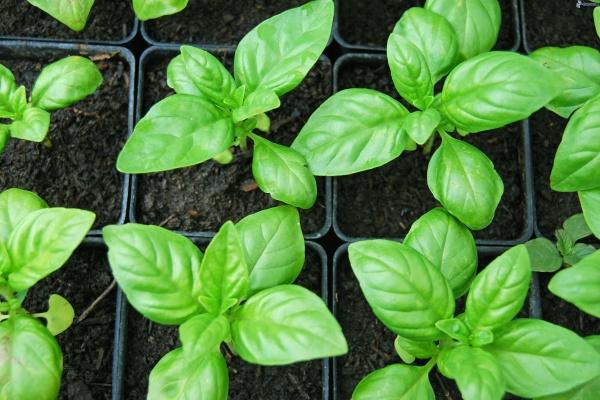
The bushes have two paired leaves growing—it's time to cull the seedlings and transplant them into individual cups. The soil used is the same as when planting the seeds, so it's stored for future use. Separate several healthy, strong sprouts and trim the root tips. Fill the cups with soil, make a small depression, water with warm water, and insert the sprout.
Carefully, using a match or a wooden toothpick, straighten each root and cover the rhizome with loose soil. Firm the soil slightly and cover the remaining space with mulch. Planting the sprouts too deeply is not recommended, as it may cause the root system to expand.
Pinching
When 5-6 paired leaves appear on the bushes, it's time to pinch the seedlings. There are two leaves in the center of the plant; these should be carefully pinched or pulled out. This treatment will produce a strong plant with additional leafy side shoots.
Without this treatment, the gardener risks ending up with a tall, sparsely leafed sapling that will fall over. In this case, the stem will need to be buried in soil; additional roots will form from the dormant buds, and the plant will begin to grow vigorously. However, this takes time, so such saplings lag in growth and development.
Potential problems with basil seedlings
The seeds do not germinate
This can happen for a number of reasons:
- perhaps you bought low-quality or old seeds that simply cannot germinate;
- the seed material did not undergo the procedure of soaking in a nutrient solution and potassium permanganate and rejection of damaged grains;
- poor growing conditions – insufficient soil nutrition or high soil acidity; improper watering;
- When planting, the seeds are buried very deep, so the time it takes for the sprouts to emerge is delayed.

The seedlings are falling
This problem can occur for a number of reasons:
- dense planting causes insufficient lighting of the sprouts, which stretch towards the light and fall over due to excessive length;
- Frequent watering and fertilizing can cause excessive growth of the stem, which will not be able to stand without support;
- High room temperatures also cause rapid development and growth of the plant stem.
Advice! Lowering the room temperature and reducing lighting to 8-10 hours per day can solve the problem. This slowing treatment should last 7-8 days.
It doesn't grow.
The seedlings have stopped growing, possible reasons:
- there is not enough nutrition for the development of sprouts, it will be necessary to add complex fertilizer;
- If the seeds haven't been treated, the plant may become diseased. If signs of fungal or pest damage are detected, treat the seedlings with a biopreparation solution;
- low room temperature and insufficient daily light for seedlings.
Pulling
Seedling stems stretch for similar reasons to when seedlings fall over or when basil bushes aren't pinched. The stretched stem is placed in a shallow trench and covered with a layer of soil. The plant will be stunted but will produce a rich harvest of fragrant foliage.
Blackleg
This disease can be caused by one thing: excess moisture. Insufficient drainage and a lack of holes in the pot will lead to waterlogging, root rot, and blackening of the seedling stem. Healthy cells gradually die, and the seedling dies.
Treating the seedlings with a copper sulfate solution (1 teaspoon per 2 liters of warm water) and reducing the amount or frequency of watering can help combat this problem. Another method is dusting the soil with a layer of sifted wood ash after each watering.
Yellowing of leaves
This is a symptom of plant malnutrition. At the first sign, apply root fertilization with a ready-made complex fertilizer or a solution of mineral fertilizers when foliar feeding the seedlings. In such cases, spraying the plants with a solution of Fitosporin helps.
Spots on leaves
This is a sign of sunburn. To protect the plant, install protective blinds to diffuse the sunlight, or place the seedlings near a west-facing window or move the containers further away from the window.

Planting in open ground
This operation will be carried out only when the weather has settled and the soil has warmed up to at least 16 -18 :
- The seedlings are pre-hardened by taking them outside for a few minutes, and then leaving them out for the entire day.
- Choose a sunny or slightly shaded spot for the bed, first add mineral fertilizer and organic matter, then dig the soil, level it with a rake, and make furrows with a hoe at intervals of 200-250 millimeters, up to 70-80 millimeters deep. Light soils and areas protected from drafts and north winds are recommended for growing grass. If the soil is heavy, we recommend creating raised beds and adding a layer of sand and organic matter.
- Before planting, seedlings are watered well - this makes it easier to remove the plants from the cups, maintaining the integrity of the root ball and without damaging the root system.
- Carefully place the plants at a distance of 150-200 millimeters, spread out the roots, and cover with loose soil. Firm the soil slightly and fill the remaining space in the hole with a layer of mulch.
- The planted basil seedlings are watered with warm water from a container. Small arches are installed and covered with Agrospan covering material or film.
Basil seedlings planted outdoors will require ongoing care, agricultural practices, and pest and disease control. You can read more about this in a separate article on our website.

Conclusion
Growing basil seedlings and transplanting them into open ground is a simple yet responsible task. A gardener's ability to reap a rewarding harvest of these deliciously flavorful, aromatic leaves depends on the quality and adherence to planting and care guidelines.
Related posts:
 What is basil and what does it look like, description of varieties and where it grows
 How to prepare basil for the winter at home, storage methods and rules
 Growing from seeds and caring for basil in open ground, diseases and harvesting
 The beneficial properties and contraindications of basil for men and women, and traditional medicine recipes
 Description of the 20 best basil varieties, what is the difference between green and purple
 Growing basil on a windowsill from seeds and cuttings, and caring for it at home
 Description and use of purple basil varieties, what are the benefits
 Top 8 recipes for making basil compote for the winter
I've been growing basil for several years now, and it's a very demanding plant. Choose your soil carefully and be sure to fertilize it. Bioactivators work well with basil; I use "BioGrow".