
- Breeding of Agawam blackberries
- Characteristics of the variety
- Fruits and bush
- Flowering period and ripening time
- Productivity, fruiting period
- Scope of application of berries
- Resistance to diseases and pests
- Winter hardiness and drought resistance
- Significant advantages
- Planting technology on the site
- Deadlines
- Selecting and preparing a site
- What to add to the planting hole
- Algorithm and landing scheme
- Specifics of care
- Watering and fertilizing
- Pruning shrubs
- Loosening and mulching the soil
- Preparing for winter
- Diseases and pests: methods of control and prevention
- Methods of reproduction
- Gardeners' reviews of the variety
Many gardeners dream of growing blackberries in their own backyards. However, most hybrid varieties of this fruit crop are finicky and require extra attention. The Agawam blackberry, while not known for its large berries, is easy on care and climate, and its yield and flavor are highly rated by experts.
Breeding of Agawam blackberries
The Agawam blackberry was developed by American breeders in the 19th century. Wild varieties of the fruit crop were used to develop the variety. This explains why the Agawam blackberry has acquired natural immunity to various diseases and frost resistance, making it considered the most easy-to-grow variety of the fruit crop.
Characteristics of the variety
The Agawam blackberry variety was added to state fruit crop registers in the early 2000s and immediately gained popularity among professional and amateur gardeners. Due to its excellent frost resistance, this variety is recommended for growing in regions with a wide range of climates.
Fruits and bush
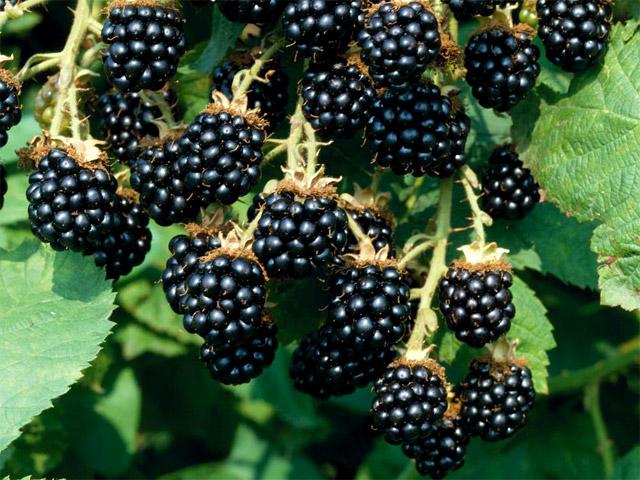
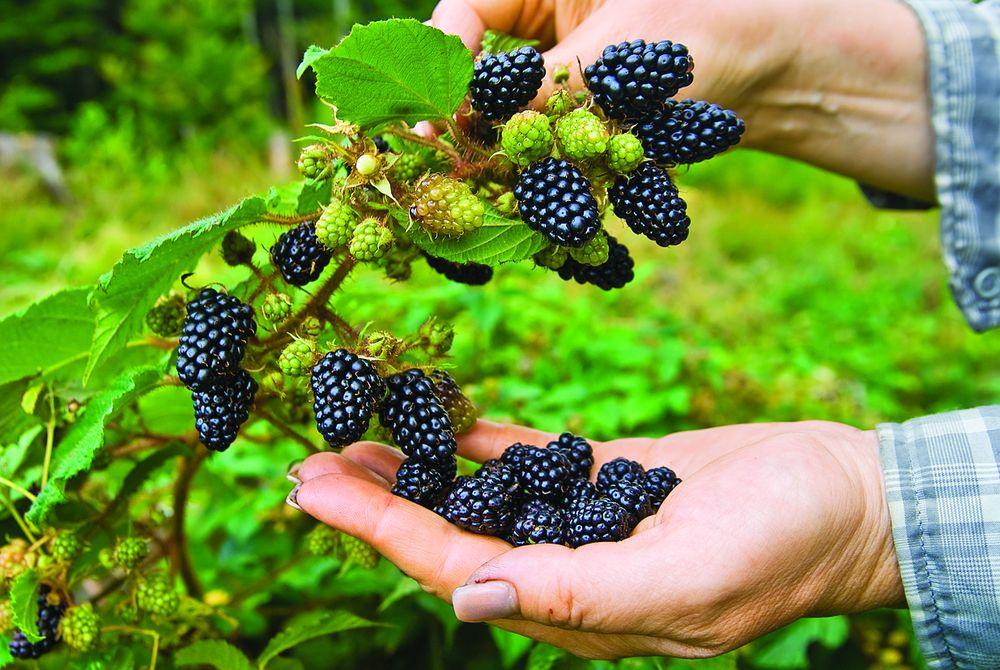
The plant is characterized by robust bushes ranging from 1.5 to 3 meters in height. The shoots are thick, brown, and covered with numerous sharp spines. The leaves are medium-sized, corrugated, and dark green in color. During the growing season, numerous shoots are produced.
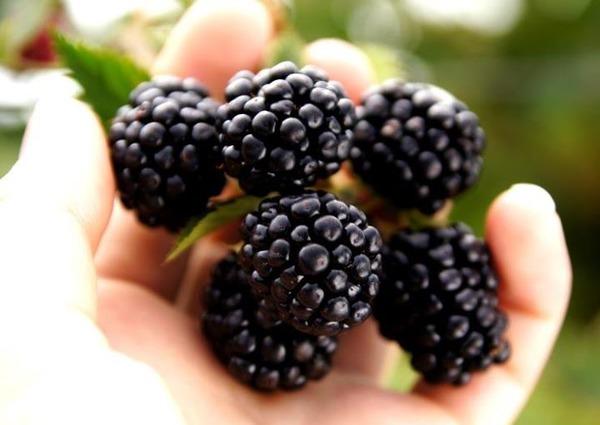
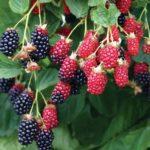
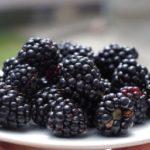
The berries are oval, medium-sized, weighing 4 to 5 grams. They turn black when ripe. When ripe, they have a sweet and sour taste with a distinct blackberry aroma.
Flowering period and ripening time
The fruit bush enters the flowering phase in mid-May, although in southern latitudes, the flowering period is 10-14 days earlier. Racemose inflorescences with multiple buds form on the shoots. The plant becomes completely covered in medium-sized white flowers, which then develop into ovaries.
Productivity, fruiting period
The berry bush begins bearing fruit in its second year of growth. The largest number of ovaries develop on two-year-old shoots. The fruiting period lasts up to 15 years.
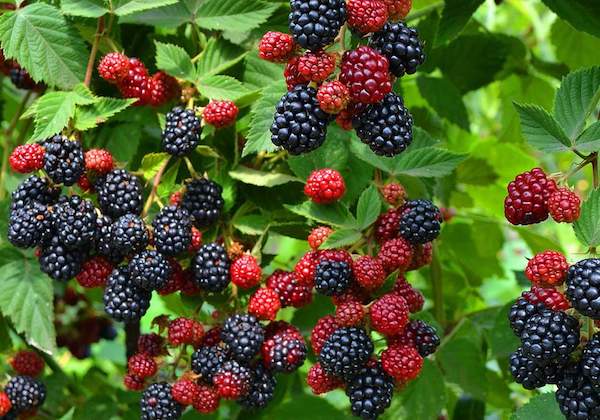
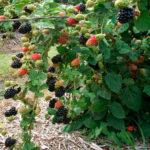
Ripening is uneven, with up to 25 black fruits ripening on a single branch. The first berries can be sampled as early as mid-July, but the main harvest occurs in mid-August.
From each berry bush they collect from 7 to 15 kg of ripe fruits.
This productive berry bush is often cultivated on an industrial scale. One hectare yields 10 to 15 tons of ripe, juicy berries.
 Important! Agawam blackberry yields depend primarily on the climate conditions of the growing region.
Scope of application of berries
Unlike larger hybrids, experts haven't rated the Agawam blackberry's flavor highly. However, according to gardeners, farmers, and vegetable growers, this variety is best suited for jams, preserves, compotes, desserts, and freezing.
Juices and nectars are produced commercially from the berries, and they are added to dairy and confectionery products. The Agawam blackberry is considered a versatile variety and is recommended for fresh consumption.
Resistance to diseases and pests
Blackberry bushes are naturally immune to some fungal and viral diseases. Pests also rarely attack the berry crop. Preventative treatments are carried out no more than once per season.
Winter hardiness and drought resistance
This fruit bush easily tolerates temperatures down to -30°C, making it suitable for cultivation in any climate zone. It tolerates drought, but prolonged lack of moisture negatively impacts the harvest. The berries become smaller and lose their flavor.
Significant advantages
Growing Agawam blackberries is easy, even for novice gardeners. However, to ensure proper care and a large, high-quality harvest, it's important to understand all the pros and cons of this fruit variety.
Advantages:
- The bushes tolerate severe frosts and spring temperature fluctuations well.
- Agawam blackberries ripen even in shady areas.
- Long fruiting period. Berry bushes in the same location can bear fruit for up to 15 years.
- High yield rates.
- The variety is undemanding to soil composition and additional care.
- Universal purpose of fruits.
- Rapid growth of shoots.
- The fruit crop is resistant to diseases and pests.
 Important! The Agawam blackberry variety is a time-tested, climatically stable, and versatile fruit crop.
Flaws:
- Large thorns on the branches and leaves cause inconvenience during care and harvesting.
- Rapid propagation of root shoots. Regular pruning of excess branches is necessary.
- Unlike modern hybrids, the Agawam variety has small berries.
- Unripe and overripe fruits significantly lose their taste.
Trimming excess shoots is the main stage of caring for this variety of blackberry.
Planting technology on the site
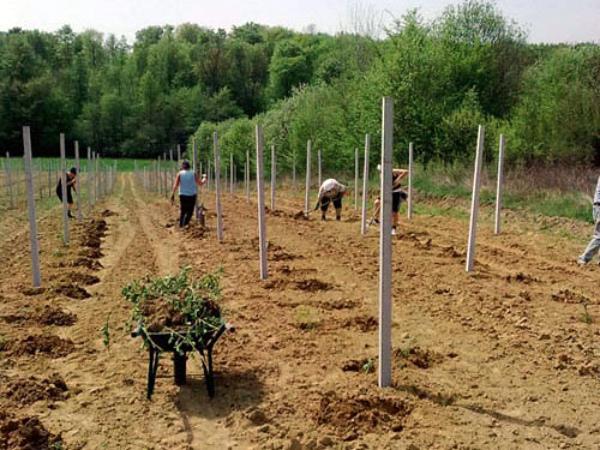
Before planting seedlings in open ground, it is necessary to determine the timing of the work, which depends on the climatic characteristics of the region and the choice of location for blackberry bushes.
Deadlines
In regions with temperate and cold climates, berries are planted outdoors in the spring, as soon as the soil warms up after frost. This way, the seedlings will have time to establish themselves, take root, and survive the winter without problems during the summer. In southern latitudes, blackberries are planted in the fall, 1-1.5 months before the first frost.
Selecting and preparing a site
In regions with hot climates, bushes are planted in shaded areas. In northern latitudes, berry bushes prefer well-lit areas sheltered from northerly winds and drafts.
The blackberry root system is not prone to rotting, so the plant grows and bears fruit well in lowlands.
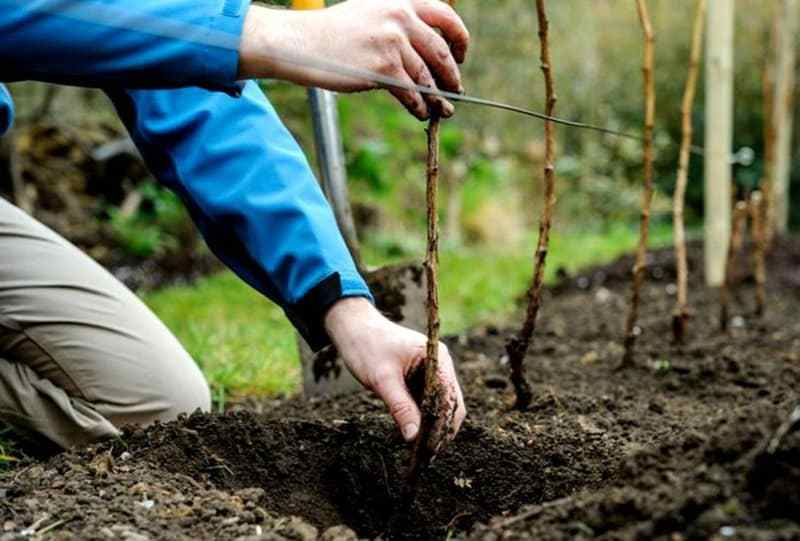
The plot for the seedlings is prepared 4-6 weeks before the planned planting. The soil is thoroughly dug and cleared of weeds. A hole 50 to 60 cm deep and in diameter is dug in the prepared plot.
What to add to the planting hole
To avoid additional work when growing a thorny fruit bush, carefully prepare the soil before planting.
- The soil from the hole is mixed with humus and mineral fertilizers.
- River sand is added to heavy soil.
- Soil with high acid content is limed.
- Soil with neutral indicators is mixed with peat.
The soil mixture is mixed and placed into the dug planting hole, and thoroughly watered.
Important! When purchasing seedlings, pay special attention to the integrity of the roots and the plant's appearance.
Algorithm and landing scheme
Agawam blackberries are planted in rows or as single bushes.
- The distance between individual plantings is at least 2 m.
- When planting in rows, the distance between seedlings is from 1 to 1.5 m, between rows from 2 to 3 m.
- Before planting outdoors, the plants are soaked for 5-7 hours in water mixed with clay. Next, the roots are treated with antibacterial agents and growth stimulants.
- A mound of fertile soil is formed in the center of the hole.
- The seedling is placed in the center of the hill, the roots are evenly distributed in the hole, and covered with soil on top.
- The soil under the bush is lightly compacted and thoroughly watered.
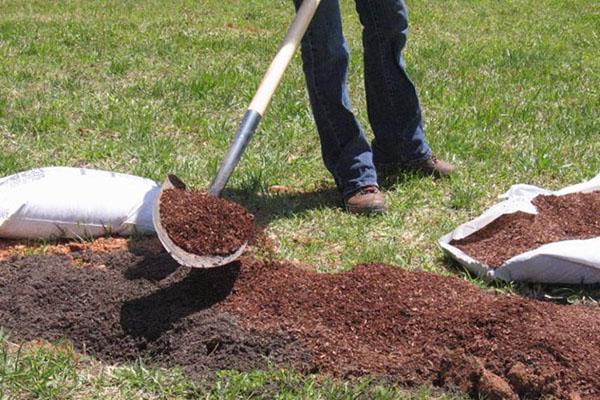
- The soil on top is mulched with sawdust mixed with peat or dry grass.
- If necessary, support pegs are driven into the holes.
 Important! Agawam blackberries differ from their hybrid relatives in that they have large, sharp thorns, which can be difficult to cultivate. Therefore, to avoid unpleasant encounters with thorny bushes, it's important to maintain strict spacing between plantings.
Specifics of care
Like any fruit crop, garden blackberries require additional care, including watering, fertilizing, preventative treatments and pruning.
Watering and fertilizing
At the beginning of the growing season, the shrub is watered every other day. As it grows and develops, water as the soil dries.
In early spring, the fruit crop is fed with a nitrogen complex.
As soon as the plant enters the active flowering phase, the bushes are fertilized with mineral fertilizers. In early autumn, blackberries are also fed with minerals and nutrients.
Pruning shrubs
With the onset of autumn, old, broken, damaged, and fractured shoots are pruned from the bush. Bush formation begins in the fourth year of fruit tree growth. Four to six of the strongest branches are left on the main trunk, and the rest are pruned.
Important! During the growing season, blackberries develop multiple shoots, which drain energy from the main plant and significantly reduce yield.
Loosening and mulching the soil
Loosening is carried out several times per season. Soil loosening is combined with watering and weeding. Loosening is especially important at the beginning of the growing season and in the fall, before the plant's winter dormancy.
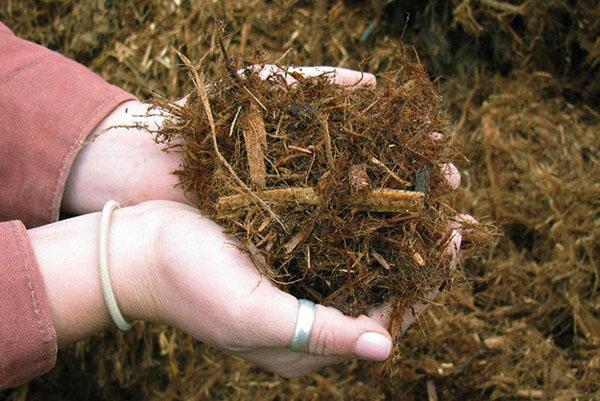
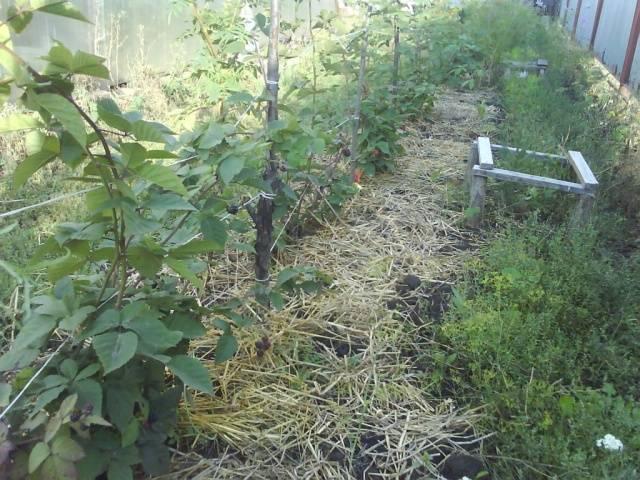
Mulching the soil is important when the plant is in the flowering and fruiting phases. Dry grass, straw, peat, or sawdust can be used as mulch.
Preparing for winter
The Agawam blackberry variety easily tolerates temperatures down to -30°C (-22°F), so in temperate and southern climates, the plant requires no additional insulation. In northern regions, before wintering, the bush's rhizomes are insulated with a thick layer of humus and mulch, covered with spruce branches. The bushes are then covered with burlap and special fiber.
Also, with the onset of autumn, sanitary pruning of plants is carried out.
Diseases and pests: methods of control and prevention
To grow healthy and productive garden crops, it's essential to follow crop rotation rules. To prevent the spread of diseases and pests, raspberry bushes, nightshade plants, and strawberries should not be planted near blackberries.
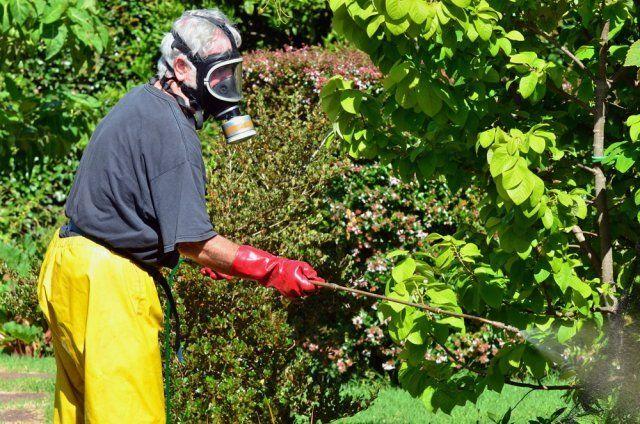
In early spring, preventative sprays of bushes are carried out with insecticides and fungicides. If treatment is necessary, copper-containing products are used.
Methods of reproduction
The Agawam blackberry variety is propagated by numerous root suckers or by seed. Dividing the bush is the easiest way to obtain seedlings. Shoots are separated from the mature bush along with the rhizome. Young seedlings are planted as individual plants.
The seeds are harvested from ripe berries.
- The berries are washed for a long time under running water until the seeds are completely cleared of pulp.
- Next, the seeds are laid out in damp soil or sand and placed in the vegetable drawer in the refrigerator.
- The seeds are kept in the cold for 2-3 months, and only then are they planted in small containers filled with fertile soil.
- The pots are covered with film and placed in a warm place.
- As soon as the first shoots appear, the film is removed and the plants are planted in different pots.
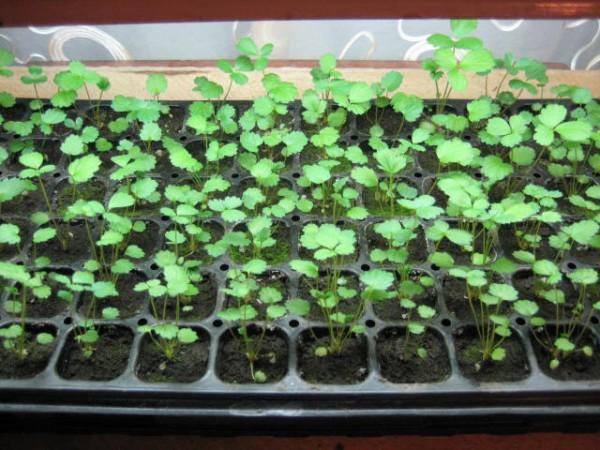
In the spring, the prepared seedlings are planted in the open ground of the garden plot.
Gardeners' reviews of the variety
Elena Vyacheslavovna, 46 years old, Moscow region
We bought two Agawam blackberry plants four years ago. We'd never grown this variety before and thought it would be a hassle. But it turns out the only real problem with this variety is fighting off the shoots. We absolutely love the berries. We make jam, juice, preserve compotes, add them to desserts, and, most importantly, make delicious homemade wine. We now have 12 blackberry bushes on our property, and we're adding to them every year.
Sergey Vitalievich, 50 years old, Krasnoperekopsk
I decided to plant Agawam blackberries on my farm plots. The bushes grew and developed during the first year, and began bearing fruit in the second year. Our climate is hot and steppe-like, so the ripe berries quickly spoiled before harvest. In my opinion, this variety is not suitable for commercial cultivation in southern conditions.
Related posts:
 Description and characteristics of the Natchez blackberry variety, planting and care
 Description and characteristics of the 40 best blackberry varieties, yield indicators
 When and how to prune blackberries: timing and instructions for beginners
 Characteristics and description of the Thornfree blackberry variety, cultivation and care
 How to care for blackberries in open ground, growing and planting
 A simple recipe for making blackberry jam for the winter
 Timing and methods for propagating blackberries at home, planting rules
 Description of thornless blackberry varieties and their cultivation, planting and care