
- The history of Natchez blackberry breeding
- Pros and cons
- General description and characteristics
- Fruit
- Flowering and pollination
- Ripening times and yield indicators
- Application of berries
- Bush and leaves
- Root system
- Habitat
- Frost and drought resistance
- Immunity to diseases and pests
- Rules for landing on the site
- Deadlines
- Required soil composition
- Choosing a suitable location
- Preparation of planting material
- Planting technology and scheme
- Specifics of caring for blackberries
- Fertilizer
- Watering, loosening and mulching
- Forming a bush and tying it to a support
- Prevention of diseases and pests
- Preparing the plant for winter
- Methods of reproduction
- Gardeners' reviews of the variety
Popular in the US and gaining popularity in Russia, the Natchez blackberry variety is prized by farmers and amateur gardeners for its early maturity, productivity, and delicious, marketable fruit. With proper care, the crop is resilient to adverse winter conditions and produces consistently high yields.
The history of Natchez blackberry breeding
The Natchez blackberry is a young variety. It was developed by American scientists at the Arkansas Research University through cross-pollination of local hybrids. A patent for the Natchez blackberry was issued in 2007 after six years of testing.
Pros and cons
Despite blackberries' demanding growing conditions, gardeners' reviews note more positive qualities of the crop than disadvantages.
The advantages of the Natchez blackberry variety include:
- early maturity;
- versatility of purpose;
- dessert taste, large fruit size;
- fruiting period extends up to 40 days;
- high genetically built-in immunity that protects the crop from pests and diseases;
- preservation of marketable appearance and taste during long-term transportation;
- high yield;
- absence of thorns, which facilitates agricultural activities and berry picking;
Flaws:
- low frost resistance;
- need for support;
- insufficient replacement of shoots, additional planting material is required.
 Blackberries love moisture and are demanding of soil and varying degrees of illumination throughout the day.
General description and characteristics
While Russian gardeners prioritize the quantity of fruit harvested from a bush and the labor-intensive nature of agricultural practices, Americans, spoiled by the diversity of varieties, value the appearance, taste, and aroma of Natchez blackberries.
Fruit
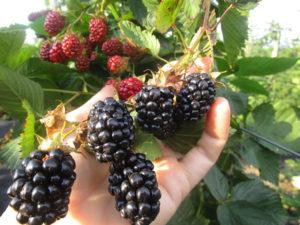
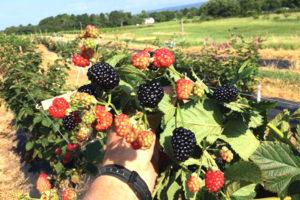
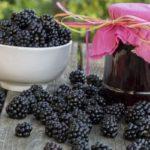
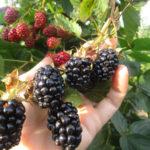
The elongated cylindrical berries gradually increase in weight, as does their productivity. In the second year after planting, the bluish-black fruits weigh 10–14 g and grow up to 3 cm in length. At peak fruiting, they weigh 20–25 g and reach a length of 5 cm, the size of a matchbox.
Overripe Natchez blackberries differ from marketable ripeness fruits by their matte skin and loss of gloss.

The berries have firm flesh, lacking the hollow core found in raspberries, and are easy to peel from the stem. The fruit's flavor is sweet without being sour, with notes of coffee and a subtle aroma. Professional tasters gave the fruit a 4.6 rating.
Flowering and pollination
Natchez blackberries produce racemes of numerous white, five-petaled flowers on their long stems. By mid-May, the flowers at the tops of the shoots begin to bloom. Then, the central buds open, and later, the lower buds.
Blackberries are self-fertile crops and do not need pollinators.
But effective pollen transfer requires bees and a light wind. Nectar is especially attractive to bees at the beginning of flowering, so two days are sufficient for pollination.
Ripening times and yield indicators
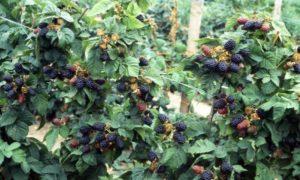
In southern regions, Natchez blackberries ripen by mid-June, and in the Moscow region, by early July. Fruiting continues for up to 1.5 months. Yields are high—up to 20 kg per bush. Abundant fruiting begins in the fourth year.

Application of berries
Natchez blackberries are eaten fresh, the fruits are used to make juices, jams, compotes, and are added to baked goods.
The following properties of berries are used in folk medicine:
- astringent;
- diuretic:
- increased blood clotting;
- sedative.
Fresh blackberries provide the body with a complex of essential vitamins and minerals and stimulate the immune system. When applied topically, the juice helps heal festering wounds and chronic ulcers.
 Blackberries improve intestinal motility, gastric secretory activity, and alleviate painful conditions associated with colds.
Bush and leaves
The vines of the Natchez berry bush are semi-prostrate. At the beginning of the growing season, the plant's shoots grow vertically upward, but after reaching a height of 3 meters, they bend toward the ground. In the first year, the vines reach a length of 4 meters, and in subsequent years, they grow to 6 meters.
The vines are powerful, spreading, and break under the weight of a bountiful harvest, so the crop requires support.
Sessile, ovate leaves grow simultaneously with the shoots for a month. The light green leaf blades are pubescent, with serrated edges and a pointed tip. Two buds form at the junction of the leaf and shoot, from which new leaves and fruiting branches emerge the following year.

Root system
In addition to the main rhizome, the bush produces adventitious shoots, which can develop at a distance (up to 3 m) from the mother plant. The bulk of the root system is located in the upper soil layer (15–40 cm), but individual roots extend down to 1.3 m along worm-made tunnels.
Habitat
This heat-loving crop thrives and produces fruit in southern regions and in the temperate climate of central Russia. Natchez blackberries do not thrive in Siberia. The short summer does not allow the plant to develop properly.
Frost and drought resistance
Most blackberry varieties, including Natchez, are not winter-hardy. Frosts below -15°C and sudden temperature fluctuations are harmful to buds. During winter, the plant requires preparation and insulation.
 Blackberries do not tolerate drought well, stop developing, and lose part of their harvest.
Immunity to diseases and pests
The Natchez blackberry inherited its strong immune system from its parent hybrids, making it less vulnerable to insect pests and diseases. Despite this, the fruit and berry bush is treated with special preparations for preventative purposes, and proper agricultural practices are followed.
Rules for landing on the site
Planting involves timing, site selection, and preparing suitable soil and seedlings. For the continued successful development of berry bushes, it's important to adhere to the planting plan and algorithm.

Deadlines
The heat-loving Natchez variety is best planted in the spring, when the soil has warmed and the buds have swollen but not yet opened. This will allow the plant to root properly, gain strength, and enter winter prepared.
In the fall, two months before the sudden cold snap, blackberries are planted in the southern regions.
Required soil composition
Blackberries thrive and produce fruit in loose, fertile loam. The soil should retain moisture well at the roots, but avoid waterlogging. They do not tolerate acidic soil, heavy clay soil, or limestone.
Choosing a suitable location
Unlike raspberries, which bear fruit in the shade, Natchez blackberries require full sun. To prevent the fruit from burning during hot midday, gardeners shade the plant with a light-diffusing net.

A suitable location for the plant is an open, south-facing site protected from cold winds. It does not thrive in low-lying areas or where the groundwater level is above 1.5 meters.
Preparation of planting material
Blackberry seedlings with a closed root system purchased from a specialized nursery are watered before planting; those with an open root system are soaked in water and dipped in growth stimulants such as Epin, Kornevin, or Heteroauxin.
Planting technology and scheme
To ensure uniform illumination, the rows of plants are arranged in a north-south direction. A distance of 2-3 meters is maintained between the bushes. Supports are installed in advance to prevent damage to the roots. When growing blackberries near a fence, a 1-meter distance is maintained from the fence.
If planting a single seedling, dig a hole. When planting multiple bushes, prepare a trench 50 cm wide and 50 cm deep.
The fertile soil layer is mixed with leaf mold and manure in equal parts. Pebbles and crushed rock are added to the bottom of the trench. A mound or ridge is built in the center.
Natchez variety planting algorithm:
- the seedling is lowered onto the mound and the roots are straightened;
- fill with prepared soil mixture, bending the shoots towards the trellis;
- compact the soil, water it;
- A 6-centimeter layer of mulch made of hay or straw is placed on top.
It's recommended to plant blackberries in cloudy weather. To ensure better survival, stretch transparent film over the seedlings, secured to arches.
Specifics of caring for blackberries
Further care for Natchez blackberries is fairly straightforward. Water, loosen the soil, and mulch the soil around the bushes. The plant responds to increased yields with basic fertilization and supplemental feeding.
Fertilizer
In spring, each Natchez blackberry bush is fertilized with humus, compost (5 kg), or ammonium nitrate (50 g per square meter). The plant is mulched with peat, which nourishes the bush's rhizomes during irrigation.
During the swelling of flower buds, blackberries are watered with an infusion of mullein and bird droppings.
After fruiting and harvesting, 2 tablespoons of potassium sulfate and superphosphate are added to the soil when digging.

Watering, loosening and mulching
The moisture-loving Natchez blackberry variety is watered regularly immediately after planting for the first 1.5 months and during summer droughts. Fruiting bushes are watered with 50 liters of water per bush weekly during active foliage growth and 30 liters every three days during fruit ripening. Allow the water to settle and warm in the sun before watering.
The next day after watering, during weeding, use a hoe to break up the crust that has formed on the surface to improve the air and moisture permeability of the soil.
To reduce the need for watering and tilling, the area around the bush is mulched with peat, straw, fallen forest leaves, and rotted manure. Organic mulch retains moisture, creates a reserve of nutrients, and accelerates fruit ripening by several days.

Forming a bush and tying it to a support
The two-year vegetation cycle of the Natchez blackberry involves pruning in the fall, during the dormant period of two-year-old shoots, leaving 7-8 strong vines formed in the current year.
In spring, to make harvesting fruit easier and prevent breakage, the shoots are tied to a support.
Popular methods of formative garter:
- Trellis. Posts are dug in along the row of plants, spaced every 3–4 meters. Two rows of wire are stretched across them. The first is 1 meter above the ground, the second 1.5 meters. The shoots are tied to the wires with nylon rope.
- Fan-shaped. This method involves driving a support stake between two bushes and tying the outer branches of both plants to it.
- Bundle. This method is used for single plantings. A stake is driven into the center of the bush. The vines are tied together in groups of 2–3, then the bundles are tied to a support.

With any type of garter, try to create as few points of contact between the blackberries and the wire or twine as possible.
Prevention of diseases and pests
Despite its high immunity, Natchez blackberries are susceptible to rust. Roots are damaged by mole crickets and cockchafer larvae, while leaves are attacked by aphids and spider mites.
Take a look Also
To avoid insect attacks and the proliferation of fungal spores on plants, take the following preventative measures:
- introduce microelements - potassium, calcium, phosphorus, magnesium;
- remove and burn damaged parts of the crop;
- comply with irrigation standards;
- do not allow the bushes to become too dense.

Spring sprays of blackberries with chemicals such as Antikhrushch and Confidor help combat root-eating pests. Akarin, Fitoverm, Aktofit, and Actellic prevent aphid and spider mite attacks. Soiling with an Aktara solution in the fall is also effective.
Spraying the bushes with Bordeaux mixture, Topaz, and Fundazol before the leaves open will protect them from fungal diseases.
Preparing the plant for winter
In September and October, Natchez blackberry vines are removed from their supports, pruned, and the remaining vines are pinned to the ground, creating a layer of cardboard, boards, and spruce branches between the vines and the soil. Immediately before the onset of frost, due to the plant's low winter hardiness, it is insulated with a double layer of spunbond, agrofibre, or lutrasil.

Methods of reproduction
Natchez blackberries are most often propagated by vegetative methods.
Popular methods of crop propagation:
- Dividing the bush. The mature plant is dug up in early spring or fall, and the rootstock is divided into several sections, each with two or three shoots. The divisions are immediately planted in the garden bed.
- Tops. Select a one-year-old shoot at least one and a half meters long. Bend the shoot toward the ground, bury the top in a pre-dug hole 20–30 cm deep, and water. After 3–4 weeks, roots and green shoots will form. The young shoot is separated from the mother plant the following year.
- Layering. The method is identical to the previous one. The difference is that the entire shoot is buried, not the top, and the trench depth is 5–10 cm.
- Cuttings. In the fall, 30-40-centimeter cuttings are prepared and buried in the ground until the following spring. In April, the cuttings are planted in a greenhouse, 10-15 cm apart. After rooting and the formation of three leaves, the seedlings are further grown in pots, one at a time.
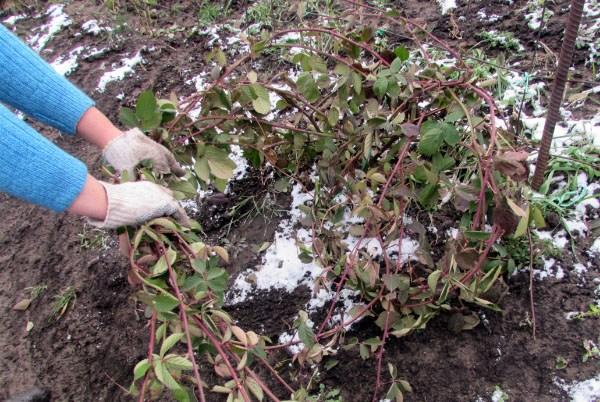
Blackberries are also propagated by cuttings using the dormant bud method. To do this, a cutting with two buds is placed in a jar of water so that the liquid covers one bud. From this bud, an independent seedling with a root system grows.
Gardeners' reviews of the variety
Farmers and gardeners speak positively about the Natchez blackberry, which confirms the quality of the fruit and the ease of care.
Nikolai Petrovich, 66 years old, Kyiv
As a farmer, it's important to me that after harvesting, Natchez blackberries maintain an attractive presentation during the long journey to retail outlets.
Ignat Matveevich, 70 years old, Krasnodar
I've been growing blackberries for about 20 years. I liked the Natchez variety for its sweet flavor, large berries, and the thornless vines. This makes harvesting, pruning, and staking easier.
Marina Georgievna, 48 years old, Moscow
Despite its stated low frost resistance, I recommend the Natchez blackberry variety to gardeners. With proper winter preparation and standard farming practices, you can harvest up to 20 kg of juicy, refreshing berries up to 5 cm long per bush.
Related posts:
 When and how to prune blackberries: timing and instructions for beginners
 How to care for blackberries in open ground, growing and planting
 Characteristics and description of the Thornfree blackberry variety, cultivation and care
 A simple recipe for making blackberry jam for the winter
 Description and characteristics of the 40 best blackberry varieties, yield indicators
 Description of thornless blackberry varieties and their cultivation, planting and care
 Description and characteristics of the Chester blackberry variety, planting and care
 Timing and methods for propagating blackberries at home, planting rules
Don't we have our own blackberry varieties? Are we really forced to grow American ones? How are they any better? After all, cultivation should be tailored to the climate, and it's different there than here. Why complicate things?