
- Climatic characteristics of the region
- Criteria for choosing a variety
- The best blackberry varieties for the Urals and Siberia
- Early
- Medium ripening
- Late-ripening
- Winter-hardy
- Remontant
- Shade-tolerant
- Bushy
- Creeping
- Features of planting and growing
- Optimal timing
- Site selection and soil preparation
- Landing technology
- Further care
- Watering
- Fertilizer
- Garter to supports
- Crown formation
- Shelter for the winter period
Planting and caring for blackberries in the Urals is of interest to many gardeners. To achieve good results growing this crop, it's crucial to prioritize the choice of variety. Blackberries, which are frost-resistant and tolerate temperature fluctuations, are ideal for this climate region. Furthermore, it's important to provide the crop with high-quality care.
Climatic characteristics of the region
The Urals are characterized by a harsh climate. This region experiences harsh winters with severe frosts. It is also characterized by recurrent spring frosts, cold winds, and limited sunshine. To harvest blackberries, it is necessary to select a variety that will ripen before frost.
Criteria for choosing a variety
For regions with harsh climates, varieties that can withstand significant temperature drops are suitable. The fruits must be ripened before the cold weather sets in. The bushes' ability to withstand strong winds is also crucial.
For the Urals, upright blackberry varieties that are resistant to temperature fluctuations are the best choice. These include varieties such as 'Waldo' and 'Kiova.' The 'Black Satin' variety is also suitable.
The best blackberry varieties for the Urals and Siberia
Today, there are many varieties of blackberries that thrive in harsh climates. They are divided into several categories.
Early
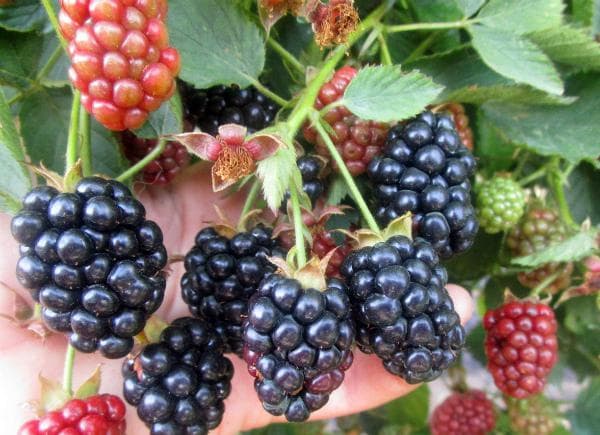
The Eldorado variety tolerates frosty winters well. Not only is it highly winter-hardy, but it also produces an excellent harvest. The plant produces deliciously flavored berries that ripen in early summer. The Snyder variety is also considered an early-ripening crop. It is resistant to fungal infections and thrives in a variety of soil types.
The upright bush is covered in large thorns. It withstands freezing temperatures and produces small fruits that ripen in late June.
Another popular variety is Polar. It is resilient to spring temperature fluctuations and can withstand frosts down to -30 degrees Celsius. Blackberries of this variety can be harvested in early summer. One bush can yield half a bucket of berries.
Medium ripening
The Polish variety Gazda is well suited for the Urals. This hybrid cultivar produces tall bushes that easily tolerate frost and are resistant to most diseases. The shoots are covered with a few thorns. The fruits ripen in August, with the harvest ending in September. Another successful variety is Lauton, which produces a harvest in late summer.
Late-ripening
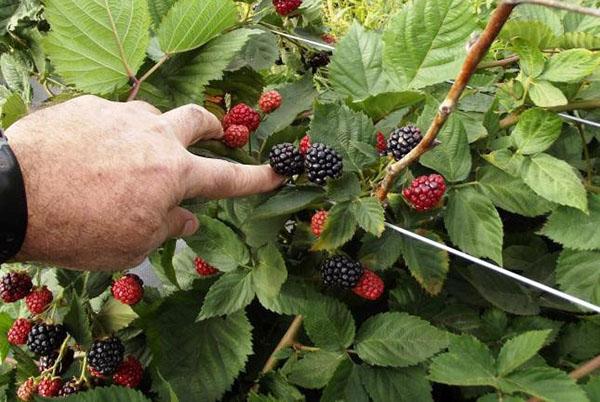
Hybrid varieties that ripen in July are most often chosen for cultivation in the Urals. With adequate cover, Oregon Thornless and Texas varieties can be grown. These varieties produce large quantities of berries. A single bush can yield a whole bucket of fruit. The berries ripen in late August or early September.
When growing blackberries, keep in mind that the plant needs to be protected during the winter. The harvest is in August-September. Each branch produces about 15 small fruits.
Winter-hardy
The Agawam variety has the greatest frost resistance. The Giant blackberry has almost the same characteristics. The upright bushes of the Darrow variety can withstand temperatures as low as -35 degrees Celsius. The Amara and Thornfree hybrids also boast excellent frost resistance.
Remontant
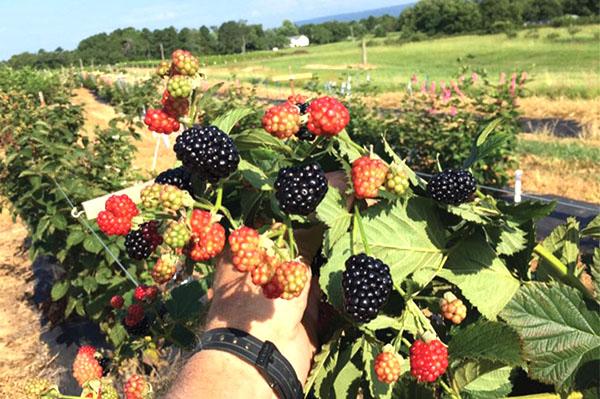
To increase yield, the bushes should be thinned out, leaving a maximum of five branches. Cold autumn sets in quickly in the Urals, so not all everbearing varieties are suitable for cultivation in this region.
In this case, the Reuben or Black Magic blackberries are suitable. These varieties are characterized by large berries and high frost resistance. The Prime Yang variety, which has been adapted to harsh climates, is also suitable.
Shade-tolerant
This plant adapts well to a variety of conditions. However, with insufficient sunlight and frequent rainfall, the taste of the fruit significantly deteriorates. Blackberries prefer full sun, but there are varieties that thrive in shade.
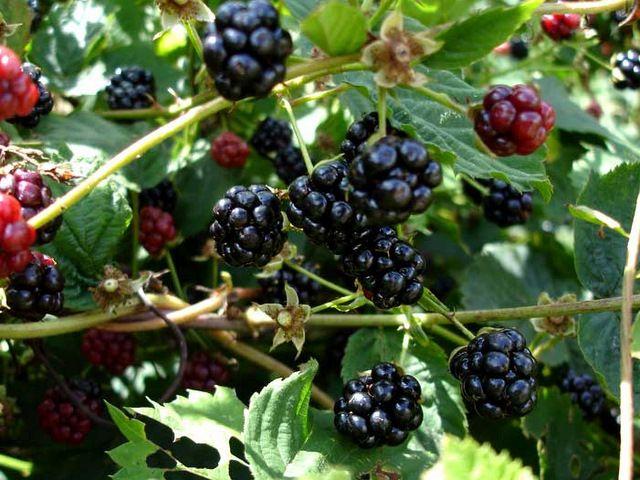
These include Agawam blackberryThis culture has a number of advantages:
- high frost resistance;
- excellent yield;
- pleasant taste qualities.
Thornless Evergreen blackberry is also grown in the shade. This thornless plant bears over 60 small fruits on each branch.
Bushy
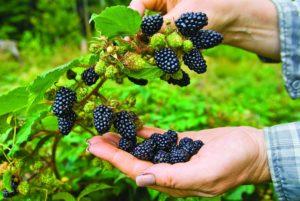
This plant is characterized by straight branches. It easily tolerates freezing temperatures and strong winds. However, when grown in the Urals, it requires shelter. The plant is covered with thorns. Its branches reach 2 meters. Gazda, Agavam, and Ruben grow well in the Urals.

Creeping
Sundew grows in European forests and the Asian taiga. Its shoots spread along the ground and grow to heights of 4-5 meters. This plant thrives in shade and is drought-resistant. Hybrid varieties such as Texas and Oregon Thornless are grown in the Urals. It is recommended to cover them for the winter.
Features of planting and growing
To grow a crop and reap a good harvest, it is necessary to provide it with high-quality care.
Optimal timing
Planting is recommended in early spring. This helps prevent young crops from freezing.
Site selection and soil preparation
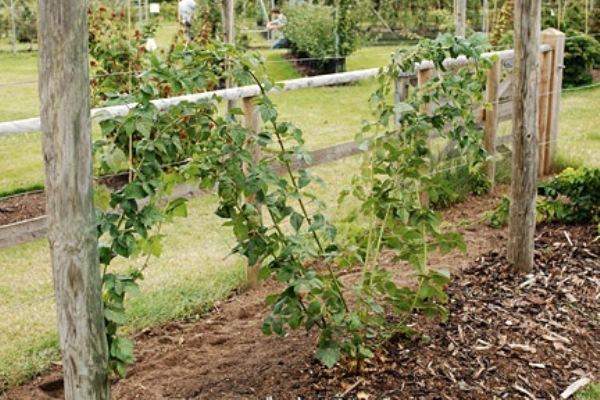
Blackberries thrive in sunny areas. It's important to ensure they're not exposed to wind or drafts. Planting them near a fence is recommended. This will provide them with the necessary support.
In spring, blackberries are planted before the buds appear. For best results, use fertile, well-drained soil. Loamy or sandy soils are excellent options.
Acidity is also important. A pH of 6-6.2 is ideal for blackberries. High humidity will prevent the bush from developing properly and will cause stunted growth. This will negatively impact future harvests.
Avoid planting blackberries in calcareous soils. These soils are prone to iron and magnesium deficiencies, which can lead to leaf chlorosis.
Landing technology
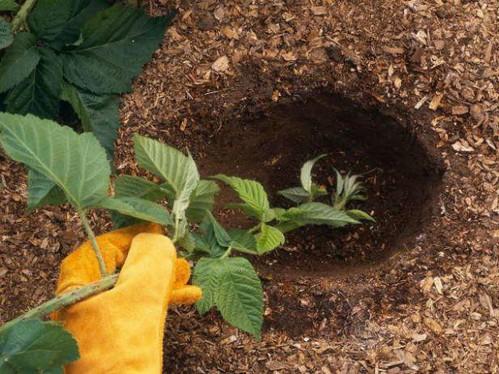
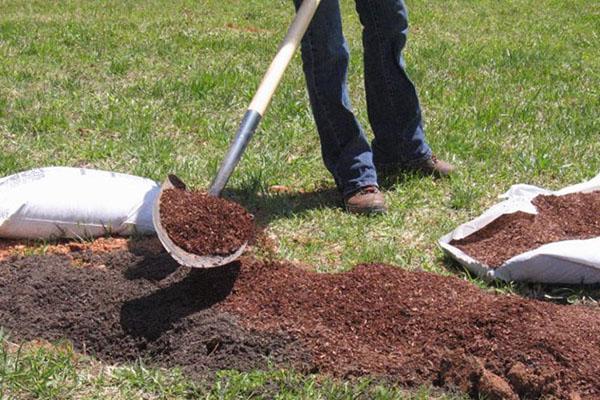
To grow the plant, dig a hole 40-50 centimeters deep. It's recommended to mix the soil with superphosphate, compost, and a potassium-rich fertilizer. Then, place the plant in the hole and spread out the root system. Sprinkle the prepared soil on top.
Maintain a certain distance between bushes, 0.7-1.5 meters. The use of support structures is recommended.
Further care
To get a strong and powerful plant, it is necessary to provide it with high-quality and comprehensive care.
Watering
Water the plant regularly, but use a moderate amount. It's important to ensure the soil doesn't dry out completely. Standing water also has a negative impact on the plant.
Fertilizer
In spring, blackberries require nitrogen fertilizer. This component is found in urea. It's also worth adding a bucket of humus or compost. This should be done every two years.
Garter to supports
Blackberry vines are characterized by their long growth. The berry clusters often droop, weighing the bush down. Therefore, the plants require a trellis. A flat support is the most common option. The vines are usually tied in a fan-shaped pattern.
It's best to build a trellis at arm's length. The bottom wire should be placed 1 meter from the ground. This will prevent the tassels from touching the ground.
Crown formation
The plant doesn't need pruning during the first year. This will ensure proper rooting. However, it's important to remove any flower heads and frozen shoot tips.
Starting in the second year, branches should be pruned to a length of 1.5 meters. This will promote abundant flowering and increase yield. In early summer, bushes that produce numerous shoots should be thinned out. It is recommended to remove young branches, leaving the most vigorous ones.
Shelter for the winter period
Even hybrid blackberry varieties, which are characterized by excellent frost resistance, are susceptible to frost damage. To prevent this, it is recommended to cover the plant in the fall. To do this, dig a trench and place young branches in it. Cover them with sawdust or pine needles. In the spring, it is recommended to remove the covering material. This should be done before the buds appear.
Blackberries are a popular plant that can be grown even in the harsh Ural climate. To achieve excellent results, first and foremost, it's important to choose the right, hardy variety. Proper planting and proper care are also recommended.
Related posts:
 Methods for planting and propagating cherries at home
 The best grape varieties for growing in the Urals, planting and care rules in summer
 The best methods for growing grapes from seeds at home
 Growing and caring for hazelnuts in open ground, rules for planting hazelnuts
 Conditions for growing mandarin at home and rules for caring for the tree
 Description and rules for growing Solaris grapes
 Rules for planting and caring for pears in open ground, how to grow them correctly
 Descriptions of the 20 best cherry varieties for the Moscow region, their planting and care