
- Peculiarities of growing blackberries
- Suitable climatic conditions
- Preparatory work
- Selecting a site for planting
- Favorable and unfavorable neighborhood
- Planting patterns and distances
- Suitable soil composition
- Dimensions and depth of the planting hole
- How and what to fertilize with before planting
- Methods of planting seedlings
- Technology of crop care
- Regular watering
- Fertilizer
- Properly shaping bushes
- Relocation to a new location
- Winter shelter
- Diseases and treatment methods
- Powdery mildew
- Botrytis
- Purple spot
- Anthracnose
- Susceptibility to pests
- Methods of bush propagation
- Cuttings
- Offspring
- Layering
- Apical shoots
- Seeds
- When to expect flowering and fruiting?
- Mistakes when growing
The appeal of growing blackberries lies in the high yields of healthy berries, whose chemical composition makes them a popular part of the human diet. They're an excellent alternative to raspberries and a way to add variety to winter preserves. If you know how to properly plant and care for blackberries, taking into account all their biological properties, the plant will delight you with a harvest of delicious fruit for 10 years and decorate your garden with its beautiful appearance.
Peculiarities of growing blackberries
The versatility of garden blackberries is determined by their nutritional value, decorative appeal, and deliciousness, as well as the diversity of shapes and varieties. Starting in their second or third year, blackberry bushes become unpretentious and can produce fruit in any weather conditions. This requires proper planting techniques. Proper care is also essential for growing a strong plant, especially during the first year of the seedling's life, when fruiting vines and the central shoot are developing.
Suitable climatic conditions
When growing blackberries, it is important to consider that the plant can grow in any climate except for arid steppe climates with low humidity.Many varieties are not frost-resistant, so the plants should be covered for the winter.
Preparatory work
When growing blackberries, proper planting is the key to good survival and growth. Therefore, it is necessary to carry out a number of preparatory measures, including: choosing a location, identifying favorable and unfavorable neighbors, as well as a planting pattern, and preparing a hole with a suitable soil composition.
Selecting a site for planting
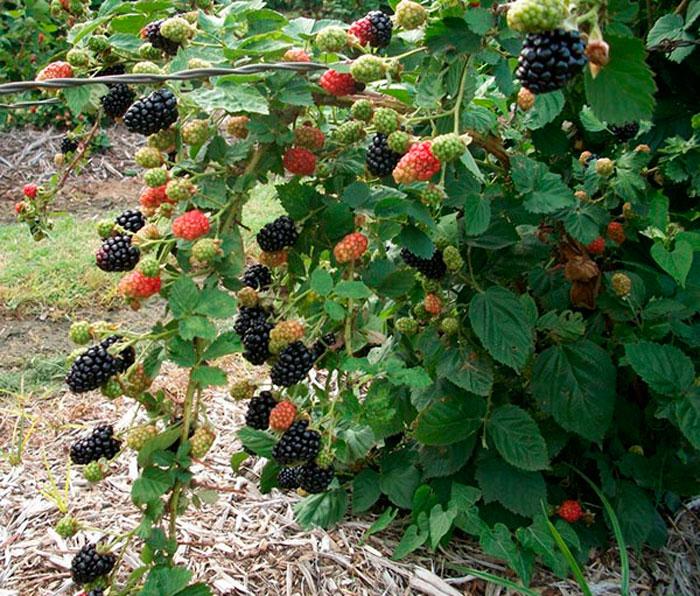
Blackberry cultivation begins with choosing a site for planting the seedlings. It's best to select a flat area sheltered from the wind. In the shade, the crop will grow poorly, and the berries will become small and lose their flavor. It's best to plant the plants on the southwest side of the dacha.The ideal solution is to plant blackberries along a fence, where the bush will be protected from drafts and the stems from damage.
Favorable and unfavorable neighborhood
Gardeners recommend planting blackberries separately from other crops, making them easier to tie up and prepare for winter. The root system of this bush is also susceptible to late blight left over from eggplants, potatoes, and other vegetables. However, if space doesn't allow for separating blackberries from other plants, their best neighbors are garden flowers, pears, apple trees, and grapes.
Planting patterns and distances
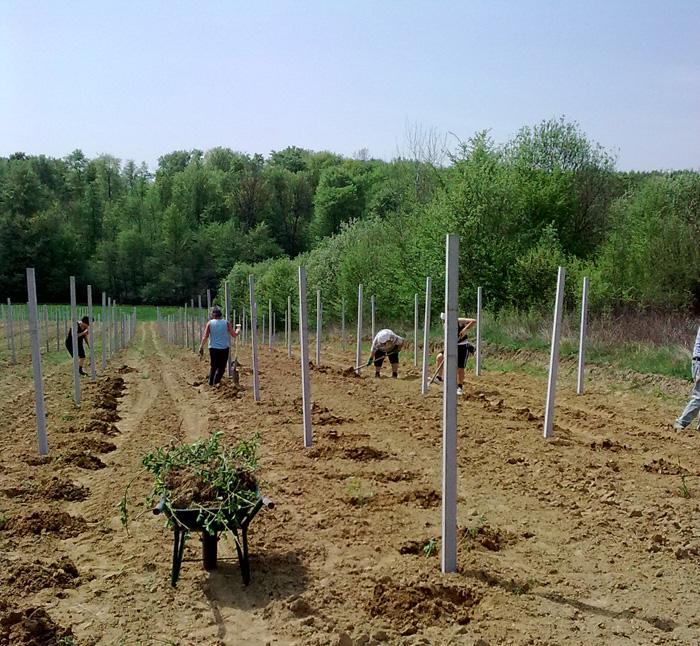
Blackberries can be grown using either bush or row cultivation. When using the former method, each seedling is planted 1.8-2 meters apart. For trailing varieties, this distance should be increased to 2.5 meters. When using the row cultivation method, the distance between plants is 1-1.5 meters, and between rows, 2-2.5 meters. Climbing varieties should be planted at least 1.7-2 meters apart within a row, with a distance of 2.5 meters between rows.
Suitable soil composition
Blackberries prefer loamy, well-drained soil. They do not thrive in rocky, sandy, or marshy areas with acidic or alkaline soil.
 The ideal pH for blackberries is 5.7-6.5. If the soil is alkaline, the acidity can be increased by adding sulfur or iron sulfate. Limestone-rich soil is also considered unsuitable, so if the soil is acidic, add lime.
Dimensions and depth of the planting hole
Before preparing the hole, you need to know that its dimensions should be 40 x 40 x 50 cm.
How and what to fertilize with before planting
Before planting, add a soil mixture containing 5-6 kg of compost, 100 g of superphosphate, and 40 g of potassium mixed with fertile soil to each hole. Fill the hole 2/3 full with the resulting mixture, then create a thin layer of topsoil to support the seedling's roots.
Methods of planting seedlings
Step-by-step instructions for planting blackberry bushes:
- Place the seedling in the prepared hole on the formed elevation, carefully straightening the roots.
- Plant so that the growth bud located at the base of the stem is buried 2-3 cm deep.
- Compact well and moisten with 1 bucket of water.
- At the end of planting, trim the seedlings, keeping the length no more than 30 cm from the ground.
- Mulch the soil by adding a 3-4 cm thick layer of wood sawdust.
Correct planting guarantees a generous harvest of healing berries.
Technology of crop care
To ensure full growth and development of blackberries, you need to know proper cultivation techniques. Then, young bushes planted in open ground will delight you with their beautiful appearance and high yield of juicy, aromatic fruit.
Regular watering
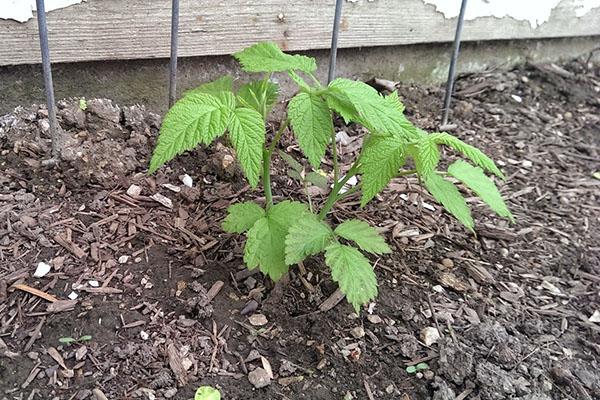
When growing blackberries, it's important to know how often to water them. They're moisture-loving plants, so a lack of moisture can negatively impact plant growth and fruit quality. Water blackberries in July, when the fruit is ripening, and during hot summer weather. During these periods, each mature bush should receive 15-20 liters of water per week. At other times, water based on soil conditions, ensuring it doesn't dry out completely.
Fertilizer
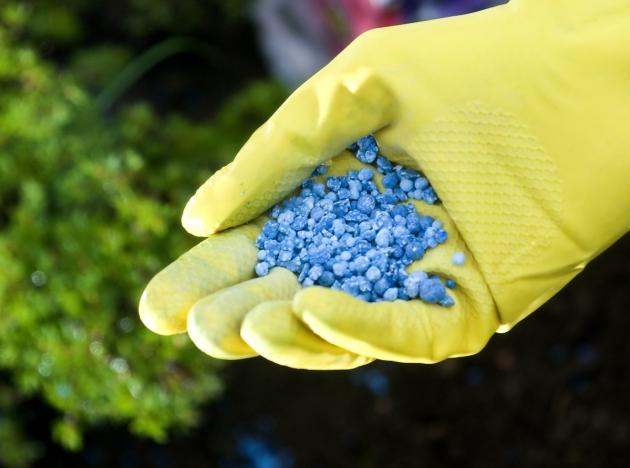
Blackberries require fertilizing every spring, adding nitrogen-based fertilizer to the soil to encourage the growth of annual shoots. Mulching the soil with compost yields excellent results. Fertilize every 3-4 years in August after harvesting, using the following nutrient mix:
- 10 kg of compost;
- 100 g superphosphate;
- 30 g potassium sulfate.
Also in September, when preparing the plant for winter, enrich the soil with potassium and phosphorus fertilizers at 50 g per 1 m2.
Properly shaping bushes
During the development of blackberries, it is necessary to control the bush density and carry out formative pruning, which will promote the rational use of nutrients supplied to the bush, increase frost resistance, and abundant flowering in the coming season.
To do this you need:
- In the first year of the blackberry's life, remove the inflorescences in order to stimulate root development.
- In the spring, before the buds begin to open, the vines of a 2-year-old plant need to be shortened, leaving a height of up to 1.8 m.
- At the end of winter, cut off the frozen parts of the shoots every year down to a living bud.
- In June, thin out the bushes, removing young shoots. This should leave 6-8 strong shoots for trailing varieties and 4-5 for upright varieties. It is recommended to trim the tops to create a beautiful, compact plant.
- In the fall, trim fruiting branches to the root, remove weak green shoots and stems damaged by parasites, and shorten strong, mature young shoots by a quarter.
Relocation to a new location
It's best to transplant blackberries in your garden in the spring, before the buds open. To do this, carefully dig and loosen the soil around the selected bush, being careful not to disturb the roots. Replant with the root ball. Dig a hole in the new location, the diameter of which should correspond to the size of the blackberry rootstock, including the root ball. Mix some soil with compost and add it to the hole. Carefully distribute the root system, sprinkle with soil mix, and moisten.
You can also transplant blackberries in the fall, a month before the first frost, so that the bushes have time to adapt and get stronger.
Winter shelter
Severe cold, especially in temperate climates, can cause not only a poor harvest but also the death of blackberry bushes. Therefore, it's important to take a number of measures and properly prepare the bushes for the cold season. To do this, before covering the blackberries, moisten them and mulch them with peat or dry sawdust. Then, lay the branches on the ground and cover them with hay or straw. Finally, cover the completed structure with thick plastic film or spruce branches, which will also protect against rodents.
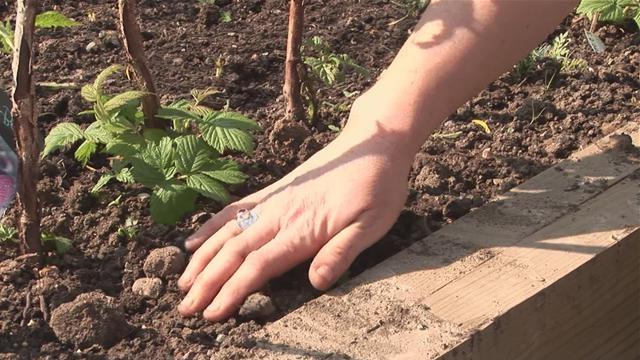 To better prepare blackberries for winter, gardeners recommend pruning them, removing two-year-old shoots and damaged stems.
Diseases and treatment methods
Blackberries can be affected by diseases that can cause poor yields and even plant death. Therefore, it's important to identify pathogens as early as possible and begin combating them promptly. To do this, it's important to know which diseases can threaten the crop.
Powdery mildew
The appearance of a whitish-gray powdery coating on all parts of the plant indicates powdery mildew. Severe mildew causes stunted shoot growth, which negatively impacts the harvest, as the berries become smaller, unsightly, and develop an unpleasant odor.
Control measures: use of healthy planting material, burning of plants affected by the virus, spraying bushes with special chemicals.
Botrytis
Gray mold (botrytis) attacks the entire blackberry bush, particularly the fruit, which loses flavor and develops a gray, fluffy coating on its surface. The foliage dries up, and the shoots become covered with brown spots. Treatment involves fungicide treatment and preventative measures, specifically following proper agricultural practices.
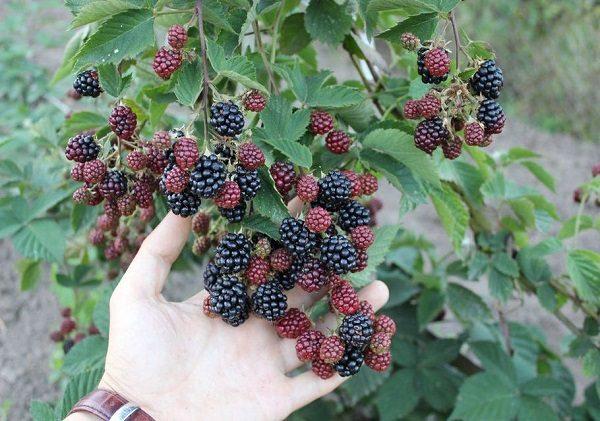 Important! The pathogen quickly develops resistance to fungicides, so it's important to alternate treatments, using products with different modes of action and chemical groups.
Purple spot
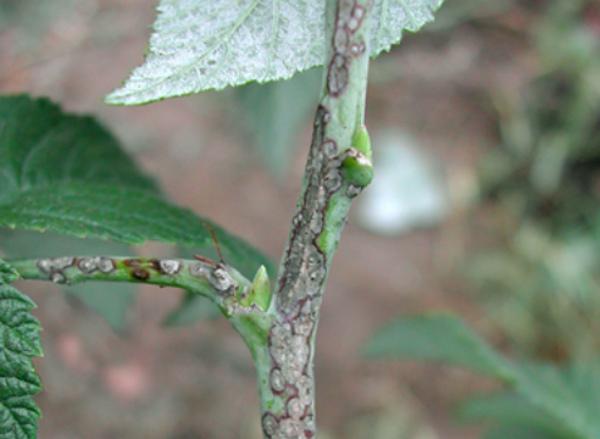
This fungus can affect all parts of the plant. It can be diagnosed by purple-brown spots with fuzzy edges on the stems, which subsequently enlarge, as well as by blackened, dried-out buds.
To combat purple spot, it is recommended to use fungicides.
Anthracnose
This disease affects blackberry bushes growing in areas with high humidity. Infected bushes develop small, round, gray spots with a wide, purple border on their leaves. The fruit turns brown and dries out. The solution is to treat the bush with fungicides and implement all necessary plant care measures.
Susceptibility to pests
Pests that can attack blackberries include spider mites, weevils, raspberry beetles, aphids, and butterfly caterpillars. Treating the bushes with insecticides is highly effective against these insects. For preventative purposes, it is recommended to treat blackberries with these products in the spring, before bud break, and in the fall, after harvesting.
Methods of bush propagation
With a large number of propagation methods, you need to choose based on the crop variety.
Cuttings
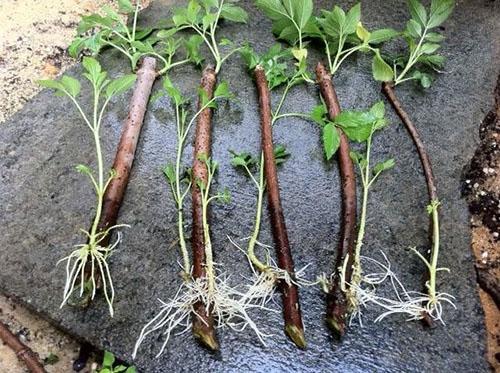
Blackberries can be propagated using stem and green cuttings. The advantage of stem cuttings is that this method is suitable for all plant varieties and is simple and versatile, allowing you to obtain many seedlings in a single operation. When choosing green cuttings, keep in mind that their survival rate is only 10%, and planting them in a greenhouse can be challenging, as it can be difficult to create optimal growing conditions.
Offspring
Blackberry propagation by suckers should begin before July. The suckers should be spaced 30 cm from the bush. When the suckers reach 10 cm in height, they should be dug up along with the root ball and then planted in new locations.
Layering
In early August, bend one-year-old blackberry stems to the ground and cover them with soil, leaving only the tips. Within 60 days, the cuttings will form roots, and shoots will emerge from the soil. In the spring, separate the seedlings from the mother plant and plant them. One cutting can produce up to five new seedlings.
Apical shoots
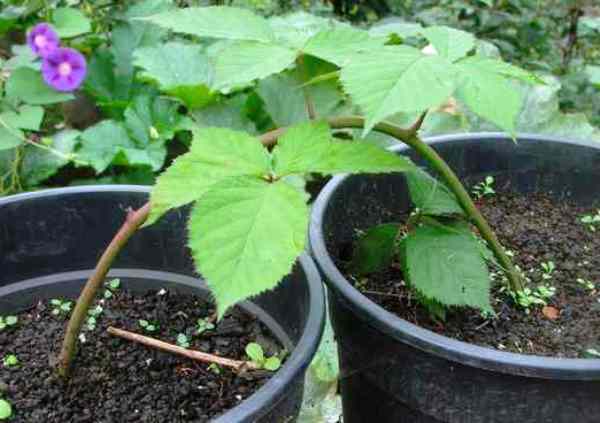
For climbing blackberry varieties, the method using apical shoots is suitable. The rooting process should begin in July by bending the tips of one-year-old shoots down to the soil and hilling them up to a depth of 15 cm. After a month, roots will form, and new shoots will emerge. These shoots should be covered for the winter with spruce branches, and in the spring, they should be separated from the bush and replanted.
Seeds
Seeds can be obtained at home by drying fully ripened blackberries. Place the resulting seedlings in water for 2-3 days and harden them by refrigerating them for 5-6 days, after adding peat and sand. When planting, space the seedlings 3-4 cm apart and at a depth of no more than 8 cm. Once the seedlings have 3-4 true leaves, plant them in open soil.
When to expect flowering and fruiting?
Early varieties require 1.5 months to ripen, while late varieties require at least two months. Blackberries begin to bloom in late June or mid-July and bear fruit in August-September, depending on the variety. Harvesting occurs in late August. The fruits ripen unevenly, so they should be picked in stages—two to three times a week in dry weather.
Mistakes when growing
Common mistakes include:
- Selecting poor quality planting material.
- Planting in shaded areas.
- Failure to maintain the distance between plants during planting.
- Incorrect deepening of the root collar.
- Close proximity to raspberries.
- Irrational application of fertilizers.
When growing blackberries, it's important to avoid these common mistakes when cultivating fruit bushes. Taking these characteristics into account, as well as the growing region, it's recommended not only to choose the right plants blackberry varieties, but to plant correctly and organize proper care of the plants.
Related posts:
 Description and characteristics of the Natchez blackberry variety, planting and care
 Description of thornless blackberry varieties and their cultivation, planting and care
 When and how to prune blackberries: timing and instructions for beginners
 Characteristics and description of the Thornfree blackberry variety, cultivation and care
 A simple recipe for making blackberry jam for the winter
 Description of the Black Satin blackberry variety, cultivation and care features
 Timing and methods for propagating blackberries at home, planting rules
 Description and characteristics of the Karaka Black blackberry variety, planting and care