
- Botanical characteristics and description of thornless blackberries
- Pros and cons of planting on a plot
- The best thornless blackberry varieties
- Osage
- Oregon Thornless
- Loch Ness
- Waldo
- Doyle
- Columbia Star
- Loch Tay
- Black Satin
- Chester
- Rules for choosing the right variety
- For the Urals and Siberia
- For the Central Belt of Russia
- For the Moscow region
- Landing features
- Deadlines
- Site selection and soil composition
- Preparing the planting hole and support
- Patterns and distances between bushes
- Landing technology
- How to care for the crop
- Irrigation of the bush
- Loosening and mulching the soil
- Crown formation
- Gartering blackberries
- Covering for the winter
- Diseases and pests: control and prevention
- Methods of reproduction
- Burying branches
- Root shoots
- Cuttings
- Apical layering
- Mistakes when growing
Growing thornless blackberries is becoming increasingly popular. This crop has many advantages. It produces a good harvest, has excellent flavor, and is thornless, making it difficult to grow. To achieve good results, it's important to understand the basic cultivation techniques it requires.
Botanical characteristics and description of thornless blackberries
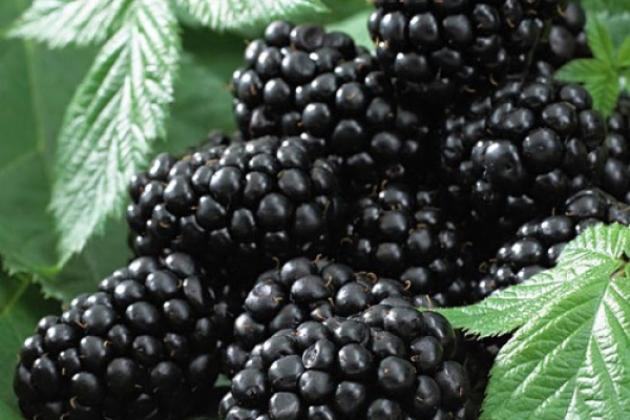
Thornless blackberries have an attractive appearance. The plant is thornless, a distinct advantage. The delicate bush is covered in rich green leaves with beautifully serrated edges.
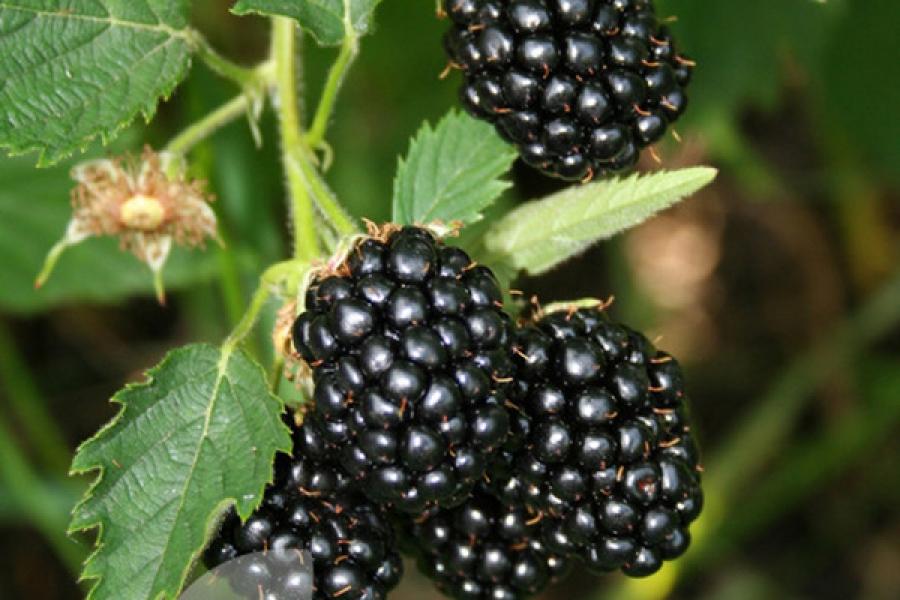
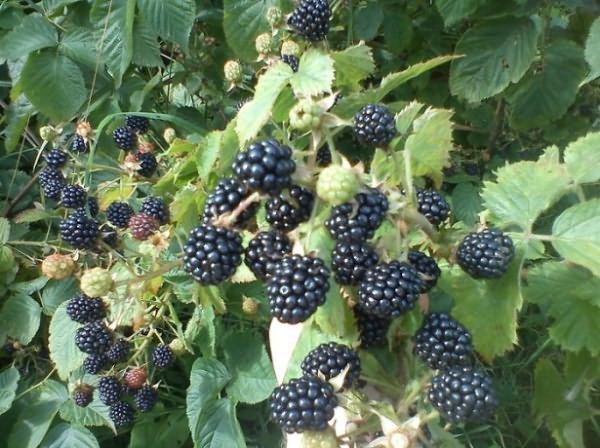
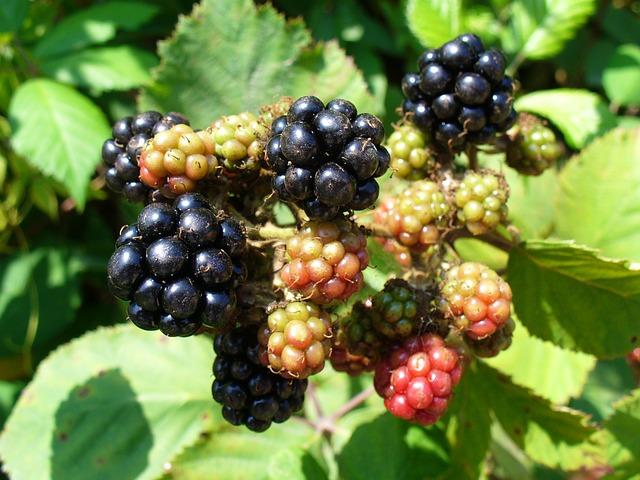
Flowering begins around mid-June. The exact timing depends on the variety. Fruiting of thornless blackberries lasts for one month or more. This also depends on the plant variety. When ripe, the berries first turn red, then black or dark purple.
Pros and cons of planting on a plot
The thornless plant has many advantages:
- long fruiting period – some varieties ripen their crops within 2 months;
- large fruits;
- the absence of thorns makes harvesting much easier;
- ease of care;
- drought resistance;
- the ability to harvest every 2 days;
- easy to care for – in autumn all climbing branches are cut off at the root;
- disease resistance.
 This variety of blackberry has very few drawbacks. These include the high cost of seedlings and lower frost resistance.
The best thornless blackberry varieties
Today, many thornless blackberry varieties have been developed. They differ in ripening time and berry flavor.
Osage
This garden blackberry variety has excellent flavor. This is perhaps the plant's only advantage. Its yield is not particularly high, never exceeding 3 kilograms per bush. The berries weigh approximately 6 grams. They begin to ripen in July. The bushes are upright and reach 2 meters in height. They are characterized by weak frost resistance.
Oregon Thornless
This late-ripening variety grows along the ground. A single bush can yield up to 10 kilograms of berries. The fruits begin to ripen in August and weigh 9 grams. The stems reach 4 meters. This blackberry is frost-resistant and can withstand temperatures as low as -29 degrees Celsius.
Loch Ness
This is an easy-to-grow variety characterized by frost resistance. The shoots grow up to 4 meters and are straight. The plant begins to bear fruit in the first half of August. The fruits are large and regularly shaped, weighing approximately 4 grams and having shiny skin.

Waldo
This variety is characterized by high yields. A single bush can yield up to 17 kilograms of fruit, each weighing approximately 8 grams. Stems reach 2 meters. This variety has moderate frost resistance, so it needs to be covered for the winter. The harvest ripens in July.
Doyle
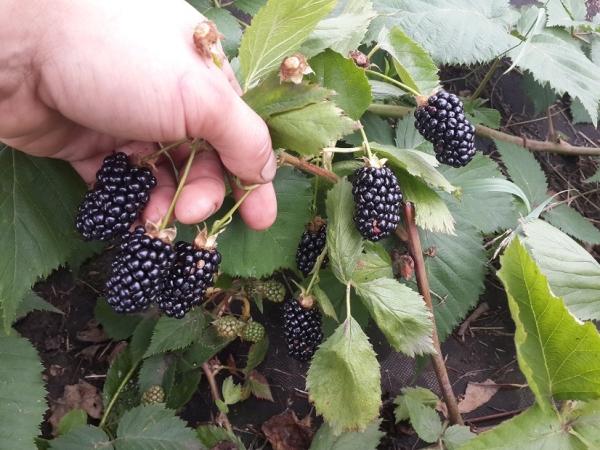
This late-ripening variety is considered quite productive. The fruits ripen in the second half of August and weigh 9 grams. The branches reach 6 meters in length. The plant requires winter protection. The plant can be grown in the south and central regions. In the north, the berries do not have time to ripen.
Columbia Star
This is not a very common variety. It is characterized by early ripening. The berries reach large sizes, weighing up to 15 grams. The bush has a creeping structure, with shoots growing up to 5 meters. This variety can be grown in southern regions, as it can withstand temperatures as low as -14 degrees Celsius.
Loch Tay
This thornless variety is characterized by a medium ripening period. Yields are 12 kilograms, with each berry weighing 5 grams. Branches reach 5 meters. The plant has moderate frost resistance, being able to withstand temperatures down to -20 degrees Celsius. It should be covered for the winter.
Black Satin
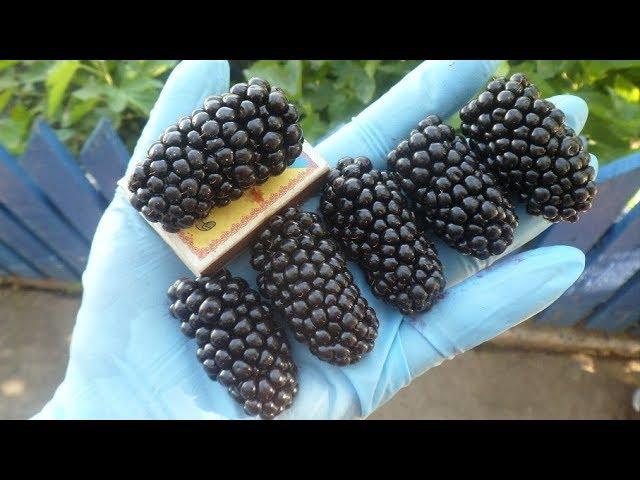
This is a high-yielding, thornless variety that is frost-resistant. The bush is considered quite vigorous, capable of growing up to 1.5 meters. The plant produces large fruits weighing 5 grams. They are distinguished by their round shape and pleasant flavor. A single bush can yield up to 15 kilograms of fruit.
Chester
This late-ripening, thornless variety produces up to 20 kilograms of berries. Each fruit weighs approximately 8 grams. The berries begin to ripen in early August. The plant has a semi-spreading habit, with branches reaching 3 meters. The cultivar can withstand temperatures down to -26 degrees Celsius.
Rules for choosing the right variety
When choosing a new variety for growing in your garden, it's important to focus on frost resistance and ripening period. It's also important to consider the region's climate.
For the Urals and Siberia
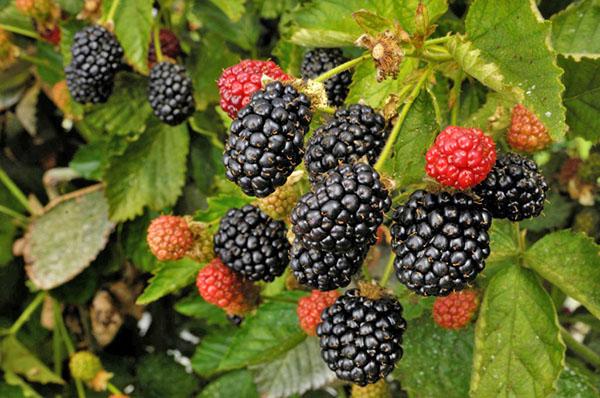
Winter-hardy varieties that can tolerate spring temperature fluctuations are suitable for these regions. Good options include blackberry varieties such as Waldo or Black Satin. The Loch Ness variety is also suitable.
The early Polar variety is ideal for the Urals. It produces fruit in late June. A single bush can yield up to 5 kilograms of berries. The crop tolerates temperatures down to -30 degrees Celsius.
For the Central Belt of Russia
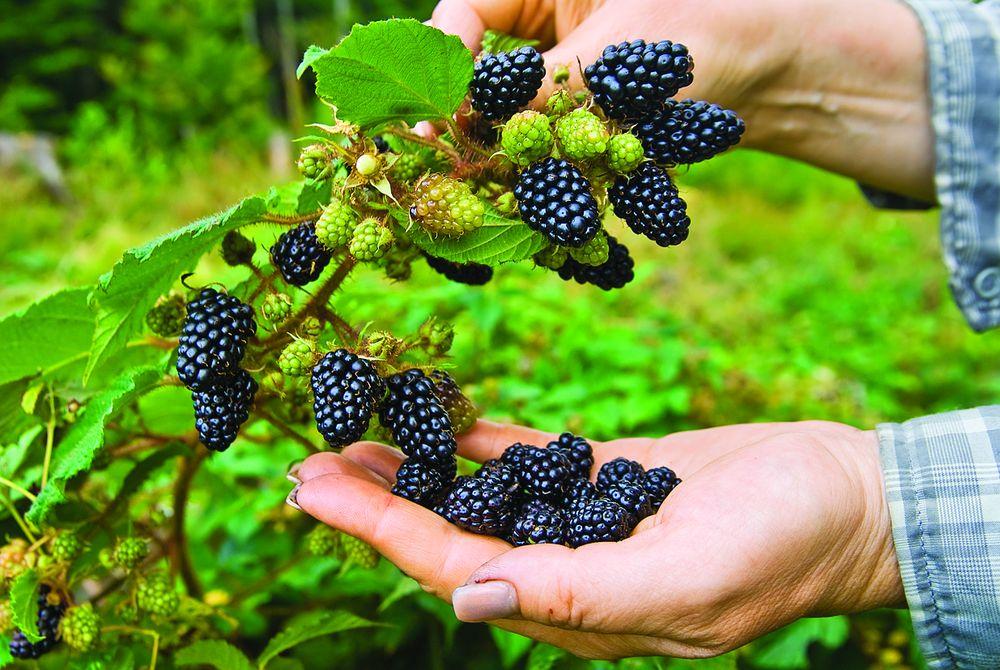
For these regions, it's important to choose varieties adapted to these conditions. The Doyle blackberry is a good choice. It produces large fruits weighing 7 grams. The plant easily tolerates lower temperatures and dry weather. Proper watering increases yield. In the temperate zone, the Ruben blackberry is suitable. This everbearing variety produces compact bushes. The fruits are ready to harvest in August-September and weigh 10 grams.
For the Moscow region
In this region, it's recommended to grow varieties that are adapted to the climate. Regardless of frost resistance, blackberries require winter protection. Black Satin and Apache varieties are best.
Landing features
To ensure a strong plant and a good harvest, it needs to be planted correctly. This is accomplished by choosing the right time and preparing the site for planting.
Deadlines
In colder regions, it's best to plant blackberries in the spring. This is recommended in April or early May. In the south, it's also acceptable to plant them in the fall, usually in September. Blackberries are generally not planted in the summer.
Site selection and soil composition
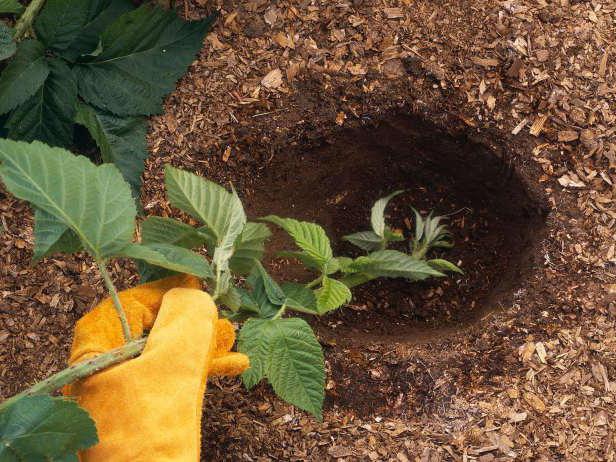
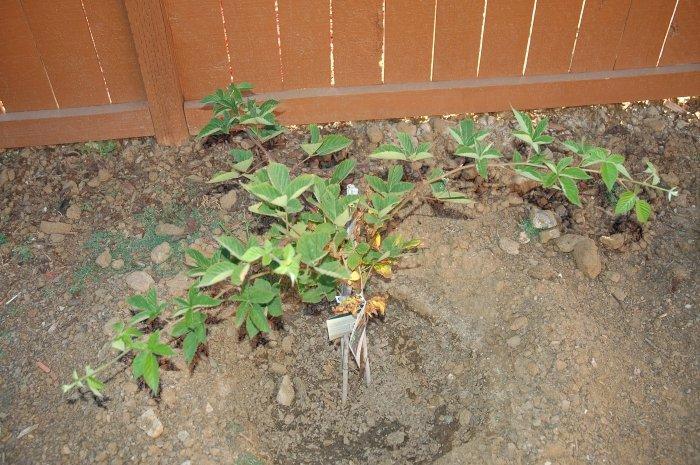
Thornless plants require a well-lit area and should be well protected from the wind. It's best to plant bushes along a fence at 1-meter intervals.
Preparing the planting hole and support
To plant thornless blackberries, dig the bed to a depth of 50 centimeters. It is recommended to add humus or compost. Before planting, fill the hole with a mixture of one bucket of humus and fertile soil. Add 25 grams each of superphosphate and potassium fertilizer.
Patterns and distances between bushes
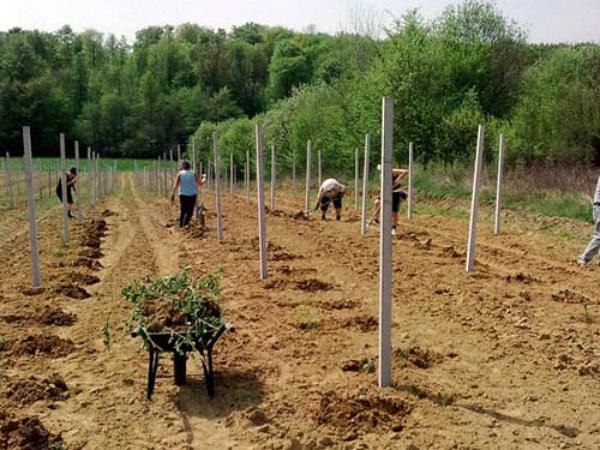
The planting pattern is chosen based on the plant variety. Compact plants should be spaced 1.5 meters apart. For vigorous, trailing shrubs, a 1.8-meter spacing is recommended. Rows should be spaced 2-3 meters apart.
Landing technology
Blackberry seedlings should be planted 50 centimeters deep. Then, cover them with soil and water. Add a layer of mulch and trim the above-ground portions. This should leave twigs 30 centimeters long.
How to care for the crop
To ensure the plant develops normally, it is recommended to provide it with comprehensive care. This includes timely watering, fertilization, and pest and disease control.
Irrigation of the bush
It's recommended to water blackberries once a week. This is done when the berries are ripening. The rest of the time, the plant's long roots draw water from the soil themselves.
Loosening and mulching the soil
To ensure sufficient oxygen supply, the soil should be loosened regularly. Afterward, a layer of mulch should be applied to protect the plant from moisture loss and weeds.
Crown formation
In the spring, sanitary pruning is recommended. This includes removing dead branches. It's important to prune branches completely, leaving no stumps. Summer pruning is aimed at removing dead shoots. The main pruning is done in the fall.
Gartering blackberries
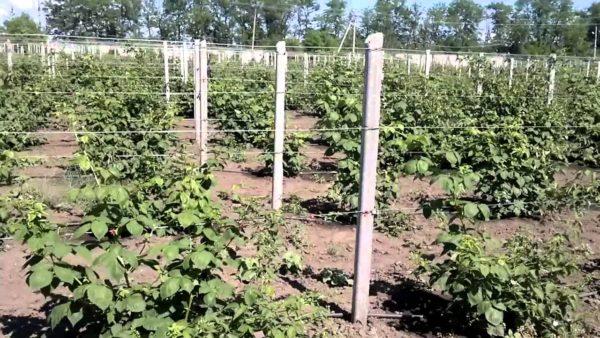
Regardless of the size of the bush, thornless blackberries require support. Trellis made from wire and poles are best.
Covering for the winter
After autumn pruning, the plant should be prepared for winter. To do this, the vines should be removed from the trellises, tied, and secured to the ground. It is recommended to insulate the bushes with spruce branches. Non-woven fabric and film can also be used.
Diseases and pests: control and prevention
Thornless blackberries require preventative measures to protect against pests and diseases. The shrub is often susceptible to diseases such as rust, gray mold, mosaic, white spot, and anthracnose.
To avoid such problems, perform sanitary pruning. Bushes should also be treated with herbicides.
The plant may be susceptible to pest attacks. These include raspberry mites, spider mites, bud moths, and other insects. Thornless bushes should be carefully inspected for prevention. If pests are detected, insecticides are used.

Methods of reproduction
There are several methods of propagating crops, each of which has its own characteristics.
Burying branches
To do this, select healthy one-year-old shoots in early August and bury them shallowly. Leave the end of the branch exposed. It's recommended to trim it back by 10-15 centimeters. Install a metal pin at the burying point, cover the area with mulch, and water regularly. After two months, the branches will root. In the spring, it's recommended to separate them and transplant them to their permanent location.
Root shoots
This method is used if the mother plant is over three years old. By this point, the bush has developed roots and shoots. It is recommended to dig them up and move them to another location. This is best done in the spring.
Cuttings
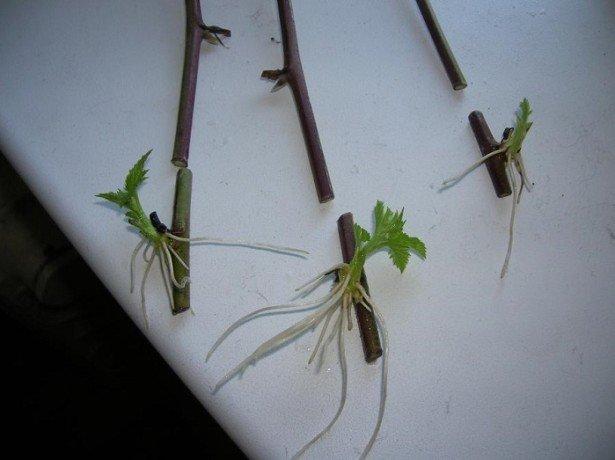
Blackberries can be easily propagated using green cuttings. This method is considered the most efficient. Cuttings should be taken in the fall. They are 15-centimeter branches with 2-3 buds.
The cutting should be tilted with the apical bud down and placed in a container of water. Only one bud should be submerged. Place the container on a windowsill and monitor the water level. Add more water as the water evaporates. It's important to ensure that the bud remains submerged at all times.
After some time, a new plant will emerge from the bud, with its own shoots and roots. The seedling should be trimmed and transferred to a cup filled with light soil. The soil should be kept slightly moist.
Apical layering
To implement this method, wrap the grafting site with plastic wrap and add soil. Keep the soil moistened regularly using a syringe and needle. After a month, the cutting will develop a root. This root can be separated and transplanted to its permanent location.
Mistakes when growing
Beginner gardeners often make mistakes when growing blackberries. The most common ones include the following:
- Incorrect site selection. Blackberries are often planted in overwatered areas. The plant does not respond well to prolonged waterlogging. To drain excess water, digging trenches is recommended.
- Planting in a shady spot. In such a location, blackberries develop poorly and ripen late, not having time to adapt to winter.
- Digging up the soil under bushes can damage the roots. To keep the soil loose and fertile, mulch.
Thornless blackberries are a popular plant with many benefits. To grow a strong, vigorous bush that will bear fruit abundantly, it requires proper care.
Related posts:
 Description and characteristics of the Natchez blackberry variety, planting and care
 How to care for blackberries in open ground, growing and planting
 When and how to prune blackberries: timing and instructions for beginners
 Characteristics and description of the Thornfree blackberry variety, cultivation and care
 The best grape varieties for growing in the Urals, planting and care rules in summer
 Description and characteristics of the 40 best blackberry varieties, yield indicators
 A simple recipe for making blackberry jam for the winter
 Description and characteristics of the Karaka Black blackberry variety, planting and care