
- Benefits of Blackberry Propagation
- Specifics of breeding at different times of the year
- Spring
- Summer
- Autumn
- Methods and technology of reproduction
- Stem and green cuttings
- Reproduction in water by dormant bud
- Root suckers
- Layering
- Tops
- By dividing the bush
- Seed method
- Methods of propagation of thornless blackberries
- Common mistakes and how to solve them
Blackberries are propagated by seeds and vegetatively. The main methods are rooting the top and side shoots, and root division. Blackberry enthusiasts practice propagation by root cuttings and root layering, depending on the plant species, season, and the rate at which new shoots emerge. By following the planting technique, you can increase the number of prickly and thornless varieties of blackberries.
Benefits of Blackberry Propagation
Everbearing varieties are propagated by dividing the bushes. In upright varieties, lateral shoots are rooted. Garden blackberries are easily propagated by root suckers—by replanting the daughter plant.
Interest in blackberries has increased with the emergence of new thornless varieties. Ouachita is an American variety whose berries leave a cherry-like aftertaste. They are easy to transport. The plant can withstand temperatures down to -17 degrees Celsius and propagates by rooting side shoots and cuttings. Propagating this new blackberry variety will be commercially beneficial—the berries' unique flavor will find a cultivar.
Blackberries produce a large harvest and, with proper care, grow for more than 12 years.
The fruits and leaves are used in folk medicine. The juicy berries are used in cooking and home canning.
Specifics of breeding at different times of the year
Winter is not the only time for blackberry propagation. Propagation in other seasons has its own challenges. Incorrect planting conditions will result in the seedlings freezing. Maintaining soil moisture is also essential at all times.
Spring
When warm weather sets in, root seedlings in open ground and propagate the bushes by root division. The plant is divided before bud break. The time for this is determined by the weather—after the last frost, early April. Spring is a good time for blackberry cultivation in northern regions.
Summer
Methods of summer reproduction:
- cuttings;
- rooting of cuttings;
- transplantation of root shoots.
At the end of August, blackberries are propagated from the tops, and July is ideal for green cuttings.
Autumn
This is a favorable season for rooting cuttings by pinning them to the ground. By spring, a rooted bush will form, which can then be transplanted. September and October are suitable for dividing the bush. Cuttings are also taken in October. The climate of southern regions favors autumn propagation of blackberries.
Methods and technology of reproduction
The methods differ in their results. Low germination rates are observed with seed and cuttings, while high germination rates are observed with rooting from the top of the plant, using root cuttings.
Stem and green cuttings
Stem cuttings begin with autumn preparations:
- cut a one-year-old shoot with dense bark into 40-centimeter-long pieces;
- cuttings need to be dug in for the winter in the garden in 20-centimeter holes;
- in the spring, dig up, cut off both ends and bury horizontally, at a distance of 20 centimeters from each other;
- water, weed;
- When the sprouts turn into bushes with 2-3 leaves, dig up the bases, divide and transplant into pots.
Strong, grown seedlings are returned to open ground.
How to root green blackberry cuttings:
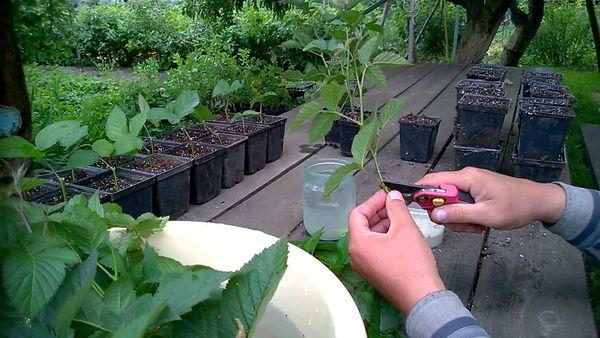
- cut off 20 centimeters from the top of the shoot;
- separate the lower part with two leaves from the cutting;
- cut off the bottom leaf, leaving part of the petiole, leave half of the top leaf;
- mix the root growth stimulator with soil in a 1:1 ratio;
- fill the boxes with soil prepared from equal parts perlite and peat or soil;
- roll the cuttings in a stimulating mixture, then plant them in boxes;
- Place the seedlings in a closed, unventilated place, a greenhouse with 90-100% humidity and a temperature of 30 degrees.
When new leaves appear, fresh air is let into the room, and after 7 days the sprouts are transferred to open soil.
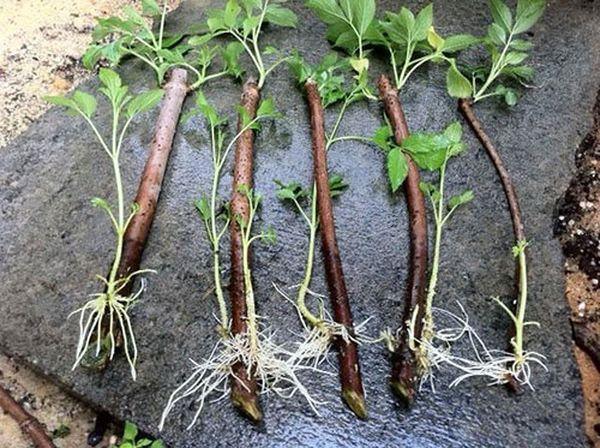
Cuttings provide a wealth of planting material. A single shoot can produce many cuttings and new plants. However, creating a humid and warm climate for growth indoors is difficult. The productivity of green cuttings is 10%.
Reproduction in water by dormant bud
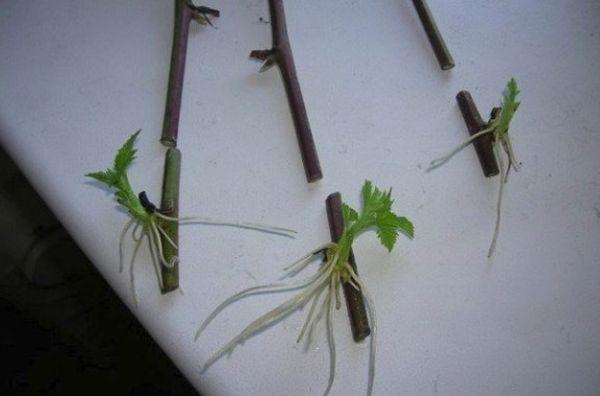
To propagate blackberries this way, select cuttings 15-20 centimeters long with 2-3 buds:
- the shoot is placed in water so that the liquid covers only the lower bud;
- send to a sunny place;
- add evaporated water;
- a sign of bud awakening is a small shoot with roots;
- separate the sprout and plant it in the ground.
All actions are repeated with the next bud.
Root suckers
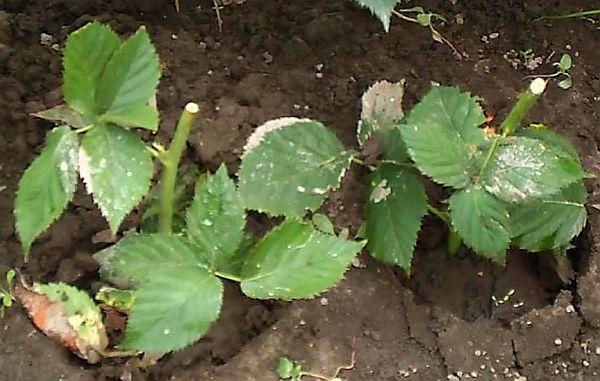
To propagate the bush, select shoots 20 centimeters long:
- dig up the shoot;
- cut off from the common root with pruning shears;
- dig in at a new location.
When propagating in the fall, the root of the shoot must be separated, leaving the root ball on it for better adaptation.
Layering
How to perform horizontal rooting:
- dig a furrow 20 centimeters deep;
- bend down and lay down a one-year-old shoot, leaving the top above the surface;
- secure with staples at the base and top;
- cover with earth;
- water and mulch.
In 1-2 months the shoot will take root, and in the spring it will be ready for transplantation.
Tops
Creeping, climbing, and rambling blackberries are propagated by apical shoots. One-year-old shoots up to 1.5 meters long are used. How to plant:
- bend the shoot down so that the top touches the ground;
- fix the shoot with a bracket and bury it, leaving 10-15 centimeters on the surface;
- water the cuttings.
Within a month, the root develops and a sprout appears, which is separated from the main shoot. The seedling is planted in late autumn.
The top of the plant can be left in place, but simply buried 20 centimeters deep. The resulting sprout is mulched and left to overwinter. The new plant is replanted in the spring.
By dividing the bush
The propagation method is used if the blackberry bush does not produce new shoots:
- dig up the mother plant;
- divide into parts, leaving 2-3 shoots and a root bud in each;
- plant in soil.
One bush can be divided into 5-6 new plants.
This method is suitable for spring and fall propagation. Bushes divided in the fall will undergo natural stratification over the winter.
Seed method
A method for propagating blackberries at home. Seeds are easily extracted from dried berries, but the resulting plants will not retain the properties of the parent plant. Instructions:
- soak the seeds for 2-3 days in rain or melt water, but not in boiled water;
- place in a mixture of river sand and peat in a ratio of 1:3 and put in the refrigerator for two months of stratification;
- plant seedlings in boxes at intervals of 4 centimeters to a depth of 8 millimeters;
- keep the seedlings at 2 degrees Celsius and water with boiled, settled water;
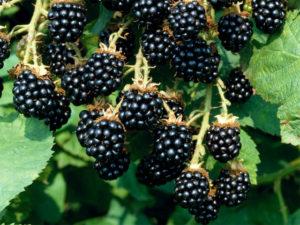
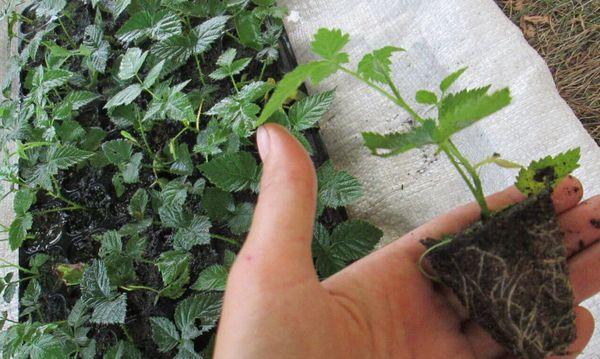
After 3-4 leaves have formed, the seedlings are transferred to open soil.
Methods of propagation of thornless blackberries
Thornless blackberries reproduce:
- green cuttings;
- seeds;
- tops;
- horizontal layering.
Propagation by root cuttings results in the appearance of thorns on new plants.
To ensure that the bush produces many lateral shoots, its top is cut off or it is propagated by division.
Common mistakes and how to solve them
Among the most common mistakes in propagating and planting blackberries are:
- failure to comply with planting deadlines;
- sprouting sprouts in boiled water;
- dividing old bushes;
- deep seating;
- wintering without shelter.
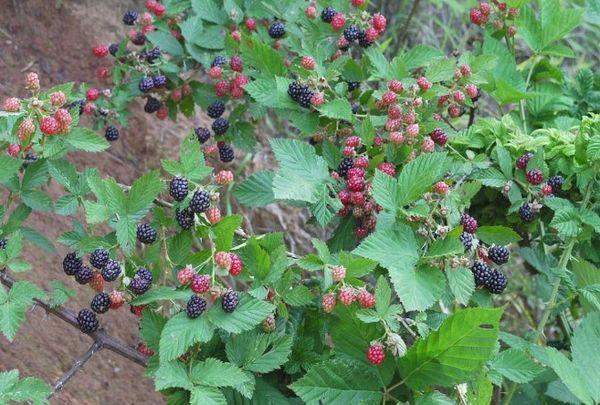
A warm and moderate climate is favorable for rooting cuttings. In northern regions, it's best to choose a different method or begin the process earlier than August. When dividing the roots, be sure to leave the underground bud on the daughter plant.
The central bud should be buried 1-2 centimeters into the soil. If raised above ground level, it will dry out. It's difficult for it to grow from deep in the soil.
Seedlings rooted in the fall should be covered with mulch for the winter—leaves, sawdust, or agrofibre. Young plants are less frost-resistant than mature ones.
In hot weather, seedlings grown from a divided bush may fail to root due to lack of moisture. Mulching will reduce evaporation. After division, parts of the old bush have difficulty adapting to new conditions.
Related posts:
 When and how to prune blackberries: timing and instructions for beginners
 Description and characteristics of the Natchez blackberry variety, planting and care
 How to care for blackberries in open ground, growing and planting
 Characteristics and description of the Thornfree blackberry variety, cultivation and care
 A simple recipe for making blackberry jam for the winter
 Description of thornless blackberry varieties and their cultivation, planting and care
 How to make blackberry jelly for the winter without gelatin: simple homemade recipes
 Description and characteristics of the Karaka Black blackberry variety, planting and care