
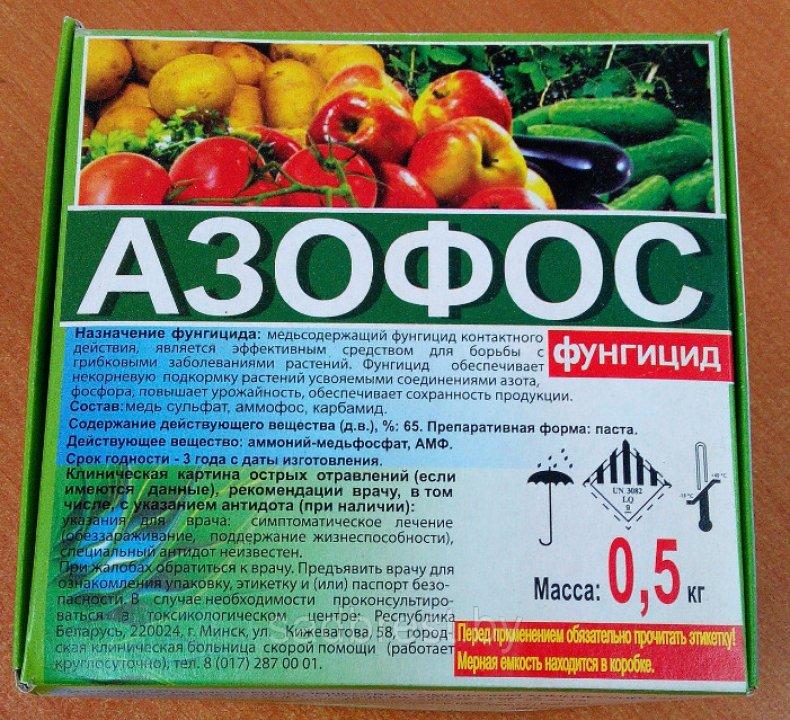
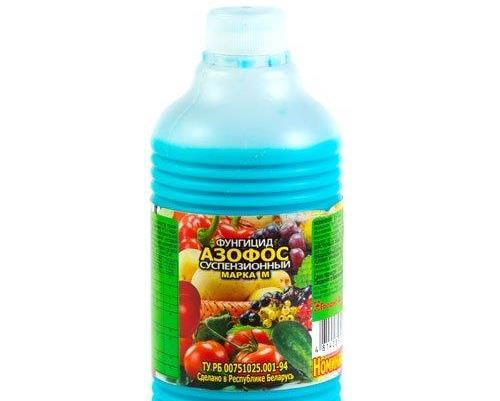
Fungal diseases are one of the main enemies of garden and fruit and vegetable crops. To prevent the disease, gardeners use agrochemicals. One such product is Azofos. The instructions for use of Azofos fungicide state that it has a contact action and is used to protect fruit and berry crops. To achieve the desired result, follow the dosage and preparation instructions.
Composition and existing forms of release
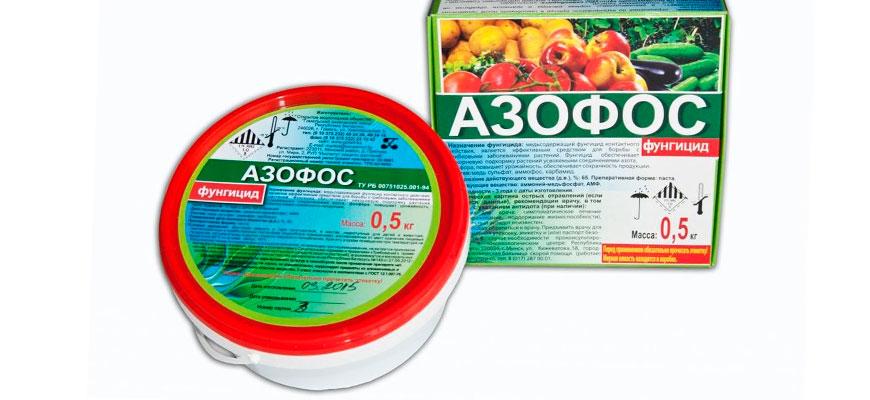
It is produced as a concentrated water-based suspension. It is packaged in plastic containers of 470 and 940 milliliters. The chemical contains 50 percent active ingredients, with the remainder consisting of ballasts and binding components.
The fungicide contains mineral additives:
- nitrogen;
- magnesium;
- zinc;
- potassium;
- copper;
- molybdenum;
- phosphorus.
Azofos differs from other pesticides in its lower concentration. When used correctly, it is harmless to humans, insects, and the environment.
Advantages of fungicide
The pesticide "Azofos" has proven itself to be highly effective. Gardeners and vegetable growers note the following advantages:
- ease of use, ease of preparation of working fluid;
- the chemical belongs to hazard class 4, therefore it is absolutely harmless to people and nature;
- Several treatments per season are allowed without harm to cultivated plants;
- Due to the presence of useful microelements in its composition, the chemical supports the vital activity of cultivated plants;
- providing excellent foliar feeding;
- wide range of applications, suitable for processing almost all cultivated plants;
- affordable price, allowing the product to be used in large and small agricultural enterprises;
- improving plant resistance to sudden climate change.
Mechanism of action
The chemical has a contact effect. When it comes into contact with the surface of plant leaves and stems, it combats pathogens. The chemical is applied by spraying. The pesticide is also used as a fertilizer on various types of soil, provided the application rates are observed.
Preparation of working solution
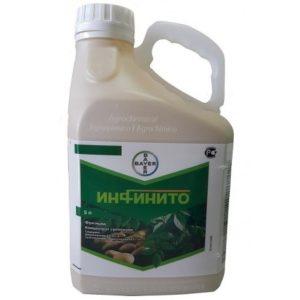
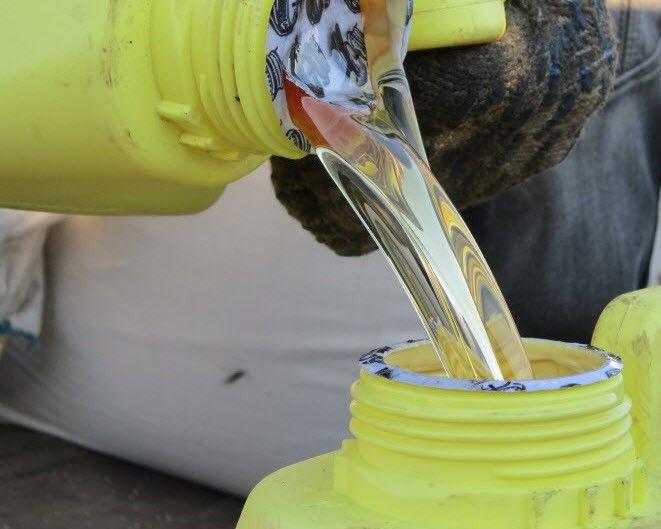
When preparing the working solution, observe the dosage of the product, which varies depending on the crop type and the stage of the disease. Prepare a plastic, metal, or glass container. Measure out the required amount of the chemical. Pour half the amount of water into the container and add the suspension. Mix the contents thoroughly. Add water until the required amount of solution is obtained. Mix again and begin treatment.
Instructions for use
The product "Azofos" is used in two ways:
- Spraying leaves as foliar feeding.
- Watering the soil.
Depending on the type of crop, a certain amount of the product is diluted in 10 liters of water.
Potatoes are treated up to three times per season to protect against late blight and early blight. The final spraying is carried out three weeks before harvest. The application rate of the suspension is 130-200 milliliters per 100 square meters. For tomatoes in greenhouses, use 130-200 milliliters per hectare. Up to two sprayings are carried out per season. The final treatment is carried out eight weeks before harvest.
Stone fruits can be treated up to four times per season. To do this, dilute 100 milliliters of Azofos in water. The final spraying is done three weeks before harvest. Cranberries, lingonberries, and blueberries are sprayed once. To do this, dilute 100 milliliters of the product in water. At least 70 days must pass between the last treatment and harvest.
Safety precautions
The fungicide "Azofos" is classified as a low-hazard substance. Standard safety precautions should be observed when working with the product:
- use personal protective equipment;
- avoid direct contact with skin;
- Do not eat or smoke while working with chemicals.

Phytotoxicity
Azofos is classified as a hazard class 4 pesticide. It is considered harmless to humans, insects, and the environment.
Possible compatibility
Azofos is compatible with most pesticides and is used in tank mixes. The exception is alkaline pesticides, which can cause a precipitate.
Storage rules and shelf life
It is recommended to store this medication in its original packaging, in a dark place, away from sunlight. Keep it out of reach of children and animals. The shelf life is 3 years from the date of manufacture. Once opened, the medication should be stored for no more than 6 months.
Analogues
Similar means include:
- Boxwood;
- "Title Duo";
- "Champion"";
- "Benomyl";
- Carbendazim.
Azofos fungicide is an effective treatment for many diseases of fruit and berry crops. When applied at the correct dosage, it does not harm plants and is completely safe from an environmental, sanitary, and hygienic standpoint.
Related posts:
 The best eggplant varieties for growing in a polycarbonate greenhouse: planting and care
 Instructions for using Azofoska fertilizer for potatoes
 TOP 15 recipes for canned mushrooms at home for the winter
 Instructions for use of Yantarin and how to dilute the growth regulator, analogues
 The health benefits and contraindications of black currants
 11 step-by-step recipes for pickled ginger at home, with and without vinegar
 How to control carrot flies with medications and folk remedies
 Methods for planting and propagating cherries at home